Für Bekleidungsingenieure und Käufer von Fitnessbekleidung, Die Herausforderung besteht darin, Kleidungsstücke zu entwerfen, die cool bleiben, trocken, und komfortabel bei intensiver Nutzung, ohne Einbußen bei Haltbarkeit oder Leistung. Atmungsaktive Mesh-Stoffe bieten eine Möglichkeit, Wärmestau und Feuchtigkeit zu kontrollieren, Ihre Vorteile hängen jedoch von der richtigen Materialwahl ab, Struktur, und Fertigungspräzision.
Dieser Leitfaden behandelt die Wissenschaft hinter atmungsaktiven Mesh-Stoffen, wie Mesh die Luftzirkulation und den Komfort verbessert, und die Herstellungsprozesse, die eine gleichbleibende Qualität gewährleisten – so können Sie Sportbekleidung herstellen, die unter anspruchsvollen Bedingungen funktioniert und die Markterwartungen erfüllt.
Was ist atmungsaktives Mesh-Gewebe??
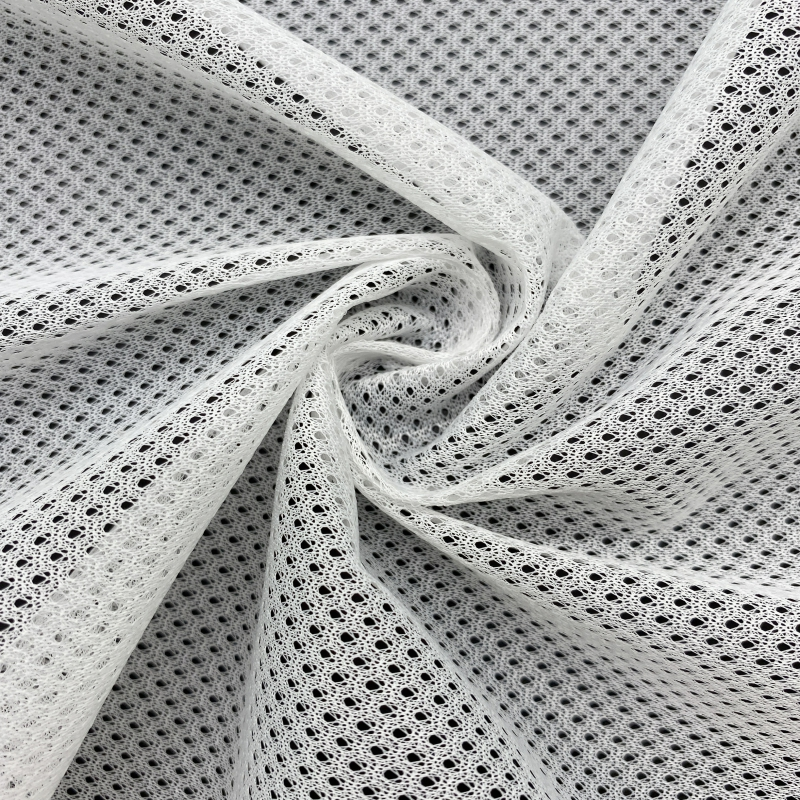
Atmungsaktives Mesh-Gewebe ist ein leichtes Textil mit einer offenen Webstruktur und Tausenden winziger Löcher, Entwickelt, um den Luftstrom und die Belüftung zu maximieren, Damit eignet es sich ideal für Aktivbekleidung und Umgebungen, in denen Feuchtigkeitsmanagement und Komfort von entscheidender Bedeutung sind.
Aus unserer Erfahrung in der Zusammenarbeit mit Sportbekleidungsmarken, Atmungsaktive Mesh-Stoffe sind zu einem unverzichtbaren Material für geworden Performance-Bekleidung. Sie vereinen technische Effizienz mit Tragekomfort, um sowohl technische Anforderungen als auch Verbrauchererwartungen zu erfüllen.
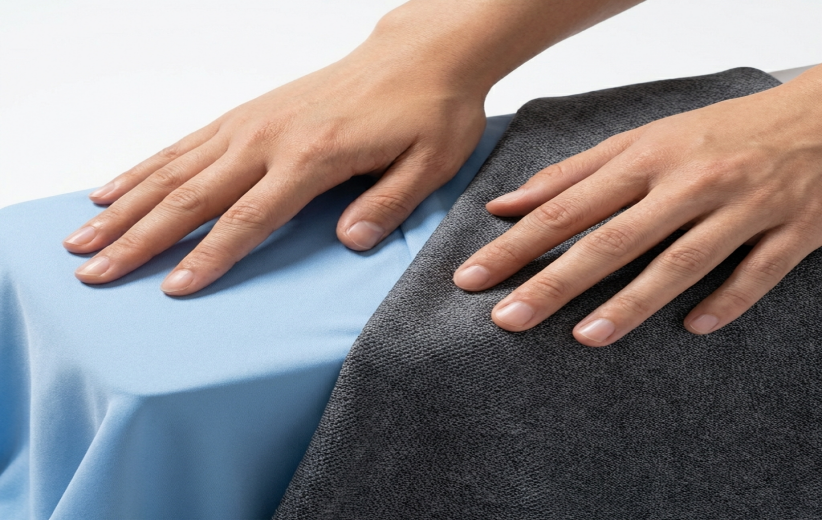
Das atmungsaktive Netzgewebe verfügt über ein offenes Webmuster, das eine freie Luftzirkulation durch Tausende von Mikrolöchern ermöglicht. Diese Struktur unterstützt auf natürliche Weise die Kühlung und Belüftung des Körpers während der Bewegung.
Technische Spezifikationen und Materialeigenschaften
| Spezifikation | Wert / Reichweite | Nutzen |
|---|---|---|
| Gewicht | 40–120 g/m² | Geeignet für leichte Bekleidung |
| Luftdurchlässigkeit | 800–1200 mm/s | Schneller Luftaustausch |
| Feuchtigkeitstransport | Mittel–Hoch | Hält die Haut trocken und angenehm |
| Haltbarkeit | Hoch (synthetische Varianten) | Reiß- und Verschleißfestigkeit |
| Pflege | Maschinenwaschbar | Einfache Wartung |
Wir konstruieren oft Netze mit der optimalen Balance zwischen GSM und Luftdurchlässigkeit, um den Leistungsanforderungen unserer Kunden gerecht zu werden.
Praktische Vorteile und Anwendungen
- Unterstützt das Feuchtigkeitsmanagement und die Temperaturregulierung, Reduzierung von Hautreizungen bei körperlicher Aktivität.
- Wird häufig in Sportbekleidung wie Trikots und Shorts verwendet, Schuhfutter, Outdoor-Ausrüstung, und medizinische Textilien.
- Die Leistungsoptionen variieren je nach Lochdichte und Fasergehalt, bietet Stretch, Unterstützung, und Witterungsbeständigkeit.
- Gleicht leichten Komfort aus, Belüftung, und Haltbarkeit besser als traditionelle Stoffe.
Aus unserer Fertigungsperspektive, Atmungsaktive Netzstoffe sind branchenübergreifend vielseitig einsetzbar. In der Bekleidungstechnik, Sie sind die erste Wahl, wenn es um Komfort geht, Atmungsaktivität, und Haltbarkeit sind in einem Material gefragt.
Wie Mesh die Luftzirkulation und den Komfort verbessert
Mesh-Stoffe verbessern die Luftzirkulation und den Komfort, indem sie ihre hohe Porosität nutzen, offen gewebte Strukturen, die eine schnelle Wärmeableitung und eine effiziente Feuchtigkeitsdampfübertragung ermöglichen, was zu einem kühleren Ergebnis führt, Wäschetrockner, und bequemere Kleidungsstücke – insbesondere im Activewear-Bereich.
Wir haben Erfahrung in der Herstellung von Performance-Bekleidung, Atmungsaktive Netzstoffe spielen eine entscheidende Rolle bei der Regulierung der Körpertemperatur bei hochintensiven Aktivitäten. Ihre offenen Strukturen fördern die Belüftung und den schnellen Feuchtigkeitstransport, hält Sportler trocken und komfortabel.
Daten zum Luftstrom- und Feuchtigkeitsmanagement
| Metrisch | Leistungsergebnis | Einblick |
|---|---|---|
| Luftdurchlässigkeit (Abstandsgeflecht) | 0.9 g/m²·h Wasserdampfübertragungsrate bei aktivem Luftstrom | Hohe Übertragungsgeschwindigkeit unterstützt schnelles Trocknen |
| Reduzierung der relativen Luftfeuchtigkeit | Aus 99% RH Sättigung zu 40% RH Ambient vorbei 24 Stunden mit Mesh und Luftstrom | Ein erheblicher Feuchtigkeitsabfall verbessert den thermischen Komfort |
| Wärmeflussableitung | Abstandsgeflecht: 19–34 W/m² vs. Schaum: 10.4 W/m² | Hervorragendes Wärmemanagement unter Last |
| Beispiel für Stoffporosität | 84% Porosität, 6.4 mm Öffnungen – minimale Verbesserung gegenüber dem Ausgangswert | Zeigt die Notwendigkeit optimierter Porositätsniveaus an |
| Zeit zum Gleichgewicht (Feuchtigkeit) | Mesh mit Luftstrom: 240 min vs. Nicht-Mesh: 820 min | Durch die schnellere Stabilisierung bleiben die Kleidungsstücke bequem |
Diese Messungen verdeutlichen, wie Stofftechnik funktioniert, insbesondere bei Sportbekleidung, kann die Leistung des Kleidungsstücks erheblich beeinträchtigen. Durch die Auswahl von Netzen mit ausgewogener Porosität und die Integration aktiver Luftstromdesigns, Es ist möglich, den Benutzerkomfort erheblich zu verbessern.
Wichtige Materialien für atmungsaktive Stoffe
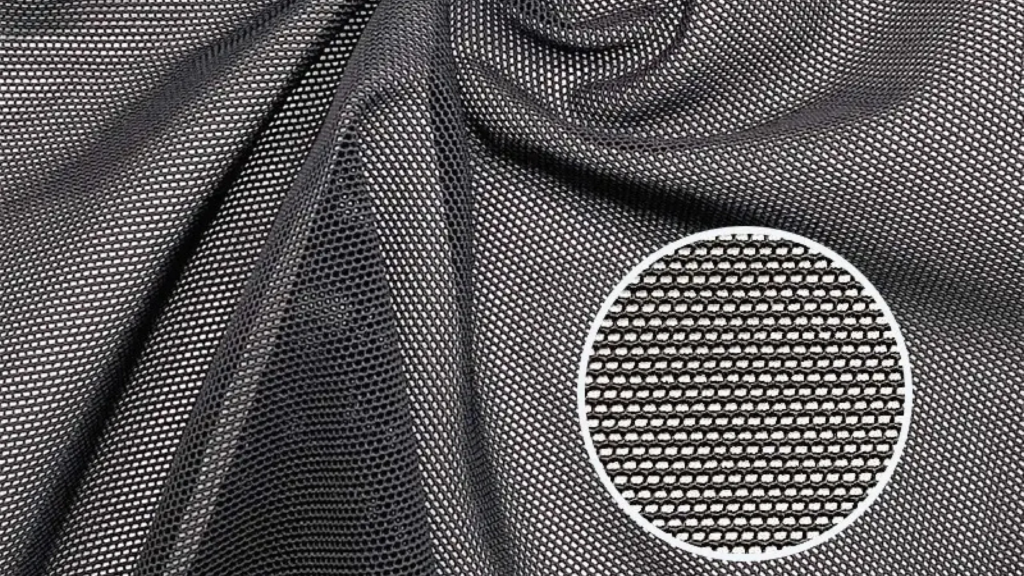
Die wichtigsten Materialien für atmungsaktive Stoffe sind Polyester, Nylon, Baumwolle, und spezielle Mischungen, die hydrophile und hydrophobe Eigenschaften kombinieren, oft mit Beschichtungen wie Polyurethan und Silikon verstärkt, um die Wasserdampfdurchlässigkeit und Luftdurchlässigkeit zu verbessern.
Atmungsaktive Mesh-Stoffe sorgen für ein ausgewogenes Verhältnis von Luftdurchlässigkeit und Feuchtigkeitsregulierung, Damit eignen sie sich ideal für Sportbekleidung und technische Bekleidung. Die Materialauswahl spielt eine wichtige Rolle bei der Bestimmung der Stoffleistung, Haltbarkeit, und Benutzerkomfort.
Gängige Fasertypen in atmungsaktiven Stoffen
Unserer Erfahrung nach, Die Auswahl des richtigen Fasertyps ist entscheidend, um den Anforderungen von Bekleidungsingenieuren und Sportlern gerecht zu werden. Jede Faser bietet einzigartige Stärken, wenn es um Atmungsaktivität geht, Komfort, und Umgang mit Feuchtigkeit.
- Baumwolle absorbiert bis zu 25% seines Gewichts an Feuchtigkeit, bietet eine hervorragende Luftdurchlässigkeit, und ist biologisch abbaubar.
- Polyester ist langlebig, schnell trocknend, und häufig mit Baumwolle gemischt 60/40 oder 55/45 Verhältnisse, um Atmungsaktivität und Haltbarkeit in Einklang zu bringen.
- Nylon ist leicht, stark, und für hohe Atmungsaktivität mit zusätzlicher Elastizität ausgelegt, Dies macht es in Sport- und Funktionsbekleidung üblich.
Beschichtungen und Stoffmischungen für Leistung
Durch Mischungen und Beschichtungen können Grundstoffe in Hochleistungstextilien mit gezielten Eigenschaften verwandelt werden. Für Sportbekleidungsanwendungen, Dies ist besonders wichtig, um die Wasserdichtigkeit mit der Luftzirkulation in Einklang zu bringen.
- Polyurethan Und Silikon Beschichtungen in einem 80/20 oder 85/15 Die Mischung sorgt für optimale Wasserdichtigkeit bei gleichzeitiger Beibehaltung der Atmungsaktivität.
- Gängige Mischungen wie 60/40 Baumwoll-Polyester kombinieren natürlichen Komfort mit synthetischer Haltbarkeit für Aktivbekleidung.
- Mehrkomponentensysteme optimieren die Leistung, indem sie komplementäre Fasereigenschaften für beste Ergebnisse nutzen.
Strukturelle Faktoren, die die Atmungsaktivität beeinflussen
Jenseits von Fasern und Beschichtungen, Die physikalische Struktur eines Stoffes bestimmt seine Fähigkeit, Luft und Feuchtigkeit durchzulassen. Daher sind Webdichte und Garndicke wichtige technische Überlegungen.
| Faktor | Auswirkungen auf die Atmungsaktivität | Markteinblick |
|---|---|---|
| Interne Stoffporosität (~8%) | Verbessert den Luftstrom erheblich; gemessen mittels Mikro-CT. | Bevorzugt in Hochleistungsausrüstung. |
| Feinere Garne | Verbessern Sie die Atmungsaktivität, reduzieren Sie jedoch die Auswirkungen auf die Faserzusammensetzung. | Für die Haltbarkeit ist möglicherweise eine verstärkte Konstruktion erforderlich. |
| Dicht gewebte, wasserdichte, atmungsaktive Stoffe | Erfüllen Sie die große Marktnachfrage. | 53.3 Million qm in 2024; CAGR 6.0% durch 2030. |
Beschleunigen Sie Ihre Innovation im Bereich Sportbekleidung mit fachmännischer Fertigung
Arbeiten Sie mit Sansan Sports zusammen, um modernste Stofftechnologie und nachhaltige Produktion zu nutzen, die auf die Leistungsanforderungen Ihrer Marke zugeschnitten sind. Flexibel genießen, End-to-End-Lösungen, die Ihre Designs effizient und verantwortungsvoll zum Leben erwecken.
Vergleich: Mesh vs. Feste Strickstoffe
Mesh-Stoffe sind durch ihre offene Strickkonstruktion deutlich atmungsaktiver und leichter, Ideal für den Einsatz bei hoher Belüftung. Feste Strickstoffe bieten mehr Wärme, strecken, und Windwiderstand, besser geeignet für gemäßigtes Klima und ergonomische Kleidung.
Nach unserer Erfahrung arbeiten wir mit atmungsaktiven Mesh-Stoffen und einer soliden Strickkonstruktion für Herstellung von Sportbekleidung, Die Wahl hängt vom Belüftungsbedarf ab, Klima, und Bekleidungszweck. Beide Optionen haben unterschiedliche strukturelle Designs, die sich direkt auf Leistung und Komfort auswirken.
Stoffstruktur und Leistung
| Besonderheit | Mesh-Stoffe | Feste Strickstoffe |
|---|---|---|
| Struktur | Offen gestrickt, netzartig mit 6–16 Löcher/Zoll | Eng, kontinuierliche Schleifen, keine Löcher |
| Atmungsaktivität | Sehr hohe Belüftung | ➖ Mäßig bis hoch |
| Wärmespeicherung | Geringe Wärme | Mäßige bis hohe Wärme |
| Strecken & Haltbarkeit | Hohe Dehnung, behält seine Form, weniger Elastizität | Höhere Dehnung, lockerere Passform, robuste Haltbarkeit |
| Schutz | Geringe Wind-/Wasserbeständigkeit | Mäßiger Schutz |
| Pflege | Schnell trocknend, leicht zu waschen | Sanfte Pflege, längeres Trocknen |
| Druckqualität | Höhere Maschenzahlen ermöglichen eine feinere Maschenweite, hellere Drucke | Deutlich, gesättigte Drucke mit geringerer Maschenzahl |
FAQs
Was ist GSM??
GSM steht für Gramm pro Quadratmeter und ist ein Maß für das Stoffgewicht. Unserer Erfahrung nach, Atmungsaktive Mesh-Stoffe für Sportbekleidung reichen oft von 80 Zu 200 GSM je nach Leistungsanforderungen.
Ein höherer GSM bedeutet einen dichteren und schwereren Stoff, Dies kann die Haltbarkeit verbessern, aber die Belüftung beeinträchtigen. Ein geringerer GSM-Wert bietet ein geringeres Gewicht und mehr Atmungsaktivität, Geeignet für Training oder hochintensives Training.
So testen Sie die Atmungsaktivität?
Atmungsaktivitätstests können mithilfe von Luftdurchlässigkeitstests wie ASTM D737 durchgeführt werden. Damit wird gemessen, wie leicht Luft unter bestimmten Bedingungen durch den Stoff strömt.
Wir empfehlen, Labortests mit realen Feldversuchen zu kombinieren, Platzieren von Kleidungsstücken bei Aktivitäten mit hoher Belastung, um den Komfort zu beurteilen, Temperaturregulierung, und Feuchtigkeitsverdunstung.
- Laborbasierte Luftdurchlässigkeitsanalyse
- Wasserdampfdurchlässigkeitsrate (MVTR) Testen
- Sportler-Bekleidungstests für Leistungsfeedback
Ist das Netz langlebig??
Mesh-Stoffe können sehr langlebig sein, wenn sie aus hochfesten synthetischen Fasern wie Polyester oder Nylon hergestellt werden. In unserer Produktion, Wir verwenden Garne mit hoher Abriebfestigkeit, um die Lebensdauer des Stoffes zu verlängern.
Faktoren wie GSM, Strickstruktur, und Veredelungsprozesse wie Heißsiegeln spielen alle eine Rolle für die Langlebigkeit. Die richtige Pflege stellt außerdem sicher, dass das Kleidungsstück über viele Verwendungszwecke hinweg seine Leistung behält.
Ist es nachhaltig??
Ja – atmungsaktives Mesh kann nachhaltig hergestellt werden recyceltes Polyester, Bio-Baumwollmischungen, oder Bambusfasern. Wir integrieren diese in Funktionsbekleidung und behalten dabei die erforderliche Funktionalität bei.
Zu einer nachhaltigen Produktion gehört auch die Reduzierung von Abfall, Schonende Färbeprozesse, und recycelbare Verpackung, All dies ist innerhalb moderner Lieferketten erreichbar.
- Verwendung erneuerbarer Garne
- Recyceltes Polyester und umweltfreundliche Mischungen
- Einhaltung der ISO, BSCI, OEKO-TEX-Standards
Beste Einsatzmöglichkeiten?
Atmungsaktive Mesh-Stoffe eignen sich hervorragend für bewegungsintensive Sportarten und Aktivitäten, bei denen die Feuchtigkeitskontrolle von entscheidender Bedeutung ist. Dazu gehört auch das Laufen, Trainingseinheiten, Radfahren, und Mannschaftssportuniformen.
Für eine gezielte Belüftung bringen wir auch Mesh-Einsätze an der Activewear an, ergonomische Passform, und ästhetische Designakzente, die die Attraktivität des Produkts steigern.
- Laufoberteile und Trikots
- Trainingsshorts mit Mesh-Seiteneinsätzen
- Radsport-Sets für Langstreckenkomfort
- Mannschaftssportausrüstung mit individuellen Belüftungszonen
Letzte Gedanken
Atmungsaktive Mesh-Stoffe bieten einen idealen Mix aus Leichtigkeit, Luftstrom, und schnelle Feuchtigkeitsregulierung, Damit sind sie unverzichtbar für Hochleistungssportbekleidung. Auswahlmöglichkeiten wie Lochdichte, Fasermischungen, und Produktionsmethoden prägen direkt den Komfort, Haltbarkeit, und allgemeine Produktattraktivität. Mit nachgewiesener Steigerung der Wärmeabgabe und Feuchtigkeitsverdunstung, Mesh bleibt ein intelligentes Material für Aktivbekleidung und Schuhe für anspruchsvolle Bedingungen.
Sansan Sports bietet Full-Service-Fertigung für maßgeschneiderte Performance-Bekleidung unter OEM, ODM, und Private-Label-Modelle. Marken erhalten Zugang zu individuellem Branding, digitaler Sublimationsdruck, und passgenaue Technologien – allesamt darauf ausgelegt, moderne Leistungserwartungen zu erfüllen. Ob atmungsaktive Sportbekleidung oder robustes Schuhwerk, Sansan Sports ist ein vertrauenswürdiger Partner für technische Exzellenz und nachhaltige Innovation.