Production engineers and garment technologists face the challenge of delivering precise, efficient cuts for complex sportswear designs while minimizing waste and maintaining fabric integrity. Traditional methods often fall short on speed and accuracy, limiting design possibilities and driving up costs.
This guide covers the step-by-step laser cutting process, equipment and software requirements, and materials best suited for sportswear, helping apparel professionals improve precision, boost throughput, and enhance design flexibility in manufacturing.
What Is Laser Cutting in Apparel Manufacturing?
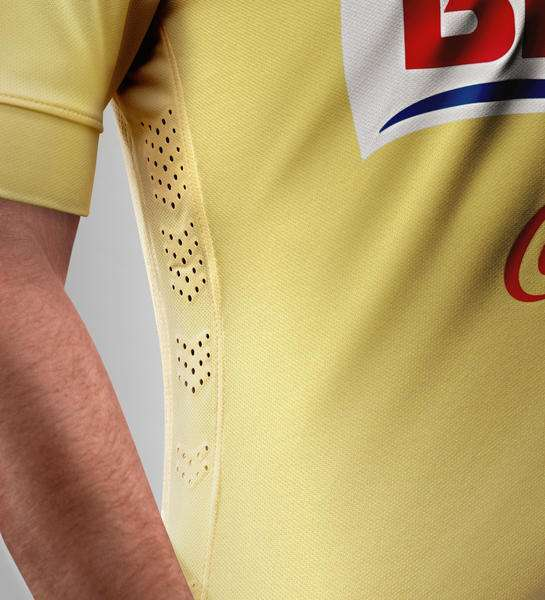
Laser cutting in fabricación de prendas de vestir is a digital, non-contact process that uses a focused laser beam to cut fabrics with high precision, velocidad, and minimal material waste. It enables intricate designs and clean, sealed edges without fraying.
En nuestra experiencia, laser cutting has transformed apparel production by combining speed, precisión, and design versatility. It removes many mechanical limitations of traditional cutting and supports advanced garment engineering.
Technical Overview of Laser Cutting
Laser cutting uses a focused beam to cut textiles without touching the fabric, preventing tool wear and contamination. This method supports production lines that demand accuracy and repeatability.
| Especificación | Valor | Notas |
|---|---|---|
| Laser Power | 100–150 watts | Optimal for fabric cutting |
| Cutting Speed | Arriba a 600 mm/s | High throughput |
| Air Pressure | 60–70 psi | Prevents overburn |
| Edge Sealing | Prevents fraying, reduces finishing steps |
Material Suitability and Layer Cutting
Laser systems handle a variety of fabrics, allowing designers and engineers to explore diverse product lines without switching cutting equipment.
- Works with cotton, poliéster, silk, synthetics, lace, leather, and technical textiles.
- Cuts multiple fabric layers at once, boosting throughput.
- Heat-sealed cut edges provide durability — ideal for activewear and performance garments.
Operational Benefits and Efficiency Gains
Switching from manual cutting to laser systems changes the economics of apparel production. Material utilization and operator efficiency both improve significantly.
| Beneficio | Impacto | Icono |
|---|---|---|
| Material Waste Reduction | Arriba a 30% less waste | |
| Labor Efficiency | 1 laser cutter replaces 10+ scissor operators | |
| Reduced Post-Processing | Lower finishing time | |
| Complex Pattern Capability | CAD-driven intricate designs |
Step-by-Step Laser Cutting Process Explained
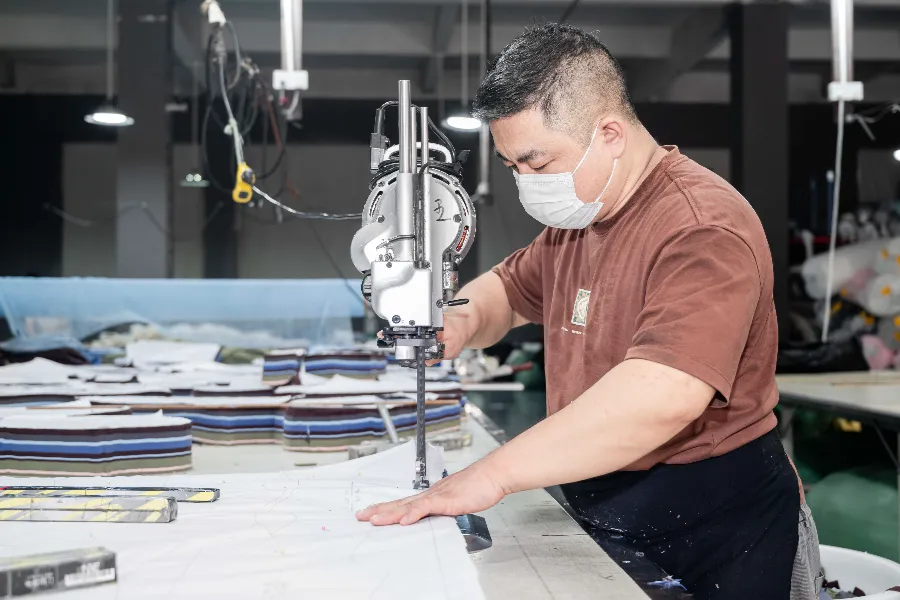
The laser cutting process includes preparing a digital design file, programming machine settings, loading and aligning materials, piercing to start the cut, executing the cut with a focused laser and assist gas, and conducting post-processing to ensure quality and finish.
En nuestra experiencia trabajando con ropa de rendimiento, each stage of laser cutting impacts both precision and efficiency. The following sections break down the process into technical and operational components relevant to apparel manufacturing.
Digital Design and Programming Setup
- Upload CAD/CAM files defining cut paths and optimize nesting for efficient material use.
- Set programming parameters including cutting speed (10–30 mm/s for textiles) and laser power (20–150 W).
- Plan cutting sequence to reduce thermal distortion and defects.
Accurate digital design directly translates into material savings and cleaner cuts. Production engineers often use advanced nesting algorithms to ensure minimal fabric waste.
Automated loading systems paired with vision alignment reduce setup time and improve yield consistency in fabricación de ropa deportiva.
Piercing and Cutting Execution
| Escenario | Detalles | Specs |
|---|---|---|
| Piercing | Forms laser entry point | 0.5–3 sec (depending on thickness) |
| Corte | Focused CO₂ or fiber laser beam with assist gas (nitrogen/oxygen) | Assist gas flow 10–20 L/min, kerf width 0.1–0.3 mm, tolerance ±0.05 milímetros |
This combination of beam focus and controlled gas flow ensures smooth edges and minimal burn marks on technical fabrics often used in athletic apparel.
Post-Processing and Quality Inspection
- Includes deburring, edge cleaning, and visual inspection to ensure cut quality and smoothness.
- Post-processing can take up to 10% of total process time.
- Common defects such as warping or edge burns occur in 2–8% of cuts if parameters are not well optimized.
- Regular lens cleaning, precise material placement, and monitoring are essential to minimize defects.
Finishing plays a critical role in maintaining garment integrity, especially for brands demanding flawless aesthetics and high comfort standards.
Process Insights and Best Practices
- Digital design precision directly affects material efficiency and cut accuracy.
- Machine programming errors commonly cause thermal distortion and material waste.
- Proper calibration of piercing and assist gas parameters optimizes cutting quality.
- Automated loading and real-time monitoring help reduce errors and improve efficiency.
- Understanding kerf widths and defect rates assists engineers in cost control and throughput optimization.
For apparel manufacturers, integrating these best practices into the workflow reduces operational costs, enhances output quality, and sustains brand consistency across every production cycle.
Elevate Your Sportswear with Precision Manufacturing & Innovación
Partner with Sansan Sports to access cutting-edge fabric technology and sustainable production solutions tailored for your brand’s unique needs. Experience sin costura R&D integration and scalable manufacturing that delivers premium performance apparel, fast.

Materials Suitable for Laser Cutting in Sportswear
The most suitable materials for laser cutting in sportswear are polyester, nylon, spandex (elastane), and technical blends because they offer clean edge finishes, resist fraying, and work well with precise, high-speed cutting. Sustainable options like recycled polyester and bamboo fiber are gaining popularity in this field.
Laser cutting in apparel has become a preferred technique for sportswear manufacturers due to its precision, velocidad, and waste reduction benefits. En nuestra experiencia, the choice of fabric greatly influences the quality and consistency of the cut.
Common Materials for Laser Cutting in Sportswear
Performance-oriented fabrics respond best to laser cutting when they have synthetic compositions capable of sealing edges. This makes them ideal for high-speed, fabricación de precisión.
- Poliéster: Melts cleanly and seals edges to prevent fraying.
- Nylon: Offers high strength and smooth edges, ideal for performance apparel.
- Spandex/Elastane: Maintains stretch and elasticity after cutting, perfect for compression garments.
- Technical Blends (Polyamide/Elastane): Combine durability and stretch for precision cuts in sportswear.
Sustainable Materials Emerging in Laser-Cut Sportswear
Eco-conscious options are increasingly adopted without compromising on laser cutting compatibility. Brands integrating these materials meet consumer demand for sustainability and high performance.
- Poliéster reciclado: Retains the same laser compatibility as virgin polyester while reducing environmental impact.
- Bamboo Fiber: Natural, absorbe la humedad, and suitable for laser cutting in sustainable apparel lines.
Advantages: Precisión, Eficiencia, and Design Freedom
3D printing offers transformative advantages for manufacturing with precise layer-by-layer fabrication, significant efficiency improvements through faster production cycles and waste reduction, and design freedom enabling complex geometries that traditional manufacturing cannot achieve.
En nuestra experiencia, integrating 3D printing in manufacturing workflows delivers measurable advantages in accuracy, velocidad, and creative flexibility. These gains support diverse sectors from medical devices to apparel engineering.
Precisión: Enhanced Accuracy and Fit
- Layer-by-layer fabrication enables detailed, highly accurate production down to complex micro-features.
- 3D-printed dental restorations demonstrate superior marginal fit compared to conventional methods.
- Surgical guides produced with 3D printing improve implant placement accuracy and reduce operative time.
- In apparel, precision supports consistent sizing and customized fits without the need for retooling.
This precision empowers manufacturers to replicate parts with minimal deviation, ensuring repeatability in both prototyping and full-scale runs.
Eficiencia: Time, Costo, and Waste Reduction
| Efficiency Metric | Resultado |
|---|---|
| Production cycle time improvement | 5-15% faster using 3D-printed jigs/fixtures |
| Lead time reduction | Tools in hours or days vs weeks |
| Cost savings | Arriba a 98% lower vs traditional methods |
| Time reduction | Arriba a 89% faster project completion |
| Material waste | Minimal waste—adds material only where needed |
| Labor efficiency | One operator can manage multiple printers |
Efficient resource use and rapid turnaround are especially useful for apparel prototyping where small batches can be tested before committing to mass production.
Design Freedom: Complex and Custom Geometries
- Removes the need for costly molds and tooling investments.
- Allows creation of intricate lattices, internal cavities, and complex shapes without compromising strength.
- Enables advanced aerospace, automotive, and medical applications requiring lightweight, customized parts.
- In apparel, supports innovation in closures and custom hardware components, complementing laser cutting in fabric shaping.
This freedom accelerates creative exploration and supports specialized ergonomics in sportswear innovation.
Careful planning ensures that 3D printing complements existing técnicas de fabricación, delivering practical benefits without introducing inefficiencies.
Comparing Laser Cutting with Traditional Cutting Methods
Laser cutting delivers higher precision (±0.03–0.1mm), faster production speeds, and lower labor costs than traditional cutting methods, but requires a higher initial investment and is limited by material thickness and type.
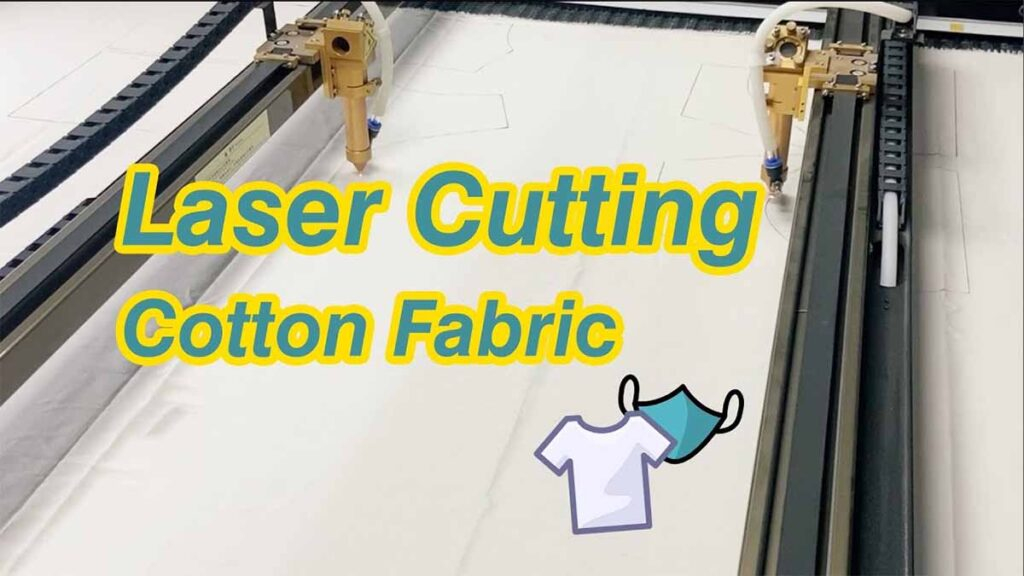
Laser cutting has become increasingly relevant in apparel manufacturing, especially for brands that demand consistency and intricate detailing. By comparing it to traditional cutting approaches, production engineers can select the method that aligns with their quality, costo, and volume goals.
Precision and Cutting Quality
Laser cutting offers exceptional accuracy with tolerances between ±0.03–0.1mm, typically around ±0.05milímetros. This outperforms waterjet at ±0.2milímetros, plasma at ±0.5–0.76mm, and mechanical cutting at ±1milímetros.
| Method | Tolerance | Kerf Width | Edge Quality |
|---|---|---|---|
| Laser Cutting ✅ | ±0.03–0.1mm | 0.15milímetros | Clean edges, minimal burring |
| Waterjet | ±0.2milímetros | 0.5milímetros | Smooth but wider cuts |
| Plasma | ±0.5–0.76mm | 2milímetros | Rougher edges, more burring ❌ |
| Mechanical Cutting | ±1milímetros | Varies | Requires secondary finishing ❌ |
Velocidad, Costo, y eficiencia
Laser cutting operates at faster speeds than knife, plasma, or mechanical cutting, adjusting output based on material type and thickness. In high-volume apparel production, it can reduce per-part costs.
- Faster throughput with automation compared to traditional methods.
- Lower operating costs per part in precision and bulk runs despite higher upfront investment.
- Reduced labor dependency as machine setups and tool changes are minimal.
- Energy use averages 1.5–4 kW, lower than waterjet (4–17 kW) and plasma (24–40 kW).
Material Limitations and Application Considerations
While laser cutting optimizes precision, it is less effective on very thick or highly reflective metals. Traditional cutting extends capability to these materials but with lower precision.
- Narrow kerf (0.15milímetros) reduces material waste; traditional kerfs are wider.
- Best fit for applications where clean edges and accuracy are priorities, such as performance sportswear fabrics.
- For heavy-gauge materials or cost-sensitive, low-volume projects, traditional methods may be more viable.
Preguntas frecuentes
What materials suit laser cutting?
In our experience with sportswear production, laser cutting works best on synthetic fabrics like polyester and nylon blends. These fibers melt cleanly under laser heat, producing crisp edges without fraying.
Performance fabrics with moisture-wicking treatment, lightweight stretch knits, and laminated textiles also respond well to precision cuts, allowing consistent fit profiles in apparel fabricación.
Is it expensive?
Cost depends on order volume, fabric type, and cutting complexity. For high-MOQ production runs, laser systems improve efficiency, reducing waste and labor, which offsets capital investment.
For small-batch prototypes, laser cutting is a premium option but offers precise results, making it valuable for high-end or custom technical apparel lines.
Can it cut multiple layers?
Sí, industrial laser cutters can process multiple fabric layers simultaneously, depending on material thickness and machine power.
This capability allows high throughput in sportswear production, ensuring consistent panel shapes for large orders while maintaining pattern accuracy.
Safety concerns?
Laser cutting systems require trained operators to prevent accidents and avoid inhalation of fabric fumes. Proper ventilation and certified safety gear are essential.
We follow strict ISO and BSCI guidelines, implementing safeguard enclosures and emergency stop features to protect staff and maintain compliance.
Maintenance needs?
Regular maintenance includes lens cleaning, alignment checks, and periodic calibration to ensure cutting accuracy. Dust and fabric residue can affect performance if not removed.
Our facilities schedule servicing intervals based on usage hours to keep laser equipment at optimal efficiency for continuous apparel production.
Conclusión: Achieving High-Performance Production with Laser Tech
Laser cutting in sportswear manufacturing delivers consistent precision, rapid throughput, and the flexibility to handle intricate patterns without compromising fabric integrity. With optimized parameters, advanced software integration, and careful material selection, production teams can minimize waste, cut multiple layers efficiently, and maintain brand consistency across every batch. These gains extend beyond speed alone, driving cost efficiency by reducing manual labor requirements and shortening sampling cycles.
Partnering with a supplier like DEPORTES SANSANSUN, experienced in apparel laser systems ensures smooth implementation, unlocking the full potential of automation for both large-scale runs and agile, custom projects.