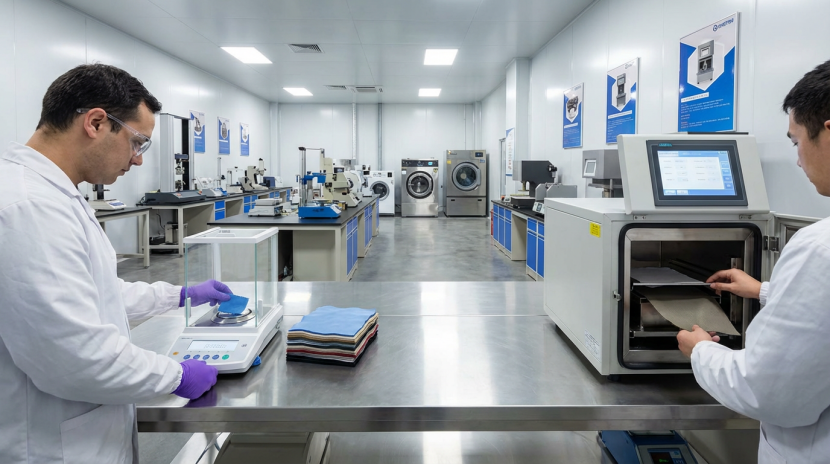
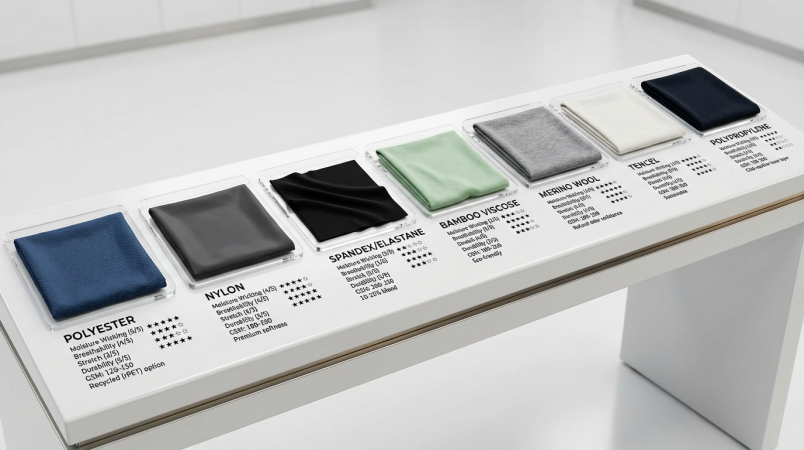
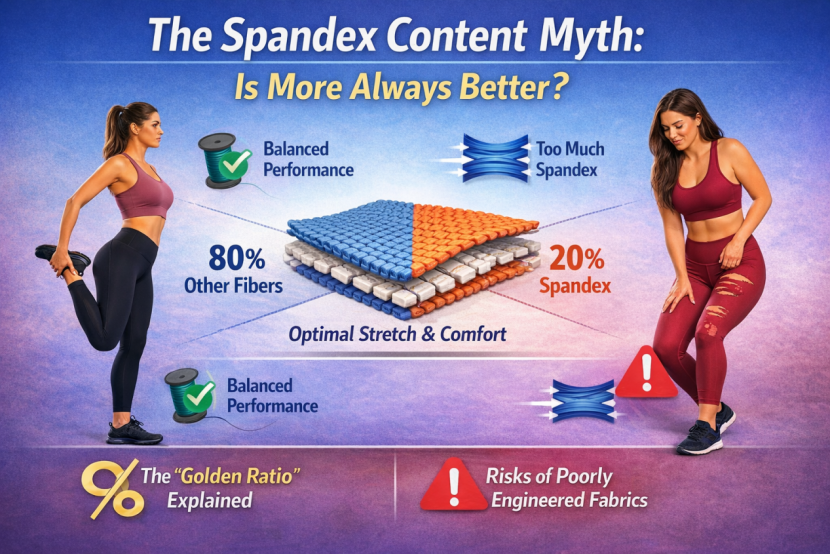
For sportswear brands and consumers, battling odor and bacteria isn’t just a comfort issue—it’s a matter of health and product performance. Rising hygiene expectations are driving demand for fabrics that can endure sweat, heat, and moisture without becoming breeding grounds for microbes.
This guide explores what makes fabric antibacterial, compares natural versus chemical treatments, and examines performance longevity, helping you choose sportswear solutions that stay fresh, सुरक्षित, and effective for longer wear.
What Makes Fabric Antibacterial?
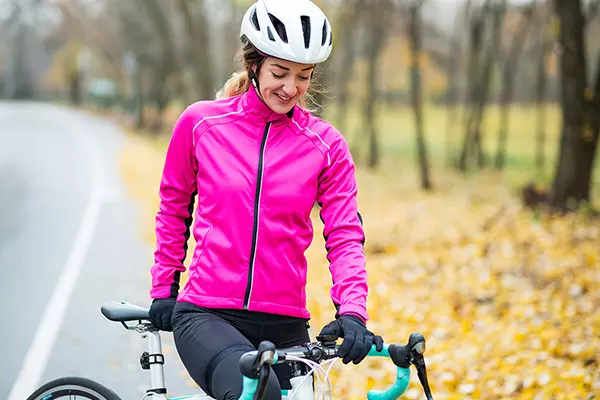
Antibacterial fabrics are made by integrating agents such as silver nanoparticles, quaternary ammonium compounds, or chitosan derivatives into or onto textile fibers, which disrupt or inhibit the growth of bacteria through mechanisms like membrane disruption, ion release, or biofilm prevention.
में खेलों का निर्माण, antibacterial fabrics play a key role in maintaining hygiene, especially for athletes and active consumers. These textiles prevent microbial growth and help reduce odors, making them ideal for antibacterial sportswear.
Key Antibacterial Agents in Fabrics
Different agents are used to achieve antibacterial effects in textiles. Each has a unique mechanism and performance profile.
- Silver Nanoparticles: Achieve up to 100% reduction in viable E. coli और S. aureus after 48 hours of incubation (AATCC 100-1999 test).
- Quaternary Ammonium Compounds (QACs): Inactivate bacteria by interacting with cell membranes; effectiveness depends on concentration and fiber binding.
- Chitosan Derivatives: Quaternized chitosan coatings significantly reduce S. aureus colonization, while native chitosan acts more on Gram-negative bacteria.
Enhancements and Durability Factors
Several methods can enhance antibacterial performance and ensure long-lasting results through multiple washes.
- Plasma Treatment: Improves deposition of antimicrobial agents such as silver nanoparticles on synthetic fibers, boosting efficacy.
- सहनशीलता: Non-leaching quaternary ammonium salt coatings maintain bactericidal activity even after 50 washing cycles.
- Biofilm Prevention: Incorporating nanoparticles like copper, zinc, silver, and gold, or using functionalized polymers, prevents bacterial adhesion and biofilm formation.
Broad-Spectrum Activity and Testing Standards
Some antibacterial fabrics provide protection beyond bacteria, targeting a range of microbes.
- Broad-Spectrum Activity: Fabrics coated with guanazole-metal complexes containing silver and zinc display activity against bacteria, fungi, and viruses.
- Testing Standards: The AATCC 100-1999 method is widely used for quantifying antibacterial efficacy in textiles.
Pros and Cons of Antibacterial Fabrics
Antibacterial fabrics are a key innovation in modern sportswear solutions, offering athletes and activewear enthusiasts improved hygiene, odor control, और आराम. तथापि, while these fabrics bring several benefits, there are also some limitations that sportswear manufacturers and consumers should consider.
Pros and Cons Table
| पहलू | पेशेवरों | दोष |
| Odor Control | Reduces bacterial growth that causes unpleasant odors, keeping garments fresher longer—an important feature in effective sportswear solutions. | Effectiveness may decrease over time and after multiple washes. |
| Hygiene & आराम | Minimizes bacterial and fungal growth, improving hygiene for sportswear, undergarments, and home textiles. | Does not eliminate all pathogens; some bacteria or viruses may survive. |
| सहनशीलता & Maintenance | Can reduce the need for frequent washing, helping maintain fabric quality and extend garment life | Antibacterial treatments can wear off, reducing long-term effectiveness. |
| Environmental Impact | Potentially lowers water and energy use due to less frequent washing. | Some chemical treatments (जैसे, silver ions, QACs) can be harmful to the environment or cause skin irritation. |
| लागत | Adds value to products by enhancing hygiene and odor resistance, appealing to brands seeking high-quality sportswear solutions. | Typically more expensive than regular fabrics, and consumers must understand the benefits to justify the cost. |
Key Takeaways
- When to Use: Antibacterial fabrics are ideal for workout clothes, fitness gear, undergarments, towels, and bed linens—items prone to moisture and frequent skin contact. They help sportswear manufacturers deliver more hygienic, गंध के लिए प्रतिरोधी, and durable products.
- When to Be Cautious: Pay attention to environmental and chemical safety, especially for sensitive skin. Choose fabrics that use natural antibacterial fibers or certified safe chemical treatments. Avoid relying solely on antibacterial claims as the main indicator of fabric quality.
Comparing Natural vs. Chemical Antibacterial Treatments
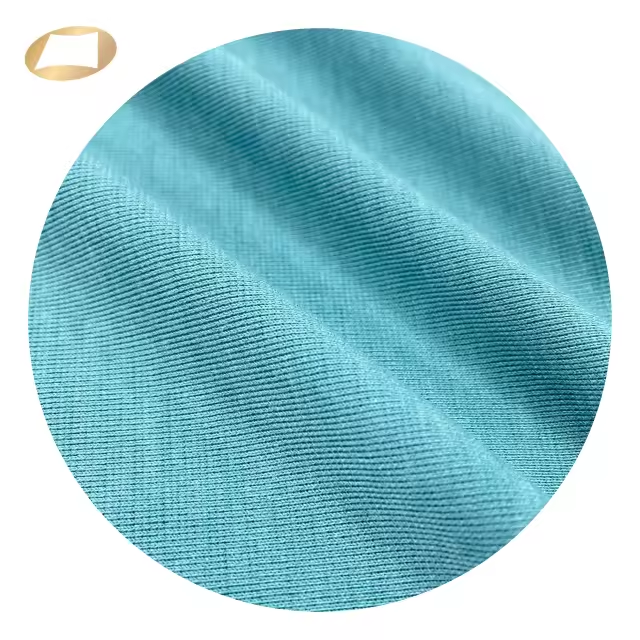
Natural antibacterial treatments tend to have lower toxicity and environmental impact than chemical agents, but often need higher concentrations or longer exposure to achieve the same bacterial reduction. Chemical antibacterials act faster and more reliably across bacteria but may raise concerns over toxicity and environmental persistence.
In sportswear manufacturing, antibacterial finishes are critical for hygiene and odor control. The choice between natural and chemical treatments affects performance, सुरक्षा, and sustainability in different ways.
Efficacy Comparison
| Agent Type | उदाहरण | Bacterial Reduction | Performance Icon |
|---|---|---|---|
| Chemical | Glutaraldehyde, Ortho-phthalaldehyde, Peracetic Acid | 100% at MIC and higher | |
| Chemical | Benzalkonium Chloride | 100% at higher concentration | |
| प्राकृतिक | Eugenol, Indole-3-carbinol | Full reduction only at higher concentration | |
| प्राकृतिक | Cuminaldehyde | Least effective; needs highest concentration |
Performance and Longevity of Treated Fabrics
Treated antibacterial sportswear fabrics can maintain over 99.999% bacterial reduction even after 50 को 100 wash cycles, with advanced nanocomposite and non-leaching coatings providing the highest durability and skin safety.
Our experience with advanced textile engineering shows that a well-designed antimicrobial treatment can withstand rigorous washing while preserving excellent performance metrics. Sportswear brands increasingly seek solutions that balance hygiene, टिकाऊपन, and wearer comfort.
Antibacterial Efficacy and Wash Durability
| कपड़ा & Treatment | Bacterial Reduction | Wash Durability | टिप्पणियाँ |
|---|---|---|---|
| Zinc Nanocomposite Textile | 99.999% after 24 hours | 100 washes | High durability and non-leaching surface |
| Quaternary Ammonium Cotton | Effective against S. aureus & E. coli | 50 washes | Maintains bactericidal activity in lab tests |
| PLCS CF Nanofiber Fabric | 99.9% initial, >80% after washing | 20 washes | Good mid-range durability |
| Other Methods | 32% को 99.999% | भिन्न | Dependent on chemistry and base fabric |
These durability profiles give product developers clear data when selecting the right antibacterial sportswear textiles for long-term use.
Additional Benefits and Safety Considerations
- Effective odor control during wear trials by inhibiting microbial growth.
- Dermatologically tested advanced nanocomposite fabrics — non-irritating and hypoallergenic.
- Antimicrobial textiles market valued at $10.43 billion in 2023, projected to hit $16.70 billion by 2032.
By focusing on both safety and performance, sportswear brands can meet the growing consumer demand for hygienic apparel. As part of our OEM and ODM capabilities, we integrate antibacterial technologies without sacrificing stretch, breathability, or design customization.
Elevate Your Sportswear Line with Precision & नवाचार
Partner with Sansan Sports to access cutting-edge manufacturing, टिकाऊ सामग्री, and seamless R&D integration. Deliver high-performance, eco-conscious apparel tailored to your brand’s vision and market demands.
पूछे जाने वाले प्रश्न
क्या यह त्वचा के लिए सुरक्षित है??
Antibacterial sportswear from Sansan Sports is engineered using skin-safe textile treatments that comply with आईएसओ और OEKO- टेक्स मानकों. This ensures no harmful residues or irritants come into contact with the skin.
The fabrics undergo rigorous dermatological testing, and in our experience, they maintain comfort during both short and extended wear without causing sensitivity or allergic reactions.
How long does it last?
Sansan’s antibacterial finishes are integrated at the fiber level, meaning they retain effectiveness for up to 50 washes under normal care conditions. This extends garment hygiene throughout its active lifespan.
Durability also depends on fabric choice — recycled polyester blends and advanced synthetics typically sustain antibacterial performance longer than natural fibers.
Are natural options better?
Natural antibacterial solutions like bamboo fibers can offer eco-friendly benefits with inherent resistance to odor-causing bacteria. These are popular for sustainable apparel projects.
Synthetic fabrics, तथापि, often achieve stronger and longer-lasting antibacterial effects due to advanced surface treatments integrated during production. The choice depends on whether your priority is maximum hygiene durability or natural fiber content.
Does it affect breathability?
Advanced antibacterial sportswear fabrics are designed so treatments do not block airflow. Sansan uses moisture-wicking yarns and mesh structures to maintain ventilation.
हमारे अनुभव में, the antibacterial technology works alongside breathability features, keeping garments fresh without trapping heat during performance activities.
Wash durability?
With correct care — cold wash and avoiding harsh detergents — antibacterial properties can be preserved well beyond 50 laundering cycles. This maintains hygiene and odor control over time.
Sansan’s fabrics are tested after repeated washes to ensure performance standards are met, making them reliable for intensive gym use or sports training.
निष्कर्ष: Keeping Sportswear Fresh and Functional
High-performing antibacterial sportswear blends advanced treatments with durable fabrics to stop microbial growth, control odor, and protect skin under intense use. The balance between chemical efficiency, natural sustainability, and wash-resistant performance enables apparel to stay hygienic while meeting consumer comfort expectations. Care practices such as gentle washes, skipping fabric softeners, and moisture-free storage safeguard these properties for the long run.
ब्रांडों के लिए, integrating proven antibacterial technologies into product lines delivers a competitive edge in a market driven by hygiene awareness and functional durability. Aligning with suppliers who can engineer treatments that last and comply with eco standards streamlines production, reduces returns, and builds buyer loyalty through performance garments that stay fresh, सुरक्षित, and ready for repeated wear.