When it comes to choosing the right fabric for activewear, especially for high-performance workouts like yoga and HIIT, nylon and polyester are two of the most popular options. These fabrics each have distinct qualities that make them better suited for different types of exercises. Polyester is known for its durability and abrasion resistance, making it a go-to for high-intensity workouts. Nylon, on the other hand, is softer and more flexible, making it a favorite for yoga wear and other activities that require a lot of movement and comfort.
In this article, we’ll dive into the differences between nylon and polyester to help you decide which is better for your needs.
Core Differences: Nylon Softness vs Polyester Durability

When it comes to choosing between nylon and polyester, the core difference comes down to softness versus durability. Nylon is known for its incredibly soft, smooth texture, which makes it feel comfortable on the skin. This is why women’s yoga wear often features nylon—it allows for full movement while feeling smooth and luxurious. On the flip side, polyester tends to be a bit stiffer but is far more durable. This makes polyester a better choice for intense, repetitive exercises like those in HIIT workouts, where durability and resistance to wear are crucial.
Abrasion Resistance: Why Polyester Wins for HIIT
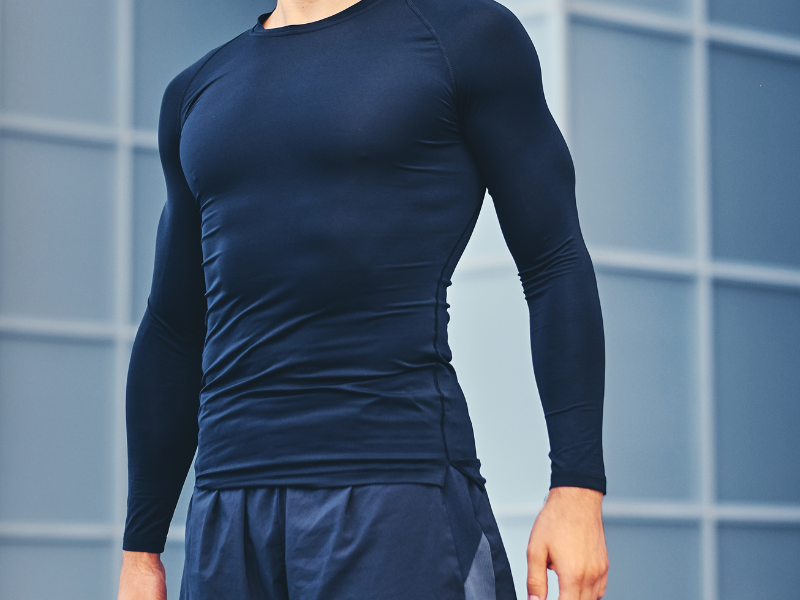
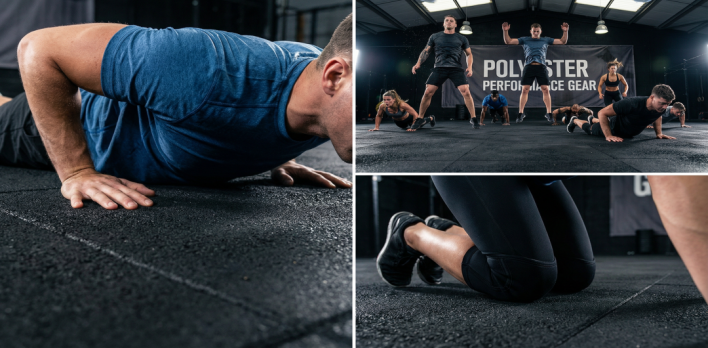
Polyester is more durable than nylon, making it the winner when it comes to abrasion resistance. HIIT (High-Intensity Interval Training) includes activities like running, jumping, and crawling, all of which can quickly wear down fabrics. Polyester holds up better under these intense conditions. It’s more resistant to abrasions and doesn’t pill as easily, making it ideal for men’s activewear clothing designed to handle frequent, high-impact movements.
Moisture-Wicking Performance
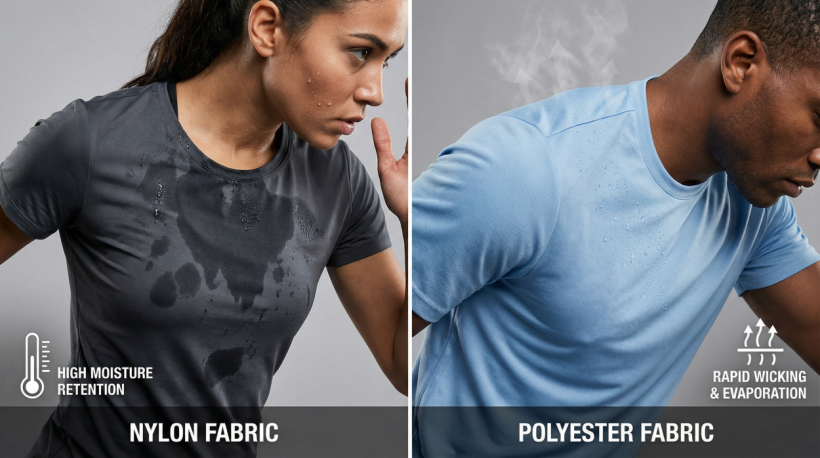
Both nylon and polyester excel at moisture-wicking, but they do so in slightly different ways. Polyester is incredibly effective at pulling sweat away from your skin and onto the surface of the fabric, where it evaporates. This makes it great for workouts where you sweat a lot, such as HIIT.
Nylon, on the other hand, has moisture-wicking properties, but it tends to hold onto moisture a little longer than polyester. While it’s still suitable for activities like yoga, where you might not sweat as much, polyester is the better choice if you’re engaging in activities that cause heavy perspiration.
Comparing Stretch and Recovery in Nylon vs. Poliestere
Stretch and recovery are key characteristics when choosing fabric for activewear. Nylon has an edge here because it has excellent stretch properties and recovers well after being stretched. This makes it perfect for yoga wear, where flexibility and comfort are essential during poses. The fabric will move with your body without becoming misshapen, providing both freedom and support.
On the other hand, polyester is also stretchy but doesn’t recover as well as nylon after being stretched. While it’s still a solid choice for HIIT workouts, it may start to lose its shape over time if it’s stretched too much during repeated high-intensity movements.
Test di traspirabilità: How Fabrics Manage Heat During Workouts
Breathability is a crucial factor in activewear, especially when you’re working up a sweat. Nylon is more breathable than polyester because it has a looser weave and allows more airflow. This makes it an excellent choice for women’s yoga wear, where comfort, flessibilità, and breathability are important during long sessions of stretching and meditation.
Poliestere, while effective at moisture-wicking, isn’t as breathable. This can be a drawback during activities like yoga, but it works well for HIIT, where maintaining moisture control and durability is more important than breathability.
How Weight and Drape Affect Your Movement
The weight and drape of fabric determine how it feels during movement. Nylon is lightweight and flows well, making it the perfect choice for garments that need to move with you—think women’s yoga wear or men’s fitness clothing for low-impact activities. It doesn’t restrict movement, so you can focus on your workout without worrying about your clothing.
In contrast, polyester is a little heavier and holds its shape more rigidly. While this makes it excellent for structured gymwear that stays in place during high-intensity workouts, it can feel a little restrictive during activities that require more flexibility.
Fabric Choices: How Top Brands Use Nylon and Polyester
Top brands in the activewear industry often mix both nylon and polyester into their collections based on the needs of the activity. Per esempio, brands like Lululemon and Athleta use nylon in their women’s yoga wear because it provides softness and stretch. Meanwhile, brands like Nike and Adidas often choose polyester for men’s fitness clothes and HIIT gear due to its durability and moisture-wicking abilities.
A Sansansunsports, we offer both nylon and polyester options, customized for your specific workout needs. Whether you’re looking for custom gymwear or premium activewear, we can help design the perfect fabric mix for your brand.
Choosing the Right Fabrics for Your Workout
So how do you choose the right tessuto for your specific activity? Here’s a quick breakdown:
For Yoga (Women’s Yoga Wear): Choose nylon for softness, stirata, e traspirabilità. It’s ideal for flexibility and comfort during your poses.
For HIIT (Men’s Fitness Clothes): Go with polyester for its durability, abrasion resistance, and moisture-wicking properties. It can handle the toughest workouts without compromising on performance.
For Gymwear (Generale): Poliestere works well for high-intensity activities, while nylon is better for activities that require flexibility and softness. make one subtitle for article base on this.
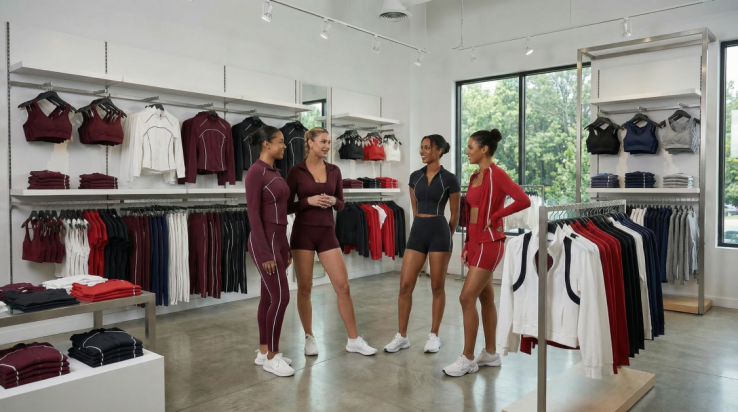
Ready to elevate your workout gear? Explore our wide range of custom nylon and polyester activewear options at Sansansunsports. Whether you need men’s fitness clothes, women’s yoga wear, or premium gymwear, we’ve got the perfect fabric solutions tailored to your needs. Contact us today to start designing your ideal activewear collection!
Domande frequenti: Nylon vs Polyester
1) Which fabric is better for sweating?
Polyester is better at wicking away moisture, making it more effective for sweaty workouts.
2) Is nylon softer than polyester?
SÌ, nylon is softer and more flexible, making it ideal for activities like yoga.
3) Can polyester be used for yoga wear?
SÌ, but nylon is usually preferred for yoga wear because it’s softer and offers more stretch.
4) Which fabric lasts longer?
Polyester is more durable and resistant to wear, making it the better choice for high-intensity activities like HIIT.