導入: The Foundation of Every Fabric
For textile technologists and apparel manufacturers, the challenge lies in producing sportswear yarns that balance durability, ストレッチ, moisture control, そして持続可能性, while staying cost-competitive in a growing global market. Fiber selection and spinning precision directly influence fabric performance, consumer satisfaction, and brand reputation.
This guide covers key spinning methods, fiber blending strategies, and innovations in sustainable yarn technology, helping industry professionals enhance sportswear quality, meet eco-standards, and optimize production efficiency for evolving market demands.
What Is Yarn Spinning?
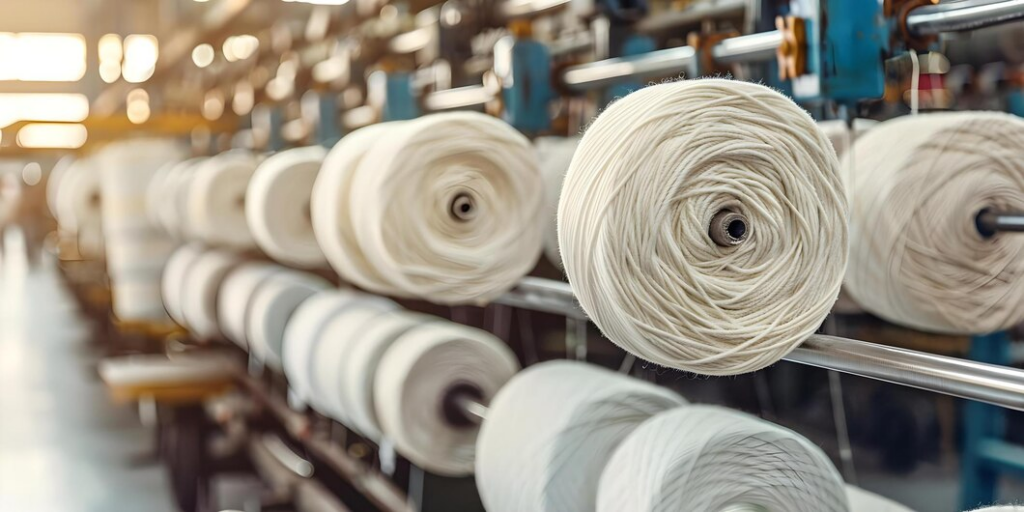
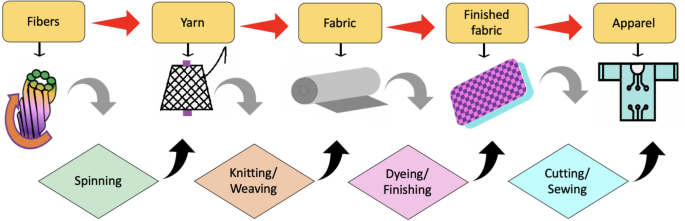
Yarn spinning is the industrial process of transforming loose fibers—such as cotton, ポリエステル, or blends—into continuous, twisted strands called yarn, which are then used for weaving or knitting fabrics. This process is fundamental to sportswear manufacturing, as it determines the yarn’s strength, texture, and performance characteristics.
In our experience working with performance textiles, yarn spinning is where the base qualities of sportswear fabrics are set. The type of spinning method chosen directly influences how a garment performs in stretch, 耐久性, and moisture management.
Key Yarn Spinning Methods
| Method | スピード / Production Rate | Yarn Count Range | 主な利点 |
|---|---|---|---|
| Ring Spinning | Spindle up to 25,000 rpm | Ne 4 to Ne 120 | ✅ Fine, high-strength yarn |
| Open-End (Rotor) Spinning | Rotor up to 120,000 rpm | Ne 6 to Ne 40 | 🚀 Efficiency above 95% |
| Air-Jet Spinning | まで 400 m/min | Ne 20 to Ne 60 | 💡 Low-hairiness yarn for blends |
Different spinning systems offer varying trade-offs between speed, yarn fineness, and texture. スポーツウェア用, the right match depends on the desired fabric performance and fiber type.
Step-by-Step Yarn Spinning Process
- Preparation: Ginning, blowing, carding, and combing to clean and align fibers.
- Drawing & Roving: Stretching fibers further and forming them into loose strands.
- Spinning: Twisting fibers into continuous yarn using drafting rollers with controlled twist levels.
- Winding: Transferring yarn onto bobbins for weaving or knitting stages.
Precise control at each stage is essential for producing yarn with consistent strength and uniformity. Poorly executed preparation or winding can compromise downstream fabric quality.
Why Yarn Spinning Quality Matters in Sportswear
- Higher twist levels increase yarn strength and elasticity — vital for compression wear and long-lasting apparel.
- Spinning method influences smoothness, hairiness, and uniformity, which in turn shape moisture management and comfort.
- Advanced technologies enable better performance and sustainability, supporting recycled and specialty fibers.
- Maintaining optimal humidity and process settings ensures batch-to-batch consistency and reliable fabric output.
Sportswear demands yarns that maintain shape, wick moisture efficiently, and endure repeated use. That level of quality begins at the spinning stage, long before fabrics are cut and sewn.
Types of Spinning Used in Sportswear (Ring, Air-Jet, Rotor)
The three main spinning technologies used in sportswear yarn production—ring spinning, rotor (open-end) spinning, and air-jet spinning—differ significantly in process speed, yarn quality, とコスト効率. Ring spinning yields the highest yarn quality but at lower speeds, while rotor and air-jet spinning offer faster production and lower costs, with distinct mechanical and performance characteristics.
In our experience working with global sportswear brands, the choice of spinning technology directly impacts production scalability, yarn performance, and the final garment’s comfort and durability.
Production Speed and Efficiency Comparison
| Spinning Method | Speed 🚀 | Labor Requirement 👷 | Efficiency ✅ |
|---|---|---|---|
| Ring Spinning | 30–40 m/min | 90 workers per 10,000 spindles | Premium quality yarn, slower output ❌ |
| Rotor Spinning | 400 m/min | Lower labor costs ✅ | Fastest production with cost efficiency ✅ |
| Air-Jet Spinning | 120–300 m/min | 36 労働者 (60% less than ring spinning) | Higher than 99% yield; saves ~30% plant area ✅ |
Yarn Quality Attributes and Mechanical Properties
- Ring Spinning: Superior strength, softness, evenness, and uniformity — best for high-end sportswear.
- Rotor Spinning: Bulkier yarns with less uniformity but higher breaking extension and abrasion resistance, suitable for knitted, cost-effective fabrics.
- Air-Jet Spinning: More rigid yarn, 20–30% lower tenacity than rotor yarns but excellent abrasion resistance, which increases with production speed.
- Rotor yarns are generally more even and flexible compared to the more rigid air-jet yarns.
Choosing the Right Spinning Technology for Sportswear
Ring spinning is ideal for premium and luxury sportswear where fabric softness, high tensile strength, and yarn uniformity are crucial. This method aligns with products that emphasize comfort, 耐久性, and premium brand positioning.
Rotor spinning suits mass-market sportswear where speed, 手頃な価格, and abrasion resistance outweigh uniform appearance. It’s often chosen by brands targeting large-volume, cost-effective production models.
Air-jet spinning works best for technical and specialty sportswear requiring enhanced abrasion resistance, quick dyeing, and distinct texture effects. Selecting the correct spinning method means balancing yarn performance, production speed, and cost against the final product’s function and market expectations.
How Fiber Blending Enhances Strength and Flexibility
Fiber blending enhances strength and flexibility in sportswear yarns by combining fibers with complementary properties—such as high-tenacity synthetics and elastic natural fibers—resulting in fabrics that outperform single-fiber materials in durability, ストレッチ, そして快適さ.
In our experience working with advanced sportswear yarn spinning technology, blending different fiber types creates a balanced fabric profile that meets the demanding needs of athletes and active lifestyles. This approach combines measurable performance gains with comfort and aesthetic benefits.
Key Performance Metrics of Fiber Blends
| メトリック | Single Fiber | Blended Fiber | Performance Gain |
|---|---|---|---|
| Tenacity | コットン 3-4 g/denier | ナイロン + コットン 7.5+ g/denier | ✅ Higher fabric strength |
| Elongation | コットン 6–10% | コットン + スパンデックス (5–10% content) | ✅ Stretch up to 600% |
| 耐久性 | Pure Cotton | コットン + ポリエステル | 🚀 Lasts 2-3x longer |
| 水分管理 | Single Fiber | 竹 + ポリエステル | 💡 Wicks 30–40% もっと早く |
| Shrinkage Resistance | Pure Wool/Cotton | Polyester Blend | ✅ Reduces shrinkage by 50% |
| Wrinkle Resistance | Pure Cotton | コットン + ポリエステル | ✅ Wrinkles 60–80% less |
| Cost Efficiency | Single Fiber Production | Optimized Blends | 💡 Cuts material costs 10–25% |
| Seam Strength | Single Fiber | Hybrid Blend | 🚀 15–30% stronger seams |
Deep Dive Into Fiber Blending Technology
By combining fibers with varied tenacity and elongation, fabric engineers can fine-tune strength and flexibility to suit sportswear performance goals. High-tenacity synthetics like nylon add durability, while elastic fibers such as spandex contribute essential stretch for active movement.
Well-engineered blends maintain the softness and breathability of natural fibers, but also deliver enhanced moisture control and wrinkle resistance. Fiber ratios are critical: more synthetics increase resilience, while higher natural fiber content ensures comfort and thermal regulation.
- Multi-component blends (cotton–polyester–spandex) deliver stretch, 形状保持, and abrasion resistance for longer garment life.
- Field tests confirm blended fabrics outperform single fibers in wear resistance, 縫い目の強度, and overall garment lifespan.
- Correctly balanced blends can address common misconceptions about reduced comfort, proving that high-performance yarns can be both functional and pleasant to wear.
Accelerate Your Sportswear Innovation with Expert Manufacturing
Partner with Sansan Sports to access cutting-edge fabric technologies, sustainable production, and agile manufacturing tailored to your brand’s needs. From small runs to large scale, we ensure superior quality, fast turnaround, and seamless global delivery.
Moisture Management and Stretch in Modern Yarns
Modern yarns for sportswear achieve superior moisture management and stretch by leveraging advanced synthetic fibers, innovative spinning techniques, and smart textile technologies, resulting in fabrics that wick sweat rapidly and provide high elasticity for unrestricted movement.
In our experience working with advanced sportswear production, fiber engineering and spinning technology have evolved rapidly to meet athletic performance needs. The segment is shaped by market growth, material innovation, and sustainability targets that influence sourcing and design decisions.
Market Size and Key Yarn Types
| 📊 メトリクス | データ | 💡 Insight |
|---|---|---|
| Moisture Wicking Fabrics Market (2025) | $3.01 十億 | 🚀 Projected to reach $3.86 十億 による 2029 で 6.4% CAGR |
| Textile Yarn Market (2025) | $12.2 十億 | ✅ Polyester holds 57% of fiber production |
- Synthetic performance fibers: ポリエステル, ナイロン, スパンデックス
- Blends with natural fibers for balanced comfort
- Specialized coated moisture-wicking yarns for enhanced sweat control
Technologies Behind Moisture Management and Stretch
- Synthetic fibers like polyester and nylon transport sweat away from skin and support fast evaporation via engineered fiber structures.
- Innovative spinning methods (microfilaments, cross-sections) increase capillary action and airflow.
- Stretch performance uses spandex and new spandex-free yarns such as Unifi Integr8™ for combined elasticity, better moisture control, そして持続可能性.
- Smart yarns with conductive threads (copper/silver) track moisture and movement in real time.
These technologies allow sportswear to maintain comfort over extended use, especially in intense training conditions. Advanced spinning and yarn construction enhance both breathability and flexibility.
Sportswear brands are increasingly integrating sustainable yarn sourcing into their production strategies. Sansan Sports applies recycled, advanced textiles while meeting ISO, BSCI, and OEKO-TEX standards to align with global regulations and market expectations.
Quality Control in Yarn Production
Quality control in yarn production relies on statistical methods such as control charts and coefficient of variation (履歴書) to monitor process stability, 欠陥を最小限に抑える, and ensure compliance with customer specifications. Automated and manual monitoring systems track yarn count, strength, and hairiness to maintain consistent quality and reduce waste.
In our experience with Sportswear Yarn Spinning Technology, maintaining consistent yarn performance is essential for producing high-quality sportswear fabrics. This allows sportswear brands to meet both durability and comfort expectations.
Statistical Quality Control Metrics
Advanced manufacturers use statistical tools to monitor yarn uniformity over time. These metrics help detect variations early, enabling prompt adjustments and reducing waste.
| 📊 メトリクス | Specification | Purpose |
|---|---|---|
| Control Chart Limits | ±3σ from mean (UCL = Mean + 3σ, LCL = Mean – 3σ) | Tracks process stability |
| 変動係数 (履歴書) | 3.0% – 5.0% typical range | Indicates yarn uniformity |
| Sample Sizes | Xbar-R: 5–10 samples, Xbar-S: 10+ samples | Improves data accuracy |
Process Specification and Capability
Setting correct specification and capability limits ensures that yarn meets strict performance criteria for sportswear applications. This is vital for both comfort and durability.
| 🧵 Parameter | 価値 | Industry Target |
|---|---|---|
| Standard Count (24/1 example) | 標準: 24.0, UCL: 24.3, LCL: 23.7 | Keep yarn within control limits |
| Fault Tolerance | ±10% of base value | Defines acceptable defect rates |
| Process Capability (CPK) | ≥ 1.33 | Represents stable high-quality output |
| DPMO | < 1,000 | Achieved by top mills |
Automation and Sampling Practices
Automation accelerates quality checks, reduces human error, and improves production efficiency in sportswear yarn spinning lines.
- Weekly or per batch sampling with 50+ samples per department for reliable data.
- Automated inspection reduces manual labor by up to 70%.
- Real-time monitoring detects hairiness, loops, and protrusions, minimizing waste.
よくある質問
Which spinning method is best for sportswear?
For performance-focused sportswear yarn spinning technology, the most widely preferred method is air-jet spinning. It delivers smooth, compact yarn with high strength, making it ideal for moisture-wicking fabrics used in activewear.
Ring spinning can also be used when brands seek enhanced elasticity and a softer hand feel. 私たちの経験では, the choice often depends on whether durability or comfort is the top priority in the garment’s intended use.
What makes air-jet spinning eco-friendly?
Air-jet spinning uses high-velocity air streams to produce yarn, which eliminates the need for extensive mechanical twisting and reduces energy consumption by up to 20%.
It also supports the use of recycled fibers and blends, helping manufacturers like Sansan Sports integrate sustainable materials such as recycled polyester and organic cotton into sportswear production without compromising fabric performance.
How does yarn blending affect comfort?
Yarn blending allows textile technologists to combine fibers with different properties, balancing softness, ストレッチ, moisture control, そして耐久性. 例えば, blending polyester with spandex can boost elasticity while maintaining high tensile strength.
In sportswear, common blends include polyester-cotton for breathable performance, bamboo-polyester for antibacterial benefits, and nylon-spandex for a lightweight but supportive feel. Choosing the right blend ensures comfort during prolonged wear and intensive activity.
結論: Spinning the Future of Activewear
Advancements in yarn spinning—from precision ring spinning to high-efficiency rotor and air-jet systems—combined with engineered fiber blends, moisture-control innovations, and rigorous quality standards, are reshaping performance textiles.
For manufacturers, strategically selecting the right spinning method and fiber mix can boost product performance, protect margins, and accelerate market entry. Aligning with partners who integrate sustainable practices and adaptable production models ensures your activewear meets both technical specifications and brand values, positioning your business to compete confidently in a rapidly transforming sportswear market.
To translate advanced yarn technology into market-ready products, working with experienced custom activewear manufacturers is key. Sansan Sports は信頼される米国のスポーツウェア メーカーです, also supporting global brands seeking reliable activewear manufacturers Australia solutions and high-quality output from a proven seamless clothing manufacturer. 訪問 https://sansansports.com/ to discover how we help brands build next-generation activewear with speed, 精度, and confidence.