The importance of QC in apparel sourcing
For apparel brands sourcing from China, inconsistent product quality, defect risks, and variable supplier standards can lead to costly returns and damage to brand reputation. Implementing rigorous quality control protocols is essential to detect and prevent issues before products reach customers.
This guide covers AQL inspection levels for balancing cost and quality, when to engage third-party inspections at different production stages, and how to use QC reports with corrective actions, helping importers and QA managers ensure consistent compliance and protect brand integrity.
The importance of QC in apparel sourcing
Quality control (Controle de qualidade) is critical in apparel sourcing because it directly impacts product consistency, brand reputation, and cost efficiency. Without rigorous QC protocols, defects reach customers, leading to returns, reputation damage, and lost market share—particularly important when sourcing from overseas manufacturers where quality variability is higher.
Em nossa experiência, quality control acts as a safeguard in apparel sourcing, ensuring every piece meets defined standards before reaching customers. It builds trust with retailers and end consumers while keeping production costs stable through defect prevention.
Quality Control Standards and Metrics
- Industry QC Standard (AQL Range): 0.1% para 4% defect tolerance.
- Target of 95%+ defect-free products to ensure quality.
- Key metrics: Coefficient of Variation (CV), Control Charts, Chi-square tests, CPK, DPMO, and AQL sampling plans.
- Inspection checkpoints: raw material input, corte, de costura, ironing, e embalagem.
- Compliance standards: ISO 11462-1:2001, ASTM D629-15, ISO 2859-1, MIL-STD-105E.
Why Quality Control Matters in Apparel Sourcing
- Prevents defects that could damage brand reputation and lead to costly recalls.
- Optimizes production processes to reduce inefficiencies and waste.
- Ensures compliance with regulatory and retailer standards, building customer confidence.
- Critical for overseas sourcing where variability and communication challenges exist.
Balancing Cost and Quality: The Role of AQL Levels
| Nível AQL | Impact on Inspection Cost | Impact on Defect Rate |
|---|---|---|
| 0.1% – 0.5% ✅ | Higher cost due to stricter inspections | Lowest defect rate, premium positioning |
| 2% – 4% ⚠️ | Lower inspection costs | Higher defect acceptance risk |
Brands select AQL levels based on positioning, market expectations, and customer tolerance. A balanced approach can contain costs while protecting essential quality benchmarks.
Statistical Quality Control Methods in Apparel Manufacturing
- Statistical Process Control (SPC) monitors cutting, de costura, and finishing in real-time to intercept defects quickly.
- Acceptance Sampling inspects finished batches prior to shipment as a final safeguard.
- Modern factories blend both methods for comprehensive defect prevention.
- Continuous monitoring generates large data sets that require skilled interpretation.
Common Challenges in Apparel Quality Control
- Variability in raw materials such as thread, tecido, and trims from different suppliers.
- Multi-stage production risks: corte, de costura, finishing, embalagem.
- Offshore coordination delays in corrective actions due to communication gaps.
- Data overload from continuous monitoring needing expert analysis.
Best Practice Framework for Quality Control
- Three-tier inspection: incoming material checks, in-process inspections, final random sampling.
- Use of control charts during production to identify defects quickly.
- Third-party inspections with clear documentation to verify compliance.
- Alignment with international standards to ensure reliability and legal safety.
Understanding AQL and inspection levels
AQL (Limite de qualidade aceitável) is a statistical quality control method that defines the maximum number of acceptable defects in a product batch, using three main inspection levels—Level I, II, and III—to determine sample size and scrutiny based on product criticality and risk. These levels help importers and manufacturers systematically balance inspection rigor, custo, and quality expectations.
In apparel sourcing and manufacturing, understanding AQL inspection levels is essential for balancing quality standards with operational efficiency. Importers can use these levels to set clear expectations with suppliers, reducing disputes and improving consistency.
What is AQL and Its Purpose
AQL stands for Acceptable Quality Limit, a statistical method used to determine the maximum allowable number of defects in a batch of products. Instead of inspecting every garment, the method relies on sampling plans to calculate how many units to check.
This approach helps maintain product quality while controlling inspection costs and minimizing delays. Em nossa experiência, it allows brands to define standards that match their quality goals and supplier capabilities.
- Helps balance quality control with operational efficiency
- Avoids excessive inspection time and expense
- Enables clear defect thresholds before shipment approval
Inspection Levels: Level I, II, and III
Inspection levels determine sample size and level of scrutiny. The right choice depends on product risk, criticality, e orçamento.
- Level I: Smallest sample size, highest scrutiny — ideal for high-risk products like safety gear.
- Level II: Medium sample size — standard for most consumer goods; balances accuracy and speed.
- Level III: Largest sample size, lowest scrutiny — used for low-risk products where speed and cost savings are key.
Sample Size and Defect Acceptance Examples
| Inspection Level | Sample Size | Acceptable Defects | Reject at |
|---|---|---|---|
| ✅ Level I | 80 unidades | Até 5 | 6 |
| ✅ Level II | 200 unidades | Varies by defect category | - |
| 🚀 Level III | 315 unidades | Até 14 | 15 |
- Critical defects: AQL 0.0 (none tolerated)
- Major defects: Typically AQL 2.5
- Minor defects: Typically AQL 4.0
Deep Dive: Strategic Use and Common Misconceptions
Choosing the right inspection level is a strategic decision. It should be based on product type, market positioning, and supplier track record.
- Level I for items where even small flaws are unacceptable (por exemplo, children’s apparel, protective gear).
- Lower AQL values like 1.0 mean stricter quality but raise inspection costs and risk of delays.
- Higher AQL values like 4.0 allow more defects, reducing inspection time but increasing risk for premium products.
Brands often begin with stricter inspections for new suppliers, then adjust after consistent performance. Em nossa experiência, requiring suppliers to run full internal checks and follow ISO 2859-1 is key for transparency.
When to engage third-party inspection – pre-production, in-line, final
Engage third-party inspection at three critical stages: pre-production (before manufacturing begins), in-line (during production, typically at 20-50% completion), and final (pre-shipment, after production is complete). Each stage targets specific risks and quality checkpoints to ensure compliance, minimize defects, and protect brand reputation.
In our experience working with apparel brands sourcing from China, the right timing for independent inspections directly impacts quality control effectiveness. Each stage addresses unique risks in sportswear and vestuário de desempenho fabricação.
Pre-production Inspection
Pre-production inspection occurs before mass manufacturing starts. It focuses on preparation, ensuring that every input meets specifications for a flawless production process.
- Conducted before manufacturing starts
- Checks raw materials, components, and factory preparedness
- Prevents large-scale production failures by catching issues early
- Ensures materials and machinery meet specifications for smooth production
For sportswear, this stage is vital to confirm fabric composition, stretch performance, and machinery calibration before sewing begins.
In-line Inspection
In-line inspection is performed during production, typically when 20-50% of the order is complete. It enables manufacturers and QC teams to react quickly to deviations.
- Detects deviations in color, tamanho, or structural integrity in real time
- Allows timely corrections before defects spread across the whole batch
- Supports ongoing quality control to maintain production standards
Em fabricação de roupas esportivas, this may involve checking sublimation print alignment, seam strength, and stretch recovery mid-production.
Inspeção Final
Final inspection is the last checkpoint before goods leave the factory. It verifies both the product and packaging against buyer requirements and global standards.
- Conducted after production finishes, before shipping
- Verifies product quality, embalagem, and compliance with AQL standards
- Minimizes risk of defective goods reaching customers
- Protects brand reputation by ensuring final products meet quality expectations
Para apparel importers, this step is essential to confirm logo placements, size labeling accuracy, and compliance with AQL 2.5 or brand-specific inspection levels.
Comprehensive Quality Control Strategy
Each inspection stage targets different types of risks. When combined, they form a robust quality assurance system across the entire production cycle.
- Pre-production, in-line, and final inspections provide thorough oversight
- Helps importers and QA teams maintain consistent quality throughout manufacturing
- Supports brand integrity and reduces costly recalls or disputes
Brands working with Sansan Sports benefit from integrated QC workflows that match international standards, ensuring performance apparel meets expectations in durability, ajustar, and design precision.
Scale Your Activewear Brand with Expert Custom Manufacturing
Leverage Sansansun’s dual-factory production and in-house design expertise to launch high-quality, trend-driven custom activewear with flexible minimum orders. Experience streamlined collaboration, materiais sustentáveis, and rapid delivery tailored to growing brands worldwide.
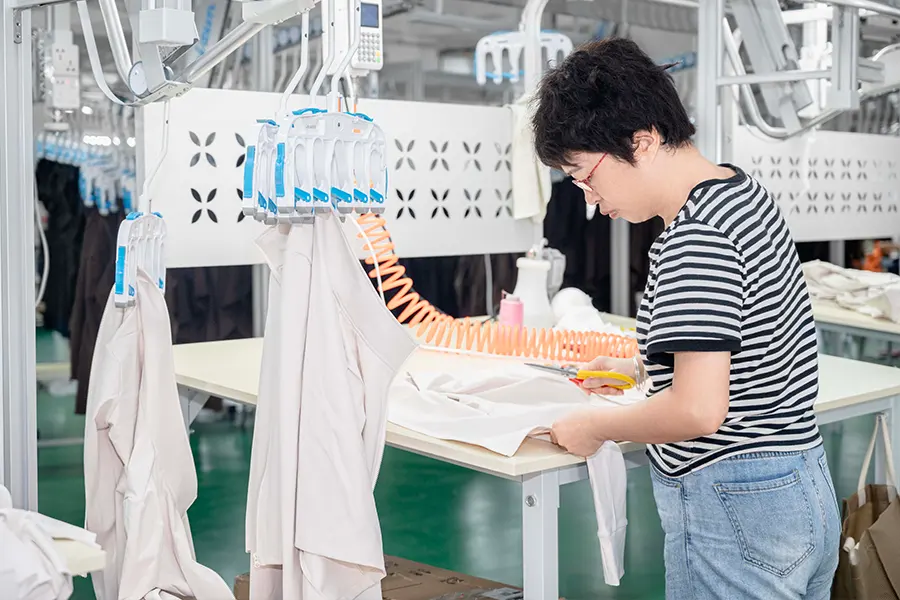
Common quality issues in Chinese apparel manufacturing
Common quality issues in Chinese apparel manufacturing include inconsistent product quality, poor quality assurance at the start of production, lack of robust quality control post-production, and unreliable input materials. Many suppliers do not strictly adhere to international production standards, leading to defects and variability in finished garments.
When sourcing apparel from China, importers often face recurring quality control challenges. These issues impact both product performance and long-term brand reliability, making structured inspections and supplier audits essential.
Prevalent Quality Issues in Chinese Apparel Manufacturing
- Inconsistent adherence to international production standards causes stitching errors, color mismatches, and sizing issues.
- Gaps in quality assurance protocols at production start allow early defects to persist through the entire run.
- Lack of comprehensive post-production quality control can result in variable batch quality.
- Variability in raw material sourcing impacts garment durability and finish.
Em nossa experiência, these problems often stem from fragmented QC processes and insufficient investment in training and supervision. Regular in-line inspections and AQL-compliant sampling can help identify issues before large-scale production is complete.
Industry Data and Sourcing Trends
| 📊 Métrica | 2026 Data | 2018 Data | Tendência |
|---|---|---|---|
| US fashion companies sourcing less than 10% from China | 43% | 18% | ❌ Decline in sourcing |
| Buyers with China as top supplier | 40% | - | ❌ Majority shifted to other regions |
| Planned reduction due to quality & sourcing risks | 80% | - | ⚠️ Significant risk-driven shift |
| Single sample inspection reliability | Often fails | Often fails | ⚠️ Persistent challenge |
This data reflects a steady migration toward alternative sourcing hubs, with quality assurance concerns strongly influencing procurement strategies.
Critical Perspective on Quality Control Challenges
Many suppliers prioritize speed and cost over rigorous quality control, which frequently results in defects and variability. This trade-off can severely impact brand reputation.
- Absence of standardized production processes leads to batch-to-batch inconsistency, even within the same factory.
- Reliance on single sample inspections does not accurately represent a manufacturer’s overall QC capabilities.
- Robust independent quality audits, detailed inspection protocols, and close supplier communication are essential for long-term consistency.
To mitigate these risks, brands should enforce structured AQL levels for inspections, commission third-party reports, and adopt a multi-stage QC approach across sampling, in-line production, and post-production.
How U.S./EU buyers decide accept/reject
NÓS. and EU buyers decide to accept or reject apparel shipments from China mainly based on third-party inspection reports, AQL sampling results, and compliance with international quality standards. Detailed inspection certificates and outcomes of audits strongly influence acceptance rates.
In our experience working with international apparel brands, acceptance decisions are driven by standardized quality metrics and verified audits. For shipments from China, buyers place heavy emphasis on impartial inspection data to avoid costly disputes.
Inspection and Audit Trends
| 📊 Métrica | Desempenho | Region/Scope |
|---|---|---|
| ❌ U.S. Buyer Inspection/Audit Demand in China (2º trimestre 2025) | -24% YoY | China |
| 🚀 U.S. Buyer Inspection/Audit Demand in Southeast Asia (2º trimestre 2025) | +29% YoY | Southeast Asia |
| 🚀 U.S./EU Inspection Demand in China (3º trimestre 2024) | +21% YoY | China |
| 🚀 Textiles/Apparel Inspection Volumes (3º trimestre 2024) | +23% YoY | China |
| ✅ Scheduled Inspections Share | 95% of total | Global |
| ✅ Foreign Inspections Share | 80% of total | EU/EEA, U.S., Switzerland |
| 🚀 Global Inspection Market Size (2024) | $15.52 bilhão | Mundialmente |
| 🚀 Europe TIC Market (2023) | $55.5 bilhão | Europa |
| ✅ U.S. TIC Revenue Share (2024) | 25%+ | United States |
Buyers in these regions consistently favor impartial third-party inspections to ensure compliance, mitigate risk, e manter a reputação da marca.
Acceptance Criteria and Inspection Practices
- Buyers apply AQL 2.5 for major defects when judging shipment quality.
- Shipments failing to meet these thresholds are rejected or require rework before acceptance.
- Third-party inspection reports covering workmanship, measurements, rotulagem, and packaging are mandatory.
- Scheduled inspections dominate, leading to more follow-ups and proactive quality control.
- Unannounced audits are used to prevent manipulation and ensure compliance.
- Digital tools and analytics speed up buyer decisions and keep audit trails for regulatory needs.
These measures allow U.S./EU buyers to maintain strict control over imports from China while ensuring consistent quality standards are met.
Challenges and Best Practices in Buyer Decisions
- Passing one inspection does not guarantee acceptance — multiple checks are common.
- Buyers can reject goods if post-shipment quality issues arise.
- Robust supplier vetting and ongoing third-party oversight reduce disputes.
- Clear contracts defining quality and acceptance criteria lower risks.
- Proactive communication supports smoother acceptance outcomes.
- Multiple inspection methods with timely corrective action improve product consistency.
By combining contractual clarity, ongoing oversight, and diversified inspection tactics, importers can reduce delays and protect brand equity.
Working with QC reports & corrective action
Working with QC reports and corrective actions in fabricação de vestuário involves systematically documenting quality findings, analyzing root causes of defects, and implementing targeted corrective measures to prevent recurrence and ensure compliance with brand standards.
In apparel sourcing from China, QC reports and corrective actions help maintain consistent quality and brand compliance. We integrate these processes deeply into our manufacturing workflow to ensure that each product meets set specifications before shipment.
Typical QC Report Components
Em nossa experiência, a comprehensive QC report captures all critical inspection details. This allows traceability and supports effective decision-making.
- Product description, inspection date, and inspector name establish the inspection context.
- Batch or lot number links to the production run for complete traceability.
- Defect types and counts record the quality issues found during inspection.
- AQL (Nível de qualidade aceitável) results indicate if the batch meets set thresholds.
- Overall pass/fail status summarizes the inspection outcome.
- Photos of defects provide visual evidence for review and analysis.
Corrective Action Steps in Apparel QC
Corrective actions aim to eliminate root causes of defects, not just surface symptoms. This approach improves long-term production quality and compliance.
- 💡 Perform root cause analysis to identify underlying reasons for defects.
- 📝 Develop an action plan outlining specific corrective measures.
- 📅 Set an implementation timeline to ensure timely resolution.
- 🔍 Verify effectiveness through re-inspection and monitoring post-action results.
- 📂 Update documentation to reflect changes and maintain audit trails.
Key Quality Metrics and Benchmarks
Measuring QC performance requires tracking specific KPIs and comparing them to industry benchmarks. This helps QA teams evaluate supplier efficiency and quality consistency.
| Métrica | Descrição | Benchmark |
|---|---|---|
| ⚠️ Defect rate (%) | Frequency of detected faults | Abaixo 2% is considered excellent. |
| ✅ First-pass yield (%) | Proportion passing initial inspection | 95%+ is ideal in apparel. |
| 🔄 Rework rate (%) | Percentage requiring corrections | Abaixo 5% keeps costs low. |
| 📢 Customer complaint rate (%) | Issues reported by buyers | Less than 1% is a strong indicator. |
| 🚀 On-time corrective action closure rate (%) | Efficiency in resolving issues | Average closure time is 7–14 days. |
Deep Dive: Challenges and Best Practices
Managing QC reports and corrective actions can be complex when dealing with multiple suppliers and diverse product categories. One key challenge lies in ensuring consistent report formats aligned with AQL standards across all partners.
- Standardized QC reports aligned with AQL ensure clarity and comparability across suppliers.
- Common apparel defects: stitching errors, fabric flaws, color mismatches, and sizing problems.
- Effective corrective actions address systemic issues, including supplier quality or flawed process design.
- Integrating QC data into Quality Management Systems supports trend analysis and continuous improvement.
- Using digital tools and cloud platforms streamlines reporting, tracking, and compliance with ISO 9001 and BSCI standards.
By combining these practices with Sansan Sports’ full-service manufacturing workflow, brands can safeguard quality while maintaining speed and flexibility in supply chains.
Checklist for your QC process
A comprehensive QC process checklist for apparel sourcing from China should cover incoming material verification, equipment calibration, in-process and post-production inspections, packaging checks, documentation, and continuous improvement actions to ensure products consistently meet AQL and client standards.
When sourcing apparel from China, an organized QC process helps reduce risks and ensure compliance with brand and regulatory requirements. Our experience shows that breaking QC into specific stages makes it easier to detect issues early.
Incoming Materials Inspection
Raw materials determine the foundation of apparel quality. Before production, every incoming batch should meet your technical specifications.
- Verify adherence to material specifications, including dimensions and composition.
- Check supplier documentation and certifications such as ISO or lot numbers for authenticity.
- Inspect materials for any damage or contamination that could affect product quality.
Equipment Calibration and Maintenance
Consistent machine performance ensures accuracy and operator safety in manufacturing. Scheduled upkeep prevents costly production issues.
- Calibrate machinery every 3 para 6 months following manufacturer guidelines.
- Regularly inspect for wear, replacing parts as necessary to prevent disruptions.
- Ensure safety features like guards and interlocks are functional to protect operators.
In-Process Control and Testing
This stage focuses on monitoring production parameters to maintain product consistency and prevent defects from reaching later stages.
- Monitor temperature, pressão, and speed within specified tolerances throughout the process.
- Adhere strictly to standard operating procedures at every step.
- Conduct daily checks at critical control points to catch deviations early.
Finished Product Inspection
Final inspections verify product functionality and appearance before shipment. Using AQL standards ensures an objective quality benchmark.
- Perform random sampling inspections using acceptable quality level (AQL) 2.5 as the default for apparel.
- Check for appearance defects, precisão dimensional, and functional performance.
- Document inspection results and ensure corrective actions for any non-conformities.
Embalagem, Rotulagem, and Documentation
Accurate packaging and labeling protect product integrity and ensure smooth customs clearance. Good records support full traceability.
- Verify the accuracy of barcodes and labels ensuring 100% scan rates.
- Inspect packaging integrity for damage or errors to prevent shipment issues.
- Maintain thorough records of inspections, deviations, and corrective actions for traceability.
Continuous Improvement Practices
Long-term quality control depends on learning from inspection data and adapting processes to prevent repeat issues.
- Analyze defect and inspection data monthly to identify trends.
- Implement corrective and preventive actions within 2 weeks of identifying issues.
- Regularly update QC checklists to reflect process changes, regulatory updates, and lessons learned.
Checklist for your QC process
Effective apparel sourcing from China hinges on disciplined quality management at every stage. Combining AQL-driven inspections, independent third-party oversight, and structured corrective actions ensures defects are caught early and standards are consistently met. The practices outlined—from pre-production checks to continuous improvement—create a closed loop that strengthens supplier accountability, safeguards brand reputation, and reduces costly rework.
Applying this checklist as part of a robust sourcing strategy positions buyers to minimize risk while enhancing margin control. By formalizing QC expectations, aligning them with global benchmarks, and maintaining clear documentation, importers can build stronger supplier relationships and secure reliable output. Partnering with teams versed in international QC standards streamlines execution, giving brands confidence in every shipment and freeing resources to focus on market growth.