When designing activewear, particularly leggings, one of the most important decisions manufacturers face is fabric weight. You’ll often come across terms like 220gsm or 300gsm in the product descriptions. But what do these numbers really mean, and how does fabric weight impact your product?
In this article, we’ll explore the science of GSM (grams per square meter), how it affects the performance of leggings, and why choosing the right fabric weight matters for squat-proof performance, durability, and comfort. Whether you’re an activewear manufacturer or a sportswear brand, understanding GSM will help you make the best choices for your products.
The GSM Factor: Impact of Fabric Weight on Legging Performance
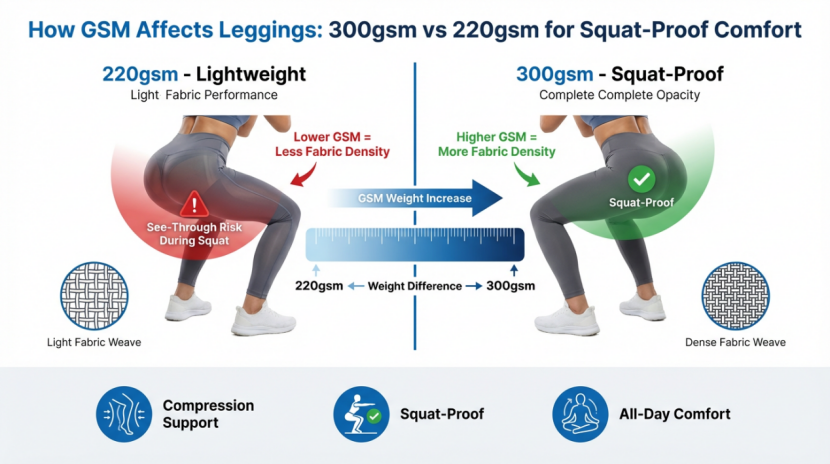
GSM (grams per square meter) refers to the weight of the fabric, and it plays a huge role in how leggings perform. For activewear manufacturers like Sansansunsports, understanding the significance of GSM allows us to produce products that meet the needs of your target market, from high-performance sports leggings to everyday athleisure.
*220gsm fabrics are lighter, more breathable, and provide stretch, making them great for low-impact activities like yoga, pilates, or lounging. These fabrics tend to feel softer against the skin and offer a higher range of motion.
*300gsm fabrics are thicker and more compressive, offering support and structure. These fabrics are ideal for intense workouts or sports where durability and squat-proof performance are crucial.
When you compare fabrics based on GSM, it’s clear that weight is one of the most critical factors in determining comfort, performance, and appearance.
Fabric Density and Compression Science
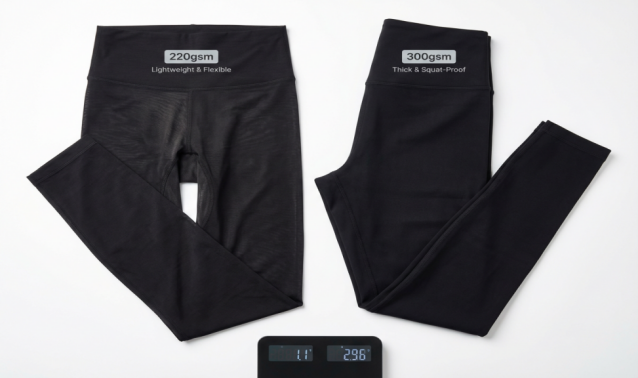
The density of the fabric is one of the key factors that affect its performance. A fabric’s GSM directly influences how much compression and support it provides. For example:
*220gsm fabric is generally more flexible and breathable, ideal for low-impact activities. It has more stretch, which makes it comfortable for exercises like stretching, yoga, or pilates.
*300gsm fabric is denser, providing more compression, which helps support muscles during high-intensity workouts. It keeps the leggings in place during squats, lunges, and other movements, ensuring a squat-proof fit.
For activewear manufacturers, choosing the right density means finding the sweet spot between comfort, flexibility, and support. Higher GSM fabrics like 300gsm provide that extra structure needed to ensure your leggings perform well during intense exercises.
Real-World Squat Tests by GSM Category
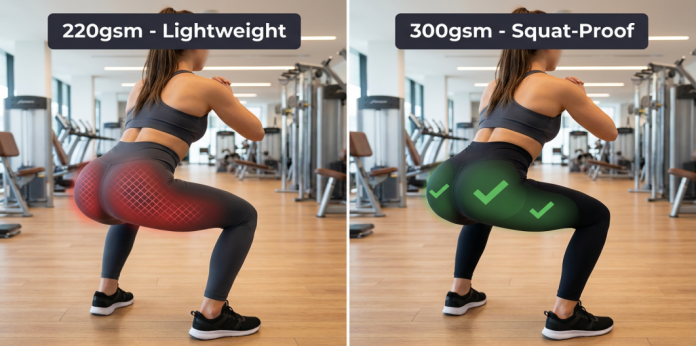
Squat-proofing is a crucial aspect of leggings, especially for sportswear brands catering to active customers. Fabrics with higher GSM are less likely to become see-through when stretched. Here’s how different GSM fabrics perform during a real-world squat test:
*220gsm leggings: While soft and comfortable, these fabrics may not hold up during deep squats or lunges. The fabric can stretch too much, becoming translucent, especially in areas like the waistband or thighs.
*300gsm leggings: These fabrics provide more compression and structure, ensuring that the leggings stay opaque, even during the deepest squats. The added density helps prevent any embarrassing see-through moments.
For activewear manufacturers, it’s important to ensure that your leggings pass the squat test before releasing them to customers. Consumers demand squat-proof leggings that perform well under pressure.
Premium vs Budget Leggings: GSM Breakdown
When comparing premium versus budget leggings, the difference in GSM can be a deciding factor in terms of performance and price.
*Premium leggings (300gsm): These leggings are made from high-quality fabrics that offer superior compression, support, and durability. They provide better muscle support and are more likely to remain squat-proof. While they may cost more, they are an excellent investment for sportswear brands targeting high-performance customers.
*Budget leggings (220gsm): While more affordable, budget leggings made from lighter fabrics are less durable and may not provide the same level of compression. These fabrics are great for less demanding activities but might not hold up during intense training or workouts.
Choosing the right fabric for your leggings depends on your target market. Higher GSM fabrics are an investment in quality and longevity, ensuring that your brand stands out in the competitive activewear market.
How Manufacturers Game the GSM Numbers
Not all activewear manufacturers are transparent about the GSM of their fabrics. Some brands may inflate the GSM number to make their products seem more premium than they are. This can lead to issues like fabric snagging, poor durability, or the fabric being too stiff or uncomfortable.
To ensure you are selecting quality fabrics for your leggings, always check the composition and actual performance of the fabric. Look for reliable suppliers that provide transparency about the materials they use and the GSM of their fabrics.
Consumer Guide: Ideal GSM for Your Activity
Choosing the right GSM depends on the intensity of the activity. Here’s a quick guide to help you select the ideal fabric weight for your leggings:
*220gsm: Best for low-intensity activities like yoga, pilates, or walking. These leggings are lightweight, breathable, and flexible.
*250-280gsm: Suitable for moderate activities like running, cycling, or fitness classes. These leggings offer a good balance of comfort and compression.
*300gsm: Ideal for high-intensity workouts like CrossFit, weightlifting, or outdoor activities. The thicker fabric provides muscle support, compression, and ensures that the leggings are squat-proof.
As an activewear manufacturer, choosing the right GSM for your leggings ensures that they are comfortable, durable, and perform well during your customers’ preferred activities.
Maintenance Tips for High-GSM Leggings
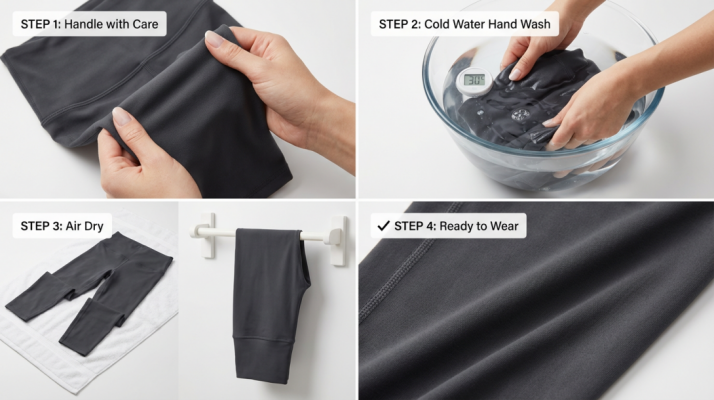
To extend the lifespan of your 300gsm leggings, here are some maintenance tips:
-Avoid fabric snagging: High-GSM fabrics can be more prone to snagging on rough surfaces. Handle your leggings carefully to avoid this issue.
-Wash in cold water: Washing high-GSM fabrics in cold water helps preserve their elasticity and prevent the fabric from losing its shape over time.
-Air dry: Avoid putting leggings made from 300gsm fabric in the dryer, as heat can damage the fibers. Instead, air dry your leggings to maintain their structure and elasticity.
Proper care will ensure your sportswear brands produce long-lasting, high-quality leggings that your customers will love.
Comparing Suppliers by Actual GSM Performance
When choosing an activewear manufacturer, don’t just rely on the GSM number listed on the fabric label. You should compare actual product performance, including opacity, compression, and how the fabric holds up after multiple washes.
-Look for reliable suppliers that test the durability and opacity of their fabrics to ensure that they pass the squat test and won’t lose their shape or become see-through.
-Check for customer feedback and product reviews to see how the leggings perform over time. This will give you a better idea of whether the fabric lives up to its GSM claim.
Custom Activewear Manufacturing: Your Vision, Realized.
Frequently Asked Questions About Fabric Weight
Q1: What’s the difference between 220gsm and 300gsm fabrics in terms of durability?
A: 300gsm fabrics are more durable, providing better compression, support, and squat-proof performance. They are perfect for high-intensity workouts, while 220gsm fabrics are ideal for lighter activities.
Q2: Can 300gsm fabrics still be breathable?
A: Yes, 300gsm fabrics can be breathable if they are made from moisture-wicking materials like polyester or spandex. However, they may feel warmer than lighter fabrics, which is ideal for cooler climates or high-intensity activities.
Q3: How can I tell if my leggings are squat-proof?
A: To test if your leggings are squat-proof, simply perform a squat while wearing them. If the fabric stretches and becomes see-through, the leggings are not squat-proof.
Conclusion
GSM is an essential factor in designing high-quality leggings for both activewear manufacturers and sportswear brands. By understanding how fabric weight affects comfort, compression, durability, and performance, you can create leggings that your customers will love. Whether you’re developing leggings for high-performance workouts or casual wear, selecting the right GSM is key to ensuring that your activewear products stand out in the market.
At Sansansunsports, we ensure that our leggings meet the highest standards of performance and durability, providing you with top-quality fabrics for your designs.