Designers and product developers face growing pressure to deliver innovative, trend-accurate sportswear at speed while meeting sustainability goals. AI in apparel design addresses this challenge by accelerating creative workflows, improving forecasting accuracy, and enabling precision in material use and product personalization.
This guide covers how AI enhances creative processes, predicts trends through data analytics, and optimizes materials for sustainability—helping designers, manufacturers, and tech startups create apparel that is faster to market, environmentally responsible, and tailored to evolving consumer demands.
How Artificial Intelligence Enhances Creative Design Processes
Artificial intelligence boosts creative design by increasing ROI up to 3.7 times, cutting production times by more than 60%, and enabling rapid generation of design variations, making workflows faster, scalable, and more effective.
AI in creative design is rapidly reshaping how teams produce, iterate, and deliver projects. By combining automation, data insights, and rapid ideation, both design agencies and apparel manufacturers gain significant improvements in speed, scalability, and return on investment.
Impact on Productivity and ROI
| Metric | Improvement |
|---|---|
| Average ROI increase in creative agencies | 3.7x (Top: 10.3x) |
| Production time reduction | From 6 weeks to 2 weeks (⚡ 67% faster) |
| Design project time cut | 84.7% less time; creative task savings over 70% |
| Content creation speed | 75% faster; output ×10 |
| Cost reduction in campaigns | 30% lower costs; premium AI services priced 20–50% higher |
In our experience with AI in apparel design, the compounding effect of speed gains and cost efficiency delivers measurable competitive advantage. Faster prototyping cycles mean more room for creative experimentation without overshooting budgets.
How AI Transforms the Creative Workflow
- AI automates repetitive tasks, freeing designers for strategic thinking and storytelling.
- Enables rapid ideation with hundreds of design variations generated within hours, not weeks.
- Supports asset generation, A/B testing, and optimization for data-driven creativity.
- Accelerates campaign idea generation from hours to under an hour.
- Enables scale in visual content production with millions of AI-generated images daily.
For B2B apparel production, this means sportswear lines can be tested and refined with unprecedented speed. Manufacturers like Sansan Sports integrate these capabilities into seamless OEM/ODM processes, bringing products to market faster while maintaining high quality.
Adoption Trends and Market Outlook
| Trend | Data |
|---|---|
| Creative professionals using AI | 83% use; 76% expect it indispensable in 5 years |
| Mature AI implementation | Only 1% of agencies |
| Regular deployment in marketing & sales | 42% |
| Generative AI market value by 2030 | $356.1 billion, CAGR 46.47% |
| Revenue lift with agentic AI | 6–10% increase |
While early adoption is widespread, mature integration remains rare. For apparel brands, this gap represents a growth opportunity to lead the market in AI-driven design and manufacturing excellence.
Sansan Sports leverages AI not only for technical optimization but also to empower creative teams. By aligning machine capabilities with human expertise, brands achieve both performance and originality in their designs.
AI for Material Optimization and Sustainability
AI is rapidly transforming material optimization and sustainability in apparel and manufacturing by reducing waste, improving energy efficiency, and enabling the development of eco-friendly materials through predictive modeling and generative design.
AI-driven technologies are introducing new efficiencies in apparel production and manufacturing, from reducing material waste to enabling sustainable sourcing. This transformation supports both environmental goals and cost savings for brands and manufacturers.
Impact of AI on Material Waste and Energy Efficiency
Data from different case studies and pilots show that AI creates measurable improvements in fabric utilization and energy savings. These optimizations directly strengthen profit margins while advancing sustainability targets.
| Area | Traditional Method | AI-Enabled Approach | Benefit |
|---|---|---|---|
| Fabric Waste in Apparel | 47% waste | Near 0% waste with zero-waste design | Material cost savings & reduced landfill impact |
| Energy in Smart Buildings | High ongoing costs | Up to 15% energy savings | Lower operational expenses & carbon footprint |
| Manufacturing Defects | Waste from quality issues | AI defect detection & real-time monitoring | Higher product quality & less rework |
AI Technologies Supporting Sustainable Material Innovation
Advanced AI tools are driving a new era of sustainable material development in apparel and manufacturing. These methods increase efficiency while limiting environmental impact across product lifecycles.
- Predictive modeling to assess durability and performance before production, reducing defective runs and post-production waste.
- Generative AI for additive manufacturing with topology optimization, enabling up to 30% material savings.
- Sustainable sourcing via AI analysis to find suppliers and materials that meet environmental performance standards.
- AI-guided 3D printing path optimization to lower material use, plus early-stage AI-designed materials aimed at carbon removal in projects like Amazon’s data center trials.
Partner with Sansan for Next-Level Sportswear Innovation
Experience seamless integration of cutting-edge technology and sustainable manufacturing tailored to your brand’s unique vision. Accelerate your sportswear production with expert precision, flexible capacity, and eco-conscious solutions.
Personalized Sportswear through AI-Generated Patterns
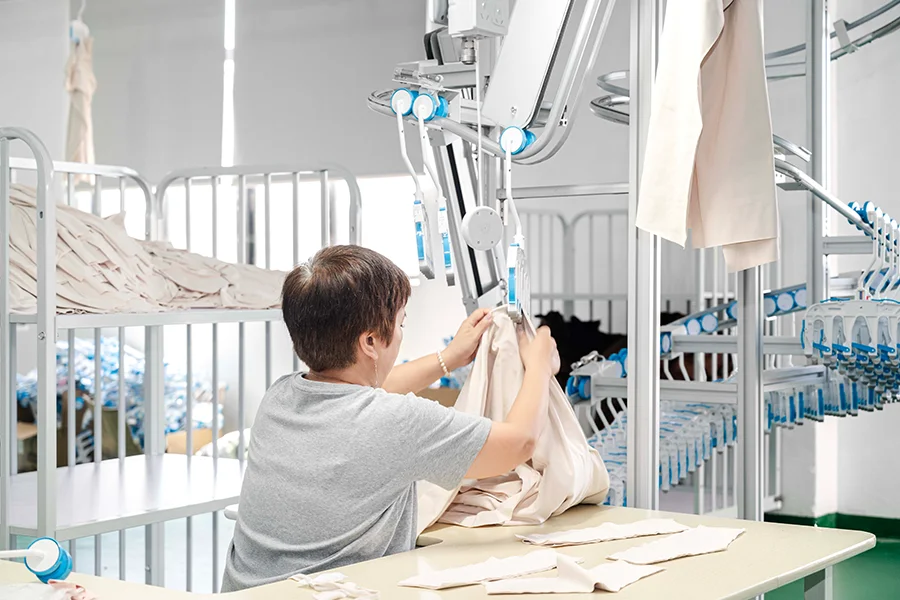
AI-generated patterns in sportswear rely on Computer Vision AI, machine learning, and design automation platforms that analyze body measurements, biometrics, and style preferences to create unique, custom-fit garments with precise pattern placement and personalized design.
In our experience, integrating AI into apparel design opens up new possibilities for precision fit, unique aesthetics, and customer personalization. By leveraging biometric analysis and automated pattern generation, brands can deliver sportswear that feels custom-made for every individual.
Key Technologies Behind AI-Generated Patterns
Modern AI tools combine scanning hardware, graphics mapping, and trend analysis to achieve unparalleled fit and style accuracy. These technologies simplify the transition from ideation to production without compromising quality.
- Computer Vision AI captures accurate body measurements from photos, adapting pattern shapes to muscle tension zones and movement.
- 3D Body Scanning creates detailed body profiles, ensuring superior fit beyond standard sizing methods.
- Natural Language Processing and image recognition study trends and customer reviews to auto-generate new pattern collections.
- Sublimation printing integrates personalized graphics precisely mapped to each individual’s measurements.
Case Studies: Brands Leveraging AI in Design
Many leading brands have embraced AI to enhance their design and customer experience processes, achieving notable improvements in sales, customer satisfaction, and conversion rates.
Below are top examples showcasing how AI integration drives measurable success.
1. Sansan Sports Manufacturing — China

Sansan Sports creates custom sportswear and performance apparel for diverse global brands. They deliver OEM, ODM, and Private Label manufacturing solutions designed for agility and trend-focused production.
Capabilities range from fabric innovation and precise pattern design to advanced printing and global logistics, supported by certifications like ISO, BSCI, and OEKO-TEX.
2. Amazon — USA

Amazon’s AI-powered recommendation engine contributes 35% of sales by tailoring product suggestions to user behavior. This elevates engagement and supports significant revenue growth.
Continuous investment in machine learning allows Amazon to optimize design and customer interaction at scale.
3. Sephora — USA/Global

Sephora blends AR/VR with AI to create virtual try-ons and tailored product suggestions. This interactive strategy lifted customer satisfaction by 41% and boosted sales.
Immersive technology improves product discovery and deepens user engagement.
4. Nike — USA/Global

Nike uses AI analytics and personalized recommendations to raise sales by 10–15% and cut operating costs by 5–10%.
Partnerships with AI platforms enable advanced customer profiling and targeted product strategies.
5. A.S. Watson Group — Hong Kong/Global

A.S. Watson Group’s AI-powered Skincare Advisor uses computer vision and personalization to lift conversion rates by 396% and raise average order value by 29%.
These targeted solutions grow sales and strengthen customer loyalty in beauty and health retail.
Challenges in Implementing AI Systems
Implementing AI systems in apparel design faces major challenges including data quality and availability, integration with legacy systems, high initial investment, a shortage of skilled professionals, and risks of algorithmic bias and data privacy issues.
AI in apparel design offers strong potential for innovation, but its rollout in real-world manufacturing environments is often slowed by technical and organizational barriers. Many apparel companies must navigate complex data challenges, high infrastructure expenses, and compliance concerns before they can scale AI-driven solutions effectively.
Key Barriers to AI Implementation
In our experience working with apparel brands, the following factors often complicate AI adoption and delay measurable ROI:
- Data Scarcity and Quality: Fragmented, siloed, and inconsistent datasets reduce AI accuracy and reliability.
- Integration Complexity: Legacy production systems not designed for AI make integration costly and time-consuming.
- Skills Gap: Limited availability of AI and data science specialists with fashion expertise slows deployment.
- Algorithmic Bias: Non-representative datasets can reinforce stereotypes in design recommendations.
- Data Privacy: Regulatory compliance and consumer trust require stringent security measures.
- High Initial Investment: Costs for infrastructure, training, and upkeep can exceed $500,000 for large enterprises.
Cost and Market Growth Insights
The financial landscape for AI in fashion highlights dramatic growth but also significant upfront costs for enterprises. Market data shows both short-term surges and long-term acceleration in adoption.
| Year / Period | Market Size | Growth Rate | Key Notes |
|---|---|---|---|
| 2024 → 2025 | $1.26B → $1.77B | 40.4% CAGR | Rapid early adoption phase |
| 2025 → 2035 | $2.92B → $89.41B | 40.8% CAGR | Sustained long-term growth expected |
| Enterprise Cost | $500,000+ | — | Infrastructure & training investment |
| Executive Feedback | 56% | — | Cited supply chain disruption as major AI integration challenge |
To address these issues, companies benefit from strong data governance, frequent bias audits, cross-team collaboration, and transparent updates to all stakeholders. In our experience, aligning AI strategies with sustainable manufacturing practices, such as those in Sansan Sports’ ethical production workflows, can balance innovation with responsibility.
The Future Outlook of AI-Enhanced Apparel Creation
AI-enhanced apparel creation is set for rapid growth, with AI-generated fashion markets predicted to reach nearly $3 billion by 2025 and surge to over $75 billion by 2035. This growth is driven by automation, mass personalization, and faster trend responses, enabling brands to optimize design cycles, reduce waste, and meet demands sustainably.
Artificial intelligence is pushing the boundaries of how apparel is designed, produced, and delivered. With adoption rates climbing across the globe, its impact spans from boosting creative capacity to enabling sustainable manufacturing practices.
Projected Market Growth and Adoption
The AI-generated fashion market is forecast to grow from $2.91 billion in 2025 to between $75.9 and $89.4 billion by 2035. This reflects a rapid uptake fueled by advancements in generative design and manufacturing automation.
| Market Metric | Value / Share |
|---|---|
| Market Value (2025) | $2.91 billion |
| Projected Value (2035) | $75.9–$89.4 billion |
| CAGR (2025–2035) | 38.6–40.8% |
| Active AI Design Tool Users (2025) | 2.5 million+ |
| Generative AI Market Share | 45–50% |
| North America’s Market Share (2025) | 35–40% |
AI-Driven Advancements in Apparel Design and Manufacturing
AI enables the creation of over 1 million fashion designs daily using specialized diffusion models. This capability allows apparel brands to launch products with unmatched speed and relevance.
- Fast fashion leaders like Shein and Zara release 6,000+ new SKUs weekly, achieving sell-through rates of up to 85% vs an industry average of 60%.
- Trend response time has dropped from 3–6 months to just 3–5 days using AI-powered analytics.
- Specialized AI models achieve 95% manufacturing feasibility, compared to 60% for general-purpose AI models.
- AI-driven fabric inspection cuts waste, reduces labor costs, and improves garment quality.
Sustainability and Risk Reduction Through AI
In our experience, AI contributes significantly to sustainable apparel production by optimizing material use and reducing overproduction. This not only helps the environment but also cuts unnecessary operational costs.
- Predictive maintenance reduces downtime and manufacturing expenses.
- AI-led inventory management saves the industry over $500 million annually by avoiding excess stock.
- Supports circular fashion initiatives including textile recycling and eco-friendly material adoption.
- Aligns sustainability efforts with international environmental standards and long-term climate goals.
FAQs
What tools are used?
In our experience, AI in apparel design often involves tools like 3D garment simulation software, fabric pattern generators, and predictive analytics platforms. These systems can integrate with CAD programs for precise pattern making.
For performance sportswear, manufacturers may also use heat mapping, motion capture, and AI-enhanced body scanning to fine-tune fit and function before production.
Can AI design from scratch?
Yes, AI can generate original apparel designs by combining trend data, market analytics, and user-defined parameters. This allows brands to explore new aesthetics quickly.
That said, most successful projects still blend AI-generated concepts with human creativity and technical fabric expertise to ensure designs are both unique and production-ready.
Is it affordable?
Adopting AI in apparel design has become increasingly cost-effective, especially with cloud-based design platforms charging as low as $50 to $200 per month.
Costs can vary based on project complexity, custom algorithm development, and whether you require integration with existing manufacturing systems.
How accurate are predictions?
AI-based trend forecasting tools can reach accuracy levels of around 80% when trained with high-quality data covering at least 3 years of sales and style cycles.
In apparel manufacturing, predictive systems can also recommend optimal fabric blends and fits, reducing prototyping rounds by up to 30%.
Will AI replace designers?
AI is more of a design assistant than a replacement. It accelerates stages like ideation, visualization, and forecasting, but it does not replace creative vision or brand storytelling.
In our experience, AI empowers designers by freeing them from repetitive tasks so they can focus on innovation, craftsmanship, and meaningful brand alignment.
The Future Outlook of AI-Enhanced Apparel Creation
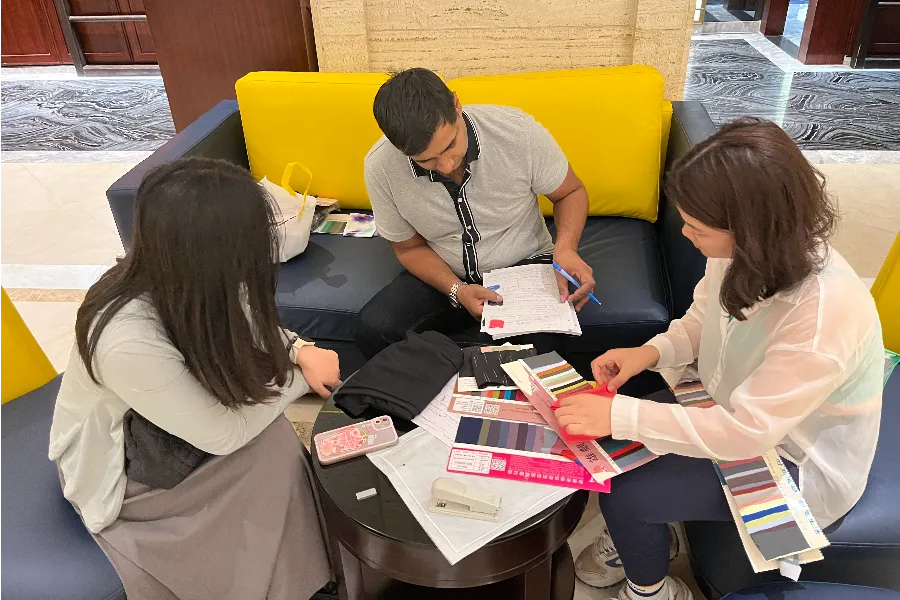
AI is redefining sportswear design by merging speed, precision, and sustainability into one seamless workflow. From data-driven trend prediction to biometric-based personalization, brands can now launch collections faster, cut waste, and align production with evolving consumer expectations.
For designers, product developers, and tech-driven apparel startups, the advantage now lies in strategically embedding AI throughout design and manufacturing. This shift enables sharper forecasting, leaner operations, and deeper customer connection. If you’re ready to elevate your innovation pipeline, streamline performance-wear development, or collaborate with technology-forward manufacturing partners, Sansan Sports is here to support your journey.
Visit sansansports.com to build your next AI-powered sportswear collection with confidence.