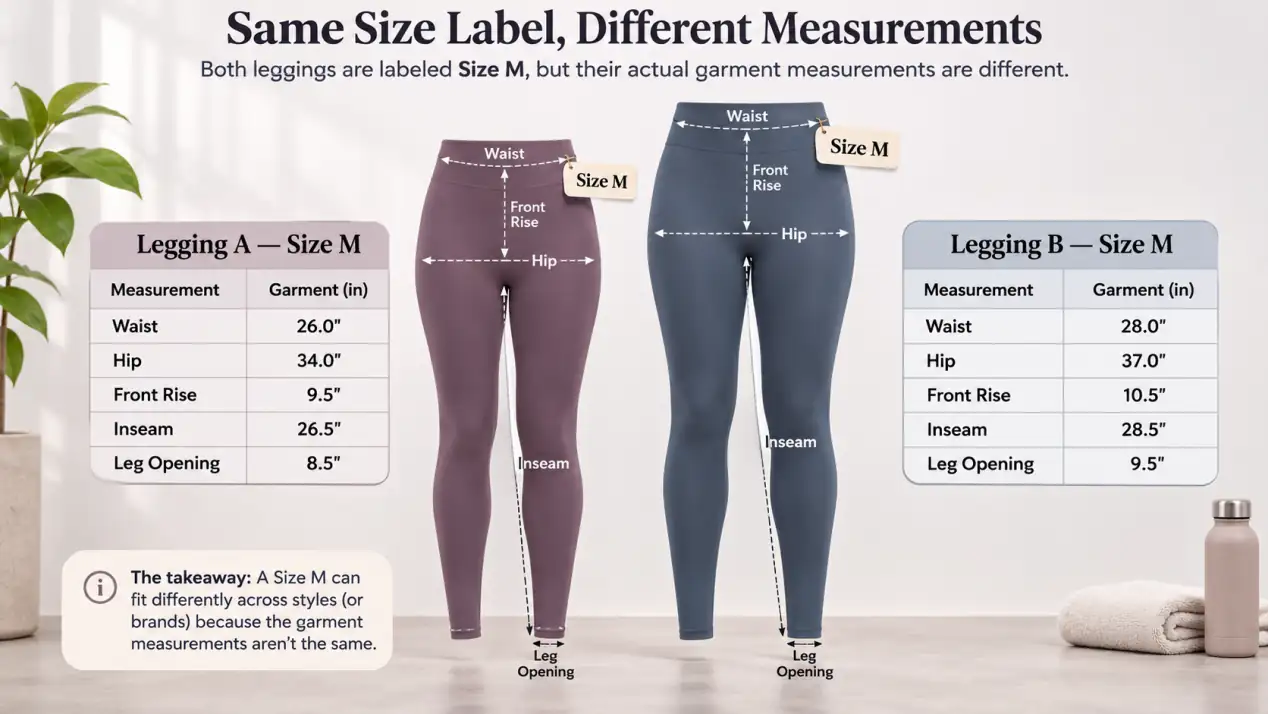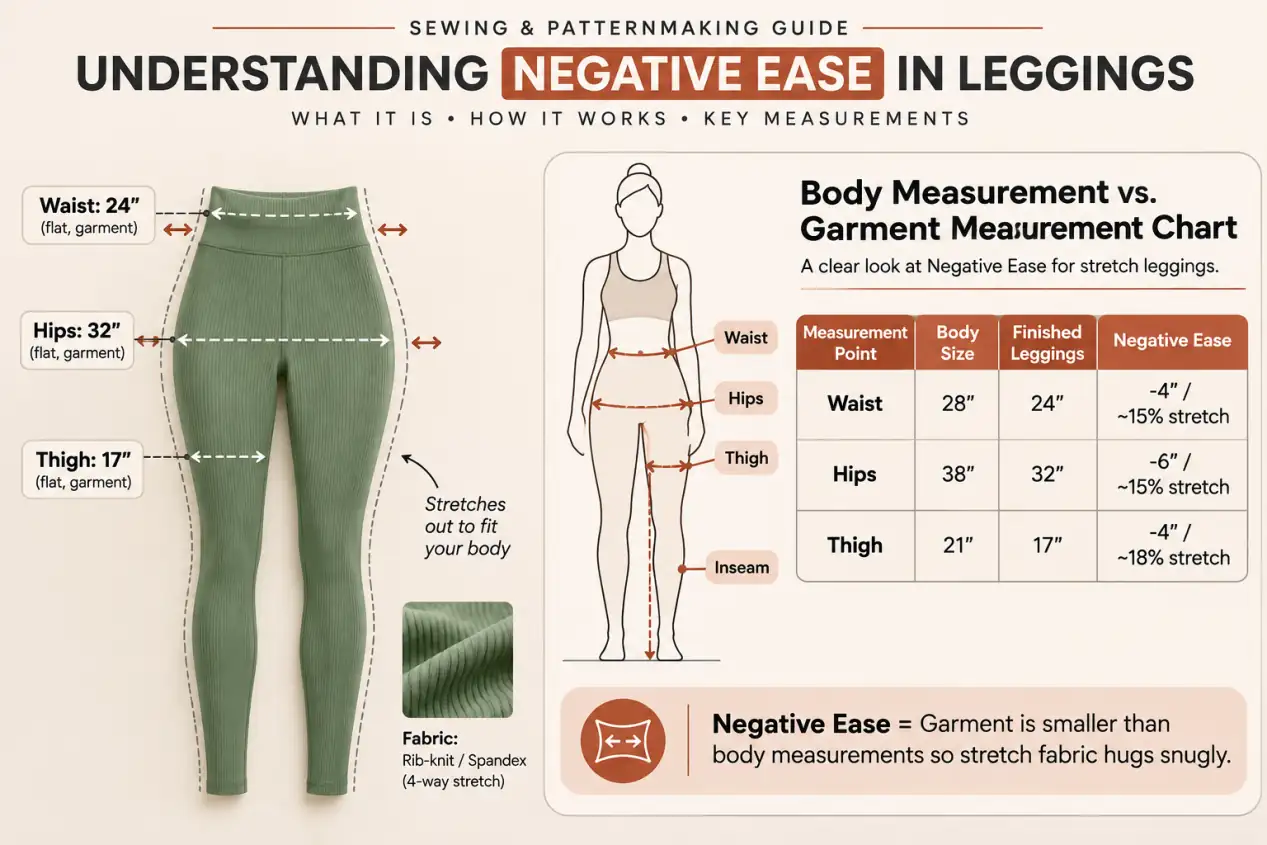
Leggings often have smaller relaxed measurements than the body dimensions listed on their size charts. This difference is not necessarily a sizing error. It often results from a patternmaking technique known as negative Leichtigkeit, which accounts for the stretch of the fabric. Brands can also refer to this activewear size chart guide to understand how body measurements are organized across different garment sizes.
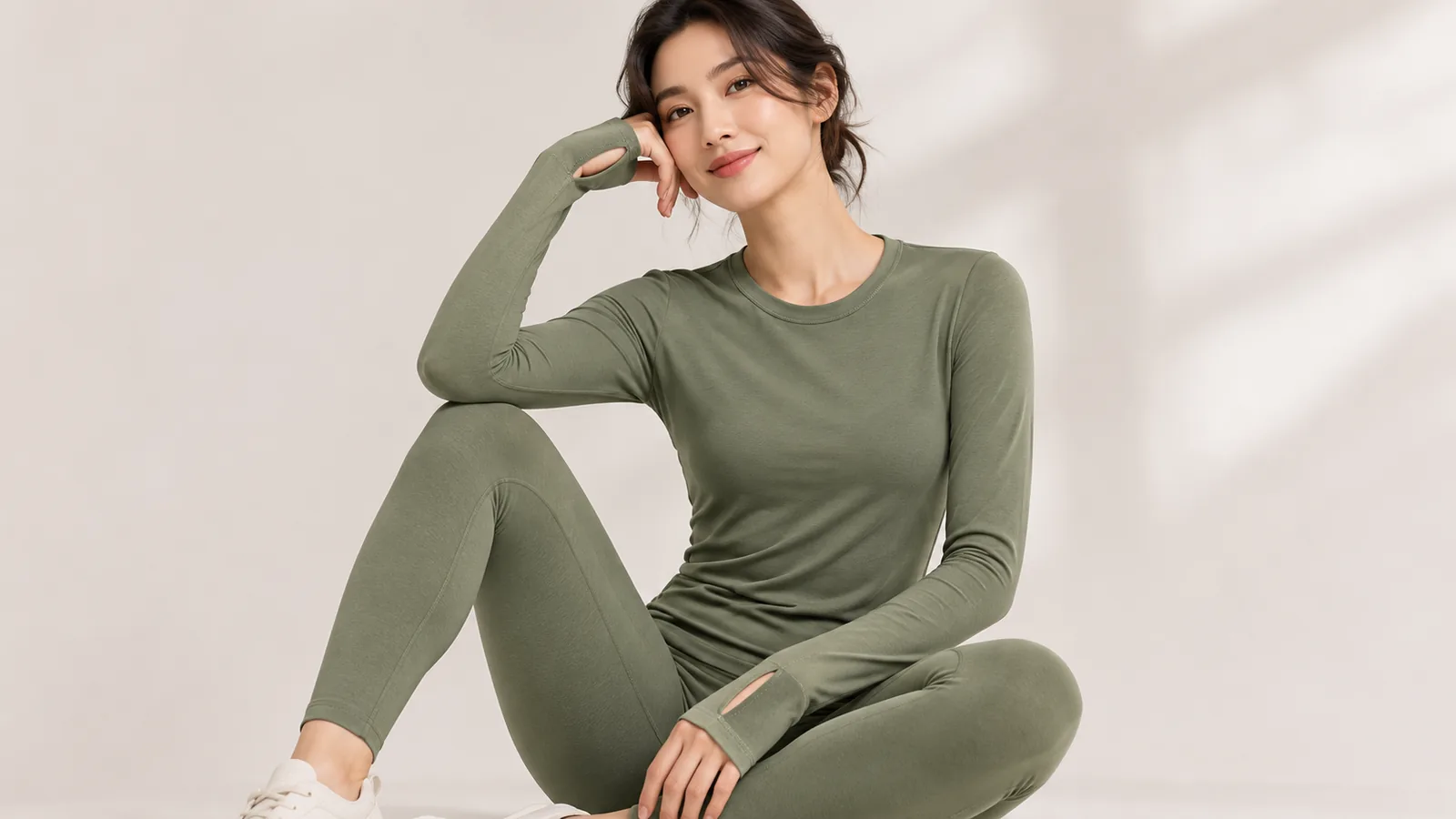
With negative ease, garment dimensions are intentionally smaller than the corresponding body measurements. The fabric stretches when worn, creating a close fit while allowing movement.
Für Activewear-Marken, negative ease affects more than garment sizing. It influences fabric selection, Musterentwicklung, and sample fitting across leggings, Sport-BHs, and compression garments. Understanding how these factors work together helps brands develop consistent fits for their target customers.
What Is Negative Ease in Activewear?
Negative ease means the finished garment measurement is smaller than the corresponding body measurement. The fabric stretches to fit the body.
It is commonly used in leggings, Sport-BHs, Badebekleidung, and fitted performance clothing.
But negative ease is not simply making a garment smaller. The fabric must provide sufficient stretch and recovery to maintain comfort and shape during movement. To better understand how fabric elasticity affects garment fit, see why fabric modulus matters in yoga wear.
Why Flat Measurements Look Smaller Than Body Size
One common misunderstanding comes from comparing different measurement methods.
A body size chart normally shows full circumference measurements, while a garment laid flat is often measured across its width. For consistent sizing, brands should also follow standard methods for measuring bust, Taille, and hip circumferences.
Zum Beispiel, a relaxed flat hip width of 45 cm represents approximately 90 cm in garment circumference when doubled. If the wearer’s hip measurement is 100 cm, Die 10 cm difference represents negative ease. The fabric is expected to stretch to accommodate the body.
daher, brands should distinguish between:
- Body measurements
- Relaxed garment measurements
- Stretched fabric measurements
How to Calculate Negative Ease in Activewear
Negative ease can be calculated by comparing the body measurement with the relaxed finished garment measurement.
Formula:
Negative Ease (%) = (Body Measurement − Garment Measurement) ÷ Body Measurement × 100
For flat garment measurements, double the measured width to estimate circumference before comparing it with the corresponding body measurement.
Zum Beispiel:
- Body hip measurement: 100 cm
- Relaxed garment hip measurement: 90 cm
- Negative ease: 10%
This is an illustrative calculation, not a universal design recommendation. Remember that fabric stretch percentage uses a different calculation because it is based on the fabric’s relaxed dimensions.
What Determines the Right Amount of Negative Ease?
There is no universal negative ease percentage for all activewear products. The appropriate pattern reduction depends on fabric properties, garment construction, and the intended fit.
The appropriate amount depends on:
- Fabric stretch
- Erholung
- Knitting structure
- Garment design
- Intended fit
Different fabrics may require different pattern reductions even when their compositions are similar.
Zum Beispiel, soft yoga leggings and firmer training leggings may need different fit approaches. Applying the same percentage to both could produce an uncomfortable or unstable fit.
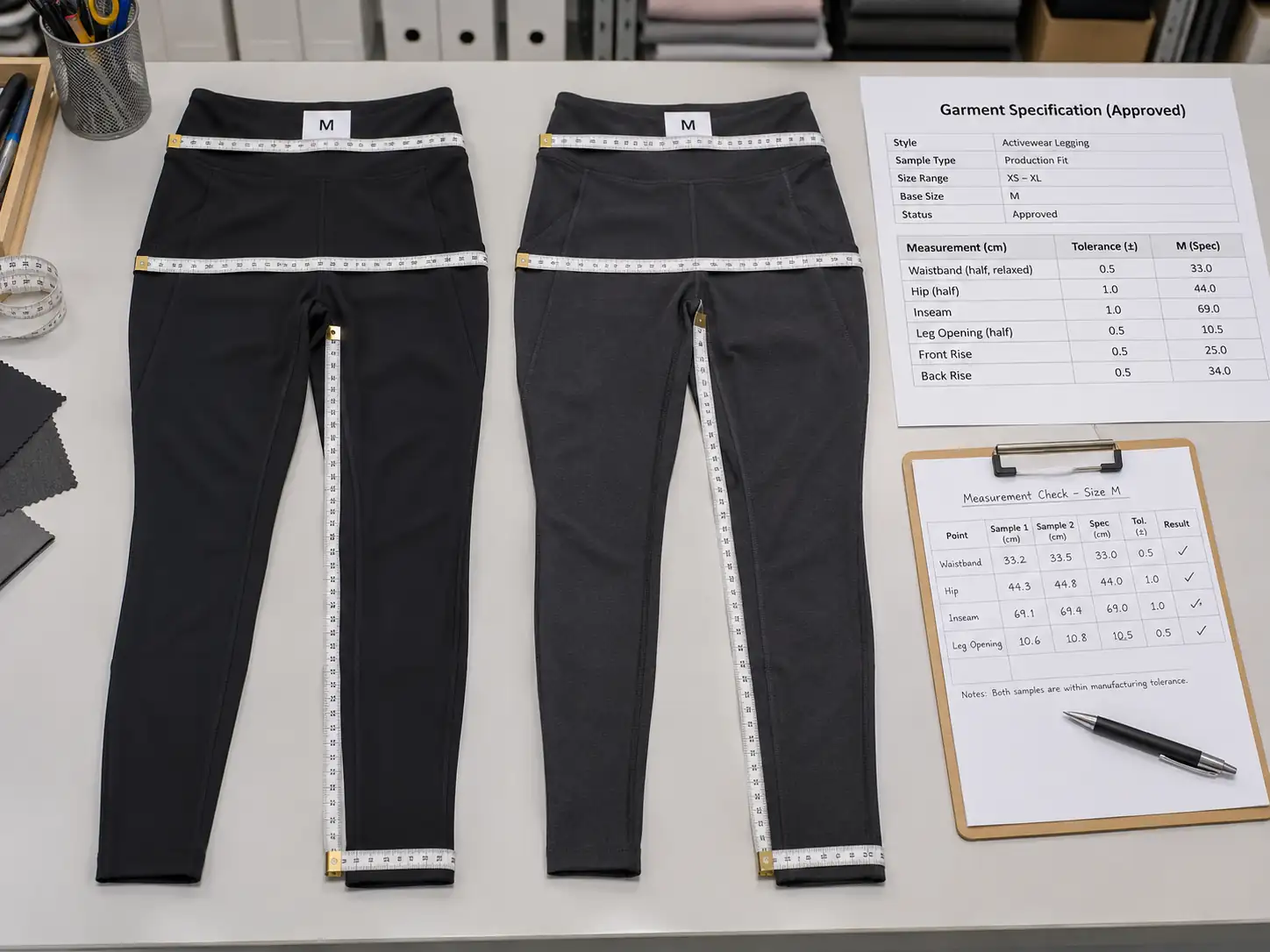
The correct percentage should be established through fabric evaluation, Musterentwicklung, and physical sample fitting. Brands can learn more about how activewear manufacturers ensure consistent sizing through measurement checks and sample fitting.
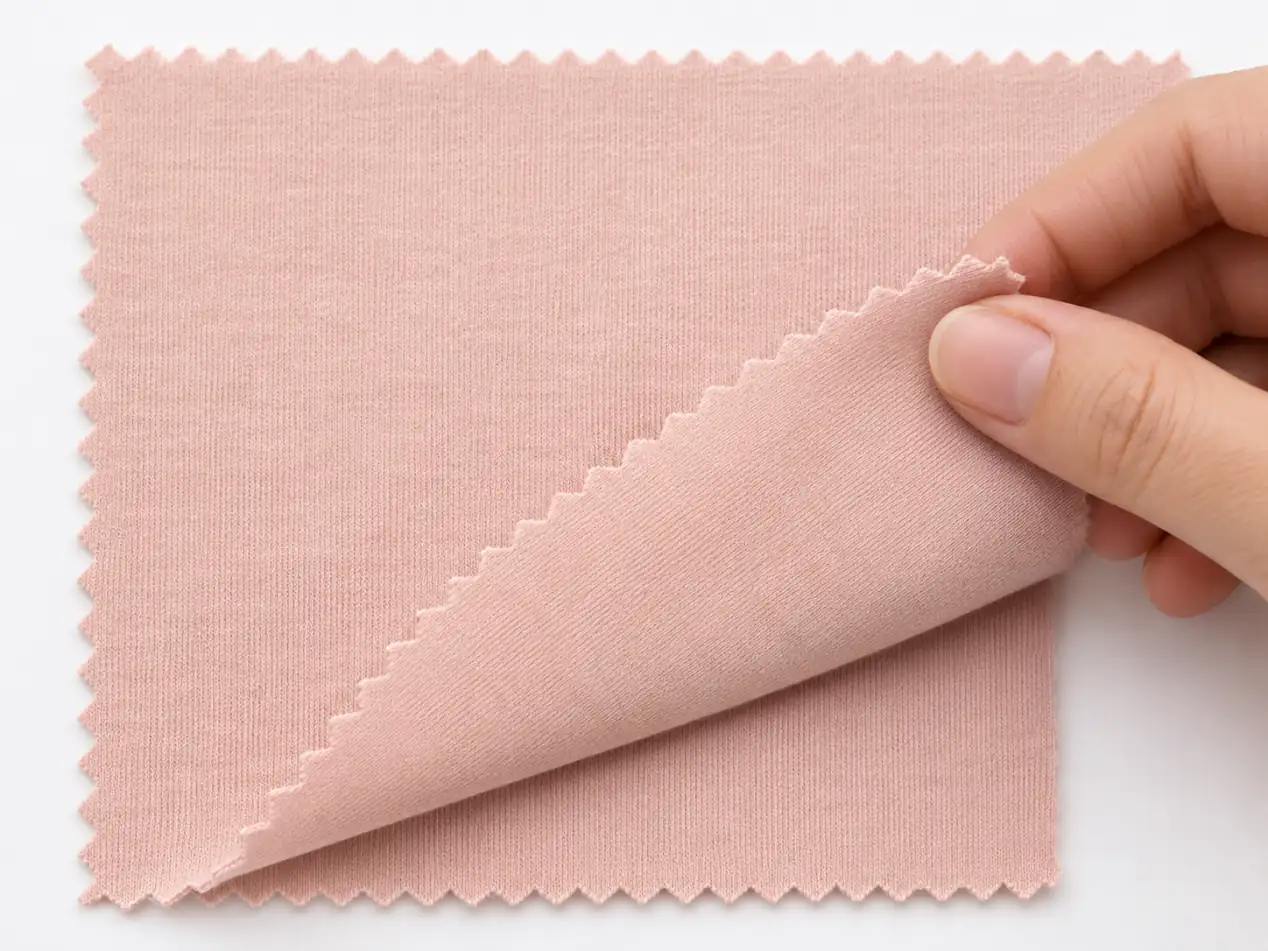
Fabric Stretch and Recovery
Stretch describes how far the fabric can extend, while recovery describes how well it returns after stretching.
A fabric that stretches significantly but recovers poorly may cause leggings to become loose around the knees, hips, or waistband after repeated wear.
Before approving a fabric, evaluate stretch in both width and length directions. Then test the finished garment during squatting, Biegen, and walking. These movement checks can be included in a structured Dehnungstest für Yogahosen before production approval.
How Negative Ease Creates Compression Fit
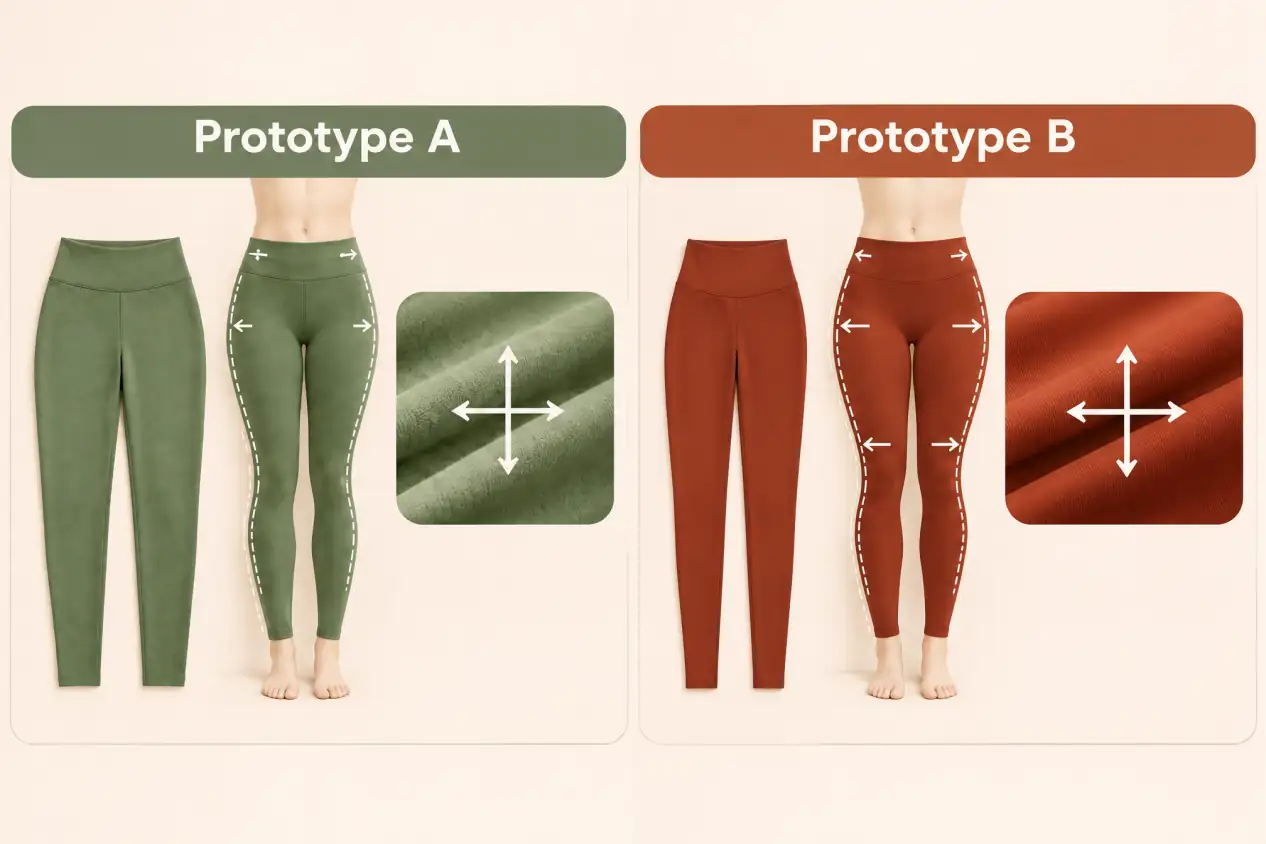
When a garment smaller than the body stretches around the wearer, it creates fabric tension and may apply pressure.
But negative ease and compression are not exactly the same.
Actual compression also depends on fabric thickness, Elastizität, Konstruktion, and how the garment fits different body areas. A close-fitting legging does not automatically provide a defined level of compression.
Brands developing sculpting or compression activewear should evaluate both fabric behavior and finished-garment performance.
Negative Ease by Body Zone Differences
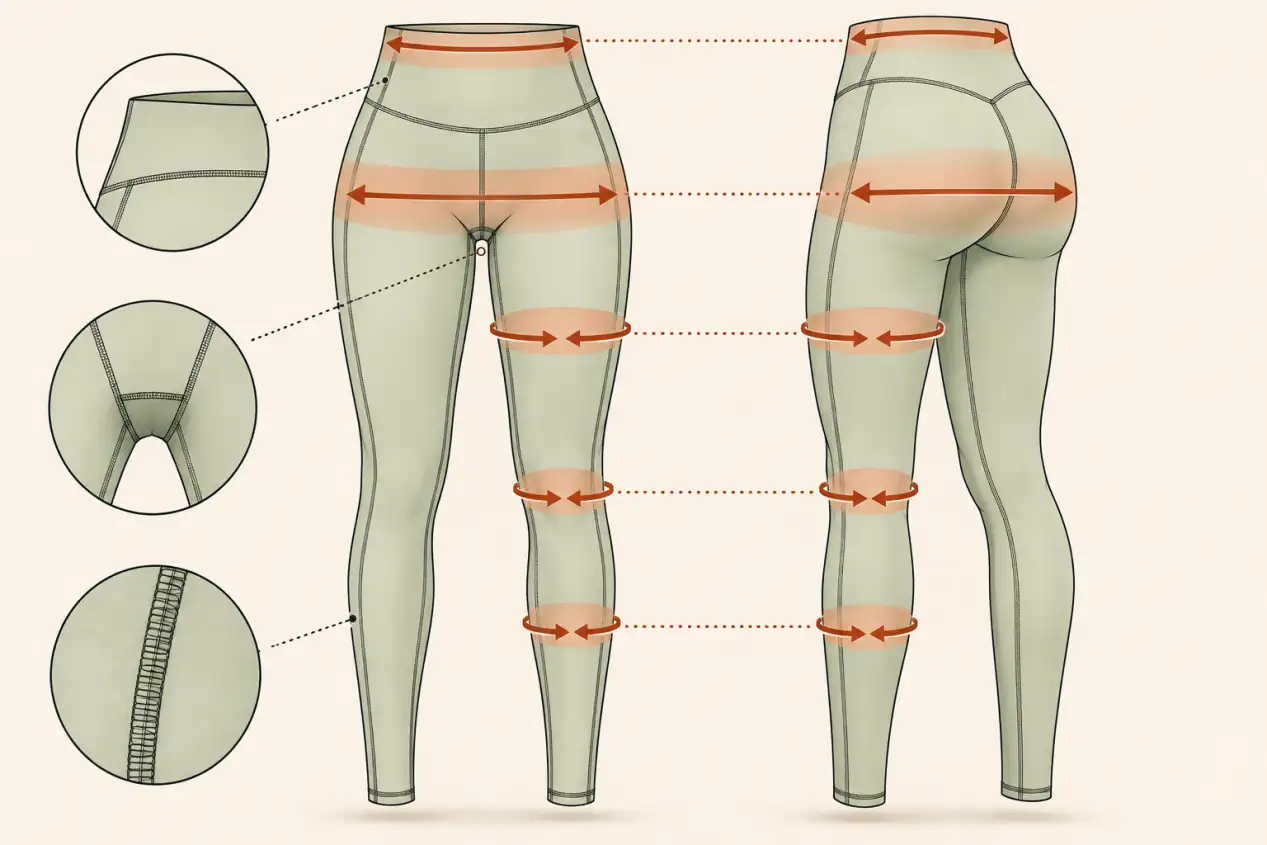
Negative ease should not be distributed equally across every body area.
Taille, hips, Schenkel, Knie, and calves have different shapes and movement requirements. Zum Beispiel, leggings need sufficient hip and thigh stretch while maintaining a stable waistband.
Sports bras also require careful consideration of bust and underbust measurements because comfort and support depend on both fabric behavior and garment construction.
For brands targeting the UAE and Saudi Arabia, intended coverage, layering preferences, and customer body measurements should also inform pattern development.
Common Activewear Ease Mistakes
Several mistakes can affect the final fit:
- Comparing flat garment width directly with full body circumference.
- Applying one negative ease percentage to every measurement point.
- Designing patterns using maximum fabric stretch instead of comfortable usable stretch.
- Ignoring fabric recovery and dimensional changes after washing.
- Assuming negative ease automatically guarantees compression or support.
Für wachsende Marken, clear measurement specifications, Stoffprüfung, Und approved fitting samples help prevent these problems before bulk production.
FAQ
Should all activewear garments have negative ease?
NEIN. Fitted leggings and sports bras may use negative ease, while relaxed T-shirts and loose training tops may use zero or positive ease.
Why do leggings look smaller than their size chart?
The garment may be intentionally smaller than the corresponding body measurement because its stretch fabric expands when worn.
Does more negative ease mean better compression?
NEIN. Compression also depends on fabric force-extension properties, Konstruktion, and garment fit.
Can the same negative ease percentage work for different fabrics?
Nicht unbedingt. Different fabrics have different stretch and recovery characteristics, so pattern dimensions should be evaluated for each material.
Abschluss
Negative ease is an important part of activewear pattern development. The goal is not simply to make garments smaller, but to balance:
- Body measurements
- Fabric stretch
- Erholung
- Movement
Bei SANSANSUNSPORTS, we support growing international activewear brands through OEM, ODM, und MDMD (Material – Design – Herstellung – Lieferung) Dienstleistungen, including fabric sourcing, Musterentwicklung, sample fitting, and custom manufacturing.
Planning your next leggings, sports bra, or compression wear collection? Contact SANSANSUNSPORTS to discuss fabric options and develop a fit that works with your product requirements.