Sustainability is no longer a trend—it’s an expectation. In today’s active wear yoga market, eco-friendly fabrics like RPET (Recycled Polyester) are reshaping how premium sportswear is made. From discarded plastic bottles to high-performance leggings, RPET proves that sustainability and style can work together.
What Is RPET? Recycled Polyester
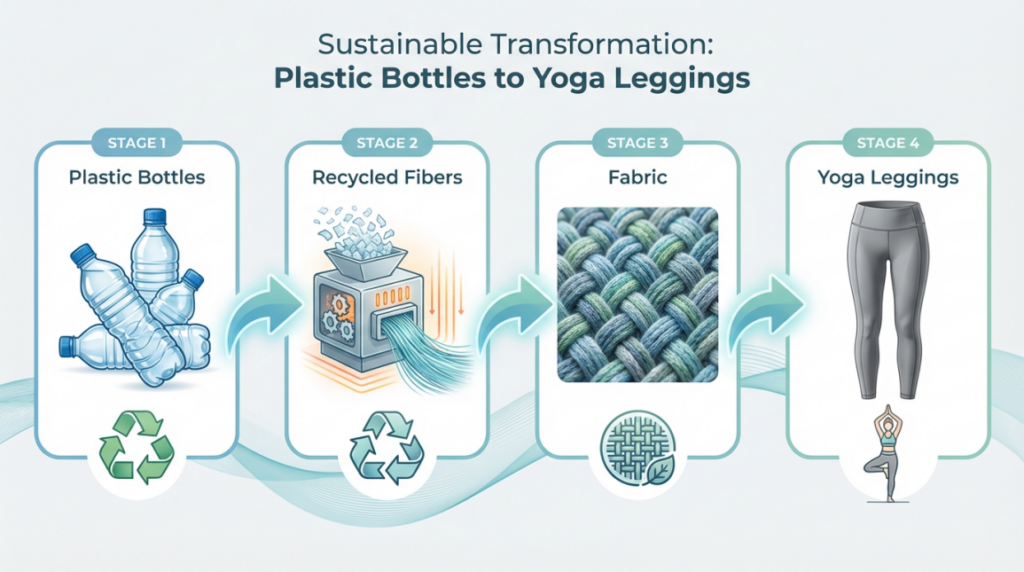
RPET stands for recycled polyethylene terephthalate, a material made by recycling used plastic bottles. These bottles are collected, cleaned, melted, and turned into fine fibers that are woven into high-quality fabrics.
Unlike traditional polyester made from petroleum, RPET reuses existing plastic, reducing landfill waste and lowering carbon emissions. The result is a durable, lightweight fabric perfect for modern yoga leggings and sportswear.
RPET vs Virgin Polyester: Performance Comparison
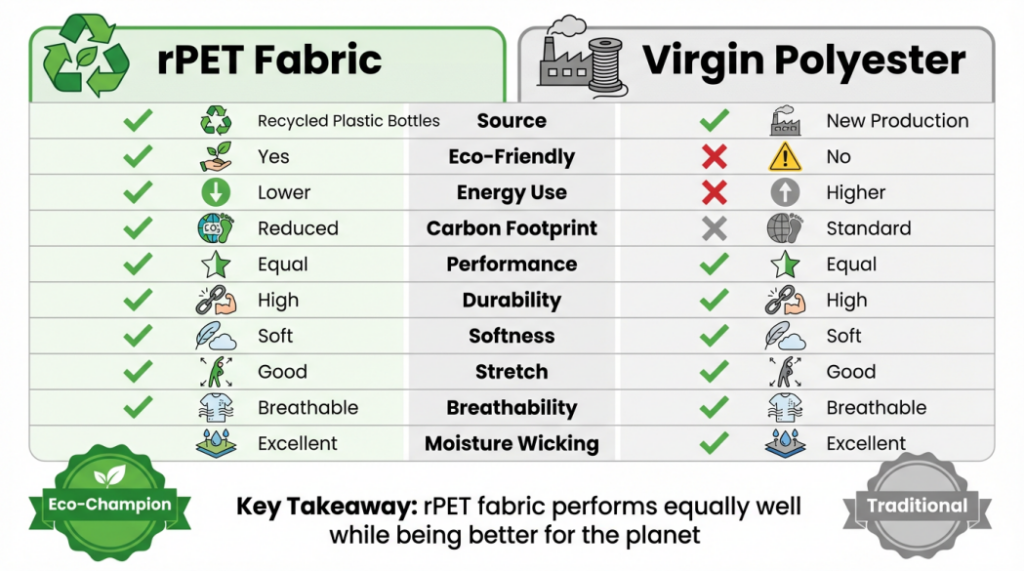
Many people think recycled fabric means lower quality—but RPET performs just as well as virgin polyester
Key comparison:
Durability: RPET is equally strong and long-lasting
Moisture-wicking: Excellent sweat absorption for workouts
Weight: Lightweight and breathable
Sustainability: RPET significantly reduces environmental impact
For brands focused on activewear, RPET offers premium performance with a responsible story.
Quality Standards for Premium RPET Fabrics
High-quality RPET fabrics meet strict global standards, ensuring safety and performance. Reputable sportswear manufacturers follow certifications such as:
–GRS (Global Recycled Standard)
-OEKO-TEX® Standard 100
-ISO quality control systems
These standards guarantee the fabric is safe for skin, colorfast, and suitable for long-term wear.
RPET in Yoga Leggings: Stretch and Recovery

For active wear yoga, stretch and recovery are essential. RPET fabrics are often blended with spandex or elastane to deliver:
-4-way stretch for flexibility
-Strong recovery that holds shape
-Smooth, soft hand-feel
-Squat-proof coverage
This makes RPET ideal for yoga leggings, gym wear, and everyday athleisure.
Challenges and Innovations in RPET Production
While RPET offers many benefits, production comes with challenges such as fiber consistency and color control. However, innovation continues to improve:
-Advanced recycling technology
-Better yarn spinning methods
-Improved dyeing processes using less water
These innovations ensure today’s RPET fabrics meet premium expectations.
Consumer Guide: Identifying True RPET Garments
Consumers and buyers should look for:
-Certification labels (GRS, OEKO-TEX)
-Brand transparency about fabric sourcing
-Product descriptions clearly stating “recycled polyester”
This helps avoid greenwashing and ensures genuine sustainability.
SanSanSun Sports Helps You

At Sansansun Sports, we support brands by offering premium RPET solutions tailored for custom activewear production. As an experienced sportswear manufacturer, we combine eco-friendly fabrics, modern designs, and strict quality control to help your brand grow responsibly.
Whether you’re launching a yoga line or scaling production, SansanSunSports is your trusted partner.
Frequently Asked Questions About RPET Fabrics
Is RPET safe for skin?
Yes. Certified RPET fabrics are skin-safe and suitable for daily wear.
Does RPET last as long as regular polyester?
Absolutely. High-quality RPET offers the same durability and performance.
Is RPET more expensive?
Costs are competitive, especially when ordered in bulk for leggings wholesale.
Is RPET suitable for hot yoga?
Yes. Its moisture-wicking and breathable properties make it ideal for intense workouts.