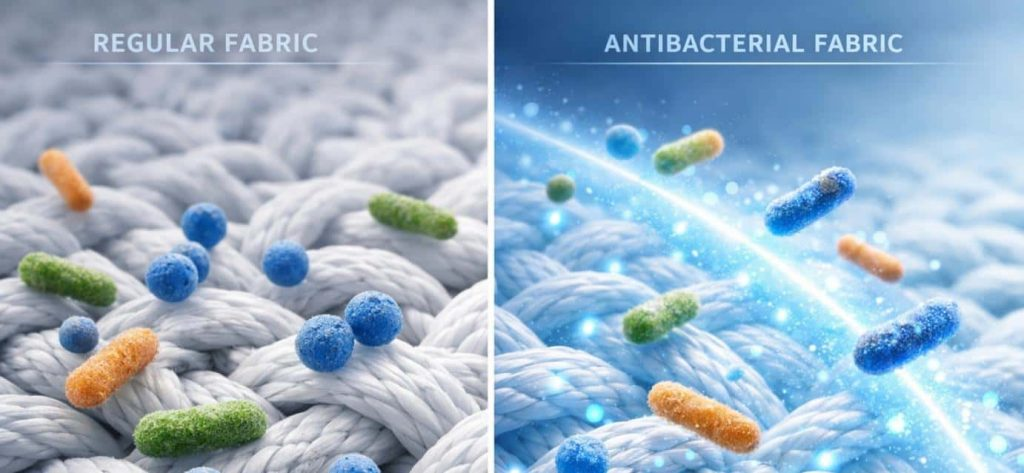
के लिए sportswear manufacturers, dyeing and finishing aren’t just final touches—they define performance, टिकाऊपन, and brand value. Poor choices in finishing can lead to color fading, reduced comfort, and lost competitiveness, while precise, high-quality processes turn basic fabrics into advanced, market-leading apparel.
This guide covers fabric dyeing methods, performance finishes, और eco-friendly technologies, helping factories, dyeing specialists, and sustainability officers enhance product quality, achieve environmental goals, and strengthen their position in global sportswear markets.
Fabric Dyeing Methods (Piece, Yarn, and Dope Dyeing)
Fabric dyeing methods—piece dyeing, yarn dyeing, and dope dyeing—differ in process stage, color uniformity, and sustainability impact. Piece dyeing is most common for sportswear, offering flexibility and fast turnaround, while dope dyeing delivers the highest colorfastness and lowest water usage, but with less design flexibility.
In sportswear manufacturing, choosing the right dyeing method affects performance, aesthetics, and environmental footprint. Each process has distinct technical characteristics that influence water and energy use, turnaround, and design outcomes.
Overview of Fabric Dyeing Methods
- Piece dyeing applies color after weaving or knitting, offering high flexibility for fabric types and designs.
- Yarn dyeing colors fibers before fabric formation, ideal for patterned textiles such as stripes and checks.
- Dope dyeing (solution dyeing) integrates pigments into polymer melt before extrusion, creating durable coloration with low resource use.
Key Performance and Environmental Metrics
| मीट्रिक | Piece Dyeing | Yarn Dyeing | Dope Dyeing |
|---|---|---|---|
| 💧 Water Usage | 60–100 L/kg कपड़ा | 40–80 L/kg yarn | <1 L/kg with closed-loop systems |
| 🎨 Color Uniformity | ±3% shade variation | ±2% shade variation | Colorfastness 4–5/5 scale |
| 🚀 Turnaround Time | 1–3 days per batch | 2–4 days incl. winding/drying | Longer lead times, higher MOQs |
| ⚡ऊर्जा का उपयोग | Conventional energy loads | Moderate efficiency | तक 30% less energy |
Applications and Practical Considerations
- Piece dyeing covers about 80% of sportswear, enabling rapid trend response and batch flexibility.
- Yarn dyeing suits engineered patterns like stripes, checks, and jacquards; ⚠️ higher costs and less agility in color changes.
- Dope dyeing ideal for recycled polyester lines; ❌ high MOQs limit small-batch options.
Critical Perspectives and Recommendations
- Dope dyeing is not universally applicable — best for synthetics such as polyester and nylon.
- Major water and chemical savings with dope dyeing, but limited flexibility for frequent color updates.
- Piece dyeing remains a practical choice for trend-driven brands despite higher resource use.
- Yarn dyeing excels in specialty designs needing precise color alignment within structure.
Performance Finishes: Anti-Odor, त्वरित सूखी, and UV Protection
Performance finishes such as anti-odor, त्वरित सूखी, and UV protection are essential in sportswear dyeing and finishing, driven by consumer demand for functional apparel and supported by advanced chemical and textile technologies that enhance durability, आराम, और स्थिरता.
In the sportswear industry, performance finishes are no longer optional features, but strategic requirements for meeting athlete and consumer expectations. They add measurable functional value while influencing purchase decisions and brand loyalty.
Key Performance Finishes and Their Market Adoption
| Finish Type | Effectiveness | Market Adoption | Cost Impact |
|---|---|---|---|
| 🦠 Anti-Odor | Reduces odor-causing bacteria by 90–99% (OEKO-TEX certified) | ✅ Used by 70-80% of premium brands | 💲 +5-15% garment cost |
| 💧 Quick-Dry | Cuts drying times by 30-50% | ✅ Widespread in active collections | 💲 +5-15% garment cost |
| ☀️ UV Protection | यूपीएफ 30–50+, blocks 96–98% UV radiation | ✅ Strong uptake in outdoor sportswear | 💲 +5-15% garment cost |
Deep Dive into Anti-Odor, त्वरित सूखी, and UV Protection Technologies
- 🦠 Anti-Odor: Utilizes silver ions, zinc oxide, or natural antimicrobials to inhibit bacteria growth and prevent odor build-up.
- 💧 त्वरित सूखी: Achieved through hydrophilic polymers or microfiber treatments that speed up moisture evaporation.
- ☀️ UV Protection: Embeds UV-absorbing chemicals or nanoparticles into fabrics for consistent sun-blocking performance.
Effectiveness is verified via AATCC and ISO testing protocols to ensure consistent performance across batches. हमारे अनुभव में, lab verification is crucial before mass production.
Durability under repeated washes remains an industry challenge, so ongoing research focuses on enhancing wash-fastness while developing eco-friendly alternatives that maintain performance without environmental trade-offs.
Eco-Friendly Dyeing: Reducing Water and Chemical Use
Eco-friendly dyeing technologies can reduce water usage by up to 95% and cut chemical inputs by over 50% compared to traditional methods, driven by innovations such as waterless dyeing, bio-based dyes, and digital printing.
In sportswear dyeing and finishing, adopting sustainable dye methods is becoming a critical priority. Advances in fabric treatment have enabled manufacturers to achieve vibrant colors while minimizing environmental impact.
Water and Chemical Savings in Modern Dyeing
New dyeing technologies are delivering major reductions in water and chemical use, directly addressing the challenges of resource-intensive textile production.
- Water usage reduction of up to 95% using processes like Birla Cellulose’s Intellicolor.
- Chemical input reduction by 50% या अधिक, with elimination of salts and soda ash in certain methods.
- Energy consumption lowered by up to 50% with dyes such as Huntsman AVITERA® ROSE SE.
Challenges and Market Dynamics
While greener dyeing methods offer clear environmental benefits, the industry faces roadblocks to widespread adoption.
- Textile dyeing accounts for around 20% of global wastewater pollution, releasing over 70 toxic chemicals in traditional processes.
- Transition to sustainable dyes often requires higher capital investment and may involve longer lead times as technologies mature.
- The eco-friendly dye market is expanding at an 8% सीएजीआर, yet remains fragmented without a dominant supplier.
Consumer Preferences and Regulatory Influence
Consumers and policymakers are accelerating the shift toward eco-friendly dyeing in sportswear manufacturing.
- 78% of surveyed consumers prioritize sustainability, और 55% are willing to pay more for eco-friendly brands.
- Environmental regulations like the EU’s Ecodesign for Sustainable Products are pushing wider adoption of greener dye technologies.
- Growing interest in circular economy models and biodegradable dyes is shaping future dyeing practices.
Accelerate Your Sportswear Innovation with Precision Manufacturing
Partner with Sansan Sports to leverage cutting-edge R&D and sustainable production for performance-driven apparel. From OEM to private label, we deliver agile, scalable solutions tailored to elevate your brand’s impact globally.

Digital Printing vs. Traditional Dyeing for Sportswear
Digital printing stands out for sportswear when sustainability and customization are key, cutting carbon emissions by up to 1 kg CO2e per kg fabric and using up to 95% less water than traditional dyeing. Yet traditional dyeing still suits large, single-color batch runs where cost-efficiency dominates.
In sportswear manufacturing, the choice between digital printing and traditional dyeing can significantly influence environmental performance, production agility, और लागत दक्षता. Here’s a structured breakdown of both methods based on data and industry trends.
Key Comparison Metrics
| मीट्रिक | Digital Printing | Traditional Dyeing |
|---|---|---|
| Carbon Emissions | Saves ~1 kg CO2e per kg fabric; तक 7.8 kg CO2e saved in coal-heavy regions | उच्च उत्सर्जन, especially in carbon-intensive grids |
| Water Consumption | Uses 95% less water | आम तौर पर 100+ liters per kg fabric |
| Freshwater Contamination | Minimal chemical runoff | Accounts for ~20% of global freshwater pollution |
| Print Durability | Color integrated into fibers; high wash/sweat resistance | Surface-level color prone to fading |
| उत्पादन गति | तक 108.6 m²/h | Slower due to batch processing |
| न्यूनतम आदेश मात्रा | Supports short runs/on-demand | Large volumes needed for cost efficiency |
| Color Vibrancy | High-resolution, AI-optimized colors | Consistent but less customizable |
| Market Growth | सीएजीआर 14.11% through 2034 | Declining share |
Environmental and Performance Advantages
- 95% less water use with reduced chemicals tackles the textile sector’s 20% share of global freshwater pollution.
- Carbon savings multiply tenfold in coal-heavy regions like China due to lower electricity-related emissions.
- Dye-sublimation bonds colors into polyester fibers, preventing fading and dye migration under sweat or washing.
- Innovations like Kornit’s Atlas MAX Poly and Ricoh’s Ri 4000 enhance vibrancy, fix migration issues, and improve fabric feel.
Cost and Scale Considerations
- Traditional dyeing suits large-scale, single-color batches over 1,000 इकाइयां with economies of scale.
- Digital printing excels for custom kits, rapid prototypes, and small-batch high-margin runs.
- On-demand printing reduces overproduction and inventory holding costs.
- Cost competitiveness begins around 500-1,000 इकाइयाँ per design where dyeing setup costs rise.
Market Trends and Technology Innovations
- Digital textile printing market grew from under 7% share to over 20% in a decade, projected at 14.11% CAGR to 2034.
- Dye-sublimated apparel is growing at 13.5% सीएजीआर (2023–2030) driven by customization demand.
- 2025 innovations include Kornit Atlas MAX Poly, Epson SC-F9400 at 108.6 m²/h, and AI color management.
- Advances widen fabric and style compatibility in sportswear printing.
Future Trends in Sustainable Finishing Technologies
The future of sustainable finishing technologies in sportswear dyeing is defined by rapid adoption of waterless dyeing, डिजिटल प्रिंटिंग, bio-based chemistries, and closed-loop recycling, with measurable reductions in water, ऊर्जा, and chemical use projected for 2025 and beyond.
Sportswear dyeing and finishing are entering a transformative phase where environmental impact is reduced without compromising performance. New processes are designed to conserve resources while enhancing product quality and design flexibility.
Innovations in Sustainable Finishing Technologies
हमारे अनुभव में, several breakthroughs are reshaping how sportswear fabrics are dyed and finished. These innovations focus on lowering water, ऊर्जा, and chemical use across production lines.
- Waterless dyeing using supercritical CO₂ can cut water consumption by up to 95%.
- Digital dyeing systems, like Alchemie Endeavour™, reduce energy use by up to 85%.
- Advanced enzymatic and digital finishing processes lower chemical consumption by around 30%.
- Biological dyeing with microbial dyes and bioengineered fibers introduces biodegradable alternatives.
- Ozone-based bleaching reduces both energy needs and harmful chemical discharge.
Market Growth and Impact Metrics
Market trends show strong growth in sustainable finishing adoption, driven by technology investment and consumer demand for eco-friendly products.
| 📊 मीट्रिक | डेटा | प्रभाव |
|---|---|---|
| Global dyeing & finishing machinery market | USD 4.73 अरब in 2025 → USD 6.23 अरब द्वारा 2030 | सीएजीआर 5.6% |
| Digital textile printing | USD 6.83 अरब द्वारा 2029 | सीएजीआर 15.2% |
| Textile waste reduction target | से 92 मिलियन टन प्रतिवर्ष | Less landfill pollution |
| Recycled polyester adoption | तक 20% replacement | Demonstrated by brands like Ganni |
पूछे जाने वाले प्रश्न
What’s the most eco-friendly dyeing process?
In our experience with sportswear dyeing and finishing, waterless dyeing technologies such as supercritical CO₂ dyeing stand out as the most eco-friendly. They use minimal water, significantly reduce chemical runoff, and can lower energy usage by up to 50% compared to conventional methods.
For sustainable sportswear projects, we also recommend low-impact reactive dyes combined with closed-loop water systems to further reduce the environmental footprint while maintaining vivid, long-lasting colors.
How are performance finishes applied?
Performance finishes in sportswear, such as moisture-wicking, जीवाणुरोधी, and UV-protection coatings, are usually applied at the fabric finishing stage. These can be integrated through padding, coating, or spray applications depending on the fabric’s structure and the intended performance level.
For high-performance gear, we use engineered treatments that bond at the fiber level, ensuring durability for over 50 industrial washes without significant performance loss.
Does digital printing last as long as dyeing?
Digital sublimation printing can offer comparable longevity to traditional dyeing when used with polyester-based sportswear fabrics. The inks penetrate the fiber structure, making the print resistant to peeling or cracking.
While both processes have strong durability, sublimation excels for intricate, multi-color designs, and with proper care, prints can stay vibrant for over 5 years of regular use. Direct dyeing remains ideal for deep, solid colors with maximum colorfastness.
निष्कर्ष: Where Aesthetics Meet Functionality
Sportswear dyeing and finishing succeed when advanced fabric technologies, sustainability goals, and meticulous quality control work together. The most competitive products integrate performance finishes like moisture management and UV protection with eco-friendly dyeing methods and precision colorfastness testing. Innovative approaches such as digital printing and waterless dyeing drive both design flexibility and environmental responsibility, while strong QC protocols ensure that aesthetics are matched by real-world durability.
To bring sustainable dyeing and finishing innovations into scalable production, working with experienced custom activewear manufacturers is essential. सैनसन स्पोर्ट्स एक विश्वसनीय संयुक्त राज्य अमेरिका की स्पोर्ट्सवियर निर्माता है, also supporting global brands seeking reliable activewear manufacturers Australia solutions and advanced output from a proven seamless clothing manufacturer.
मिलने जाना https://sansansports.com/ to discover how we help brands deliver high-performance, eco-conscious activewear with confidence.