A fabric swatch can create an immediate impression. You touch it, notice its softness, and begin imagining the garment it could become.
For growing activewear brands, that first impression is a useful starting point. But developing a successful modal-blend top requires more than selecting a soft fabric. The material must also support the intended silhouette, 快適, coverage, and wearing experience.
Modal-blend fabrics can be explored for Pilates collections, studio tops, layering pieces, and everyday athleisure. Each application requires different fabric properties and garment construction.
The key is turning a simple idea—“We want something soft”—into a clear product development brief that guides fabric sourcing, サンプリング, と製造業.
Define the Intended Use of the Modal-Blend Top
Before selecting a modal-blend fabric, growing activewear brands should define when and how customers will wear the finished top.
Is it designed for gentle yoga or Pilates? Will customers wear it as a layer before and after exercise? Or is it an everyday piece paired with leggings and casual trousers?
These occasions create different product requirements.
| Product application | Main development priority |
|---|---|
| Fitted studio top | ストレッチ, 回復, and movement comfort |
| Relaxed everyday T-shirt | 柔らかさ, drape, and silhouette |
| Layering top | Comfortable fit and fabric weight |
| Modest long-sleeve top | カバレッジ, 通気性, and garment length |
For brands targeting the UAE and Saudi Arabia, modal-blend tops may also be considered for comfortable layering and relaxed athleisure collections.
Buyer insight: Defining the wearing occasion first helps prevent unsuitable fabric choices and unnecessary sample revisions.
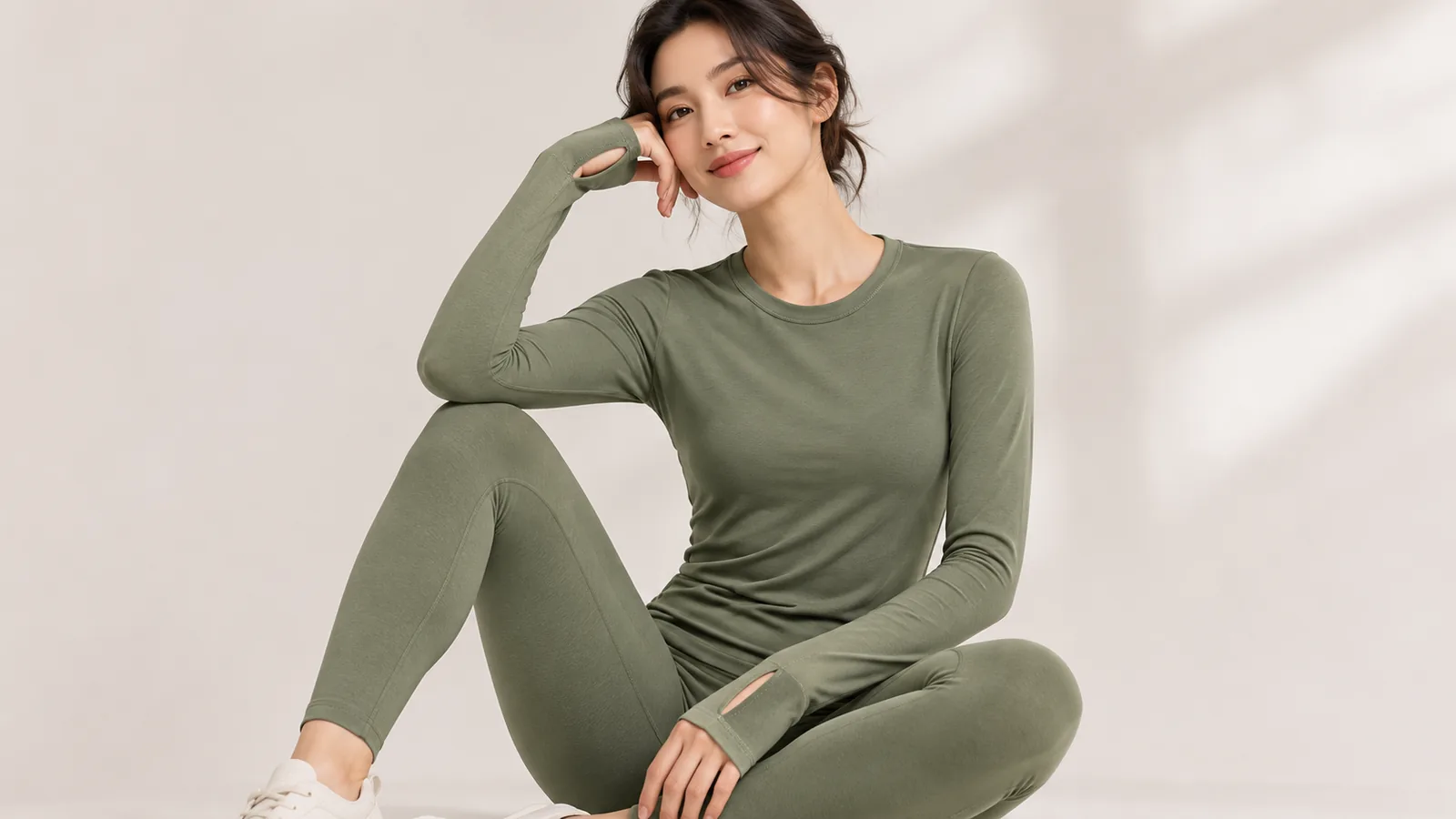
Select Modal-Blend Fabric for the Desired Feel and Fit
Softness is important, but it does not describe the complete performance of a garment.
Two fabrics labeled as modal blends may behave differently. The differences come from:
- 繊維組成
- Yarn construction
- Knitting structure
- Finishing processes
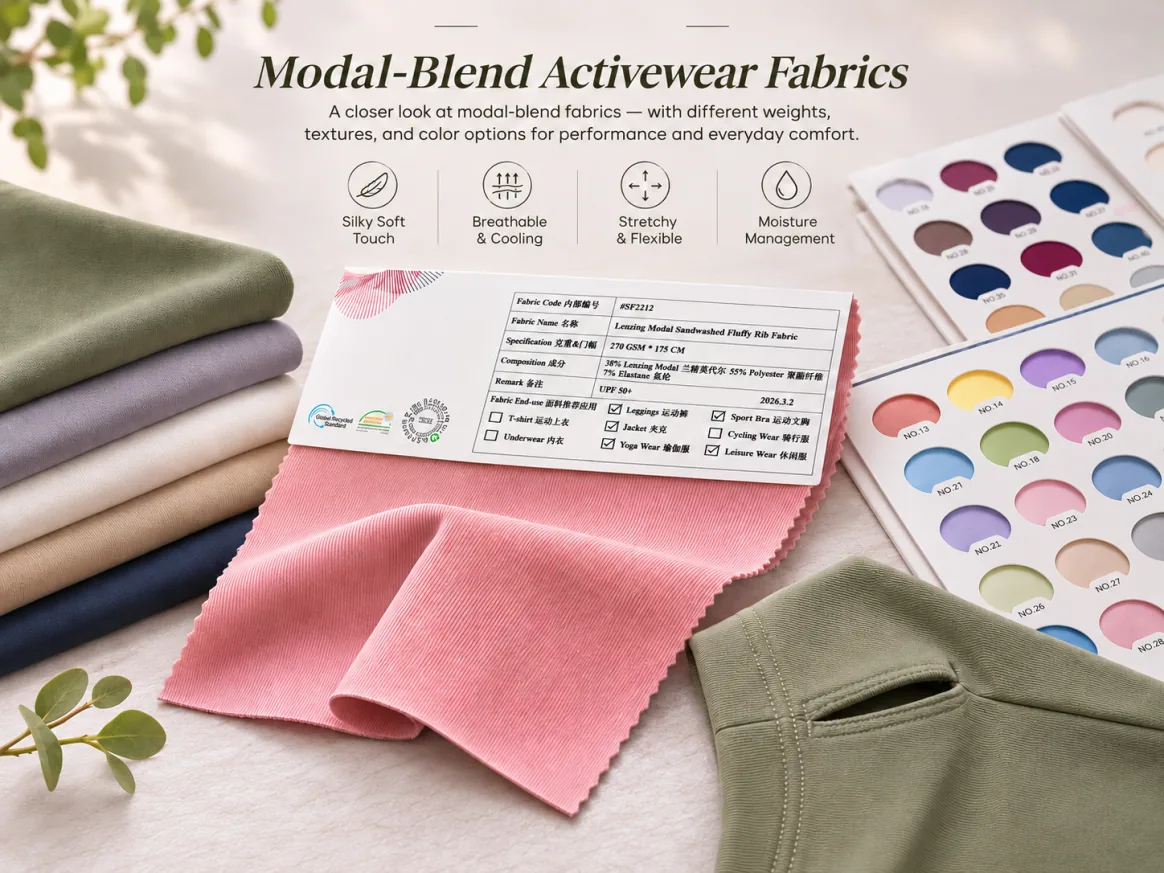
When developing a custom modal-blend top, brands should evaluate:
- 生地重量 (GSM): Influences garment structure, drape, and coverage.
- ストレッチと回復: Determines how the fabric extends and returns to shape.
- Opacity: Helps ensure appropriate coverage, particularly in lighter colors.
- Drape: Influences how the finished top hangs on the body.
- Surface finish: Affects hand feel, 外観, and garment styling.
例えば, a lightweight modal-spandex blend may suit a relaxed layering top, while a fitted studio design may need greater stretch recovery and shape stability.
The appropriate fabric should be selected through physical comparison rather than fiber composition alone.
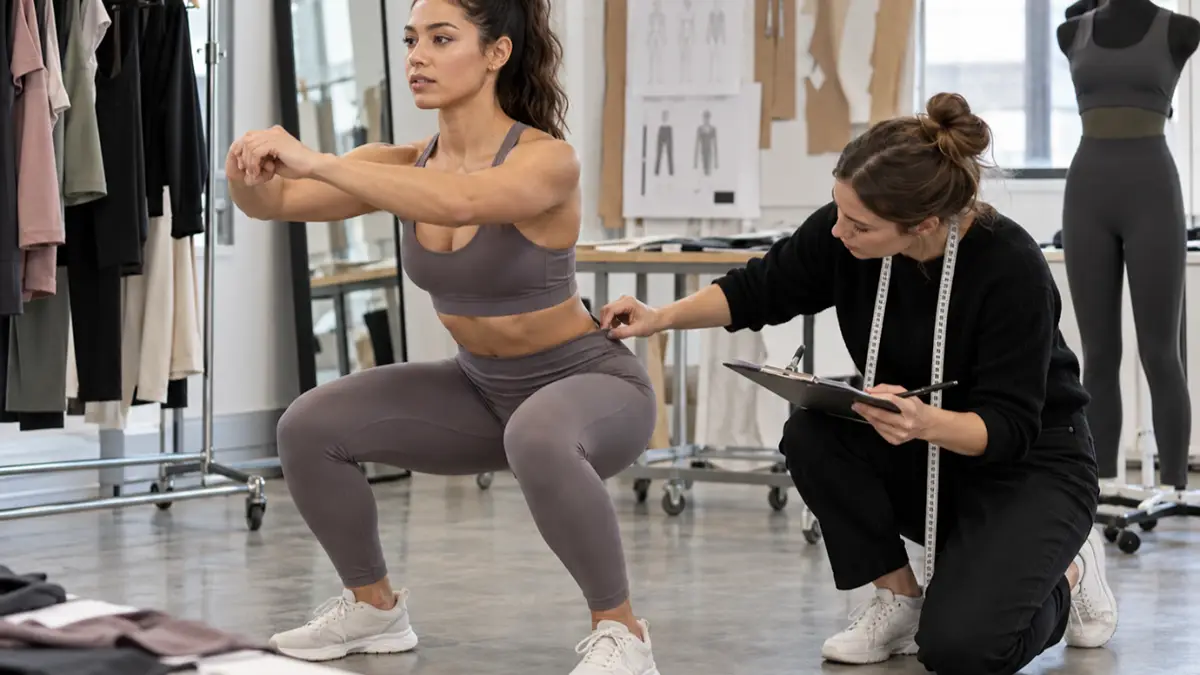
Test Fabric Performance on the Finished Garment
A fabric that feels excellent in hand may behave differently once it becomes a finished garment.
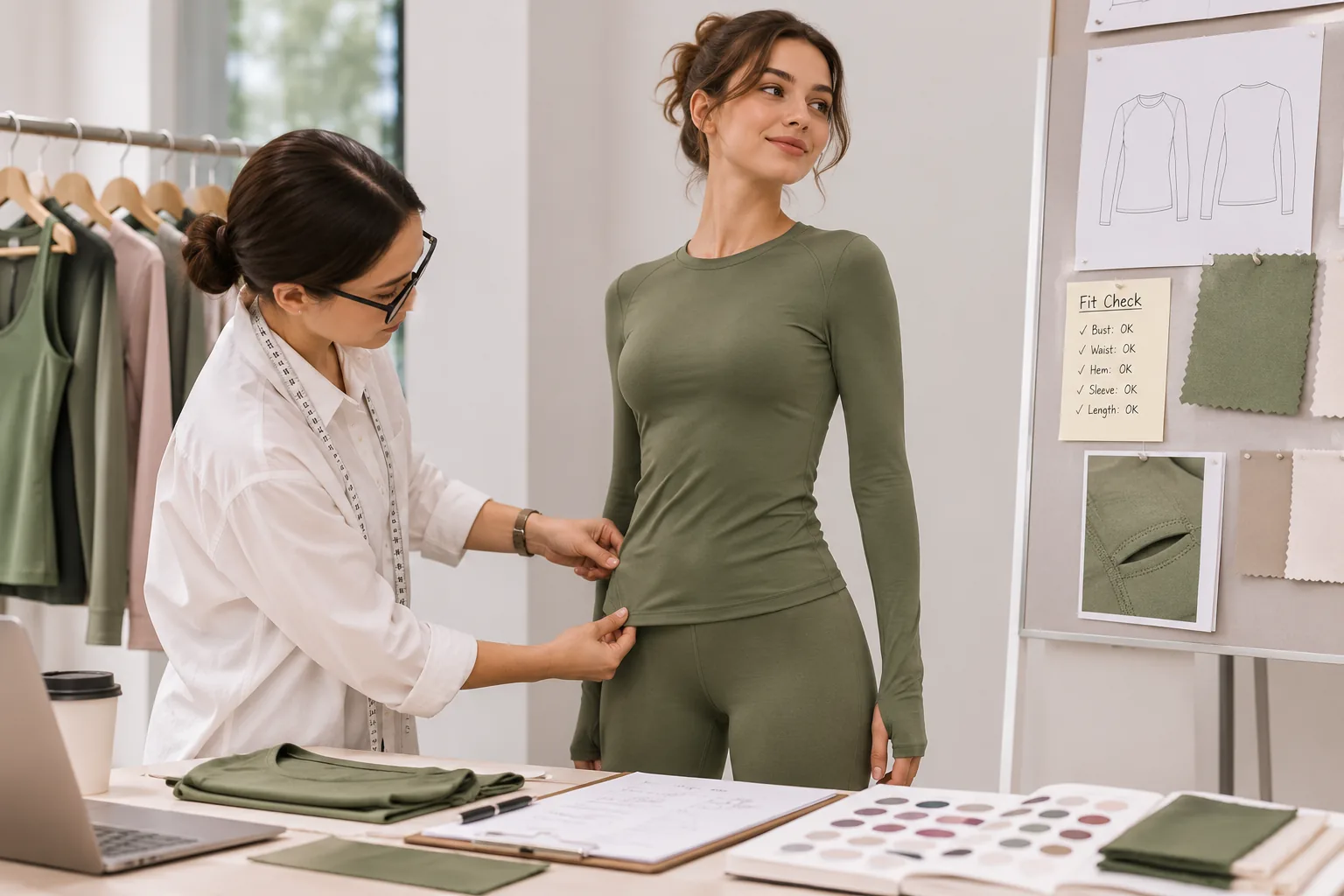
This is why physical sampling is essential in modal-blend activewear development.
During sample fitting and fabric evaluation, brands should check:
- Shoulder positioning and neckline stability
- Sleeve movement and body length
- Fabric stretch and recovery
- Pilling and surface appearance
- Dimensional stability after washing
- Colorfastness under the agreed testing conditions
The sample should also be assessed during reaching, 曲げ, and layering.
例えば, a relaxed modal top may have attractive drape while standing but stretch excessively around the neckline during movement.
Wash evaluation is equally important. Compare garment measurements, fabric appearance, and shape before and after the agreed laundering process. This helps identify shrinkage, surface changes, and potential fit issues before bulk production.
Documenting these observations helps development teams identify necessary changes before bulk production.
Match Fabric Features with Activewear Product Positioning
For growing activewear brands, fabric selection is also part of product positioning.
Instead of describing a garment only as “premium soft modal,” explain how its material and construction support the intended wearing experience.
Show:
- Fabric drape
- Neckline details
- Silhouette
- Layering possibilities
例えば, an everyday modal-blend top can be presented through its relaxed fit, soft hand feel, and styling versatility.
If using branded fibers such as テンセル™モダール, confirm the relevant material documentation before making branded-fiber or environmental claims.
明確な, evidence-based product story helps customers understand what makes the garment suitable for their needs.
How to Prepare a Modal-Blend Top Development Brief
Before contacting an activewear manufacturer, brands should organize their requirements into a practical product brief.
A practical product brief should include:
- Target customer and product application
- Reference images or existing samples
- Fabric composition and preferred GSM
- Stretch and recovery requirements
- Garment measurements and size range
- Color specifications
- Construction and finishing details
- Sample evaluation and testing requirements
Reference images or existing samples can help communicate the design direction.
For growing DTC brands, this preparation supports more focused discussions about fabric selection, パターン開発, and sampling.
サンサンサンスポーツにて, we support custom activewear development through OEM, ODM, and MDMD (材料-設計-製造-納品) services, helping brands connect material selection with finished garment requirements.
よくある質問
Is modal-blend fabric suitable for activewear tops?
はい. Modal blends can be considered for yoga, ピラティス, layering, and everyday athleisure tops. Suitability depends on fabric construction, ストレッチリカバリー, and intended activity.
What GSM is best for a modal-blend top?
There is no universal ideal GSM. Lightweight fabrics may suit relaxed layering, while styles requiring more structure or coverage may benefit from a different fabric weight.
Can modal-blend tops be developed for Middle Eastern markets?
はい. Brands can evaluate longer silhouettes, comfortable layering, sleeve coverage, and breathable fabric constructions according to their target customers’ preferences.
What should brands check before bulk production?
Check fabric characteristics, garment measurements, sample fit, ストレッチリカバリー, wash performance, and approved construction details.
What is the difference between modal and modal-blend fabric?
Modal is a regenerated cellulose fiber, while modal-blend fabric combines modal with other fibers such as spandex, コットン, or polyester. The additional fibers can change the fabric’s stretch, 構造, and overall performance.
結論
Developing a successful modal-blend top involves more than choosing a fabric that feels soft.
Growing activewear brands should connect the wearing occasion with fabric weight, ストレッチ, coverage, garment construction, and physical sample evaluation.
These decisions create a clearer development process and a stronger foundation for the finished collection.
SANSANSUN SPORTS is a China-based activewear manufacturer offering OEM, ODM, およびMDMDサービス, 生地選びも含めて, design development, サンプリング, and custom manufacturing.
Planning your next modal-blend activewear collection? Share your preferred silhouette, fabric requirements, and intended wearing occasion with サンサンサンスポーツ to begin developing your next custom top.