Introduction: Why Knitting Matters in Sportswear
For sportswear brands, textile engineers, and apparel designers, the challenge lies in creating fabrics that meet high performance demands while staying competitive in a growing market. Knitting stands at the center of this effort, offering the precision, adaptability, and material versatility needed to balance moisture control, durability, and comfort across both active and athleisure segments.
This guide covers essential knitting techniques, the performance impact of knit density, and innovations like seamless technology, helping industry professionals engineer sportswear that delivers superior function, speed-to-market, and sustainability.
Overview of Knitting Techniques (Warp, Weft, Circular)
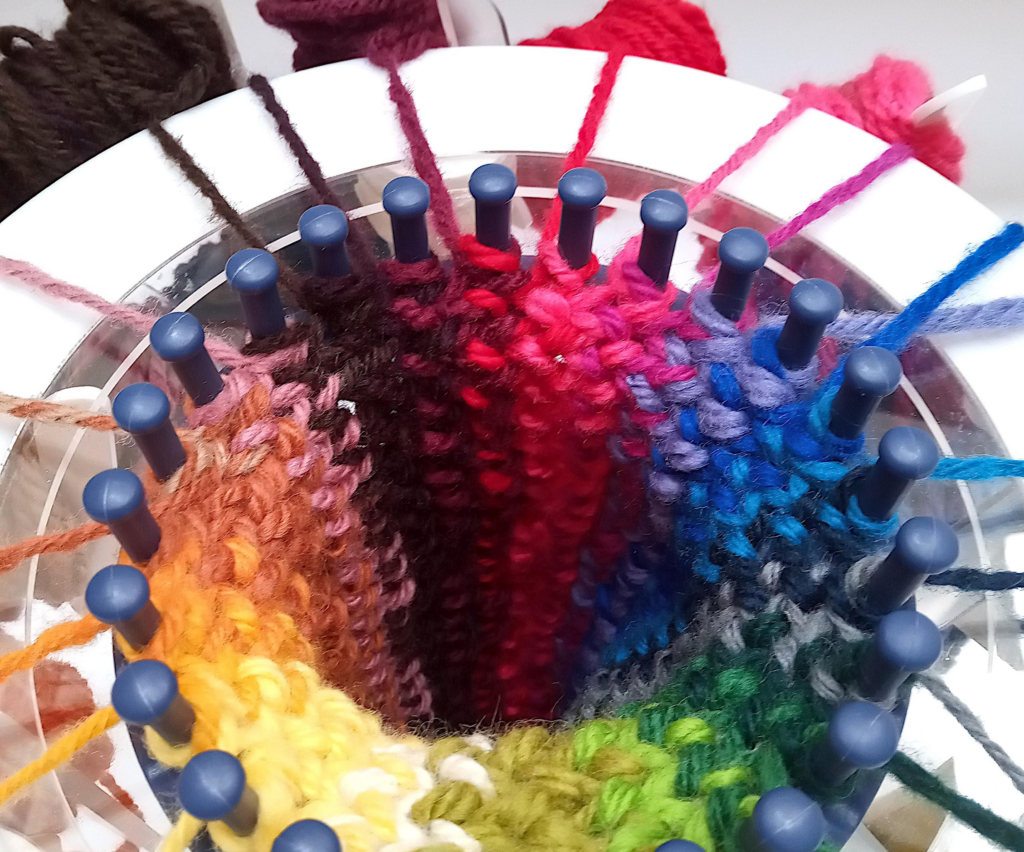
Warp, weft, and circular knitting are the three principal techniques in sportswear manufacturing, each producing fabrics with distinct properties: warp knitting yields strong, stable fabrics ideal for technical sportswear; weft knitting creates elastic, soft fabrics suitable for stretch garments; circular knitting is a subtype of weft knitting that efficiently produces seamless tubular fabrics for items like leggings and t-shirts.
In sportswear manufacturing, the knitting method directly shapes the performance, comfort, and appearance of the final product. Understanding the distinctions between warp, weft, and circular knitting can help brands select the right process for their apparel lines.
Key Characteristics of Knitting Types
| Aspect | Weft | Warp | Circular |
|---|---|---|---|
| Loop Direction | Horizontal ➡️ (widthwise) | Vertical ⬆️ (lengthwise) | Horizontal ➡️ with tubular formation |
| Machine Type | Flat-bed or circular machines | Specialized warp knitting machines | Circular knitting machines |
| Production Speed | ❌ Slower (sequential loop formation) | 🚀 Faster (simultaneous loop formation) | Moderate |
| Elasticity | ✅ High | ⚠️ Low to moderate | ✅ High |
| Fabric Stability | ❌ Low (prone to unraveling) | ✅ High | ⚠️ Moderate |
| Shrinkage Risk | ⚠️ High | ✅ Low | Moderate |
| Minimum Yarn Requirement | Small quantities possible | Full yarn beam required | Moderate quantities |
| Common Applications | T-shirts, sweaters, fashion knits | Sportswear, technical textiles, lingerie | Leggings, seamless sportswear, socks |
Deep Dive into Warp Knitting
Warp knitting stands out for producing fabrics that are both durable and resistant to distortion or unraveling. All needles form loops at the same time, enabling consistent output at high speeds.
In our experience, this method is excellent for technical sportswear items like compression gear and mesh linings where stability is a must. The process, though efficient, requires a full beam of prepared yarn, which raises initial setup costs.
Typically, warp knitting yields fabric rolls rather than shaped garments, so additional cutting and sewing are needed. This can limit direct-to-garment efficiencies but ensures quality control across large production runs.
Weft and Circular Knitting: Flexibility and Comfort
Weft knitting produces soft, elastic fabrics that adapt well to body movement. It’s commonly used for garments prioritizing comfort, such as casual sportswear and loungers.
Circular knitting, a subset of weft, uses specialized circular machines to create continuous tubes of fabric without side seams. This makes it ideal for leggings, seamless tops, and base layers where smooth fit is a priority.
Both knitting types allow greater design versatility but tend to operate at slower speeds than warp knitting. They also require finishing processes and careful quality checks to address higher shrinkage risk.
Key Fibers Used in Sportswear Knitting (Nylon, Spandex, Polyester)
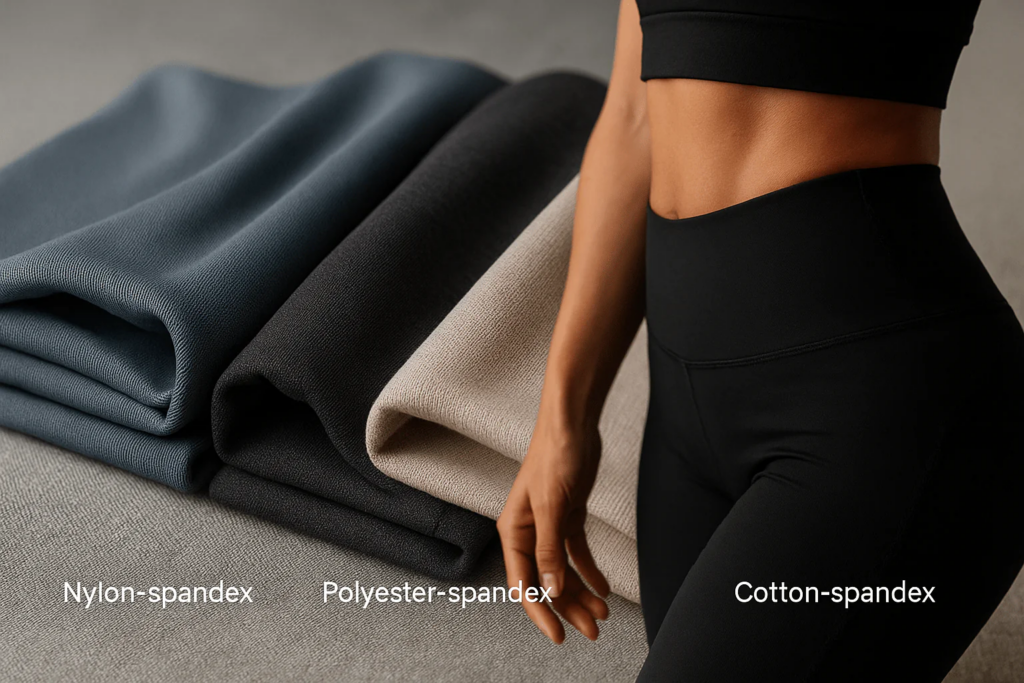
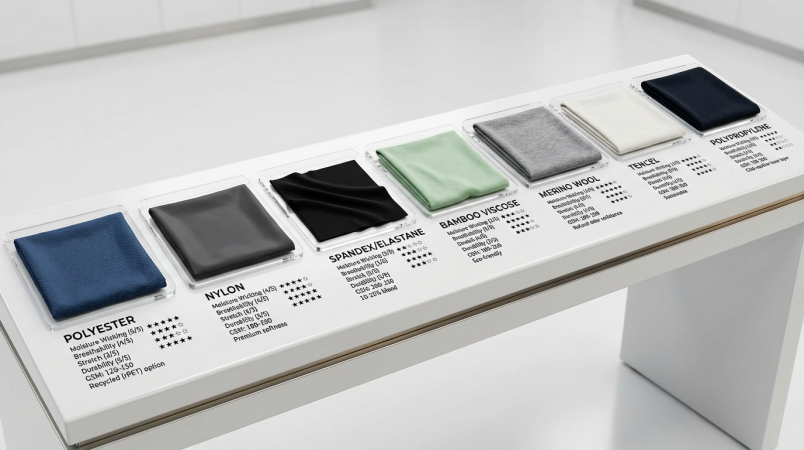
Nylon, spandex, and polyester are the dominant fibers in sportswear knitting due to their high elasticity, moisture management, durability, and ability to blend for performance optimization.
In our experience working with sportswear brands, the choice of fiber deeply impacts fabric performance, durability, and customer satisfaction. The sportswear knitting process relies heavily on fibers that can balance stretch, moisture control, and abrasion resistance.
Overview of Key Fibers in Sportswear
- Polyester – Holds about 60% market share, delivering moisture-wicking capacity of 80–90% and offering high cost-efficiency.
- Spandex – Typically blended at 5–20%, provides over 95% stretch recovery, crucial for compression and fit retention.
- Nylon – Represents roughly 20–25% market share, valued for abrasion resistance that is 2–3× higher than polyester and a softer hand feel.
Fiber Blend Ratios and Performance Characteristics
| Fiber Type | Common Blend Ratio | Performance Traits |
|---|---|---|
| Polyester | 80–100% (up to 100% recycled) | ✅ High moisture-wicking (80–90%), 🚀 Cost-effective, 💡 Sustainable options with rPET. |
| Spandex | 5–20% | ✅ Excellent stretch recovery (>95%), 🚀 Enhances durability and fit retention. |
| Nylon | 20–80% | ✅ Superior abrasion resistance (⚠️ 2–3× polyester), 💡 Moderate moisture-wicking (70–80%). |
| Polyester/Spandex & Nylon/Spandex | Variable | ✅ Balanced comfort, durability, and elasticity. |
How Knit Density Affects Stretch, Breathability & Comfort
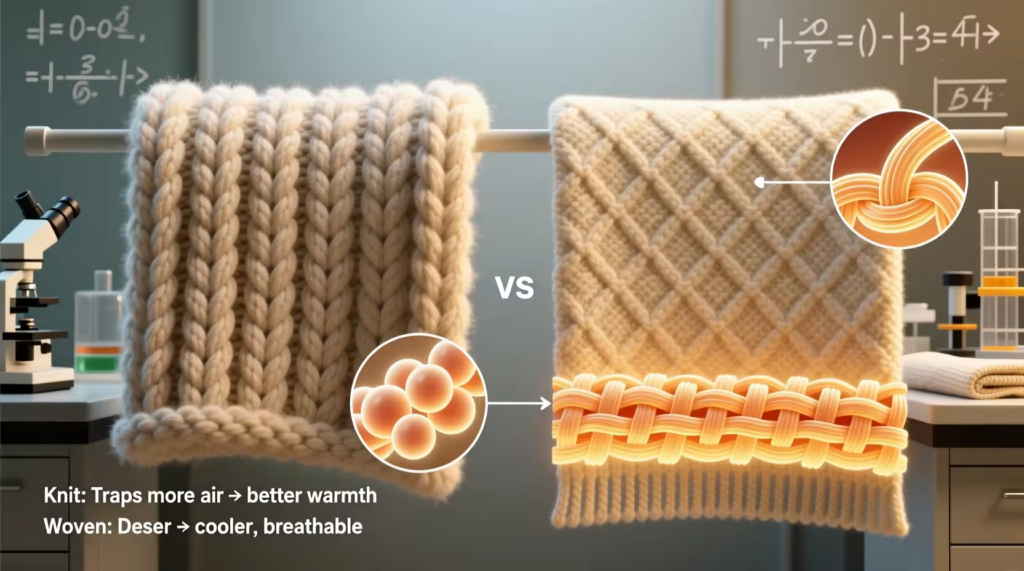
Knit density directly influences the stretch, breathability, and comfort of sportswear fabrics: higher knit density typically increases fabric stability and durability but reduces stretch and air permeability, while lower knit density enhances stretch and breathability but may compromise support and shape retention.
In sportswear knitting processes, the way loops are arranged and counted per unit area greatly affects how the fabric behaves during athletic use. By adjusting knit density, manufacturers can control critical features like stretch, ventilation, and support.
Understanding Knit Density and Its Measurement
Knit density is measured as the number of loops per unit area, often expressed in loops/cm². This metric determines how tight or loose the fabric is knitted, which directly influences the fabric’s physical properties.
- Stitch density varies by knit type — for example, 2×2 rib structures usually have the highest density.
- Double-ply yarns tend to produce lower density fabrics.
- Loop length matters: shorter loops increase stitch density and limit stretch; longer loops reduce density and allow more flexibility.
Impact on Stretch, Breathability and Comfort
| Knit Density Level | Performance Effect |
|---|---|
| High Density | Improves stability, firmness, and durability but reduces stretch and air permeability |
| Low Density | Enhances stretch, breathability, and softness but may reduce shape retention and support |
- Air permeability is greater in low-density fabrics like bi-layer mesh, aiding moisture management.
- Compression levels drop as stitch density rises.
- Softness improves with higher stitch density and double-knit designs.
Choosing Knit Density Based on End-Use and Fabric Structure
- High-impact sportswear benefits from higher knit density for added firmness and abrasion resistance.
- Lightweight yoga apparel or base layers work best with lower density for maximum stretch and ventilation.
- Yarn choice matters — double ply yarns lower stitch density and may increase shrinkage, while rib knits improve hand feel and stability.
- Always balance knit density to align with comfort, durability, and movement goals for the end user.
Elevate Your Brand with Precision Sportswear Manufacturing
Partner with Sansan Sports to access cutting-edge R&D, sustainable materials, and flexible production tailored to your brand’s unique needs. Experience seamless collaboration from design innovation through global delivery—ensuring premium quality and rapid market readiness.

Advanced Knitting Machines: Precision in Motion
Advanced knitting machines transform sportswear manufacturing by offering high-speed, fully automated, and precise production. They enable seamless, engineered, and high-performance fabrics with minimal human intervention to meet growing demands for performance and innovation.
In our experience working with sportswear brands, advanced knitting machinery has become a cornerstone of apparel innovation. These machines combine speed, precision, and automation to deliver fabrics that support both performance and design flexibility.
Market Overview and Growth Trends
The global knitting machine sector is undergoing strong expansion, driven by demand for high-quality sportswear fabrics and efficient production systems. Multiple market segments show promising growth trajectories.
| 📊 Segment | 2024 Value | Forecast Value | CAGR |
|---|---|---|---|
| Global knitting machine market | $5.18 B | $10.54 B (2034) | 🚀 7.3% (2024–2032) |
| 3D knitting machines | $1.3 B | $2.2 B (2034) | 🚀 5.7% |
| Large circular knitting machines | $1,076 M | $1,378 M (2032) | 🚀 3.2% |
| Warp knitting machinery | $1.5 B (2023) | $2.8 B (2028) | 🚀 Growth trend |
Circular knitting machines hold a 35% share of the market, with fully automatic units forming the largest segment. The outlook is defined by the convergence of automation and high-performance sportswear demands.
Technological Features and Performance Benefits
Advanced knitting machines are designed to maximize precision and productivity. They use integrated control systems and AI to deliver consistent quality at speed.
- Up to 40% faster operational speed compared to traditional models.
- AI-driven defect detection cuts fabric flaws by 30–50%.
- Fully automated operation reduces labor costs by up to 60%.
- Real-time monitoring, digital controls, and automated yarn feeders enhance consistency.
- Robotic arms and seamless 3D knitting enable complex, form-fitted sportswear.
- Capability to integrate smart textile elements like embedded pressure sensors.
These features align closely with modern sportswear performance goals, supporting breathable, lightweight, and ergonomic designs that meet both professional and casual wear needs.
Applications and Market Drivers in Sportswear
Sportswear brands leverage large circular and warp knitting machines for their ability to produce fabrics with excellent stretch and durability. This makes them ideal for activewear that must withstand repeated motion and washing.
- Fastest-growing application segment driven by athleisure and performance trends.
- Production of ergonomic, breathable, and lightweight fabrics for active lifestyles.
- Adoption of smart textiles and sustainable materials to meet evolving consumer values.
- Modular and upgradable machine controls to enhance manufacturing agility.
In our projects, these capabilities translate to shorter lead times and the flexibility to adapt designs in real time, providing brands with a competitive advantage.
For brands aiming to lead in performance apparel, these investments are increasingly a matter of business continuity rather than optional upgrades.
Seamless Knitting Technology: Comfort Without Stitch Lines
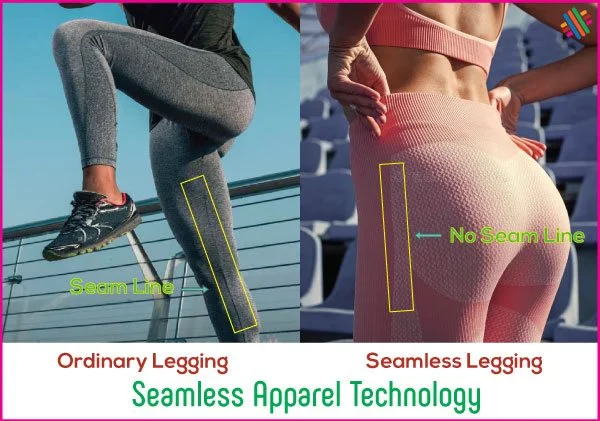
Seamless knitting technology eliminates traditional stitch lines by producing entire garments in a single, continuous process, resulting in superior comfort, reduced material waste, and up to 40% lower production costs compared to cut-and-sew methods. It is especially valued in sportswear for enhanced fit, flexibility, and advanced fabric integration.
In our experience working with global sportswear brands, seamless knitting has become a preferred manufacturing approach for performance apparel. It enables higher comfort, precise fit, and quicker turnaround times while addressing sustainability demands in the industry.
Efficiency and Cost Benefits
| Factor | Seamless Knitting ✅ | Traditional Cut-and-Sew ❌ |
|---|---|---|
| Production Speed | 🚀 Up to 35% faster | Slower due to manual cutting and stitching |
| Production Costs | 💡 Up to 40% lower | Higher due to more labor steps |
| Material Waste | ✅ Almost zero | ❌ About 30% loss |
| Labor Requirements | ⚡ Minimal – no spreading, cutting, sewing | High – multiple manual steps |
| Retail Pricing | ⚠️ May be 10–15% higher | Standard pricing |
Technical Features and Manufacturing Process
- Uses computerized circular knitting machines that create garments in a continuous, single-piece process.
- Wide gauge range from 7 to 32 for fabric flexibility and customization.
- Allows integration of advanced features like embedded sensors and high-stretch textiles with up to 200% elongation.
- No stitch lines for improved fit, comfort, and unrestricted movement in sportswear.
- Enables rapid design changes and mass customization without lengthy cut-and-sew workflow.
Sustainability and Environmental Impact
- Reduces fabric waste by up to 90% compared to traditional garment manufacturing.
- Water usage can drop by around 30% due to integrated 3D knitting.
- Virtually eliminates textile leftovers, aligning with circular economy principles.
- Lower labor and resource input contribute to a reduced carbon footprint.
- Ideal for sustainable and ethical apparel brands that meet global compliance standards.
Sustainability in Modern Knitting Processes
Sustainability in modern knitting processes is driven by the adoption of recycled and biodegradable yarns, waterless dyeing techniques, seamless knitting, and zero-waste manufacturing, resulting in significant reductions in textile waste, water usage, and carbon footprint across the sportswear sector.
The sportswear knitting process is undergoing a major transformation as brands seek to reduce environmental impact without compromising performance. In our experience, innovative yarns and advanced knitting methods are creating more efficient production workflows and eco-friendlier apparel lines.
Key Sustainability Metrics in Knitting
Recent figures highlight both the urgency and the opportunity for progress in sustainable knitting. The data points below illustrate the scale of the issue and the market shift toward greener solutions.
| 📊 Metric | Value | Insight |
|---|---|---|
| Annual global textile waste | 92 million tons | ⚠️ Indicates major waste management challenge |
| Global clothing recycling rate | 12% | ❌ Highlights limited reuse capacity |
| Demand increase for eco-friendly yarns (2022) | 50% | 🚀 Growing market adoption |
| Yarn producers with biodegradable/recycled options | 40% | ✅ Expanding supply availability |
| Water savings from waterless dyeing/digital printing | Up to 90% | 💡 Major environmental benefit |
| Performance knitted fabric market projection (2025) | $5 billion at 7% CAGR | 🚀 Positive growth outlook |
Innovations Driving Sustainable Knitting
Technological and material advancements are enabling sportswear manufacturers to address ecological impact while delivering performance-driven products.
- Use of recycled polyester, organic cotton, hemp, and biodegradable yarns to reduce reliance on virgin synthetics.
- Seamless knitting technology that eliminates cut-and-sew steps, minimizing waste and improving garment durability.
- Adoption of waterless and plant-based dyeing methods to cut water use by up to 90% and lower chemical runoff.
- Integration of digital printing and automated knitting for improved efficiency and reduced production scrap.
FAQs
What’s the difference between warp and weft knitting?
Warp knitting creates vertical loops along the fabric’s length, which often results in a more stable and less stretchy fabric. Weft knitting forms horizontal loops side by side, offering more elasticity ideal for activewear.
In our experience with the sportswear knitting process, warp is often chosen for compression gear where shape retention is key, while weft knitting is preferred for garments that require greater comfort and movement.
How does knitting impact fabric performance?
Knitting determines stretch, breathability, and weight distribution in the final fabric. For example, finer gauge knitting yields lightweight, smooth textures, while coarser gauges improve insulation and durability.
In high-performance sportswear, knitting techniques are combined with yarn technology to achieve moisture-wicking, quick-dry, and ergonomic fit properties that enhance athletic performance.
Is seamless knitting eco-friendly?
Seamless knitting can be eco-friendly because it minimizes fabric waste by producing garments in a single tube-like piece. This eliminates excess cutting and reduces leftover scraps.
When paired with sustainable yarns like recycled polyester or organic cotton, the environmental impact drops further. We often combine seamless knitting with performance fibers to balance eco-responsibility and athletic functionality.
Conclusion: Crafting Performance Through Precision
Sportswear brands that align fiber selection, knit density, advanced machine capabilities, and sustainable methods gain the ability to engineer fabrics with targeted performance traits. Combining warp, weft, and seamless knitting with strategic fiber blends produces garments that deliver comfort, durability, and flexibility while meeting environmental goals.
For businesses, adopting this integrated approach reduces waste, shortens lead times, and enables rapid adaptation to shifting trends. Leveraging innovations such as automated knitting, sustainable materials, and design customization strengthens competitiveness in both performance and lifestyle segments.
To bring precision-driven performance apparel to life, collaborating with experienced custom activewear manufacturers is essential. Sansan Sports is a trusted United States sportswear manufacturer, also supporting global brands seeking reliable activewear manufacturers Australia solutions and advanced production from a proven seamless clothing manufacturer. Visit https://sansansports.com/
to explore how we help brands scale innovative sportswear collections with speed, quality, and confidence.