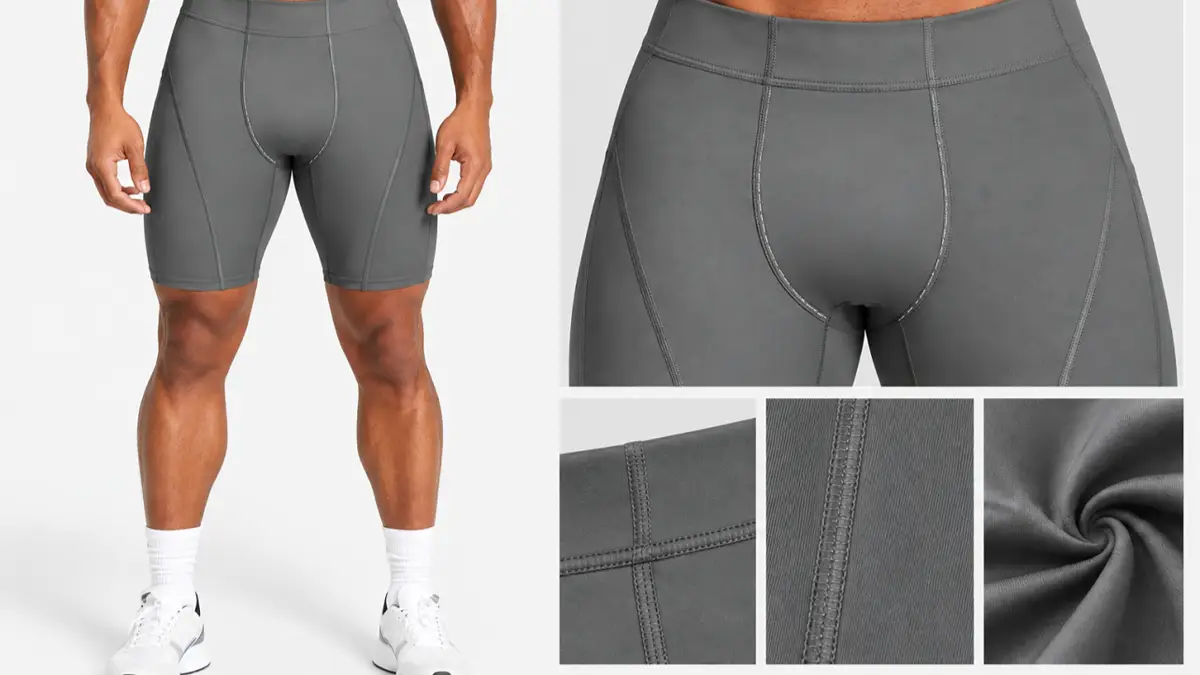
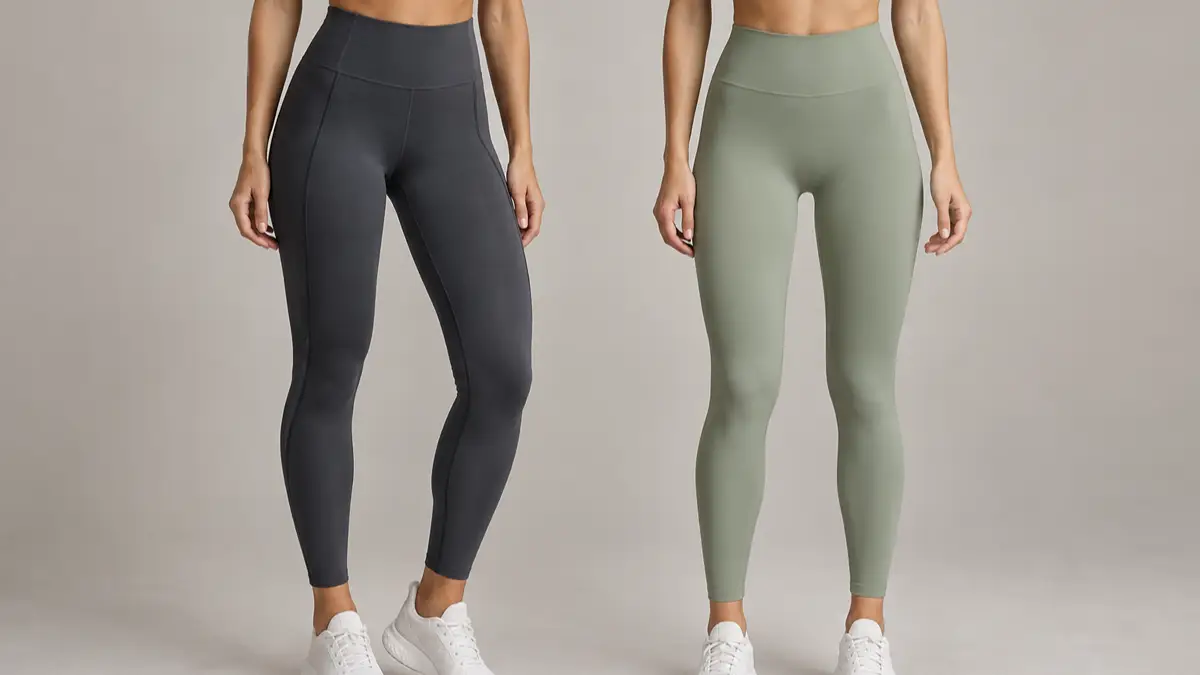
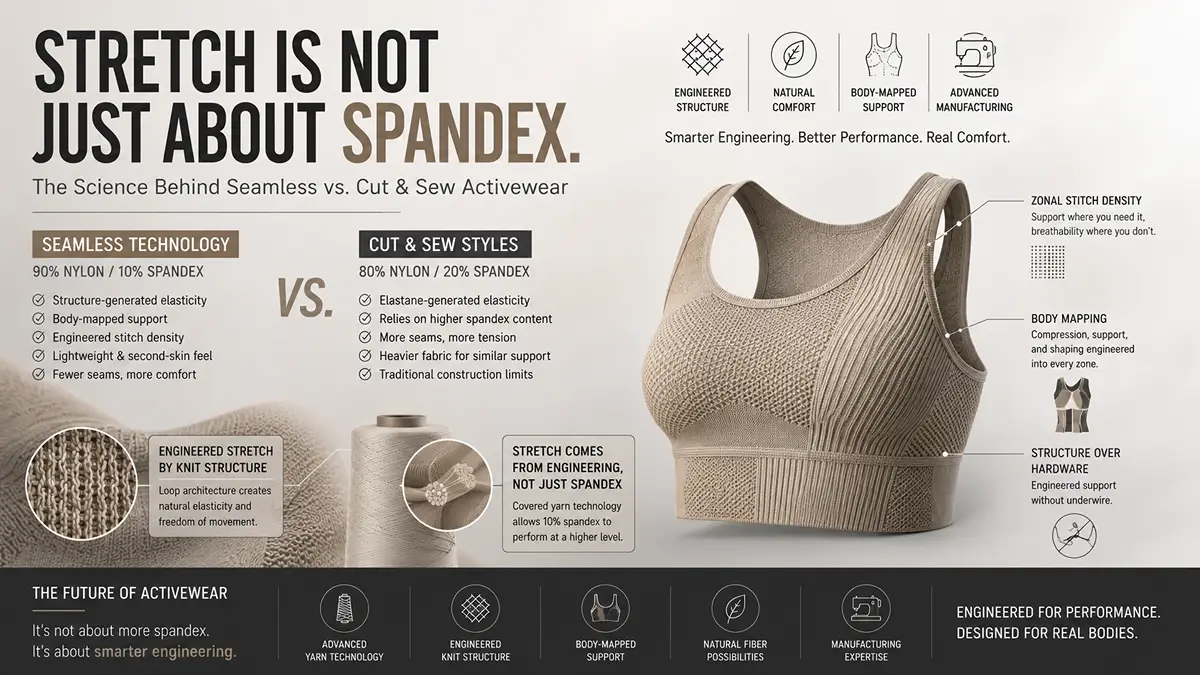
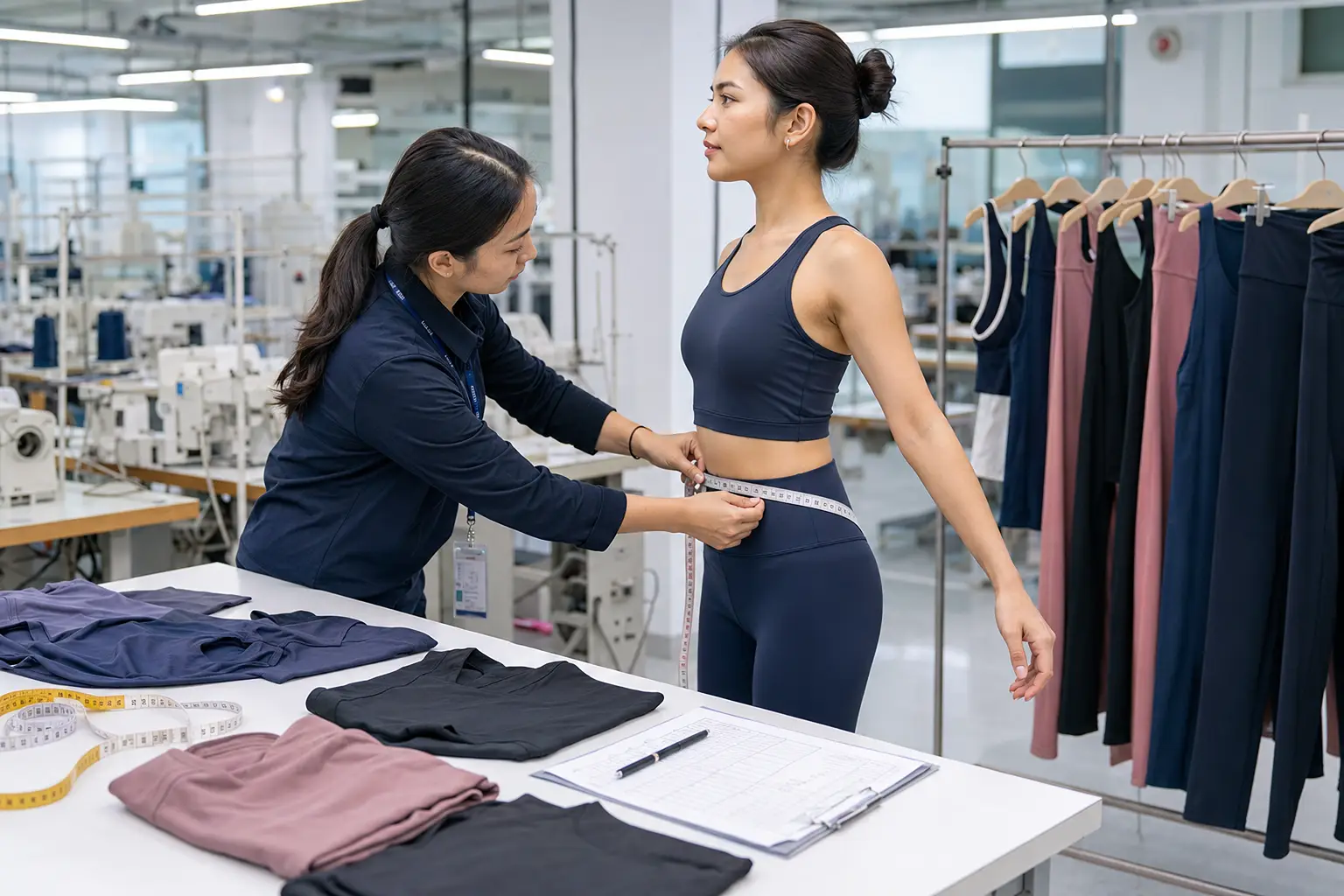
For activewear brands focused on yoga wear, roupas de ginástica, and sportswear, color is not just decoration — it is part of the brand identity.
No entanto, many brands encounter the same frustrating issue during development: even using the same Pantone code, variations in fabric structure, elasticidade, and surface texture often lead to visible color differences within the same collection.
Hoje, we want to share how professional custom fabric dyeing actually works, and how we help brands achieve stable and consistent color results across multiple activewear fabrics.
Why Does Color Difference Happen in Activewear?
Many people assume: “Same Pantone code = same color result.”
Na realidade, fabric dyeing does not work that way.
Different fabrics absorb dye differently due to:
- Fabric composition
- Yarn structure
- Knitting construction
- Densidade do tecido & GSM
- Surface texture
- Elasticity level
- Dyeing temperature tolerance
Por exemplo:
A brushed nylon/spandex fabric and a smooth interlock fabric may use the exact same Pantone code, but after dyeing, one may appear deeper, cooler, softer, or more saturated than the other. A related topic is Náilon versus. Poliéster, which explains how it impacts overall performance.
This natural variation is unavoidable in textile manufacturing.
The real difference between manufacturers is not whether color difference exists — but whether they know how to control it professionally.
Etapa 1: Fabric Matching Based on Product Function
Before dyeing even begins, we first determine the most suitable fabric combinations according to the garment category and performance requirements.
Por exemplo:
- Naked-feel yoga leggings
- Sculpting compression bras
- Lightweight running tops
- Quick-dry training shorts
- Seamless gym sets
Different functions require different fabric constructions.
The fabric itself becomes the foundation of color performance.
Nesta fase, we evaluate:
- Stretch performance
- Surface texture
- Moisture absorption
- Dye compatibility
- Recuperação elástica
- Functional finishing requirements
This step greatly impacts the final color consistency later in production.
Etapa 2: Pantone Confirmation & ABC Lab Dip System
Once the fabric is confirmed, the customer provides the target Pantone color reference.
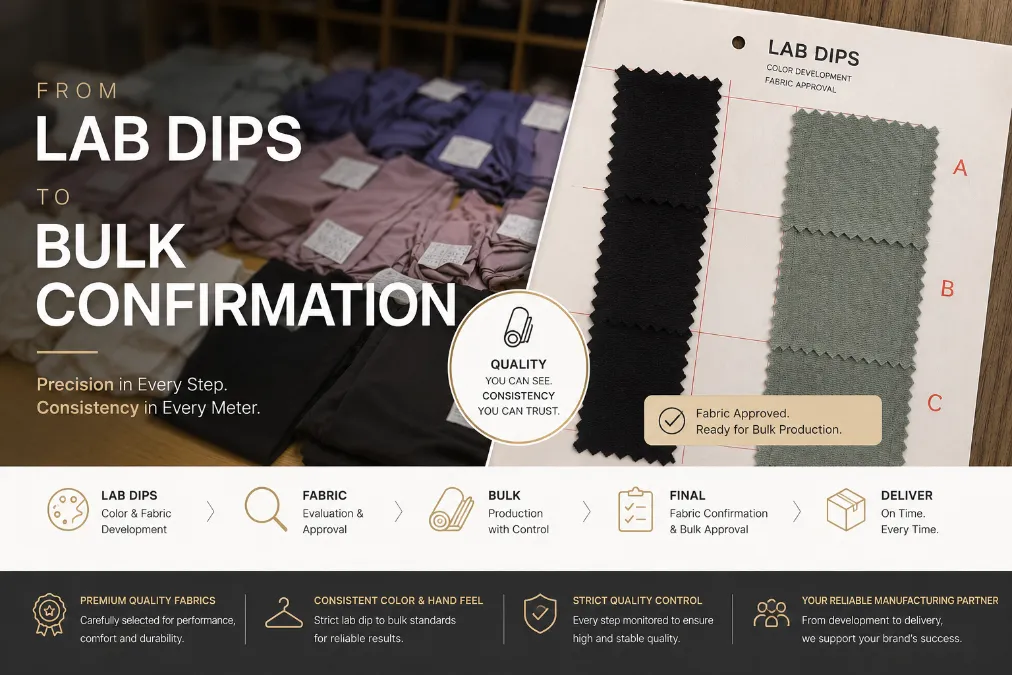
Instead of creating only one lab dip like many factories, we use an ABC three-tone lab dip system.
This means we develop:
- A version slightly lighter
- A version slightly deeper
- A version slightly adjusted in tone/saturation
This gives customers a much more accurate visual comparison before bulk dyeing begins.
Because under different lighting conditions, texturas, and garment applications, tiny color differences become extremely obvious on activewear products.
The ABC system helps brands avoid costly color approval mistakes before mass production.
Etapa 3: Professional Color Correction Between Different Fabrics
This is the core technical step.
Even under the same Pantone code, different fabrics naturally produce different color results after dyeing.
In most factories, this issue is simply accepted.
But for premium activewear brands, color inconsistency across a set can seriously damage product presentation and perceived quality.
To solve this, our color revision team performs targeted color correction for each fabric individually.
We adjust:
- Dye concentration ratios
- Temperature curves
- Dyeing duration
- Chemical auxiliaries
- Finishing process parameters
The goal is not to force every fabric to become “identical,” because physically that is impossible.
The goal is visual consistency when all garments are displayed and worn together.
This is the real standard professional brands care about.
For brands interested in more responsible production methods, sustainable dyeing practices are becoming an important part of modern sportswear manufacturing.
Etapa 4: Pre-Production Confirmation Before Bulk Dyeing
Before full production starts, we always arrange:
- Bulk pre-production fabric confirmation
- Final color approval sample
- Hand feel verification
- Esticar & recovery checking
- Functional performance checking
Only after all confirmations are approved do we proceed into bulk fabric dyeing and garment production.
This process helps minimize:
- Bulk color deviation
- Customer complaints
- Re-dye risks
- Inventory losses
- Collection inconsistency
Why Color Consistency Matters More in Activewear
In fashion products, slight color differences are sometimes acceptable.
But in activewear, customers often purchase:
- Matching bra & legging sets
- Coordinated studio collections
- Tonal layering pieces
- Seasonal color stories
Even small color variation becomes immediately visible.
This directly affects:
- Product premium perception
- Customer satisfaction
- Return rates
- Brand professionalism
- Social media presentation
Para marcas de roupas esportivas em crescimento, stable color consistency is not just a manufacturing detail.
It is part of brand building.
To better understand the full system, see our breakdown of Técnicas de tingimento e acabamento na fabricação de roupas esportivas
Our Standardized Dyeing Advantages
ABC Three-Tone Lab Dip System
More accurate color decision-making before production.
Professional Multi-Fabric Color Correction
Reduce visible color difference across entire collections.
Full Pre-Production Verification
Control quality before bulk risks happen.
Pantone-Based Standardization
Stable and repeatable dyeing process for long-term collections.
Activewear-Focused Development Experience
Understanding stretch fabrics, tecidos de compressão, brushed fabrics, and performance finishing.
Considerações Finais
Na fabricação de roupas esportivas, qualidade premium is not created by design alone. It is built through control of every technical detail behind the product. Color consistency is one of the most underestimated — yet most important — parts of building a professional activewear brand.
The brands that scale successfully are usually the ones that standardize these details early.
If you’re currently developing custom colors for yoga wear, roupa de ginástica, or performance apparel, we’d be happy to exchange ideas and share professional solutions.