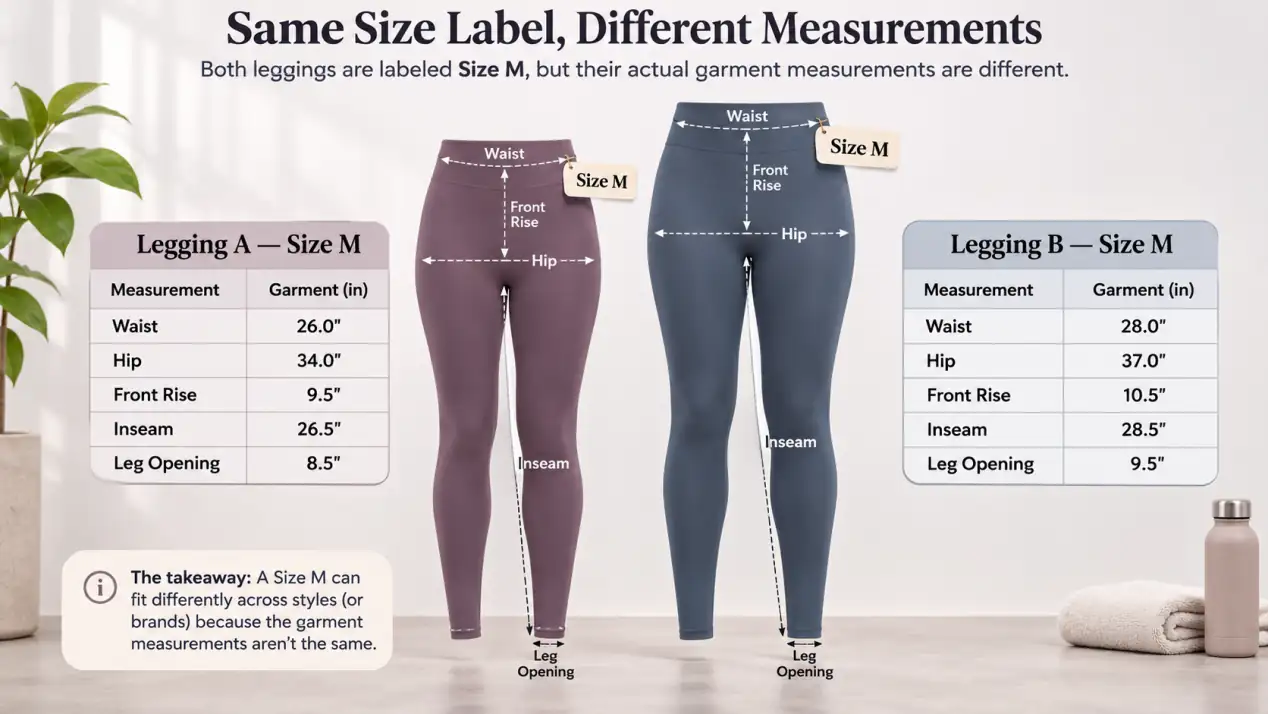
Why can two pairs of size M leggings from the same activewear brand have slightly different measurements, even when produced by the same factory?
For growing DTC activewear brands, consistent sizing is essential for customer satisfaction. But small measurement differences can occur during mass production because of fabric behavior, corte, de costura, e processos de acabamento.
These differences are known as manufacturing tolerances. Understanding how they work helps brands establish realistic quality requirements and maintain consistent garment sizing across production batches.
What Are Manufacturing Tolerances in Activewear?
Manufacturing tolerance refers to the acceptable difference between a garment’s approved measurement and its actual finished measurement.
Por exemplo, if leggings have an approved flat waist width of 32 cm with an agreed tolerance of ±0.5 cm, measurements between 31.5 e 32.5 cm are acceptable for that point.
This does not mean every difference is acceptable. Each measurement must remain within the limits agreed between the brand and manufacturer.
Buyer insight: Tolerances should be confirmed during product development, not after bulk production.
Why Same-Size Garments Vary During Mass Production
Even when a factory uses the same approved pattern, small variations can occur during manufacturing.
Stretch fabrics may relax differently after cutting. Sewing tension, fabric handling, and finishing can also influence finished dimensions.
Por exemplo, two leggings may have slightly different waistband measurements because of variations in elastic tension or attachment during sewing. Both garments may still fall within the approved tolerance range.
The manufacturing goal is not necessarily zero variation. It is keeping differences within agreed limits without affecting garment function.
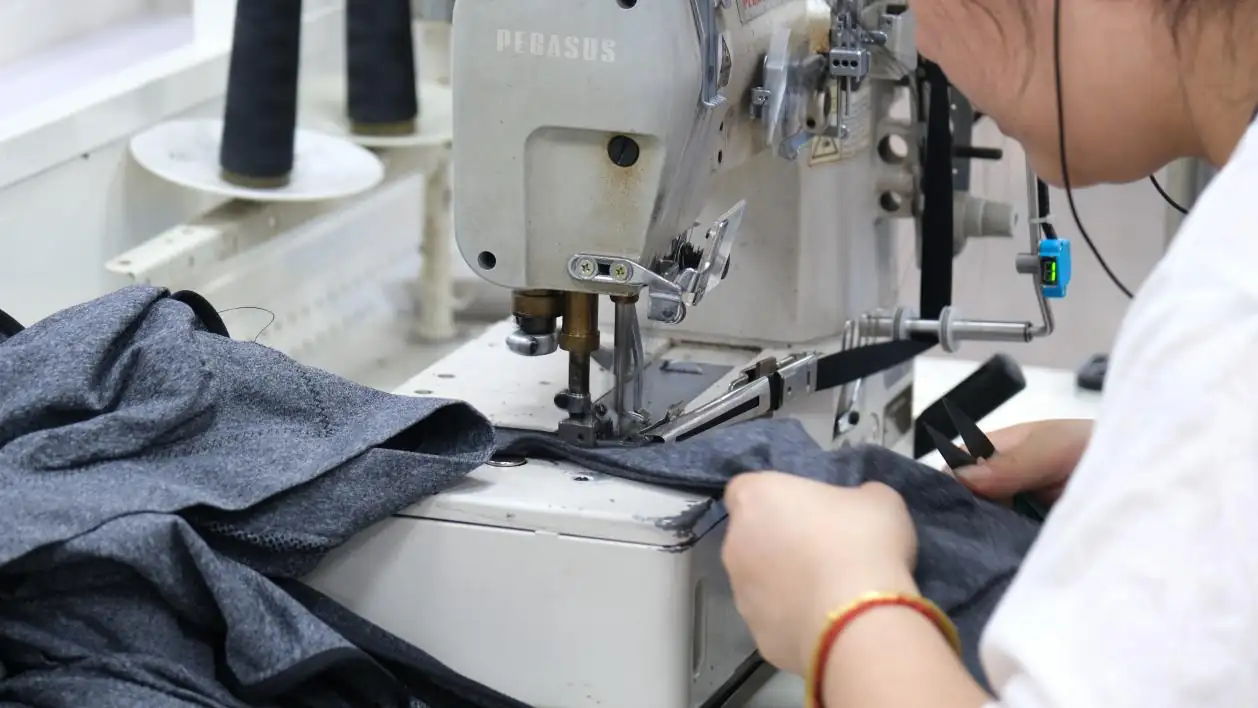
Key Garment Measurements That Require Tolerance Control
There is no single universal tolerance range suitable for every activewear product.
Acceptable limits depend on:
- Garment construction
- Fabric properties
- Measurement points
- Buyer requirements
| Measurement point | Why accuracy matters |
|---|---|
| Waist width | Waistband comfort and stability |
| Hip width | Fit and movement |
| Chest width | Upper-body comfort |
| Comprimento da costura interna | Leggings length consistency |
| Front and back rise | Crotch fit and coverage |
| Sleeve length | Arm coverage and mobility |
Smaller garment details may require tighter tolerances than larger dimensions.
Important: Brands should establish clear measurement points before production. Esse activewear size chart guide explains how garment measurement points are organized and documented.
Fabric Stretch Impact on Production Variance
Stretch fabric behaves differently from rigid woven material.
Nylon-spandex and polyester-spandex fabrics can extend during handling and recover afterward. Their dimensions may also change after washing or heat treatment.
Consistent garment measurements depend on:
- Peso do tecido
- Knitting structure
- Stretch recovery
- Dimensional stability
Por exemplo, leggings made with fabric that recovers poorly may become loose even when their initial measurements meet specifications.
Brands should therefore evaluate fabric recovery and dimensional stability alongside garment measurements.
Cutting and Sewing Tolerance Realities Explained
Measurement variation can begin during cutting and continue through sewing.
Fabric movement during cutting may affect pattern-piece dimensions. During sewing, seam allowances, feeding tension, and elastic attachment can influence garment measurements.
Por exemplo, inconsistent waistband attachment may create differences in finished waist width.
Manufacturers can reduce these risks through controlled cutting procedures, approved sewing methods, e AQL-based apparel quality inspections
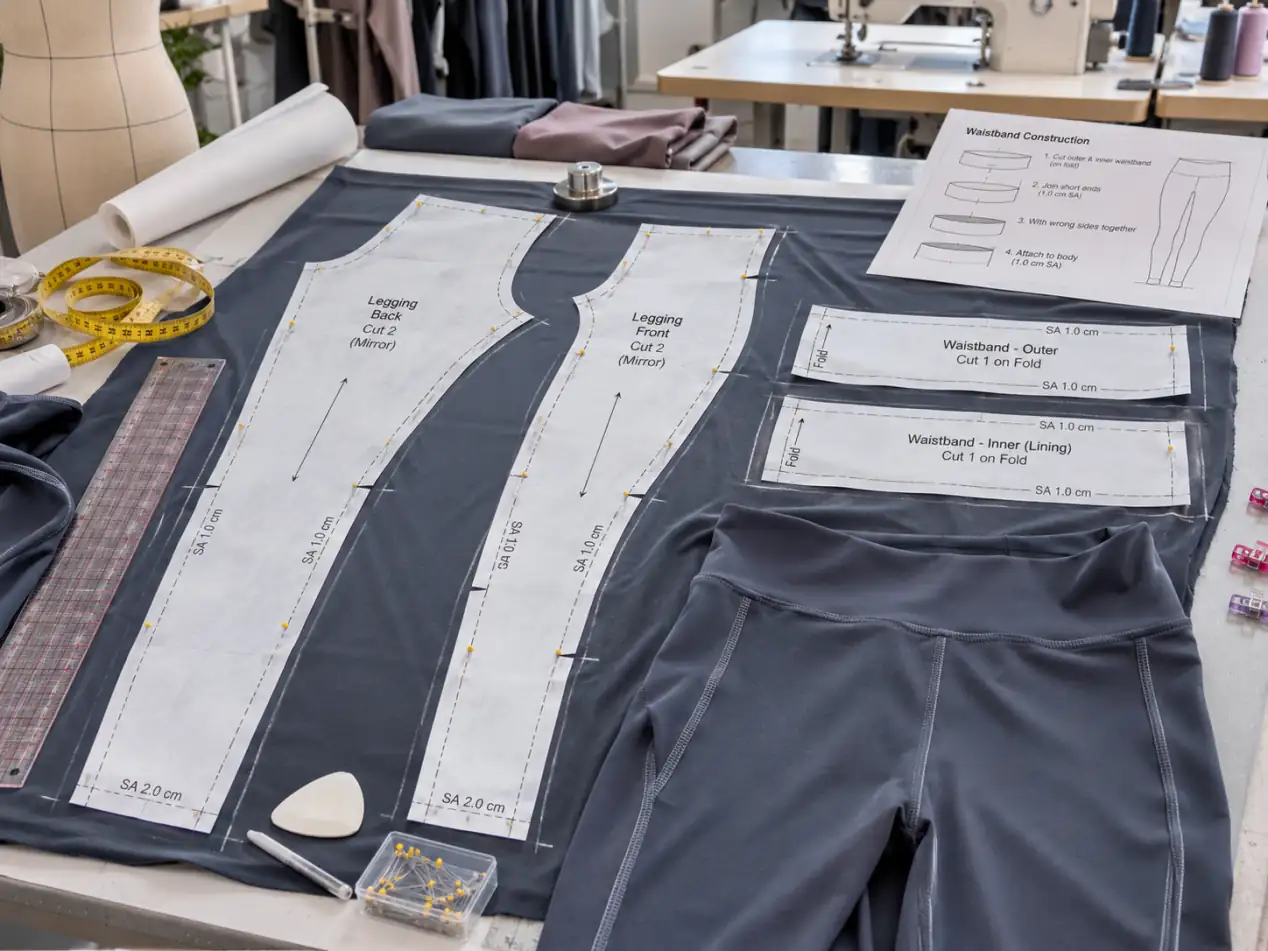
How Activewear Manufacturers Control Measurement Variations
No SANSANSUNSPORTS, we support growing activewear brands with size-chart review, physical sample fitting, and garment measurement verification.
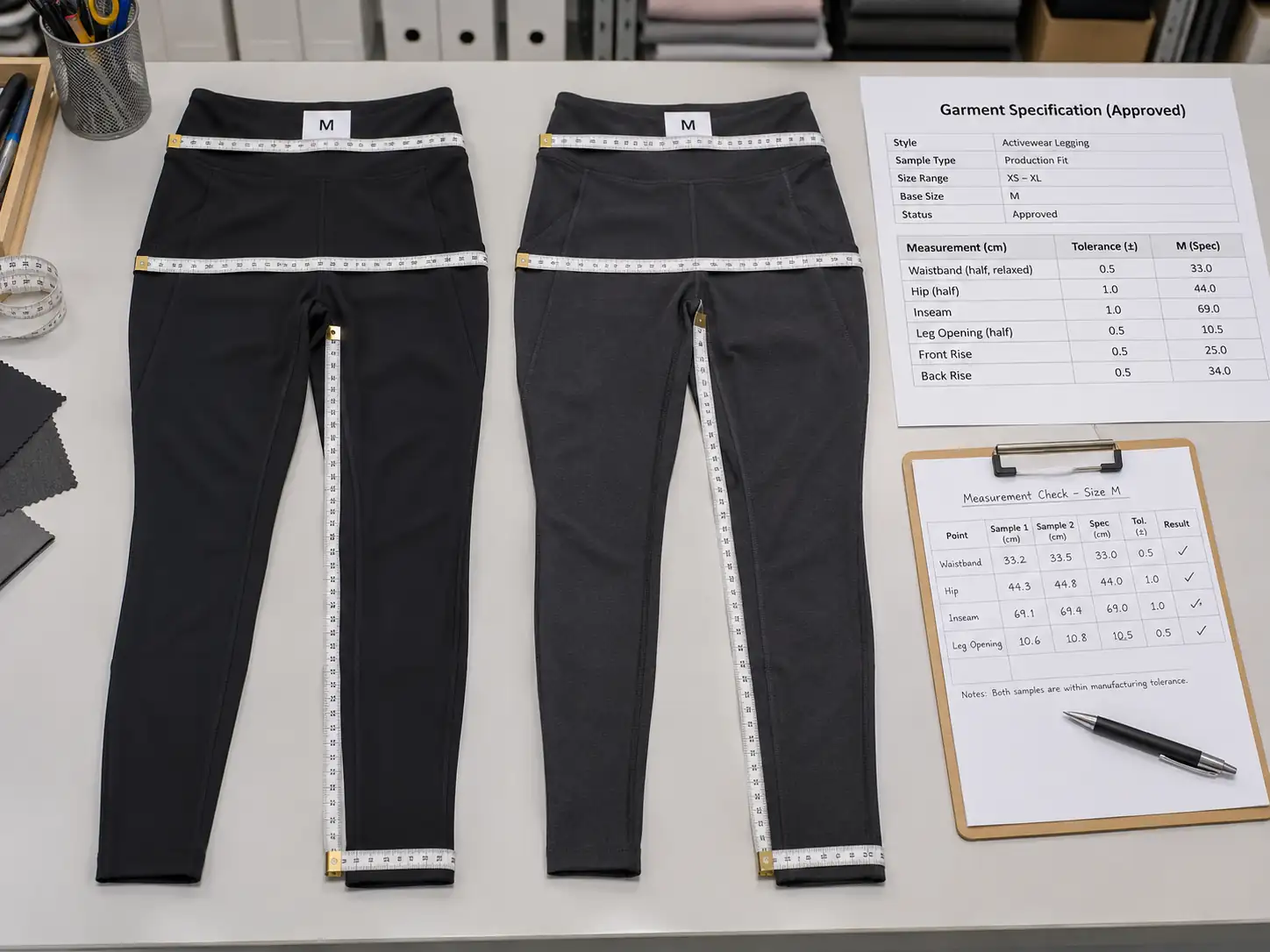
The important principle is to compare finished garments with approved specifications and agreed tolerances.
A practical quality-control process includes:
- Confirming the approved size chart and measurement methods.
- Checking physical samples before bulk production.
- Reviewing key garment measurements during production.
- Identifying deviations that exceed agreed limits.
- Checking finished garments against production requirements.
Minor differences within approved tolerances may be acceptable. But garments must also meet functional fit and appearance requirements.

How Top Brands Minimize Variance Across Batches
Consistent activewear sizing requires more than checking finished garments.
Brands should work with manufacturers to maintain approved patterns, fabric specifications, measurement methods, and production instructions across repeat orders.
They should also document previous fitting corrections and compare new production samples with approved references.
Para marcas em crescimento, documented specifications are especially valuable when replenishing bestselling styles.
Perguntas frequentes
How to Check Tolerance for Finished Garment Dimensions?
Lay the garment flat and measure each specified point using the approved measurement method. Compare the results with the size specifications and record any deviations. Measurements outside the agreed tolerance range should be reviewed.
What Is Chest Tolerance in Sizing?
Chest tolerance is the permitted difference between the specified chest measurement and the actual garment measurement. Its range depends on garment design, fabric properties, e construção. Brands and manufacturers should agree on limits before production.
Are Width and Chest Size the Same?
Não. Chest width is measured across a garment laid flat, while chest circumference measures around the full chest area. For symmetrical garments, circumference is generally twice the flat width.
How to Measure a Garment for Size?
Lay the garment flat without stretching it. Measure key points such as chest width, waist width, hip width, and inseam according to the approved measurement specification. Use the same method for every sample and production batch.
Is it normal for two leggings of the same size to measure slightly differently?
Sim. Small differences can occur during mass production, provided they remain within agreed measurement tolerances and do not compromise the required fit.
What is an acceptable measurement tolerance for activewear?
There is no universal value. Tolerances should be agreed for each measurement point based on fabric, design de vestuário, and manufacturing requirements.
Does being within tolerance guarantee a good fit?
Não. A garment can meet its measurement specifications but still have problems with waistband stability, fabric pressure, or movement comfort. Physical fit testing remains necessary.
How can activewear brands reduce sizing inconsistencies?
Brands should use:
- Approved size charts
- Standardized measurement procedures
- Controlled cutting and sewing processes
- Production quality inspections
Conclusão
Small measurement differences are a reality of activewear manufacturing, particularly when working with elastic fabrics.
But manufacturing tolerance should never become an excuse for uncontrolled sizing.
For growing DTC brands, reliable production depends on:
- Clear specifications
- Physical fitting
- Agreed tolerances
- Consistent quality checks
SANSANSUN SPORTS supports international activewear brands through OEM, ODM, and MDMD (Material – Design – Fabricação – Entrega) services, including pattern development, size-chart verification, amostragem, e fabricação.
Planning your next perneiras, sports bra, roupa de ginástica, or modest activewear collection? Contact SANSANSUN SPORTS to discuss measurement requirements, fitting standards, and quality expectations before bulk production.