Securing the right supply chain is critical, yet finding reliable sportswear manufacturers in the USA is often a complex challenge. Brands must constantly balance “Made in USA” quality with sustainable production costs and lead times.
To streamline your sourcing, we have curated a list of the top 8 US activewear manufacturers for 2026. This guide analyzes their capabilities, MOQs, and private label services to help you select the ideal partner for your business growth.
What Makes a Top Sportswear Manufacturer in the USA?
Top US sportswear manufacturers distinguish themselves through integrated technology stacks rather than single capabilities. Leaders combine advanced material science (moisture-wicking fibers), digital manufacturing (3D sampling), and strict quality assurance protocols. For example, established entities like Precision Sportswear Inc. leverage specialized cut-and-sew operations.
Technological Infrastructure and Innovation
To compete at the top level, clothing manufacturers rely on a blend of digital and physical technologies. Think of this infrastructure as the nervous system of the factory, ensuring that the design intent is perfectly translated into the final physical product without signal loss.
- ✅ Digital Prototyping: Adoption of 3D Virtual Sampling drastically reduces physical prototyping cycles. This acts like a digital dressing room, allowing designers to tweak fits and drape on a virtual avatar before cutting a single piece of fabric, speeding up time-to-market.
- ✅ Manufacturing Tech: Implementation of Seamless Knitting technology reduces seam friction and improves garment durability. This method constructs the garment in a single continuous process, similar to 3D printing, rather than stitching separate pieces together.
- ✅ Smart Automation: Utilization of smart factories with real-time monitoring matches the scale of leaders like Nike and Adidas. These systems track production efficiency instantly, much like a fitness tracker monitors heart rate during a workout.
- ✅ Material Science: Deployment of performance fibers specifically engineered for sweat-wicking and compression properties ensures the apparel meets athletic functional requirements.
Specialized Production and Quality Control Standards
Operational rigor is what separates average factories from top-tier facilities. Leading US manufacturers maintain versatility and strict oversight to ensure every item meets premium B2B buyer expectations.
- ✅ Production Versatility: Capabilities must span Cut and Sew manufacturing, heat transfer, screen printing, and sublimation under one operational framework. This allows a brand to source complex, multi-method designs from a single partner.
- ✅ Domestic Leaders: Companies like Precision Sportswear Inc. (established 1993) and Bella+Canvas set the standard for specialized domestic production, prioritizing consistency and ethical labor practices.
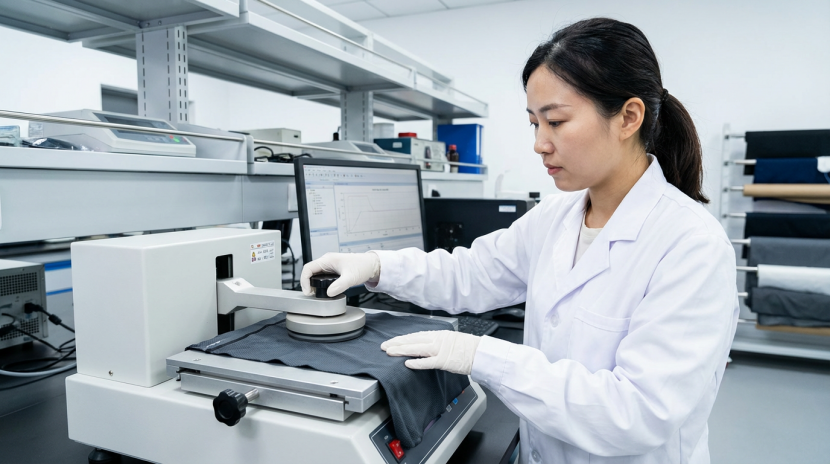
- ✅ Strict Quality Assurance: Top manufacturers operate bespoke final inspection departments where every unit undergoes strict compliance checks. Think of this as a final exam for every garment to ensure it meets material durability standards before shipment.
- ✅ Sustainability Focus: A shift toward organic materials, such as Royal Apparel’s organic cotton, and sustainable practices is now a baseline requirement for top-tier status rather than an optional add-on.
| Operational Capability | US Benchmark Standard | Sansansun Alignment |
|---|---|---|
| Manufacturing Flexibility | Integrated Cut-and-Sew & Specialized Tech | Dual facilities: 5,000㎡ Stitching & 3,000㎡ Seamless Factory |
| Equipment Quality | High-precision automation & knitting | 50+ Santoni seamless knitting machines (Global Standard) |
| Design Integration | 3D Sampling & Virtual Prototyping | 8-person design team providing 3D visuals & tech packs |
| Quality Assurance | Zero-defect tolerance & pre-shipment checks | 100% quality control on bulk orders & 72-hour response |
Top 8 Sportswear Manufacturers in USA (2026)
The US sportswear manufacturing landscape is currently bifurcated between massive legacy brands focusing on team sports and emerging players dedicated to sustainable material innovation. While heritage companies like Russell Athletic (est. 1902) dominate the institutional market, newer entrants are prioritizing carbon-neutral logistics and circular economy standards. Below is a curated list of the top manufacturers serving the US market, ranging from domestic specialists to integrated global partners.
| Manufacturer | HQ Location | Core Strength | Verdict / Best For |
|---|---|---|---|
| Columbia Sportswear | Portland, OR | Proprietary Omni-Tech Textiles | Global Outdoor Retail & Consumers |
| Russell Athletic | Bowling Green, KY | Team Uniforms & Durability | Institutional Sports & Team Dealers |
| VizApparel Ltd. | Dallas, TX | Waterproof & Modular Activewear | North America & Australia Fashion Brands |
| Seam Apparel Inc. | Miami, FL | Compression Wear & Workwear | Fashion Brands & Corporate Clients |
| ARGYLE Haus | Los Angeles, CA | E2E Platform & Swimwear | Mid-to-High End Private Labels |
| Badger Sportswear | Statesville, NC | OEKO-TEX Safety & Stock Inventory | Youth Sports & Schools |
| Girlfriend Collective | Seattle, WA | 100% Recycled Materials (RPET) | DTC Eco-Conscious Consumers |
| Athleta | San Francisco, CA | Certified B Corp & Premium Yoga | Premium Women’s Activewear |
Columbia Sportswear
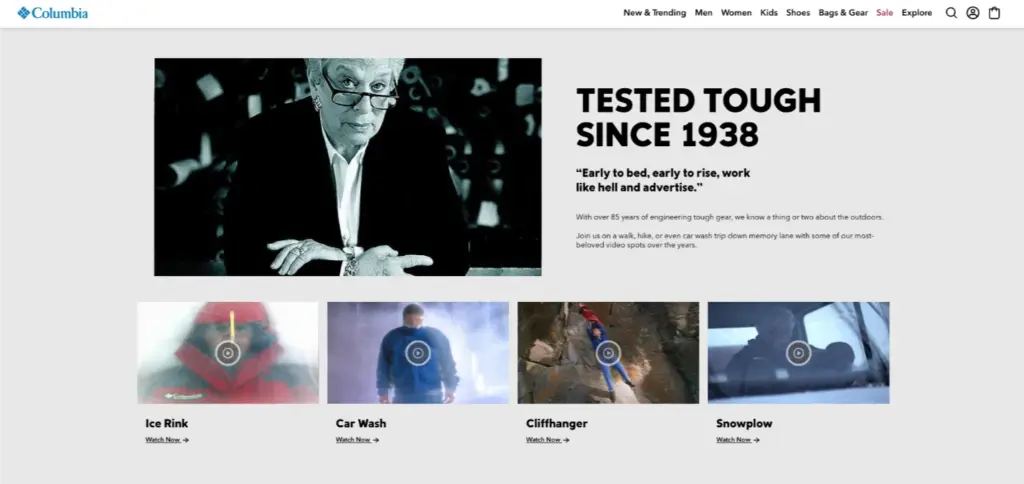
🏆 Verdict: Global Consumer Market Specialist
Columbia Sportswear commands a significant share of the global outdoor sector, backed by $3.424 billion in annual revenue and a workforce of over 8,000 employees. Based in Portland, Oregon, the organization oversees a diversified portfolio that includes SOREL, Mountain Hardwear, and prAna. Their market position relies heavily on internal textile innovation rather than off-the-shelf components. The proprietary Omni-Tech system delivers air-permeable waterproofing, while Omni-Heat technology utilizes thermal reflective patterns to maximize heat retention without added bulk. This focus on owned intellectual property allows for strict quality control and distinct product differentiation in a crowded marketplace. For retail partners, this infrastructure guarantees supply chain stability and brand recognition. The company targets performance-driven consumers requiring reliable gear for hiking, fishing, and alpine environments. Their operational scope ensures consistent delivery across international markets, prioritizing functional durability over fast-fashion trends.
At a Glance:
- 📍 HQ Location: Portland, Oregon (Global Operations)
- 🏭 Core Strength: Proprietary Omni-Tech Textiles, Performance Apparel
- 🛒 Serving Markets: Global Outdoor Retail, Cold Weather Gear
Why We Picked Them:
| The Wins (Pros) | Trade-offs (Cons) |
|---|---|
|
|
Russell Athletic
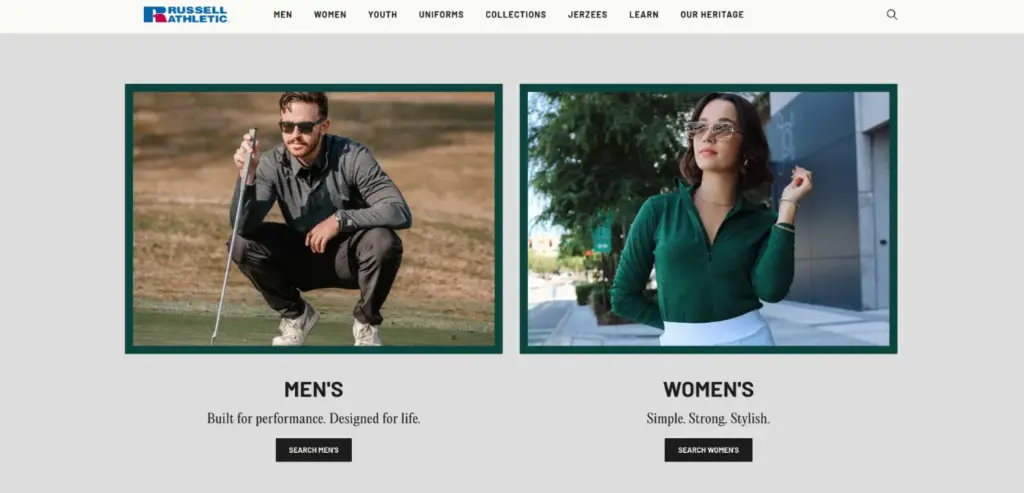
🏆 Verdict: Institutional Sports, Team Dealers Specialist
Russell Athletic commands a distinct position in the athletic apparel sector, leveraging manufacturing infrastructure established in 1902 to serve the institutional and team dealer markets. Unlike fast-fashion suppliers, this Bowling Green-based entity prioritizes structural integrity and fabric resilience, specifically engineering textiles for contact sports and high-frequency laundering. Their portfolio relies on performance-driven technologies, including moisture-management systems and reinforced stitching patterns essential for collegiate and varsity levels. Buyers procuring for leagues or large-scale educational contracts benefit from their streamlined inventory models, which reduce lead times for custom team orders. Recent integration of sustainable cotton practices into their mass-market lines addresses growing corporate responsibility mandates without compromising the heavyweight durability their fleece and jersey products are known for. This combination of heritage reliability and modern supply chain compliance makes them a pragmatic partner for distributors seeking consistent SKU availability and long-term product lifecycles in the team uniform category.
At a Glance:
- 📍 HQ Location: Bowling Green, Kentucky
- 🏭 Core Strength: Team Uniforms, Fleece, Performance Basics
- 🛒 Serving Markets: Institutional Sports, Team Dealers
Why We Picked Them:
| The Wins (Pros) | Trade-offs (Cons) |
|---|---|
|
|
VizApparel Ltd.

🏆 Verdict: North America, Australia Specialist
VizApparel operates as a dedicated manufacturing partner for fashion brands targeting North America and Australia. Since 2015, this Dallas-based entity has distinguished itself through a rigorous focus on technical textile engineering and modular design architecture. They move beyond standard garment assembly by integrating high-performance waterproof membranes and adaptive fabric technologies suitable for active outdoor environments. Their production lines handle the complex joinery and seam sealing required for modular activewear, ensuring functional durability in harsh weather conditions. For brands prioritizing supply chain responsibility, VizApparel integrates carbon-neutral shipping protocols directly into their logistics framework. This operational structure assists client brands in reducing Scope 3 emissions without disrupting delivery timelines or inventory flow. By combining technical outerwear capabilities with sustainable logistics, the company offers a pragmatic solution for mid-market and premium labels seeking to minimize their environmental footprint while maintaining high product utility. The firm functions as a strategic node for organizations requiring specialized handling of performance materials rather than generic cut-and-sew services.
At a Glance:
- 📍 HQ Location: Dallas, Texas
- 🏭 Core Strength: Waterproof Outerwear, Modular Activewear
- 🛒 Serving Markets: North America, Australia
Why We Picked Them:
| The Wins (Pros) | Trade-offs (Cons) |
|---|---|
|
|
Seam Apparel Inc.
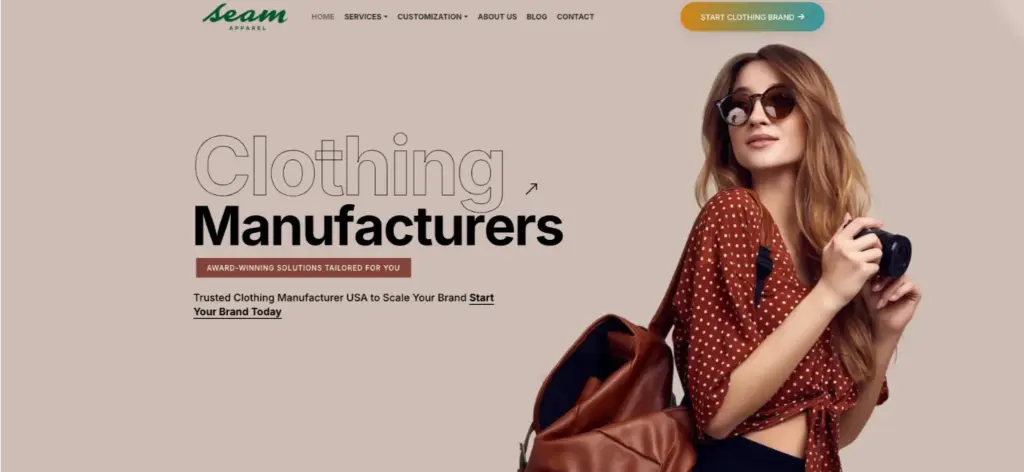
🏆 Verdict: Fashion Brands, Corporate Clients Specialist
Seam Apparel Inc. operates out of Miami, Florida, positioning itself as a strategic manufacturing partner for private label fashion brands and corporate entities seeking reliable supply chain management. This USA-based firm distinguishes its production capabilities through rigorous quality control frameworks, specifically focusing on the textile integrity of performance wear. Unlike generic garment assembly services, Seam Apparel implements testing protocols to verify moisture-wicking properties, breathability ratings, and fabric elasticity necessary for high-intensity athletic applications.
Their production infrastructure handles complex cut-and-sew operations for compression gear, yoga apparel, and heavy-duty industrial workwear. This versatility allows brand owners to consolidate manufacturing for distinct collections under one roof, managing SKU diversity without engaging multiple vendors. The company supports clients through the entire product lifecycle, offering technical pattern making, sample development, and bulk production with customizable sourcing options. For procurement officers, this integrated approach reduces the logistical friction often associated with fragmented sourcing, providing a streamlined pathway from technical pack creation to final inventory delivery for both boutique lines and mass-market corporate uniforms.
At a Glance:
- 📍 HQ Location: Miami, Florida
- 🏭 Core Strength: Compression Wear, Yoga Apparel, Workwear
- 🛒 Serving Markets: Fashion Brands, Corporate Clients
Why We Picked Them:
| The Wins (Pros) | Trade-offs (Cons) |
|---|---|
|
|
ARGYLE Haus of Apparel
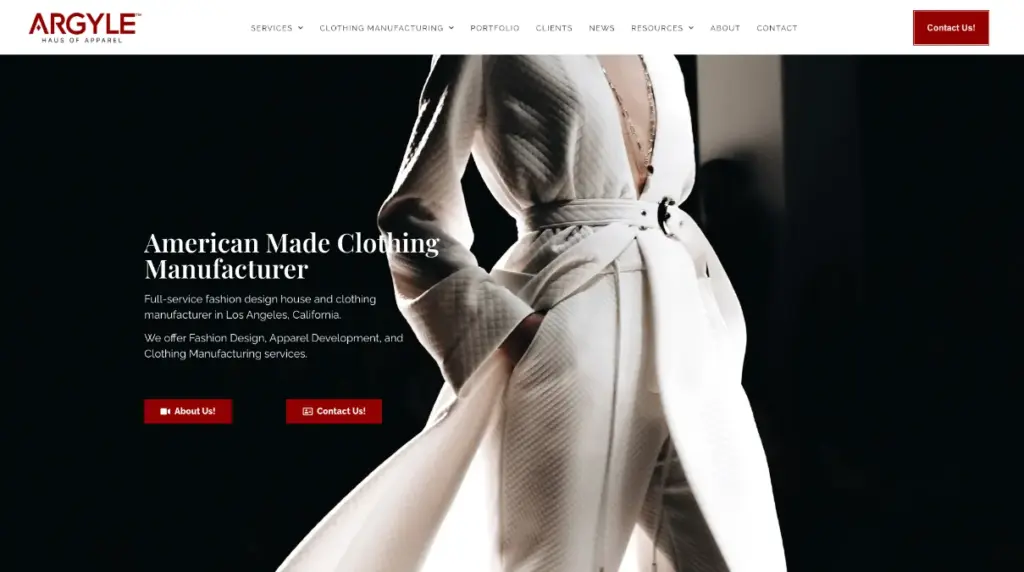
🏆 Verdict: Private Label Brands, Retailers Specialist
ARGYLE Haus of Apparel operates as a vertically integrated manufacturer based in the San Fernando Valley of Los Angeles, focusing on the specific needs of mid-to-high-end fashion markets. They address the logistical inefficiencies often found in fragmented supply chains by deploying a cohesive End-to-End (E2E) platform. This operational structure manages the complete product lifecycle internally, moving from initial concept and technical design directly into pattern making, grading, and final cut-and-sew production. By centralizing these critical stages, the company mitigates the communication errors and lead-time delays typical of multi-vendor outsourcing models.
The facility specializes in high-complexity categories, specifically activewear, swimwear, and intimates, which require industrial flatlock machines and specialized cover-stitch equipment for technical fabrics. This infrastructure allows established brands to secure consistent quality control and rapid speed-to-market that offshore factories struggle to match. ARGYLE Haus functions as a strategic partner for retailers prioritizing ethical labor standards and American manufacturing compliance, enabling clients to leverage Made in USA labeling for premium market positioning.
At a Glance:
- 📍 HQ Location: Los Angeles, California
- 🏭 Core Strength: Fashion Activewear, Swimwear, Intimates
- 🛒 Serving Markets: Private Label Brands, Retailers
Why We Picked Them:
| The Wins (Pros) | Trade-offs (Cons) |
|---|---|
|
|
Badger Sportswear
🏆 Verdict: Youth Sports, Schools, Team Dealers Specialist
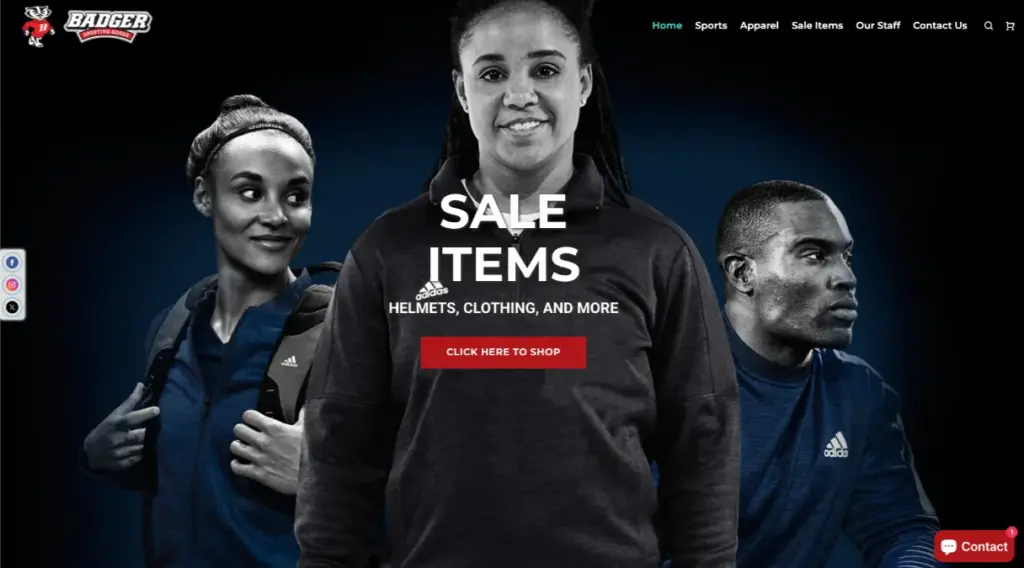
Badger Sportswear established its footprint in 1921, securing a century-long legacy in the North American athletic market. They function primarily as a high-volume stock house for team dealers and institutional buyers who require rapid fulfillment for seasonal leagues. The manufacturing framework prioritizes strict compliance, utilizing OEKO-TEX Standard 100 certified fabrics across their primary product lines. This certification verifies that textiles remain free from harmful chemicals like azo dyes and formaldehyde, a non-negotiable requirement for many school districts and youth athletic associations.
Their core inventory revolves around B-Core moisture management technologies and performance polyesters designed to withstand high-friction use. Unlike fast-fashion suppliers, Badger maintains deep inventory levels in Statesville, North Carolina, enabling consistent replenishment for uniform programs. This domestic warehousing model reduces supply chain volatility for dealers managing tight season openers. Their value proposition centers on reliability and chemical safety compliance rather than experimental fashion, making them a safe operational choice for institutional procurement officers.
At a Glance:
- 📍 HQ Location: Statesville, North Carolina
- 🏭 Core Strength: Team Performance Wear, Moisture-Wicking Polys
- 🛒 Serving Markets: Youth Sports, Schools, Team Dealers
Why We Picked Them:
| The Wins (Pros) | Trade-offs (Cons) |
|---|---|
|
|
Girlfriend Collective
🏆 Verdict: DTC Eco-Consumers Specialist
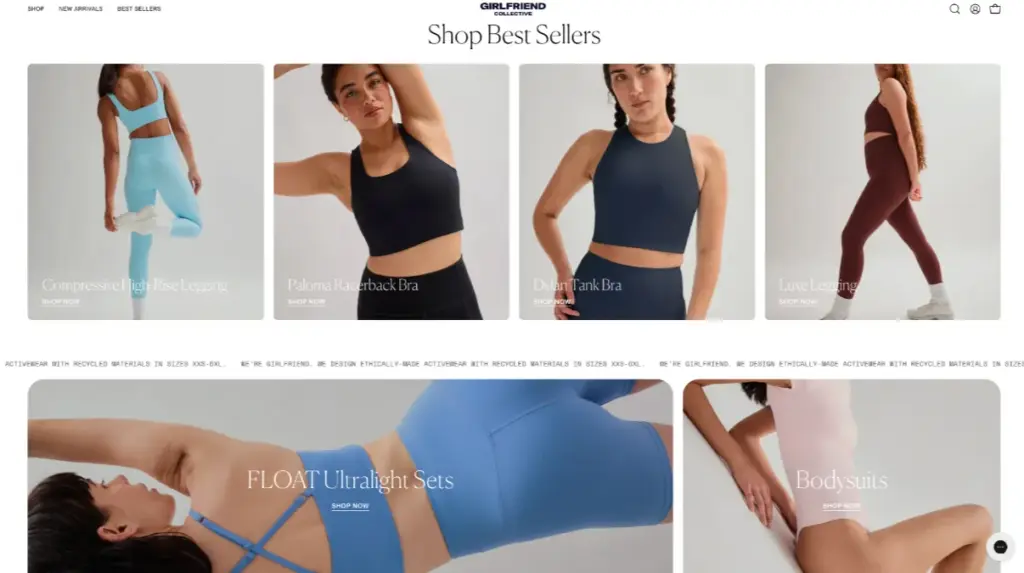
Since entering the market in 2016, Girlfriend Collective has established a blueprint for scalable sustainability within the activewear sector. They moved beyond surface-level green marketing by integrating a fully circular supply chain rooted in post-consumer waste recovery. Their production methodology relies on converting landfill-bound water bottles and fishing nets into certified recycled polyethylene terephthalate (RPET) and Econyl yarn. This material innovation is paired with SA8000-certified manufacturing facilities in Vietnam, ensuring ethical labor standards align with material sourcing. The brand utilizes strictly Oeko-Tex certified non-toxic dyes and treats wastewater before release, adhering to stringent environmental protocols often skipped by fast-fashion competitors. This technical rigor allows them to serve a high-value demographic prioritizing transparency and inclusivity, with size ranges extending from XXS to 6XL. Their dedicated take-back program closes the loop, creating a self-sustaining material economy that reduces dependency on virgin polymers and insulates the brand from volatile raw material price fluctuations common in standard synthetic textile markets.
At a Glance:
- 📍 HQ Location: Seattle, Washington
- 🏭 Core Strength: Recycled Leggings, Bras, Outerwear
- 🛒 Serving Markets: DTC Eco-Consumers
Why We Picked Them:
| The Wins (Pros) | Trade-offs (Cons) |
|---|---|
|
|
Athleta
🏆 Verdict: Premium Women’s Activewear Market Specialist
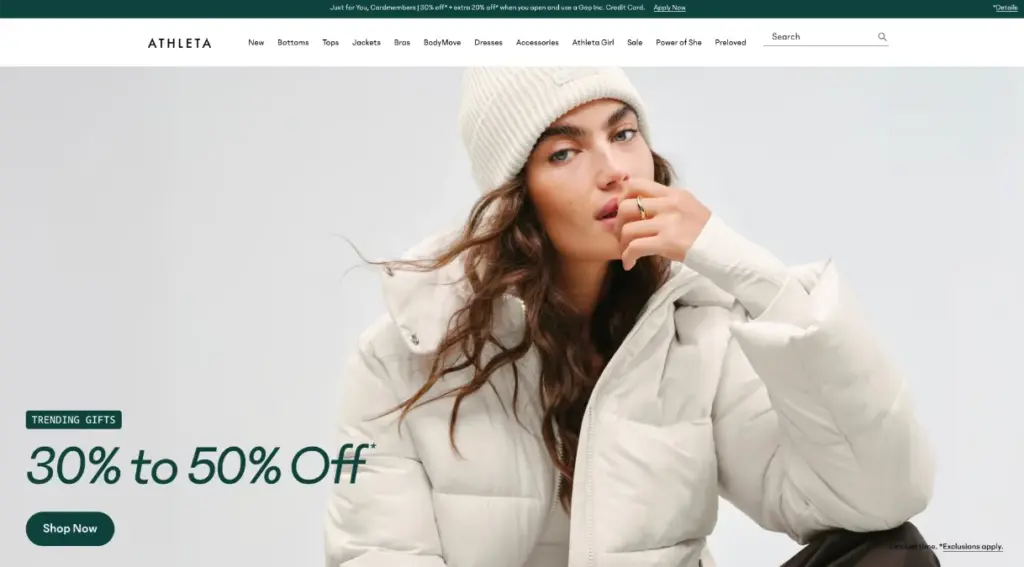
Operating as a high-growth subsidiary of Gap Inc., Athleta commands a distinct position in the premium women’s performance apparel sector. The brand leverages the massive logistical infrastructure of its parent company while maintaining a specialized focus on technical fabric innovation, such as the integration of recycled polyester and TENCEL Modal fibers. Their supply chain adheres to rigorous ESG criteria, a commitment validated by their status as a Certified B Corporation since 2018. This certification separates them from competitors merely greenwashing their operations, ensuring verified social and environmental performance. The product lineup spans high-compression yoga wear to moisture-wicking running gear, utilizing proprietary fabric blends like PowerVita and Supersonic. For B2B observers, Athleta demonstrates the commercial viability of sustainable vertical integration. They control their entire lifecycle from fabric sourcing to retail distribution, ensuring consistent quality control and brand equity. While not a contract manufacturer, their operational framework serves as a prime example of scaling eco-conscious production methodologies within the billion-dollar athleisure market.
At a Glance:
- 📍 HQ Location: San Francisco, California
- 🏭 Core Strength: Women’s Yoga, Running, Travel Apparel
- 🛒 Serving Markets: Premium Women’s Activewear Market
Why We Picked Them:
| The Wins (Pros) | Trade-offs (Cons) |
|---|---|
|
|
Strategic Insight: Is “Made in USA” Right for Your Margins?
Choosing a right USA sportswear manufacturer from the list above is an excellent move for brands that rely heavily on the “Made in USA” label for their marketing story. However, decision-makers must consider the economic reality: domestic labor costs can significantly compress your profit margins.
Furthermore, many top-tier technical fabrics (especially high-compression seamless knits) are predominantly sourced from established supply chains in Asia. If your goal is to balance premium quality with scalable profitability, looking beyond the border is often the smarter play.
Why Consider Sansansun Sports?
We bridge the gap between Western quality standards and Eastern manufacturing efficiency. Unlike massive legacy brands that ignore small orders, or domestic factories with high overheads, Sansan Sports offers:
- ✅ Flexible MOQs: Start from 150 pieces.
- ✅ End-to-End Service: From tech pack design to final logistics.
- ✅ Cost Efficiency: Save 30-40% on production costs compared to US-based counterparts.
Private Label vs. Custom Manufacturing: Which is Right?
Private Label utilizes pre-existing manufacturer designs for rapid market entry and reduced development costs, allowing only minor aesthetic tweaks. Custom Manufacturing (OEM) provides 100% control over fabric, sizing, and construction but requires higher upfront investment for sampling and longer production lead times.
| Feature | Private Label | Custom Manufacturing (OEM) |
|---|---|---|
| Design Control | Limited (Logos, colors, trims) | Full (Fabric, fit, construction) |
| Time to Market | Fast (Weeks) | Moderate to Slow (Months) |
| Primary Cost | Inventory purchase | Product development & Sampling |
| Exclusivity | Low (Competitors may sell same base item) | High (Proprietary ownership) |
Strategic Application: Choosing Based on Brand Maturity
- Best for Emerging Brands: Private label is generally superior for startups with limited budgets, allowing resources to be allocated toward marketing rather than complex product engineering.
- Best for Performance Brands: Custom manufacturing is essential for brands seeking a premium market position. If your value proposition relies on proprietary technical features, such as specialized compression zones or unique fits, you need the engineering control that OEM provides.
How to Evaluate Your Ideal USA Sportswear Manufacturer
Evaluating an ideal manufacturer requires assessing three interconnected dimensions: certification infrastructure, production capabilities, and quality control. Key indicators include ISO 9001 compliance for management and specialized ISO 16321/18527 standards for athletic safety. Data indicates that adhering to these standards correlates with 25% higher customer trust and a 40% reduction in supply chain risks.
Finding the right sportswear clothing manufacturer requires a holistic audit that goes beyond a simple price quote. To ensure a sustainable partnership, decision-makers must evaluate potential USA sportswear manufacturers across four interconnected dimensions: Production Model, Financial Transparency, Technical Integrity, and Operational Scalability.
1. Define Your Production Model: Private Label vs. OEM
The first step in evaluation is determining if the manufacturer’s capabilities match your design needs.
- Private Label (Pre-Production): Best for rapid market entry. You buy “blank canvas” garments that are already framed; you can paint on them (logos/prints), but you cannot change the shape of the frame.
- Custom Manufacturing (OEM): Best for proprietary performance gear. You control every technical detail, from gusset construction to seam placement. This approach is essential for brands looking for a custom sportswear USA manufacturer capable of executing complex technical packs.
- Strategic Fit: Emerging Brands often start with Private Label to save budget for marketing. Performance Brands require OEM to engineer specific features like compression zones.
2. Financial Audit: Decoding Landed Costs & Margins
A manufacturer is only “ideal” if the partnership is profitable. The unit price quoted by a factory is rarely the final amount a brand pays. You must calculate the “Landed Cost”—the total price of a product once it arrives at your warehouse.
- The 20-30% Surcharge Reality: A garment quoted at $12.50 often rises to $16.00 once shipping, duties, and tariffs are applied.
- Hidden Expenses: Budgets must include specific line items for customs clearance, VAT, poly-bagging, and file conversion charges.
- Indirect Allocations: Design costs (tech packs, office rent) must be separated from direct manufacturing costs (fabric, labor) to determine true profitability.
Pro Tip: A 100% markup (doubling the COGS) is generally considered the safety floor for Direct-to-Consumer (DTC) sales. For wholesale, the standard margin tightens to 25-30% to leave room for the retailer’s markup.
3. Technical Audit: Critical Quality Standards (ISO & ASTM)
“High Quality” is subjective; data is not. Evaluate potential partners based on their adherence to rigorous international testing standards.
- Strength Testing (ASTM D5035): Does the factory perform tensile testing? This determines the exact force required to rupture the fabric, ensuring gear withstands high-intensity movement.
- Color Fastness (ISO 105-E04): Verify that they test for dye resistance to perspiration. A Grade 3–4 rating is the non-negotiable industry standard for athletic wear.
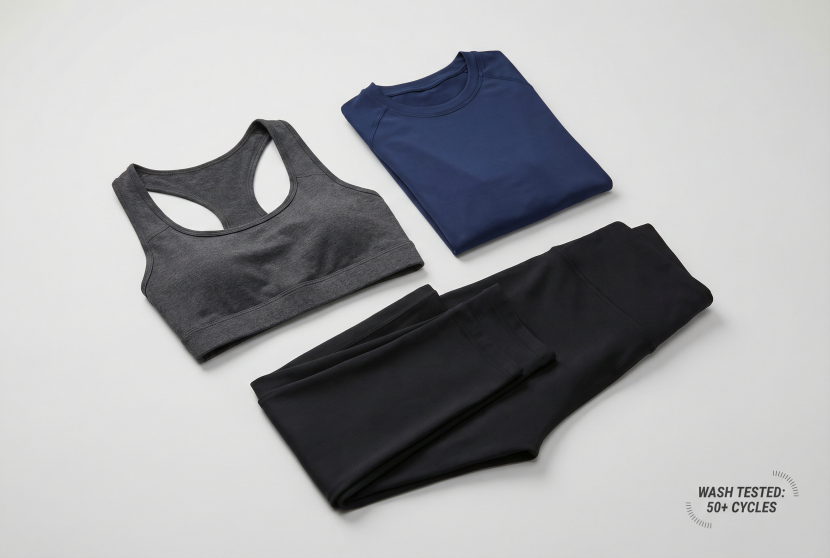
- The 50-Wash Threshold: Professional-grade sportswear must pass the 50-wash-cycle benchmark, retaining 90% of its moisture-wicking and shape properties.
- Performance Benchmarks: Check if they classify fabrics by GSM (Grams per Square Meter) for density and UPF ratings (30+ or 50+) for outdoor protection.
4. Operational Scalability: Timelines & MOQs
Finally, assess if the manufacturer’s logistics align with your launch calendar. Time and volume are interconnected; factories function like printing presses where setup time dictates efficiency.
- Minimum Order Quantities (MOQ): Custom sportswear manufacturing typically demands high MOQs to offset setup costs (often 1,000+ pieces for seamless). Private label allows for lower volumes (100-300 pieces) because production lines are shared.
- Standard Lead Times: A typical healthy cycle involves 14 days for sampling and approximately 30 days for bulk production once the sample is approved.
- Scale Potential: Look for tiered pricing structures. As your volume increases, the unit price should drop because setup costs are spread across more items.
Scale Your Brand with Expert Custom Activewear Manufacturing
Access our dual seamless and cut-and-sew factories with flexible MOQs starting at just 150 pieces and rapid 14-day sampling. We provide end-to-end design support and 100% quality control to accelerate your time-to-market and ensure your growth.

Frequently Asked Questions
What Is the Minimum Order Quantity (MOQ) for USA Manufacturers?
Domestic manufacturers often provide flexibility to help emerging brands enter the market. Documented thresholds can start as low as 100 pieces for specific factories, which allows for smaller initial production runs. These minimums vary significantly based on how complex the product is and the specific capacity of the factory.
Think of minimum order quantities like buying in bulk at a wholesale store. The factory sets a baseline number to ensure that setting up the machines and sourcing the fabric is worth the time and effort for both parties.
Which Certifications Should I Look For?
You should prioritize quality management certifications like ISO 9001:2015. This standard acts like a strict playbook that ensures every garment is made exactly the same way, from the first sample to the final bulk order. For safety, look for OEKO-TEX Standard 100. This certifies that the textiles are free from harmful substances by testing for over 1,000 chemicals.
If you are selling children’s apparel, you must ensure compliance with CPC and CPSIA regulations. Adherence to these standards helps verify material endurance and chemical safety, which can increase consumer trust and significantly reduce operational risks.
How Dongguan Sansansun Sports Co., Ltd. Approaches MOQs and Standards
We offer competitive minimum order quantities starting at 150 pieces for sewn products and 1,000 pieces for seamless items to support brand growth. This approach lowers the entry barrier for new businesses while maintaining industrial efficiency.
Our operations span two specialized facilities in Guangzhou and Yiwu, where we implement 100 percent quality control checks on bulk orders. We align with international safety standards and utilize sustainable fabrics like recycled polyester and organic cotton to ensure high performance and environmental responsibility.
Final Thoughts
Success in sportswear manufacturing depends less on location and more on the integration of digital prototyping and rigorous quality control. Whether sourcing domestically or bridging the gap with specialized partners like Sansansun, the right infrastructure determines if you scale efficiently or stall with costly inventory defects.
Prioritize activewear manufacturers that offer flexible MOQs and validated fabric performance standards to protect your long-term margins. Securing a supply chain that balances speed, cost, and technical precision ensures your brand competes on quality without sacrificing profitability.