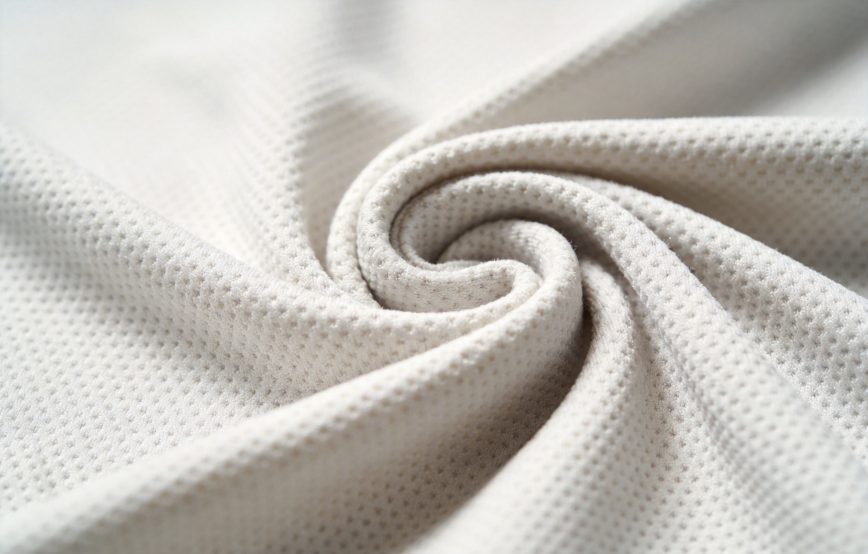
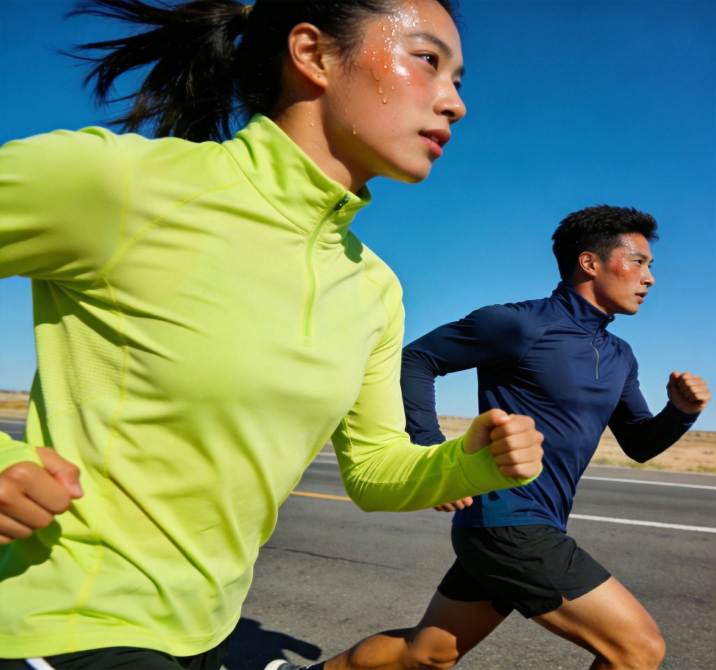
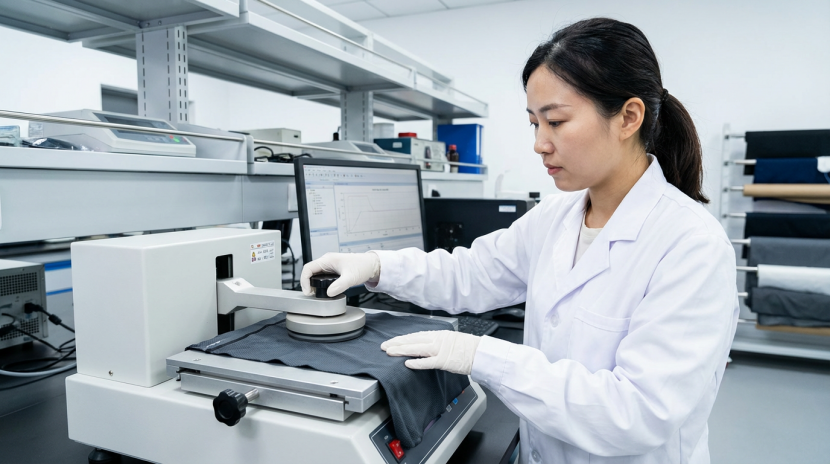
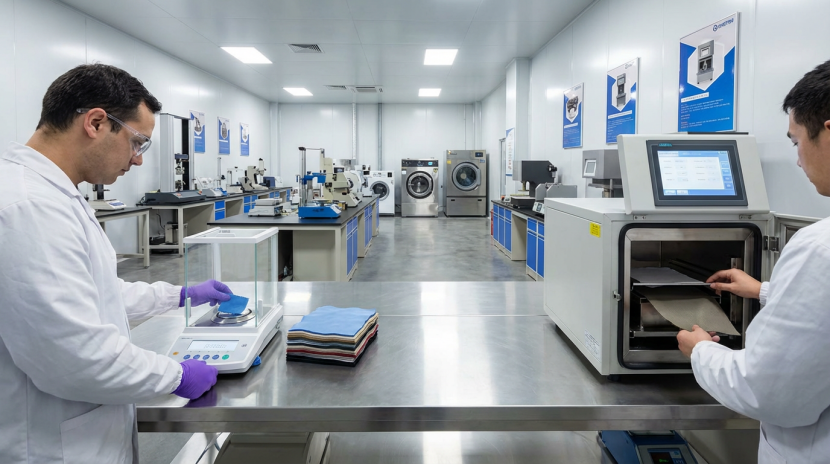
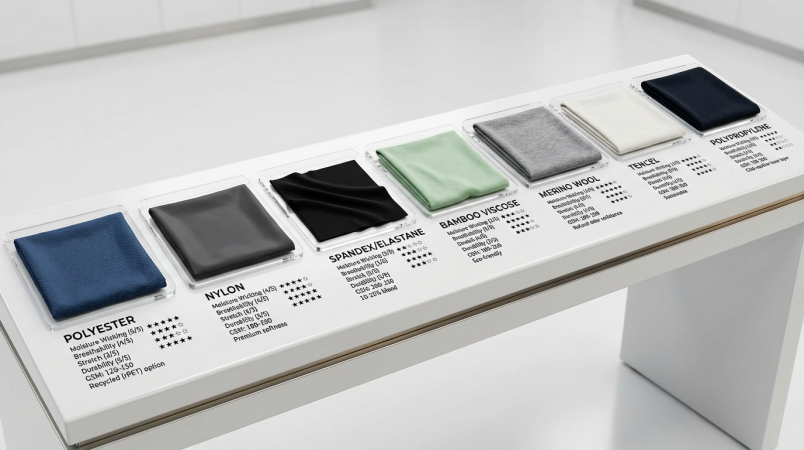
Sportswear designers and material specialists often face the challenge of choosing between warp and weft knitting to meet specific performance goals. Each method shapes fabric properties like stretch, durability, and fit, directly influencing how garments behave under athletic conditions.
This guide covers warp knitting, weft knitting, and their key differences in structure and performance, helping apparel designers and sportswear developers select the best option for achieving the right balance of comfort, stability, and athletic functionality.
What Is Warp Knitting?
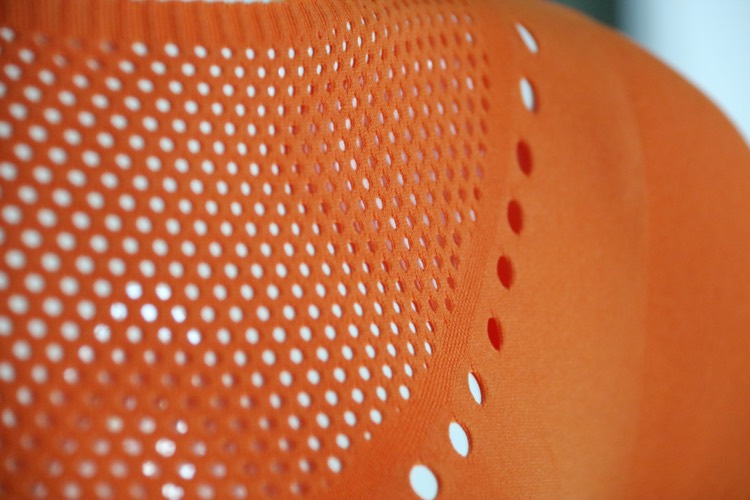
Warp knitting is a textile manufacturing process where multiple yarns run in parallel (warp-wise) and are simultaneously formed into loops by individual needles, creating a stable, high-speed, and versatile fabric structure distinct from weft knitting.
In our experience working with performance textiles, warp knitting stands out for its speed, precision, and ability to produce stable fabrics for demanding applications. It differs from weft knitting not only in the yarn orientation but also in the loop formation method and resulting fabric characteristics.
Definition and Basic Mechanism
- Multiple yarns run parallel in the warp direction.
- Each needle forms loops simultaneously in the same course.
- Produces stable fabric with low risk of unraveling.
- Unlike weft knitting, yarn does not run horizontally across rows.
This mechanism enables the creation of fabrics with greater dimensional stability, which is critical for sportswear and technical applications where smart fabric shape retention matters. For apparel designers comparing Warp vs Weft Knitting Sportswear, these mechanical differences directly influence fit and performance outcomes.
Key Machine Types and Technical Data
| Specification | Value / Range | Notes |
|---|---|---|
| Typical yarn input | 600–800 yarns per beam | 🚀 High yarn count supports wide, stable fabrics |
| Machine needles | 4,000–5,000+ per machine | ✅ Enables simultaneous loop formation |
| Production speed | 2,000–3,500 courses/min | 🚀 Critical for high-volume sportswear production |
| Fabric width | 213–533+ cm | ✅ Supports large roll formats |
| Common machine types | Tricot & Raschel, 2–5 guide bars | 💡 Choice affects fabric texture and performance |
What Is Weft Knitting?
Weft knitting is a fabric manufacturing method where a single yarn forms loops horizontally across the fabric, producing stretchable, comfortable textiles commonly used in sportswear, hosiery, and sweaters.
In our experience working with performance fabrics, weft knitting plays a key role in sportswear design due to its softness, flexibility, and ability to create ergonomic fits. This structure differs from warp knitting mainly in the yarn direction and elasticity, which directly affects garment comfort and stretch recovery.
Fundamentals of Weft Knitting
Weft knitting uses a single yarn, or sometimes multiple yarns depending on machine capacity, to loop horizontally along the fabric’s course. These loops form interconnected rows, creating textiles that have high stretch in multiple directions.
- Uses a single yarn looping horizontally, enabling fabric fluidity.
- Produces stretchable textiles valued for comfort and flexibility.
- Commonly knitted on circular and flat machines, allowing tubular or flat panel production.
In sportswear manufacturing, circular machines are preferred for seamless garments like compression tops, while flat machines are used for controlled panel shapes in custom uniforms.
Types of Weft Knitted Fabrics and Machines
Different weft knit structures offer specific performance benefits. Designers often select them based on the desired balance between stretch, warmth, and surface finish.
- Single jersey: lightweight, breathable, and flexible.
- Rib: excellent widthwise stretch and warmth.
- Purl: visually textured with reversible surfaces.
- Interlock: stable, smooth, and suitable for high-quality prints.
Key Differences in Structure and Performance
Warp knitting produces stable, less stretchable fabrics ideal for durability and dimensional stability, while weft knitting yields softer, highly stretchable fabrics favored for comfort and flexibility.
In sportswear manufacturing, understanding the structural and performance differences between warp and weft knitting can guide fabric selection for optimal results. In our experience, the choice impacts durability, stretch, and production efficiency.
Key Comparison of Warp and Weft Knitting
| Attribute | Warp Knitting | Weft Knitting |
|---|---|---|
| Machine Type | Tricot, Raschel | Circular, Flat |
| Production Speed 🚀 | Up to 1,200 rpm | 20–60 rpm |
| Fabric Stretch | 5–15% | 25–50% |
| Dimensional Stability ✅ | High | Moderate |
| Snag Resistance | High ✅ | Lower ❌ |
| Typical Yarn Count | 40–150 denier | 20–80 denier |
| Moisture Management | Good ✅ | Excellent ✅ |
| Cost per Meter | $2.00–$3.50 | $1.50–$2.80 |
| Common Applications | Jerseys, mesh panels, compression wear | Base layers, T-shirts, leggings |
| Lead Time | 2–4 weeks (bulk) | 1–3 weeks (bulk) |
Structural Mechanics and Performance Characteristics
Warp knitting interloops yarns vertically, producing fabrics with minimal stretch and excellent durability. This makes it ideal for compression wear and garments subjected to repeated stress.
Weft knitting interloops yarns horizontally, providing high stretch for freedom of movement. This softness enhances comfort, making it suited for base layers and casual sportswear.
- Warp machines operate at high speeds, delivering efficiency and consistent output.
- Weft knitting enables complex shaping and seamless designs but offers moderate stability.
Partner with Experts to Elevate Your Sportswear Innovation
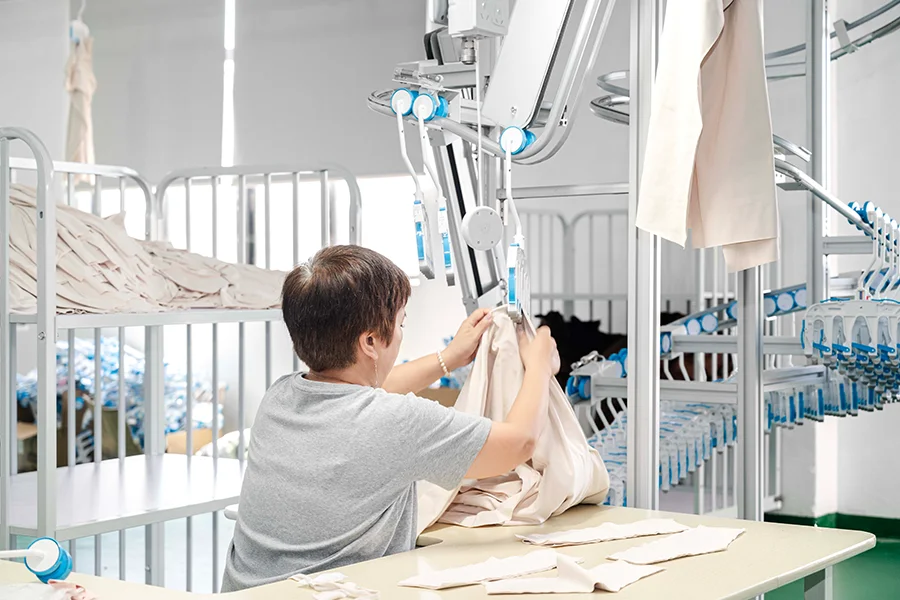
Leverage Sansan’s integrated R&D and advanced manufacturing to launch performance-driven, sustainable apparel tailored to your brand’s needs. Experience seamless scalability, cutting-edge technology, and eco-conscious solutions designed for the modern activewear market.
When to Use Warp Knit for Activewear
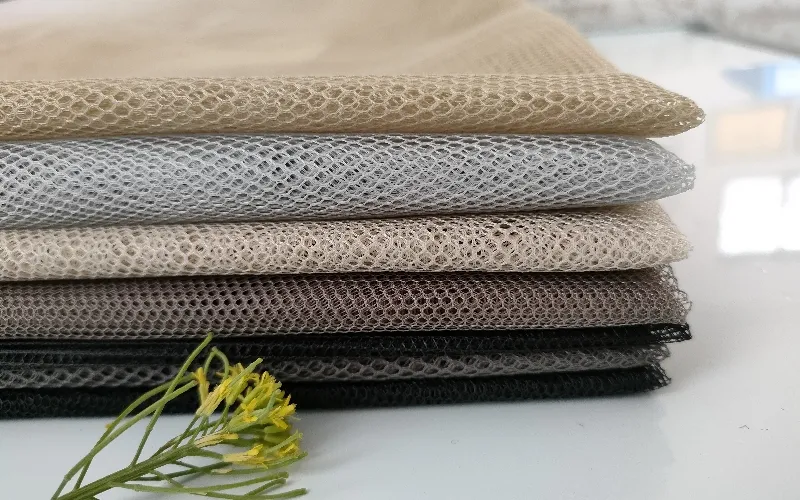
Warp knit fabrics should be used for activewear when durability, dimensional stability, and shape retention are critical—such as in swimwear, compression garments, and high-end sportswear requiring minimal deformation and long-lasting performance.
Warp knit fabrics play a vital role in high-performance activewear where resistance to wear and precision fit are priorities. For apparel designers and technical developers, understanding these fabrics’ properties can guide optimal application choices.
Technical Characteristics of Warp Knit Fabrics
| Property | Warp Knit | Weft Knit |
|---|---|---|
| Elasticity | ⚠️ Low to moderate stretch | ✅ High elasticity |
| Dimensional Stability | ✅ High stability | ⚠️ Moderate stability |
| Durability | ✅ Resists abrasion and pilling | ⚠️ More prone to abrasion |
| Shape Retention | ✅ Excellent, minimal wrinkling | ⚠️ Moderate retention |
| Production Cost | ⚠️ Higher than weft knits | ✅ Lower production cost |
In our experience, warp knits provide a stronger and more stable fabric structure, though they demand higher manufacturing investment compared to weft knits.
Applications Best Suited for Warp Knit Activewear
- Ideal for swimwear, compression garments, and high-end sportswear requiring structural integrity.
- Suitable for performance leggings, jackets, and gear exposed to frequent stretching and washing.
- Less suitable for everyday soft sportswear that requires maximum stretch and flexibility.
- Elastane or spandex blends can enhance warp knits’ stretch without sacrificing stability.
These applications benefit most from warp knit fabrics’ stability and resistance to deformation, making them a smart choice for premium activewear collections.
Considerations and Misconceptions About Warp Knit
- Modern warp knits can balance comfort with technical performance, challenging the perception of rigidity.
- Higher production costs and a slightly stiffer feel mean they suit premium or specialized activewear lines.
- For everyday flexible sportswear, weft knits may remain preferred due to lower cost and superior stretch.
- Experts recommend warp knits for professional or luxury activewear that demands durability and minimal deformation.
Choosing warp knit over weft knit should be driven by targeted product performance goals, brand positioning, and end-user expectations.
When to Use Weft Knit for Comfort and Flexibility
Weft knit fabrics are ideal when maximum comfort, stretch, and flexibility are required—such as in sportswear, activewear, and garments designed for freedom of movement—because they offer superior softness, elasticity, and drapability compared to warp knits.
In our experience working with performance apparel, the choice between warp and weft knitting can greatly affect wearer experience. Weft knits are often the go-to for activewear where unrestricted motion and comfort are priorities.
Performance Characteristics of Weft Knit Fabrics
Weft knits deliver a level of stretch and softness that many warp knits cannot match. For sportswear designers, understanding this data helps in choosing the optimal fabric for the target activity.
| Characteristic | Weft Knit | Warp Knit |
|---|---|---|
| Stretchability | ✅ Width: 100%, Length: 30–50% | ❌ Less than 30% |
| Elastic Recovery | ✅ High elasticity, shrinkage 5–8% after laundering | ✅ Lower shrinkage <2% |
| Comfort Ratings | ✅ Up to 20% higher softness & drape | ❌ Lower ratings |
| Production Speed | 🚀 Fast prototyping, efficient for all quantities | ⚠️ Slower for small runs |
| Material Options | ✅ Cotton, wool, polyester, blends | ✅ Synthetic-focused |
Balancing Comfort with Durability: Considerations for Designers
Weft knits create a “second skin” feel, which makes them highly appealing for leisurewear and activewear. This softness and elasticity can be a trade-off when high durability is required.
- Exceptional softness and elasticity for activewear and lounging.
- Lower dimensional stability, with risk of deformation after washing.
- Apply fabric finishes, adjust stitch density, and select stronger fibers for longer life.
- For garments needing high structural integrity, warp knits or reinforced fabrics may be better.
Understanding Knit Structure and Its Impact on Comfort
The performance of a knit depends on both structure and yarn composition. Designers should match weave type to the intended activity.
- Knit types like single jersey, rib, and interlock each deliver different stretch and comfort levels.
- Yarn composition impacts hand feel, elasticity, and fit; cotton versus polyester blends can feel vastly different.
- The right weave-yarn combination improves wearer satisfaction and extends product lifespan.
- B2B buyers should study these factors to align fabrics with end-use requirements.
How Designers Choose Between the Two
Designers choose between warp and weft knitting based on needed fabric characteristics: warp knitting offers high dimensional stability, durability, and resistance to distortion — ideal for sportswear requiring shape retention. Weft knitting provides greater elasticity, softness, and drape, suitable for comfort-focused garments.
In our experience working with global sportswear brands, the choice between warp and weft knitting often depends on the right balance between stability and stretch. Below, we break down the critical factors that influence design decisions in performance apparel.
Fabric Properties Comparison
| Property | Warp Knitting | Weft Knitting |
|---|---|---|
| Elasticity | Low to moderate | High |
| Dimensional Stability | High | Moderate |
| Shrinkage | Shrinks less | Shrinks more |
| Fabric Hand | Crisp & structured | Soft & drapey |
| Resistance to Fraying | High | Lower |
Production and Cost Considerations
- Production Speed: Warp knitting machines are fast yet slightly slower than weft machines, which can run at very high speed.
- Machinery: Warp knitting requires large multi-needle machines, while weft knitting uses simpler, smaller machines.
- Cost of Production: Warp knitting demands higher capital investment but yields longer-lasting fabrics; weft knitting needs less upfront cost.
- Yarn Types: Warp knitting is typically synthetic yarn-focused; weft accepts a wide range including natural fibers.
- Patterning Capability: Warp knitting achieves precise, run-resistant designs; weft offers more flexibility but less dimensional stability.
Design Considerations and Application Suitability
- Warp knitting suits sportswear needing shape retention, minimal shrinkage, and durability — examples include compression gear and technical apparel.
- Weft knitting is preferred for comfort-first apparel like yoga wear and base layers thanks to softness and elasticity.
- Warp knitting supports large-scale production with consistent quality, ideal for durability-prioritized brands.
- Weft knitting accommodates diverse yarns and smaller batch runs for trend-sensitive shaping.
- Designers must match knitting type to end-use needs such as required stretch vs stability, production volume, and design aesthetics.
FAQs
Which knit type is better for compression wear?
In our experience working with performance apparel, warp knitting is generally preferred for compression wear. It offers consistent tension, minimal stretch in the vertical direction, and enhanced durability over time.
This structure supports muscle stabilization and delivers a secure fit, which is essential for high-intensity sports and recovery garments.
What is the main difference between warp and weft knitting?
Warp knitting uses multiple yarns that run vertically, creating stable fabrics with minimal stretching in lengthwise direction. Weft knitting, on the other hand, employs a single yarn interlaced horizontally, giving more stretch and softer feel.
For sportswear, warp structures are favored for shape retention, while weft structures excel in comfort and flexible movement. The choice depends on performance requirements and garment design intent.
Can both be made from recycled yarns?
Yes ✅. Both warp and weft knitting can be produced using recycled polyester, nylon, or other sustainable fibers without compromising performance.
Sourcing quality recycled yarns ensures that tensile strength and fabric integrity remain high, enabling eco-conscious brands to maintain sustainability commitments while delivering high-performance sportswear.
Conclusion: Matching Fabric Type to Function
Warp knitting brings exceptional dimensional stability and durability, making it the go-to for compression wear, team uniforms, and garments exposed to repeated stress. Weft knitting delivers superior elasticity, drape, and softness, excelling in comfort-first sportswear like yoga apparel and base layers. Matching knit type to the activity’s physical demands, environmental conditions, and desired garment fit ensures each piece supports the athlete’s performance while extending product lifespan.
To turn knit technology into high-performance apparel, partnering with experienced custom activewear manufacturers is essential. Sansan Sports is a trusted United States sportswear manufacturer, also supporting global brands seeking reliable activewear manufacturers Australia solutions and advanced production from a proven seamless clothing manufacturer. Visit https://sansansports.com/
to explore how we help brands build durable, comfortable, and market-ready sportswear collections.