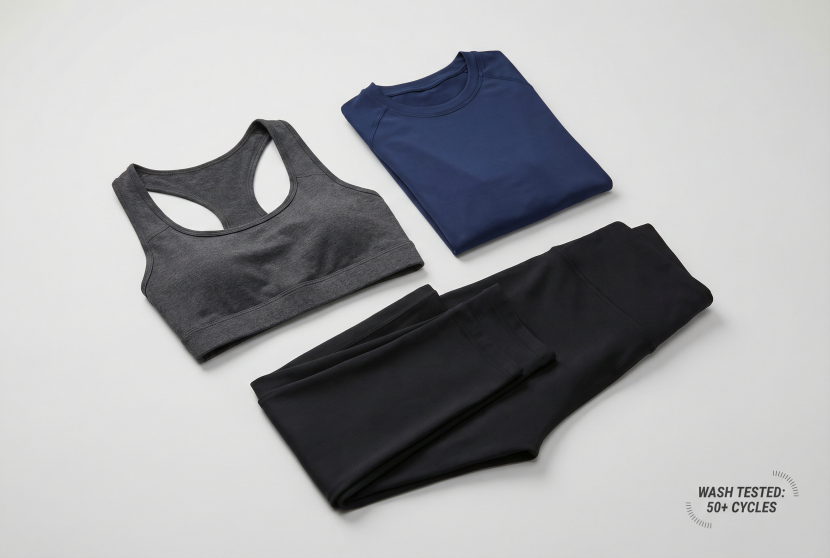
Textile materials containing over 2-3% elastane or incompatible coatings like PU/PVC pose significant recycling barriers, leading to substantial landfill waste and hindering brand sustainability goals. For product designers and material developers, understanding these limitations is critical.
This guide details why fabrics with >3 wt% EVOH or carbon black pigment challenge 2026 recycling standards. It outlines solutions, including HKRITA’s Green Machine technology and specific supplier clauses for compliance.

Textile Materials Hard to Recycle
Textile materials that are difficult to recycle typically feature complex constructions, including blended fibers, significant elastomer content like Spandex, and heavy chemical finishes. These attributes complicate both mechanical and chemical recycling processes, hindering efficient fiber separation and often degrading material quality.
By 2026, less than 1% of textiles achieve closed-loop recycling into new textile products due to these challenges.
Challenges from Blended Fabrics and Coatings
In 2023, data from some recycling systems showed over 60% of post-consumer textiles were blended fabrics, creating a major bottleneck for efficient separation.
Elastane, such as Spandex or LYCRA®, is particularly problematic. Mechanical recycling lines cannot efficiently separate it from other fibers. While chemical routes for cotton/elastane blends are under development, they remain at an experimental scale as of 2026.
Furthermore, dyes, various coatings, and functional finishes contaminate otherwise recyclable fibers. These additions increase the pre-processing requirements for recycling, often reducing the overall material quality and economic viability of the recycling process.
Impact on Mechanical and Chemical Recycling Systems
Current recycling technologies face substantial limitations. Less than 1% of textiles achieve true closed-loop recycling into new textiles, with most materials currently going to landfill or incineration in 2026. This highlights a significant gap in circularity.
Mechanical recycling processes, such as tearing and carding, cause fiber shortening and significant material loss. This means recycled fibers often require blending with new, virgin fibers to meet necessary quality standards for new products.
Chemical recycling for polyester (PET) generally demands relatively pure streams. The presence of other polymers like polyamide (PA) or heavy finishing chemicals reduces processability and economic viability, making mixed-material textiles less attractive for this advanced recycling method.
Companies like Dongguan Sansansun Sports Co., Ltd. are actively addressing these material challenges. They partner with sustainable fabric mills, offering options like recycled polyester and recycled nylon. This commitment provides brands with choices that support better end-of-life solutions for activewear, moving towards more circular production models.
Why They Can’t Be Recycled
Many products are unrecyclable due to fundamental engineering limitations. Their composite nature, like plastic-lined paper, or incompatible polymer blends, such as different plastic types mixed, prevents standard recycling.
Contamination from food residue or chemicals also plays a significant role. These factors make efficient separation, identification, or reprocessing difficult for typical municipal recycling facilities, often sending materials to landfills or incineration.
Inseparable Coatings, Laminates, and Polymer Blends
Many everyday items appear simple but are complex at a material level. These inherent structures make them unsuitable for conventional recycling processes.
- Polyethylene or PLA plastic linings, often 10–20 micrometers thick on paperboard, cannot be separated by standard paper mills. This means they are excluded under industry recycling guidelines.
- Multi-layer structures, like the PET/Al/PE laminates found in snack packaging, are unrecyclable. Conventional systems lack the technology to delaminate these bonded layers.
- Incompatible plastics, particularly resins numbered #3 through #7 (such as PVC, LDPE, PP, PS), are rarely accepted by Material Recovery Facilities (MRFs). Sorting them is challenging, and they risk contaminating batches of recyclable plastics.
- Black plastics often contain carbon black pigment, which absorbs Near-Infrared (NIR) light. This absorption prevents optical sorters from identifying the plastic type, diverting these items to landfills.
Contamination and Operational Hurdles for Recycling
Beyond material composition, external factors and practical limitations at recycling facilities contribute significantly to what cannot be processed.
- Thermal paper receipts, containing BPA/BPS chemicals, and grease-soiled pizza boxes introduce chemical and organic contamination. These pollutants can degrade entire paper batches.
- Heavily food-soiled fibers, like paper plates, yield low-quality pulp and can introduce biological contamination into recycling mills.
- Material Recovery Facilities (MRFs) reject materials that could damage their equipment, are not sortable by existing machinery, or lack a reliable end market for reprocessing.
- Small, flexible, or tangling items—such as plastic films or stringy materials—often bypass sorting equipment or cause operational issues, leading to their rejection from the recycling stream.
Common Problem Treatments
In 2026, many problematic materials like multilayer films, black plastics, and small-format items remain largely unrecyclable through standard municipal systems.
Their ‘treatment’ often involves landfilling, incineration, or specialized, non-commodity reclamation. This is primarily due to technical hurdles in sorting, separation, or chemical contamination that degrade recycled material quality.
Default Disposal Routes for Difficult Materials
- Multilayer flexible films (e.g., PET/PE, PET/Al/PE snack packs) typically use 2–7 laminated layers and are not mechanically recyclable. These structures usually go to landfill or incineration.
- Small-format plastics (< ~5 cm) such as cutlery and straws (commonly polypropylene or polystyrene) routinely fall through screens. This jams equipment and leads to disposal.
- Polystyrene foams (e.g., EPS food trays) have very low bulk density (often 10–30 kg/m³) and high contamination. Transport and washing become uneconomic, so most MRFs list them as non‑acceptable.
- Grease‑contaminated fiber (e.g., pizza boxes) is rejected. Even 1–2% oil content significantly reduces inter-fiber bonding, lowering paper strength; these are often directed to trash.
Technical Barriers Leading to Rejection
- Black plastic packaging often uses carbon black pigment that absorbs Near-Infrared (NIR) light. Most NIR sorters cannot detect these items, routing them to residue even if the base resin is PP or PET.
- Paper cups use a polyethylene or PLA lining (typically 10–20 g/m²) that standard pulpers cannot fully separate. Many mills exclude them from mixed paper streams.
- Waxed and silicone-coated papers use hydrophobic layers that resist repulping. Mills often specify a maximum coating content of <3–5% by weight, making heavily coated grades effectively non-recyclable.
- Thermal paper receipts contain BPA or BPS color developers. These components carry into recycled pulp and can exceed regulatory thresholds, so receipts typically go to trash.
- Hazardous and regulated wastes (e.g., certain solvents) remain subject to RCRA Subtitle C controls (40 CFR 261.6 and 266). They cannot enter commodity recycling and require specialized treatment.
Innovate Your Activewear: Fabrics & Beyond
Design-for-Recyclability: Alternatives & Workarounds
Design-for-recyclability focuses on material substitution and engineering components for effective separation during recycling. This approach includes adhering to specific weight thresholds for multi-material layers and managing component densities for float-sink separation.
It also utilizes advanced recovery processes for complex blends, all guided by 2026 industry standards to enhance product circularity.
Meeting 2026 industry standards requires a deep understanding of material properties and recovery processes. Manufacturers, including those like Sansansun, are focusing on integrating sustainable fabric options such as recycled polyester and nylon, making them a smart choice for brands prioritizing circularity.
| Category | Challenge/Material | 2026 Requirement/Solution | Principle |
|---|---|---|---|
| Material Compatibility | Incompatible layers & additives | Substitution for compliance | Prevent melt contamination |
| Physical Separation | PET bottle components | Density < 1.0 g/cm³ for float-sink | Effective material sorting |
| Polyethylene Film Purity | EVOH > 3 wt% or PA-MXD6 > 6 wt% | Not compatible with PE recycling | Maintain PE stream integrity |
| Paper Packaging Fiber Content | Non-fiber content & coatings | < 5-10% non-fiber; screen-removable | Efficient fiber recovery |
| Textile Blends Recovery | Cotton-Polyester blends | Advanced chemical recovery (e.g., Green Machine) | High-yield fiber separation |
Material Selection and Separation Physics
Design-for-recyclability prioritizes substituting incompatible layers and additives. This strategy helps products meet rigorous 2026 recycling standards. It avoids materials that might contaminate recycling streams.
Engineering around separation physics is crucial. It ensures product components detach effectively, preventing melt contamination during mechanical recycling processes. This careful design supports higher quality recycled output.
- For PET bottles, components with a density under 1.0 g/cm³ (like PP or HDPE closures) float.
- This allows them to separate easily from PET, which has a density of approximately 1.38 g/cm³, in 2026 float-sink systems.
Quantitative Thresholds and Advanced Recovery Processes
Industry guidelines establish specific limits for material content to ensure recyclability. RecyClass, for instance, sets clear thresholds for PE films. Exceeding these limits impacts their compatibility with recycling processes.
- PE films with over 3 wt% EVOH or 6 wt% PA-MXD6 are ‘not compatible’ with PE recycling by 2026 standards.
- Paper packaging guidelines from CPI and AF&PA advise under 5-10% non-fiber content. They also require coatings to be screen-removable by 2026.
Advanced recovery processes offer solutions for complex material blends. For example, HKRITA’s Green Machine recovers over 98% of polyester from cotton-polyester blends. This process takes 0.5-2 hours and uses less than 5% biodegradable chemical additive.
End-of-Life Solutions: Upcycling, Chemical Recycling, Take-Backs
Upcycling transforms challenging waste materials into new products, such as composite lumber. Chemical recycling breaks down complex polymers into their basic monomers, exemplified by polyolefin pyrolysis at 400–600°C. Take-back systems manage specific materials under regulatory frameworks, often placing producer responsibility on items like textiles that resist conventional mechanical recycling.
These advanced methods ensure value recovery and reduce environmental impact, particularly for complex blends and contaminated streams that conventional systems struggle with.
| Strategy | Process / Method | Typical Materials | Key Compliance / Considerations |
|---|---|---|---|
| Upcycling | Transforms waste into new, higher-value products without degrading material quality. | Textile scraps, difficult blends, plastic film waste, contaminated paper (e.g., composite lumber, insulation). | Meeting Land Disposal Restriction (LDR) treatment standards (40 CFR 266 Subpart C) for land application. |
| Chemical Recycling | Breaks down polymers into monomers or other chemical feedstocks (e.g., pyrolysis, depolymerization). | Mixed plastics (polyolefins, PET), difficult-to-separate polymers. | Process parameters (e.g., polyolefin pyrolysis at 400–600°C, PET depolymerization at 180–280°C), feedstock purity (e.g., PVC < 0.5–2 wt%). |
| Take-Back Programs | Manufacturer or retailer takes responsibility for end-of-life products, often for specialized or hazardous materials. | Textiles, electronics, batteries, certain brominated flame-retardant plastics. | RCRA 40 CFR 261/266 for hazardous secondary materials; specific exclusions for scrap metals (40 CFR 261.6(a)(3)(ii)). |
Strategies for Challenging Material Waste

These solutions are crucial for materials that conventional mechanical recycling systems cannot process effectively. This includes items like multilayer films, black plastics, and contaminated paper.
They offer valuable pathways to recover resources from difficult materials. For instance, certain textile blends and coated fabrics can become new resources or chemical feedstocks, moving them beyond landfills.
Technical Processes and Compliance Details
Chemical recycling involves specific technical parameters. For example, polyolefin pyrolysis often operates between 400–600°C, yielding naphtha-like oils from mixed plastics. This process breaks down plastics at a molecular level.
Depolymerization for PET material takes place at 180–280°C, often with catalysts like zinc acetate. This method recovers monomers, which can then be used to create new, virgin-quality products.
Feedstock purity is vital for chemical recycling. Specifications typically limit PVC content to below 0.5–2 wt% to prevent equipment damage and ensure process efficiency.
When upcycling materials for land application, specific regulations apply. These materials must meet Land Disposal Restriction (LDR) treatment standards found in 40 CFR 266 Subpart C. This ensures a chemical reaction makes them inseparable and safe for the environment.
Producer take-back programs, especially for hazardous secondary materials like some brominated flame-retardant plastics, must adhere to RCRA 40 CFR 261/266. Scrap metals, in contrast, benefit from specific exclusions, such as those detailed in 40 CFR 261.6(a)(3)(ii).
Companies like Dongguan Sansansun Sports Co., Ltd., committed to sustainable activewear, consistently explore these end-of-life solutions to manage textile waste responsibly. Their approach reflects a broader industry trend toward innovative material recovery and environmental stewardship.
Supplier Clauses to Reduce Non-Recyclable Inputs
Implementing clear supplier contract clauses helps reduce non-recyclable inputs. This involves setting strict definitions for recyclable materials and capping contamination thresholds.
It also means banning specific unacceptable items and mandating the use of recycled content and circular design principles by 2026.
Reducing non-recyclable materials in the supply chain is a critical step towards environmental responsibility. Companies can achieve this by integrating precise clauses into supplier contracts.
These clauses ensure that materials meet specific sustainability criteria. They also drive suppliers to adopt more eco-friendly practices throughout their operations.
Defining Material Acceptability in Supply Contracts
Clear definitions in supply contracts are essential for identifying what materials are acceptable for recycling. This helps to minimize waste and ensure proper processing.
It establishes specific thresholds for contamination, making expectations clear for all parties involved.
- “Recyclable materials” mean source-separated items with no more than 10% non-recyclable contaminants by weight or volume.
- Some specific items are “unacceptable materials.” These include Styrofoam, plastic-coated paper, textiles, rubber, and certain mixed-material products.
- Organics streams have stricter contamination limits. These range from 5% to 30% by weight, with a hard cap of 0.25% glass for loads.
- Plastic products labeled “compostable” or “biodegradable” are not automatically accepted as organic material. They need individual approval from the contractor.
Mandating Recycled Content and Circular Design Practices
Beyond defining what is recyclable, contracts should actively promote the use of recycled content. This encourages a more circular economy.
It pushes suppliers to integrate design principles that allow products to be reused and reprocessed across their lifecycles.
- Paper products for public entities must contain minimum post-consumer recycled content by weight. They also need to qualify as “unqualified recyclable” in at least 60% of communities by 2026.
- Contracts specify using recycled PETE, oil, and paper. This is required when the recycled option’s cost is no more than 5% higher than the virgin alternative by 2026.
- Suppliers should promote and prioritize materials that are renewable, recycled, and recyclable in their product lines.
- Suppliers must develop skills in circular design. This ensures products can be reused and recycled over multiple cycles.
- Managing hazardous substances is a key supplier requirement. This includes documentation, safe handling, storage, reprocessing, and reuse.
Companies like Dongguan Sansansun Sports Co., Ltd. actively champion these principles. They partner with sustainable fabric mills, offering options such as recycled polyester, recycled nylon, and organic cotton.
This focus on sustainable materials and responsible sourcing aligns directly with strong contractual clauses. It demonstrates a commitment to reducing non-recyclable inputs and promoting a greener supply chain.
Final Thoughts
Knowing what textile materials defy recycling isn’t just about technical specifications. It’s about empowering your brand to meet 2026 standards, slash future waste, and avoid significant end-of-life costs.
Proactive design for recyclability future-proofs products, reduces expensive disposal liabilities, and builds strong brand trust. Make smart material choices today to secure your long-term market position.
Frequently Asked Questions
Which fabric finishes block recycling?
Most fiber-to-fiber recyclers require unfinished, uncoated mono-materials.
Common blockers include durable water/oil/soil-repellent finishes, resin/foam back-coatings, flame-retardant and biocidal finishes, heavy metallized or PVC/PU coatings, and high elastane content (above 2–5%).
Can coated fabrics be chemically recycled?
Chemical recycling of coated synthetics is technically possible if coatings and restricted substances are removed below industry limits (such as ZDHC MRSL or GRS restricted substances).
Commercial polyester depolymerization lines typically require PET-rich feedstock with minimal non-polyester layers and finishes.
Are poly-cotton blends recyclable?
Poly-cotton blends are not widely recyclable today.
Leading cotton-cellulose recyclers, like Renewcell and Infinited Fiber, tolerate only 10–15% polyester in cotton waste streams. If polyester content is higher, the material is usually rejected or downgraded.
How should we design garments for recycling?
Design for recycling involves using single fiber types where possible. If blends are necessary, limit them to one minor component (≤10–15%).
Keep elastane below 2–3%, avoid PU/PVC coatings or laminates, use easily removable trims, and ensure full chemical/finish disclosure aligned with standards such as GRS/RCS and ZDHC MRSL.
What should we require from trim suppliers for recyclability?
Require mono-material trims, recyclability-compatible polymers (matching the main fabric), metal-free or single-metal hardware, and no halogenated plastics.
Also, demand compliance documentation against MRSL/RSL frameworks like ZDHC, GRS 4.0/5.0, and OEKO-TEX.