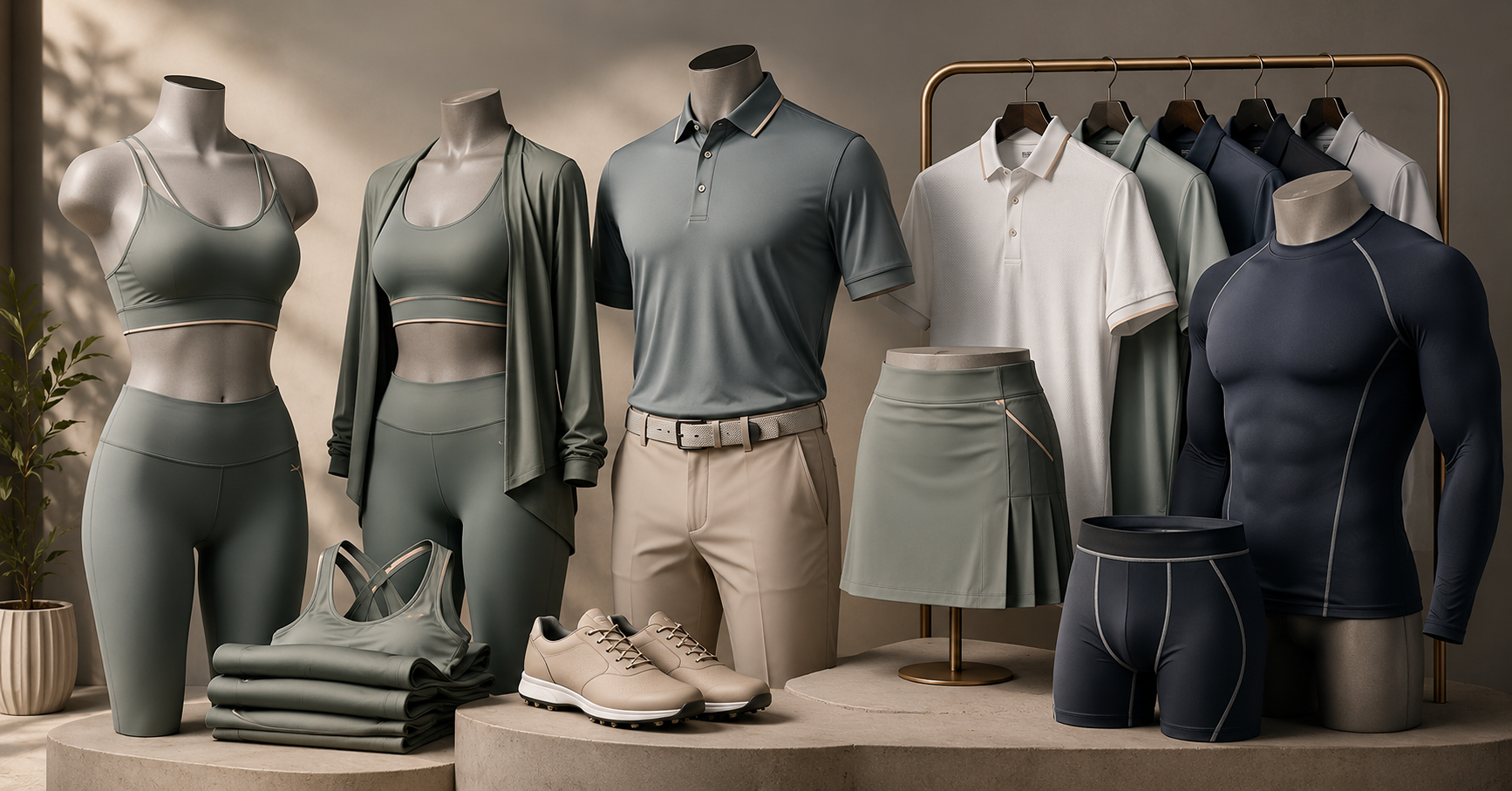
More yoga and activewear clients are now asking us the same question:
Can we develop a collection that feels more natural, uses fewer conventional synthetic fibres, and still performs well in real life?
For years, most yoga leggings and sports bras were built around nylon–spandex or polyester–spandex because these fabrics offer excellent stretch recovery, compression, moisture management, colour consistency, and durability. However, more brands today are exploring sustainable yoga wear with softer hand feel, more plant- or naturally derived fibre content, and a calmer studio-to-street aesthetic.
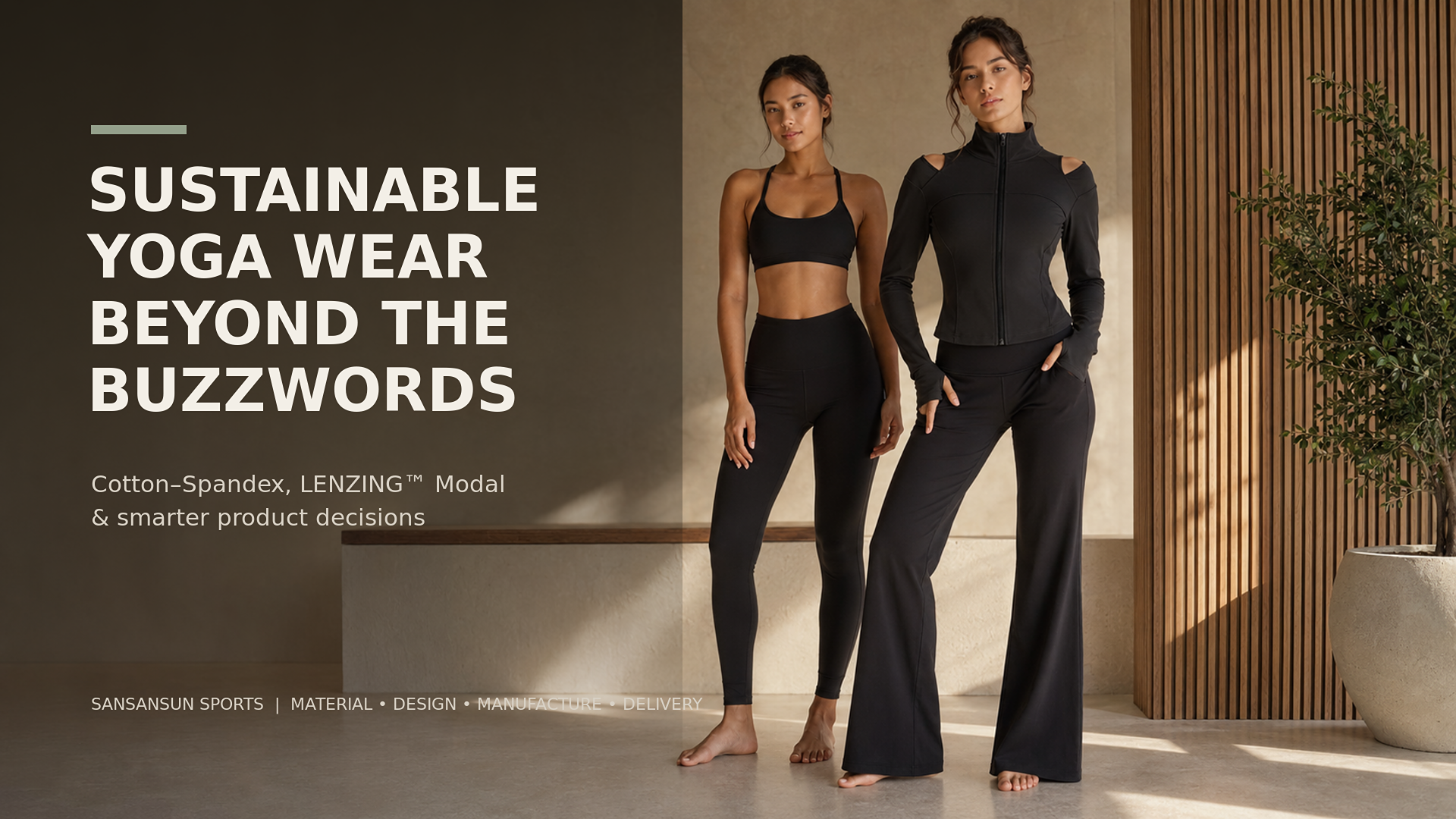
That is why we have developed more yoga products using cotton–spandex and LENZING™ Modal blends, including fitted jackets, yoga bras, leggings, and flare pants. These materials can create beautiful products, but choosing a more responsible fabric is not simply about replacing one fibre name with another.
The results can be beautiful—but choosing a more responsible material is not as simple as replacing one fibre name with another.
“Sustainable” Is Not a Single Fabric
One of the biggest mistakes in product development is treating sustainability as a fabric label.
Cotton is not automatically sustainable. Modal is not automatically suitable for every performance product. Recycled content does not automatically make a garment durable. And a fabric with a good certification can still be the wrong choice for the intended activity.
A responsible product decision should consider the complete picture:
– Where the fibre comes from
– How the fabric is knitted, dyed and finished
– Whether the required claims can be supported by documentation
– How well the garment performs and retains its shape
– How often the customer is likely to wear it
– Whether the product can survive repeated washing
– Whether the brand can realistically meet the fabric MOQ and price target
In other words, the better question is not:
“What is the most sustainable fabric?”
It is:
“What is the most responsible and commercially realistic material for this particular product?”
Brands comparing different sustainable yoga wear fabrics can also explore our guide to sustainable yoga wear fabrics for premium activewear brands.
Why Brands Are Choosing Cotton–Spandex
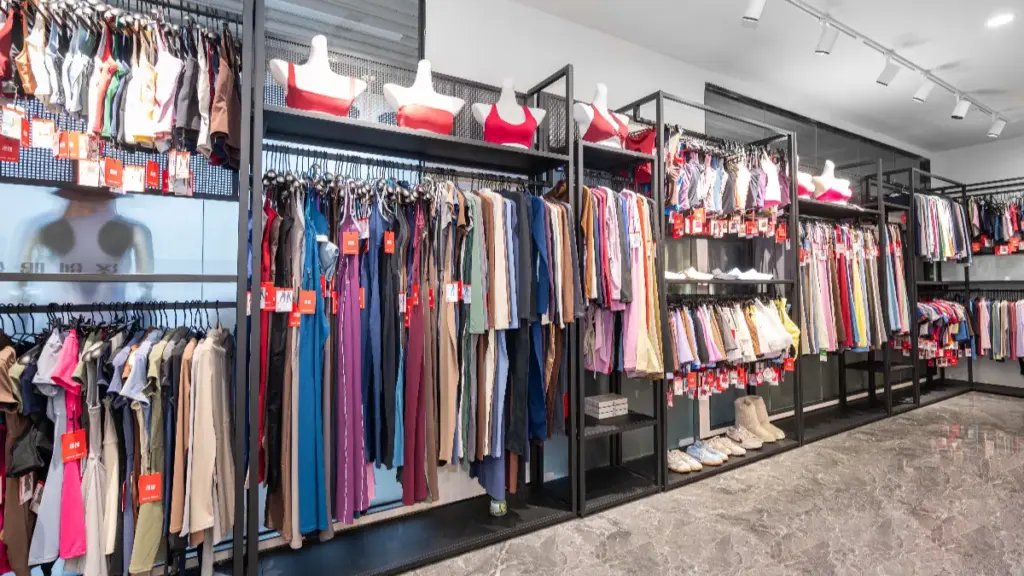
Cotton–spandex offers something that many customers immediately recognise: a soft, familiar and natural-feeling touch.
For yoga, Pilates, stretching, travel and everyday studio wear, it can create a comfortable product that feels less technical than a traditional nylon performance fabric.
It can work especially well for:
– Low- to medium-intensity yoga leggings
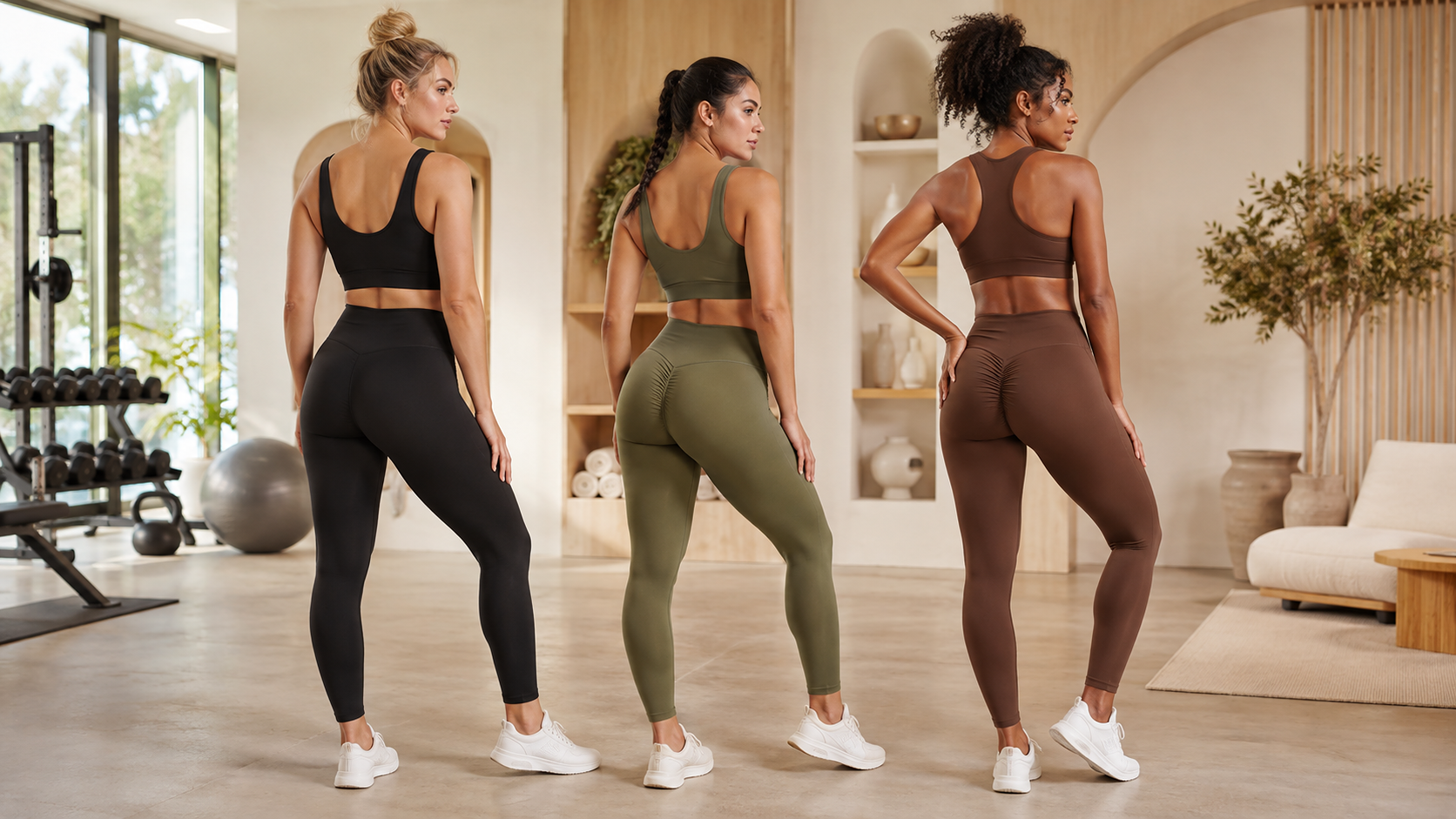
– Flare yoga pants
– Fitted jackets and layering pieces
– Yoga bras and crop tops with light support
– Lounge and studio-to-street collections
The spandex content is still important. It gives the garment stretch, recovery and freedom of movement. A 100% natural-fibre garment may sound attractive in a marketing brief, but if it loses shape quickly, becomes baggy at the knees or is uncomfortable during movement, it will not create a better customer experience.
The goal is balance.
However, cotton–spandex also has limitations. Compared with many nylon–spandex fabrics, it can absorb and retain more moisture, dry more slowly, provide less compression and show wear sooner if the yarn, knit structure or finishing is not well controlled.
For that reason, we do not recommend it automatically for high-sweat training, running or high-compression sculpting products.
The product category must lead the fabric decision.
Where LENZING™ Modal Adds Value
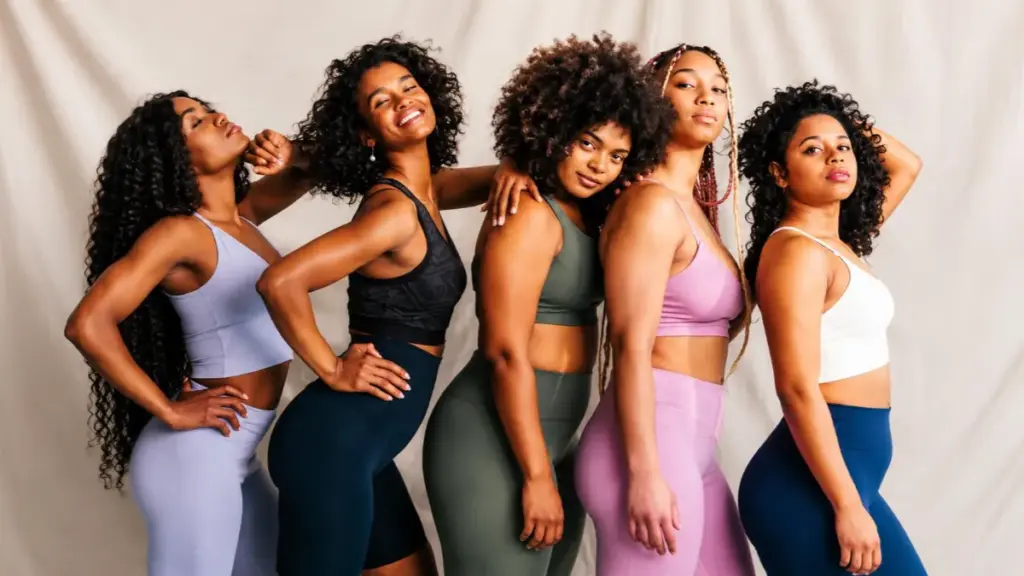
LENZING™ Modal is a branded cellulosic fibre known for its smooth touch, softness and fluid drape. In yoga and wellness apparel, those qualities can help create a distinctly premium wearing experience.
It is particularly suitable when the design direction is:
– Soft rather than highly compressive
– Elegant rather than overtly technical
– Body-skimming rather than heavily sculpting
– Suitable for yoga, Pilates, travel, lounge and everyday wear
Modal blends can work beautifully for yoga tops, fitted long sleeves, flare pants, light-support bras and soft leggings. They are also useful for brands that want their collection to sit between activewear and lifestyle apparel.
But again, the word “Modal” alone is not a complete specification.
The final performance depends on the blend ratio, fabric weight, yarn quality, knit construction and finishing. Spandex is normally added for stretch and recovery. In some cases, another fibre may be blended in to improve stability or durability.
Before bulk production, the fabric should be tested for dimensional stability, pilling, colourfastness, spirality, stretch recovery and appearance after washing. A fabric that feels exceptionally soft on a hanger may not necessarily keep its shape after repeated wear.

Natural Feel and High Performance Are Not Always the Same Brief
When a client asks for a “sustainable yoga legging”, we usually need to clarify what the customer will actually do in it.
Will she wear it for restorative yoga or a high-sweat hot-yoga class?
Does the brand want a soft second-skin feel or firm compression?
Is the legging expected to be squat-proof in light colours?
Does the customer want a natural matte appearance, or fast drying and strong shape retention?
Will the product retail as studio wear, everyday wellness apparel or technical activewear?
These questions matter because one material cannot maximise every benefit at the same time.
For example:
– A cotton-rich fabric may offer a natural touch but dry more slowly.
– A Modal-rich fabric may feel beautifully soft and drape well but provide less sculpting compression.
– A high-spandex construction may improve recovery but reduce the percentage of natural or cellulosic fibre.
– A very soft surface finish may improve the first touch but require extra testing for pilling and abrasion.
Good development is not about hiding these trade-offs. It is about choosing them intentionally.
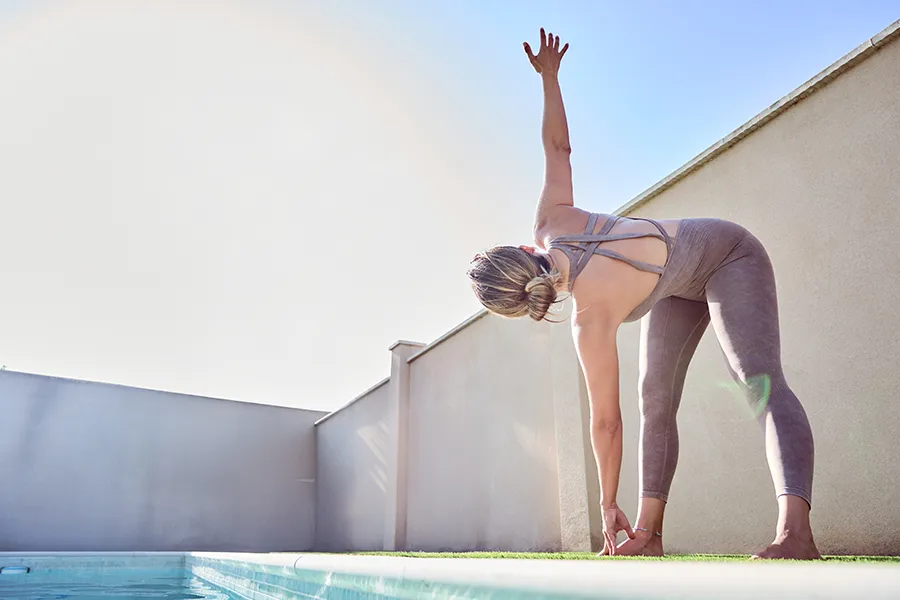
What We Check During Development
When we develop cotton–spandex or LENZING™ Modal yoga wear, fabric selection is only the starting point.
We also review:
1. Fabric weight and opacity
Leggings and flare pants need enough coverage, especially in stretched areas and lighter colours. A fabric that looks opaque on the table may become transparent when worn.
2. Stretch and recovery
The garment must move comfortably and return to shape. We pay close attention to the waistband, knees, seat and elbows, where poor recovery becomes visible quickly.
3. Pattern and garment structure
Natural-feeling fabrics behave differently from highly elastic nylon fabrics. The pattern cannot always be copied directly from a synthetic style. Ease, seam placement and construction may need to be adjusted.
4. Support level
A soft yoga bra and a high-impact sports bra are two different products. Modal or cotton blends can work well for light-support styles, but the lining, elastic, construction and coverage must match the intended use.
5. Shrinkage and washing performance
Cellulosic and cotton-rich fabrics require careful shrinkage control. We recommend wash testing before the final size specification and bulk approval are confirmed.
6. Colour and finishing
Dark colours, light colours and different dye lots can produce variations in hand feel and appearance. The finishing process must be controlled, and realistic tolerances should be agreed before production.
7. Certification and traceability
If a brand plans to make specific environmental or fibre-origin claims, the required certification and transaction documentation should be discussed before the fabric is ordered—not after the garments have been produced.
A Better Way to Build a More Responsible Yoga Collection
For many brands, the best first step is not converting the entire collection at once.
A more practical approach is to begin with the products where softer, more natural-feeling materials provide the greatest customer value.
For example:
– Use a Modal–spandex blend for a premium yoga top or flare pant.
– Use cotton–spandex for a soft studio jacket or low-impact set.
– Keep a performance blend for products that genuinely require high compression or faster drying.
– Start with a focused capsule collection and collect real customer feedback before expanding.
This creates a more honest product architecture. Each fabric is used where it performs best, rather than forcing one sustainability story across every SKU.
Final Thoughts
Sustainable yoga wear is not about finding one perfect fabric for every product. Cotton–spandex, LENZING™ Modal, and performance blends each have their own advantages and limitations. The best choice depends on the activity, customer expectations, product positioning, and long-term performance requirements.
For brands developing a more responsible yoga collection, the right material decision starts with clear product goals and careful testing before bulk production. Through fabric sourcing, sample development, pattern adjustment, and OEM/ODM manufacturing support, SansansunSports helps brands create yoga wear that balances comfort, performance, and a more thoughtful material approach.