Have you ever seen a pair of leggings that looked perfect on a Western model but sagged, rode up, or pulled tight on a customer in Asia? This is one of the most common problems activewear brands face. The cause is usually simple: the pattern was made for a different body shape. At SANSANSUN Sports, a China-based yoga wear and activewear manufacturer offering OEM, ODM, and MDMD services, we see this often. This guide explains how Asian fit and Western fit differ, why it matters for custom leggings and private label activewear, and how your brand can get sizing right from the start.
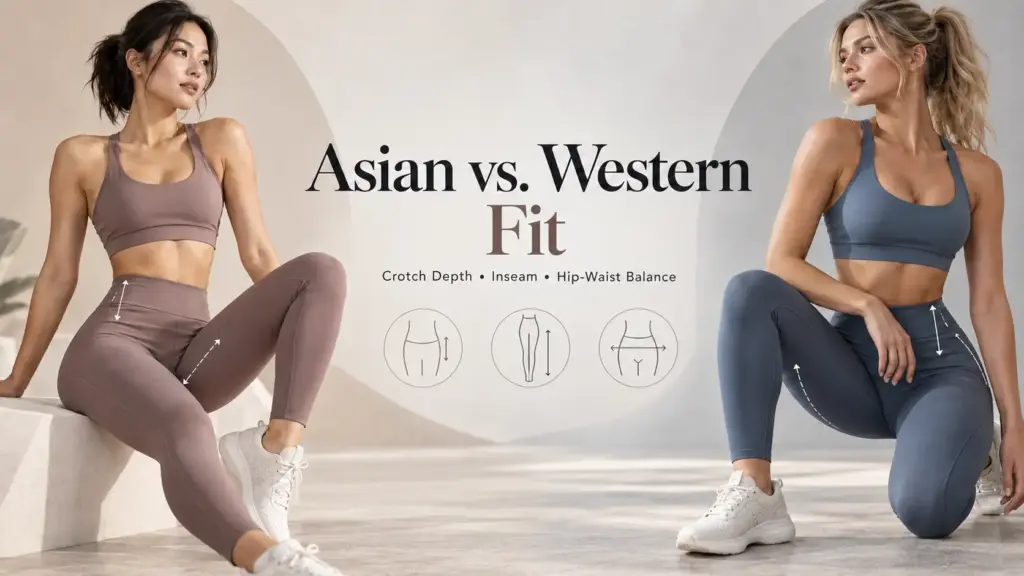
Understanding the Fundamental Anthropometric Differences Between Asian and Western Populations
Anthropometry is the study of human body measurements. Activewear brands use it to decide how a garment should be cut. When body data changes, the pattern must change too.
On average, Asian customers tend to have a shorter height and a shorter leg length than Western customers. The torso is often longer in proportion to the legs. Hip shape, thigh size, and waist position also vary. In a fitted garment like yoga pants, these small differences add up quickly.
This is the first step in good activewear design. Once you know the body is different, you can see why one size chart cannot fit every market.
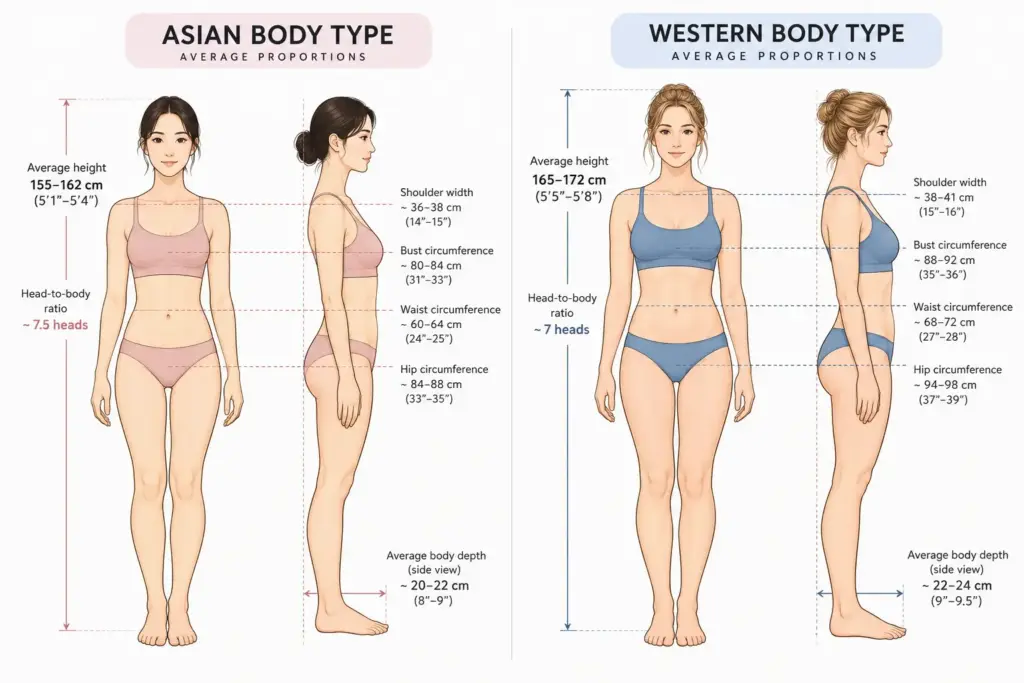
The Technical Failures of Western Sizing Systems in Asian Markets
Many brands simply take a Western size chart and sell it in Asia. This often leads to fit problems that customers notice right away.
The most common issues are:
• Inseam that is too long
• Crotch depth that sits too low
• Waistbands that gap at the back
In yoga wear, these problems are more visible because the fabric sits close to the body. Extra length creates wrinkles at the ankle. A low crotch point limits movement in poses like deep squats.
These failures lead to more returns, poor reviews, and lost trust. For a startup activewear brand, that is a costly start. Every return hurts your margin, and every bad review makes it harder to win new buyers.
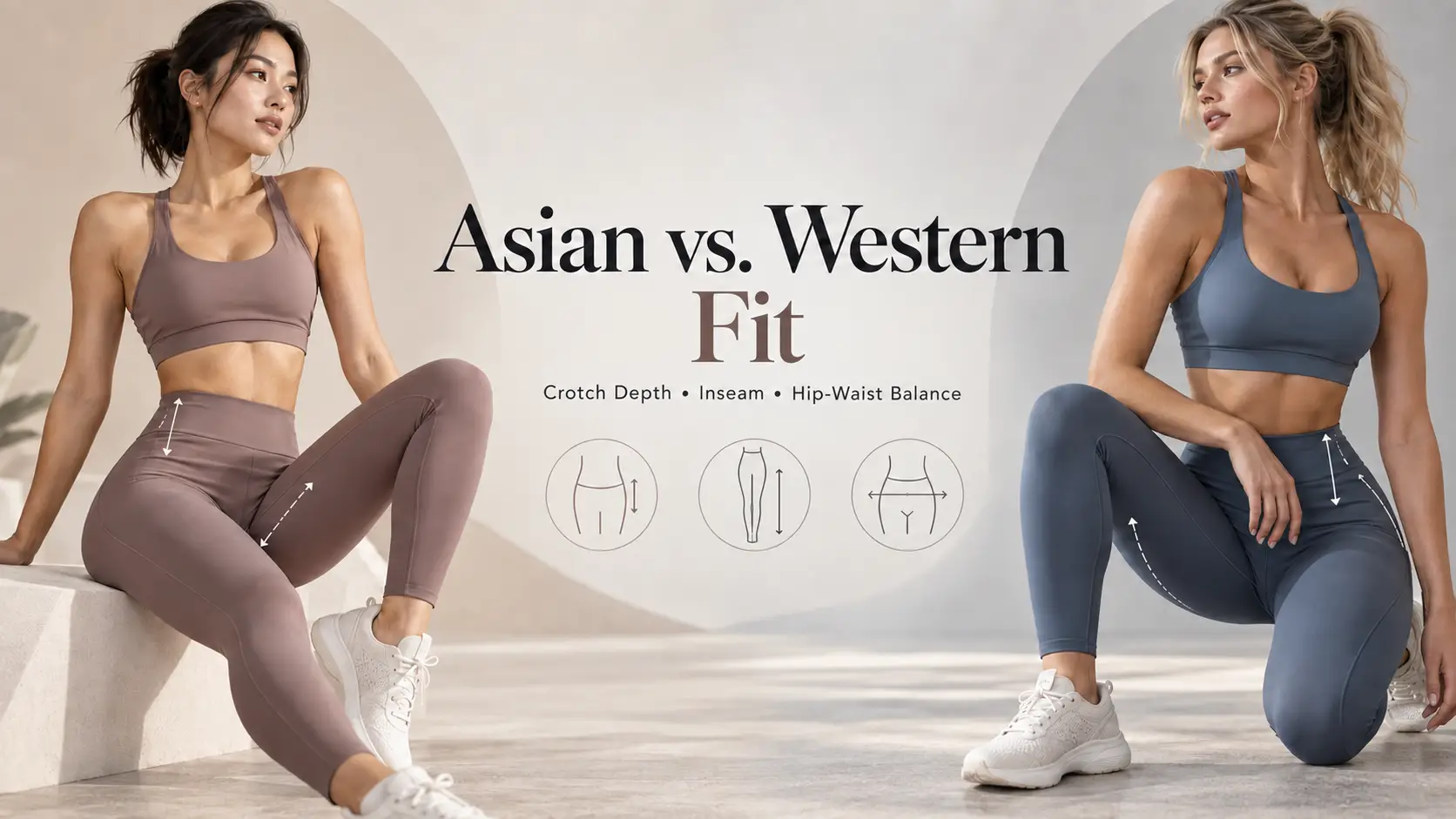
Asian vs Western Body Measurements: Critical Differences
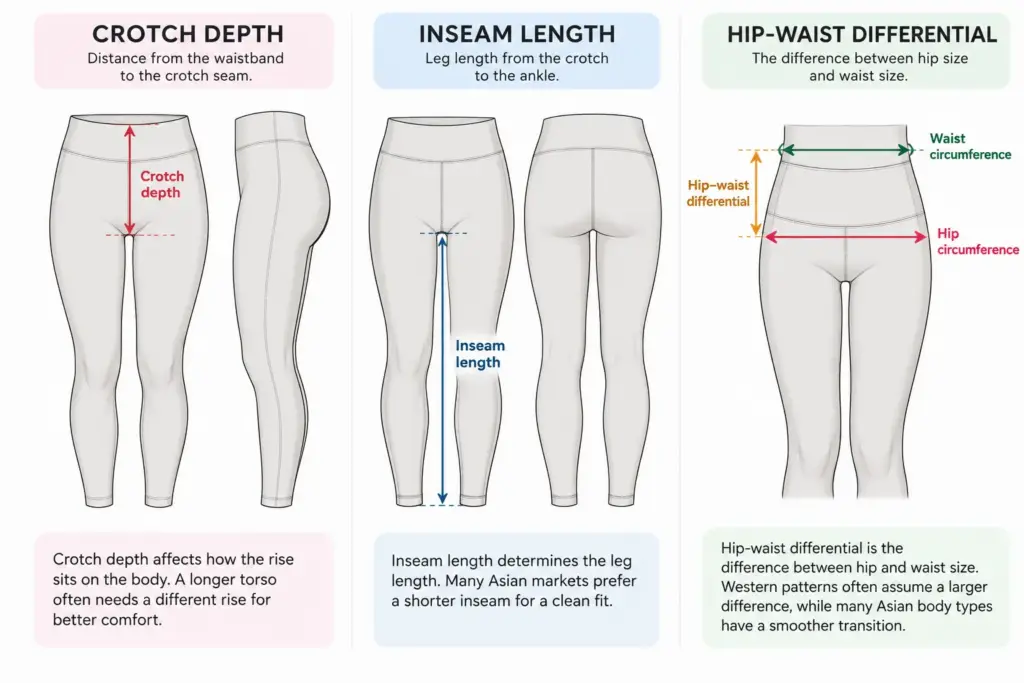
Three measurements matter most in leggings and yoga pants.
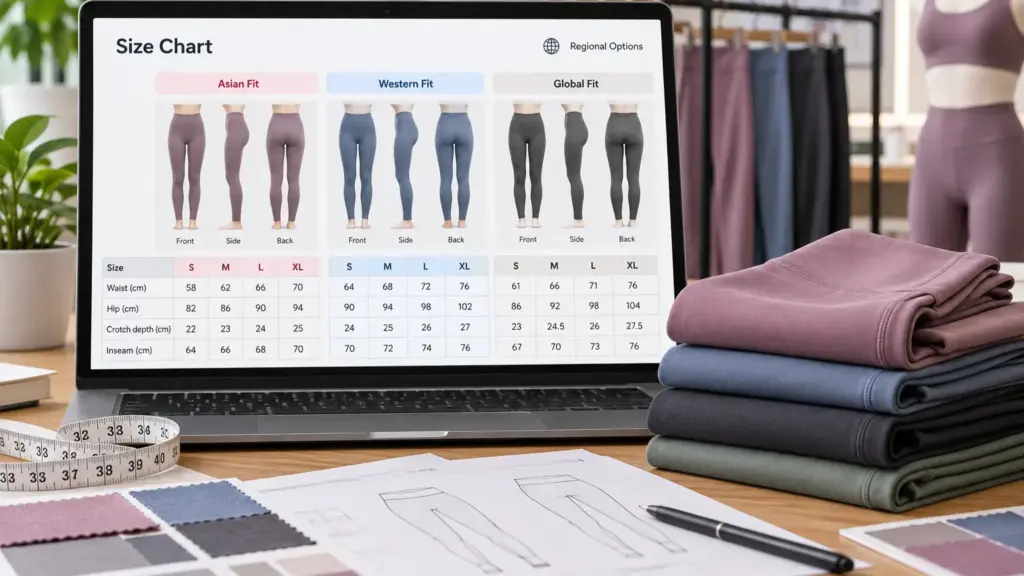
Crotch depth, also called rise, is the distance from the waistband to the crotch seam. A body with a longer torso and shorter legs usually needs a different rise to sit comfortably. Inseam length is the leg length from the crotch to the ankle. Many Asian markets prefer a shorter inseam for a clean fit. Hip-waist differential is the difference between hip and waist size. Western patterns often assume a larger difference, while many Asian body types have a smoother transition.
| Measurement | Common Asian Fit | Common Western Fit |
|---|---|---|
| Crotch depth (rise) | Adjusted for longer torso proportion | Shorter rise for shorter torso proportion |
| Inseam length | Shorter | Longer |
| Hip-waist differential | Smoother transition | Often larger difference |
Cultural Preferences and Their Impact on Sizing Requirements
Fit is not only about numbers. Style preferences also shape what customers want.
In many Asian markets, customers like high-waisted designs with strong tummy support and full coverage. They may also prefer opaque fabrics and cropped or ankle-length styles that look neat. In Western markets, some customers prefer a looser or more relaxed feel, or longer inseams for full-length coverage.
These preferences affect fabric choice, waistband height, and length. A brand that respects local taste will feel more familiar to its customers.
Successful Brand Adaptations: Case Studies in Asian Market Sizing
Several well-known activewear brands have learned this lesson. They created size charts made for Asian customers, often with shorter inseams and adjusted rise. Some added extra size options, and others changed the waistband and pattern shape for regional fit.
The result was better reviews, fewer returns, and stronger loyalty. These brands did not change their style. They changed the pattern to match the body.
Startups can follow this approach on a smaller scale. Start with one core product, adjust the fit for your target market, and test with real customers. For a real-world example of how fit adjustments reduced returns, see our Solving the Sizing Nightmare: A Case Study in Kids’ Loungewear.
Technology Solutions for Bridging Asian-Western Sizing Gaps
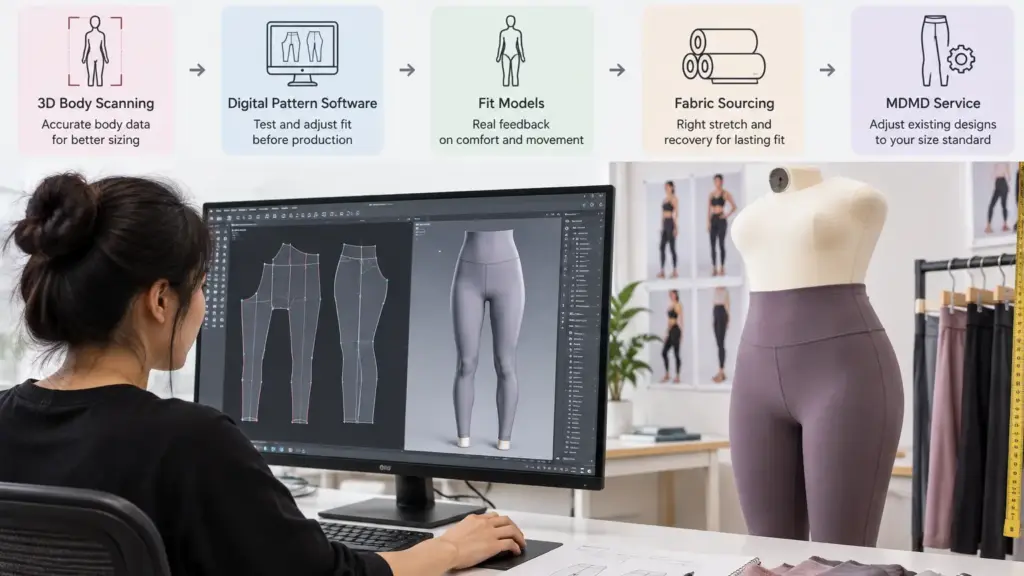
Modern tools make fit easier to solve. 3D body scanning and digital pattern software help designers test a garment before cutting fabric. Fit models from your target market give real feedback on comfort and movement.
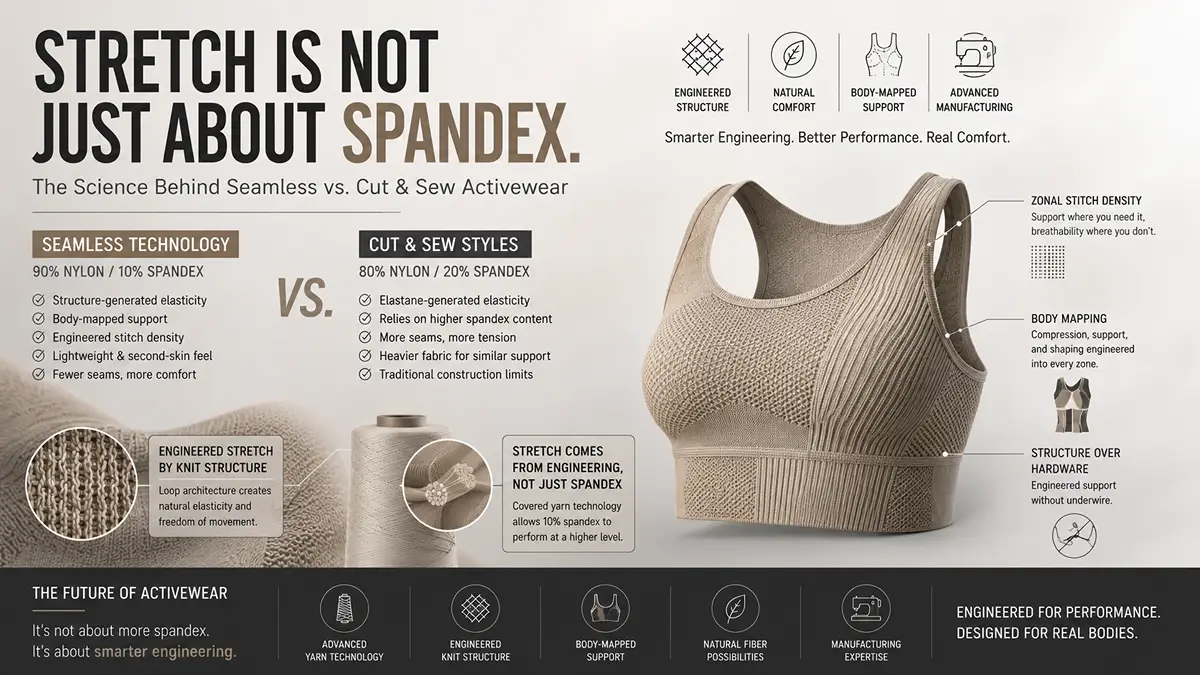
At our factory in China, we use market-specific grading rules — for example, a 1.5 in (4 cm) waist grade per size run aligned with GB/T 1335 for the China market — and run sample fittings with fit models from the target region before bulk production. If you are new to spec sheets, our how to create a professional tech pack the ultimate guide covers the full process from measurement to grading. We also help source fabrics with the right stretch and recovery, so the garment holds its shape after washing. Understanding the difference between stretch and recovery is critical — our breakdown of The LYCRA® Truth: Recovery Power vs. Stretch in Spandex explains why elongation matters more than spandex percentage alone. Our MDMD service lets brands adjust an existing design to their own size standard without starting from zero.
These steps reduce risk and save time for new brands building custom activewear. They also help you launch faster, so your brand can start learning from real customers sooner.
Future Trends in Asian-Western Sizing Solutions
Sizing is moving toward more flexibility. Many brands now offer dual size charts, regional fit options, and made-to-order sizing. Data from customer returns and reviews is also helping brands refine their patterns.
Inclusive sizing is growing as well, with extended size runs that account for different negative ease and elongation requirements across body types. Brands that listen to customer feedback and update their fit often will stay ahead.
For startups, the message is clear. Build fit flexibility into your product plan early.
Frequently Asked Questions
What is the main difference between Asian fit and Western fit in yoga pants?
The main differences are in crotch depth, inseam length, and hip-waist differential. Asian fit often uses a shorter inseam and adjusted rise to match common body proportions.
Can I use one size chart for both Asian and Western markets?
It is possible, but it often causes fit problems. A separate or adjusted size chart usually gives better comfort and fewer returns.
Why is crotch depth important in leggings?
Crotch depth affects comfort and movement. If it is too low or too high, the leggings can feel tight, slip down, or limit your range of motion.
How does inseam length affect leggings fit?
A wrong inseam creates wrinkles at the ankle or makes the leggings too short. Matching the inseam to your target customer gives a cleaner look.
Conclusion
Asian fit and Western fit are not the same, and good activewear starts with understanding that difference. Crotch depth, inseam length, and hip-waist balance all shape how a garment feels and looks. Brands that adapt their patterns to their target market see happier customers and fewer returns.
For growing brand owners, the best path is simple: know your customer, choose the right fabric, test your samples, and work with a factory that supports flexible customization. With the right partner, sizing becomes a strength instead of a problem.Ready to build leggings and yoga wear that fit your target market? Contact SANSANSUN Sports today to discuss your OEM, ODM, or MDMD project and request a custom fit sample.