Why do two pairs of yoga leggings labeled Size M fit differently? The answer often starts with garment measurements.
Para marcas de ropa deportiva en crecimiento, accurate sizing is essential for comfort, satisfacción del cliente, and consistent production. Puntos de medida (POM) define how garment dimensions are established, tested, and controlled.
Understanding POM helps brands develop reliable yoga leggings size charts, avoid costly sampling mistakes, and improve fit across international markets.
What Are Points of Measure in Sizing?
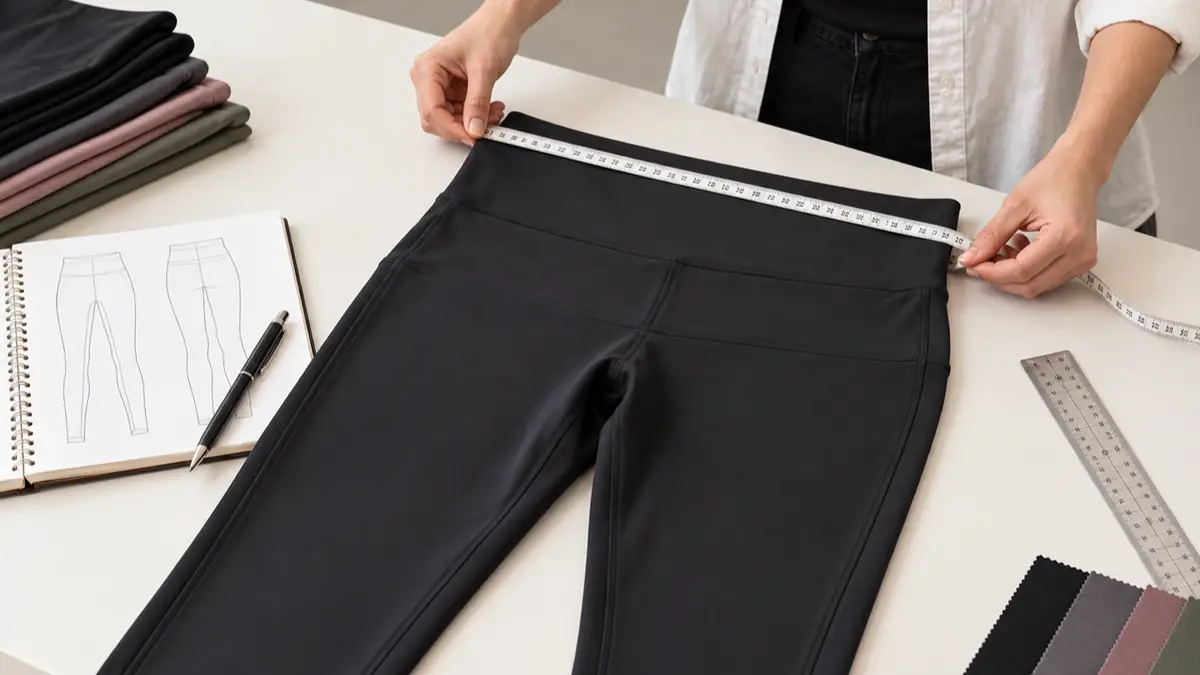
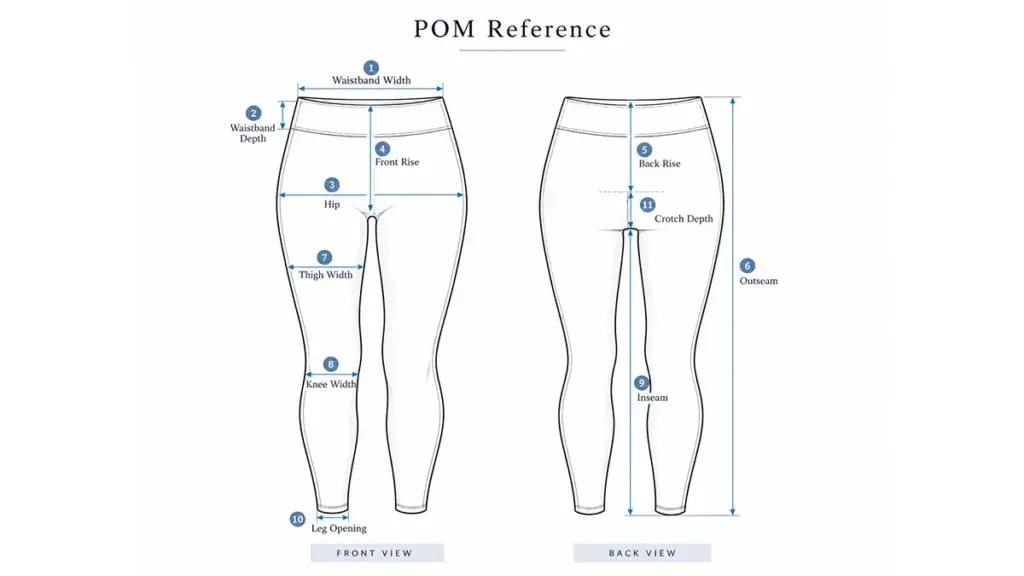
Puntos de medida (POM) are defined locations used to measure a finished garment. For yoga leggings, these include the waist, cadera, thigh, entrepierna, and rise.
Each POM includes a measurement method, target dimension, and acceptable production tolerance. These details appear in a garment’s technical specification sheet, or tech pack—see our guide on how to create a professional tech pack.
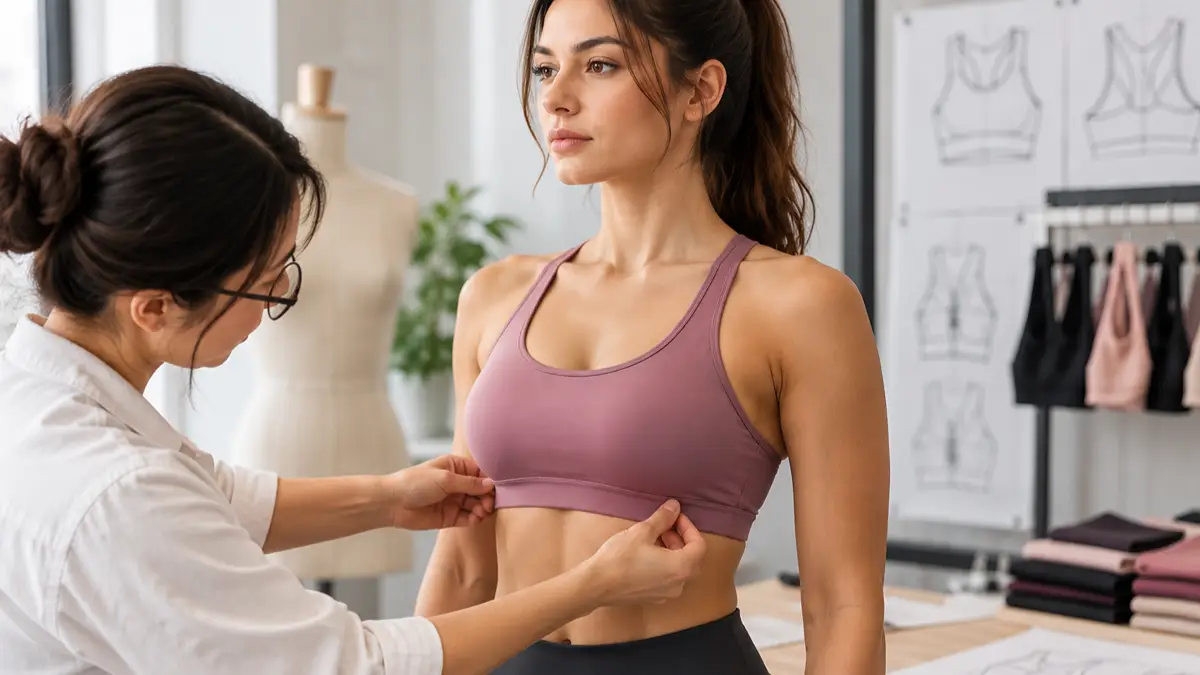
Key distinction: a customer size chart describes body measurements, while a POM chart records finished garment measurements. International standards such as ISO 8559 define the terminology for these measurement points, though adoption remains voluntary.
For how those body measurements typically appear as S–M–L or 4–6–8 labels, read our breakdown of letter versus numeric activewear sizing.
Why POM Specifications Make Consistent Size Charts
Accurate POM specifications connect garment design with actual production measurements.
A customer size chart shows recommended body measurements. A POM chart shows finished garment dimensions.
Both are essential. Clear measurement rules help factories reproduce approved fits consistently across different sizes and production batches.
Core POM for Yoga Leggings Explained
Six important measurements influence how yoga leggings fit:
• Half waist: Waistband comfort and support.
• Half hip: Seat coverage and fit.
• Front rise: Front waistband position.
• Back rise: Rear coverage and comfort.
• Inseam: Inside leg length.
• Half thigh: Leg compression and movement.
Each measurement should match the intended garment style and fabric performance.
How Waist and Hip POM Are Established
Waist and hip measurements begin with target-customer body data, estiramiento de la tela, and desired compression.
Stretch leggings are typically built with negative ease, meaning the relaxed garment measures smaller than the body it covers. The degree depends on the style: compression-tight silhouettes use the largest negative ease, while relaxed joggers may sit at zero or slight positive ease.
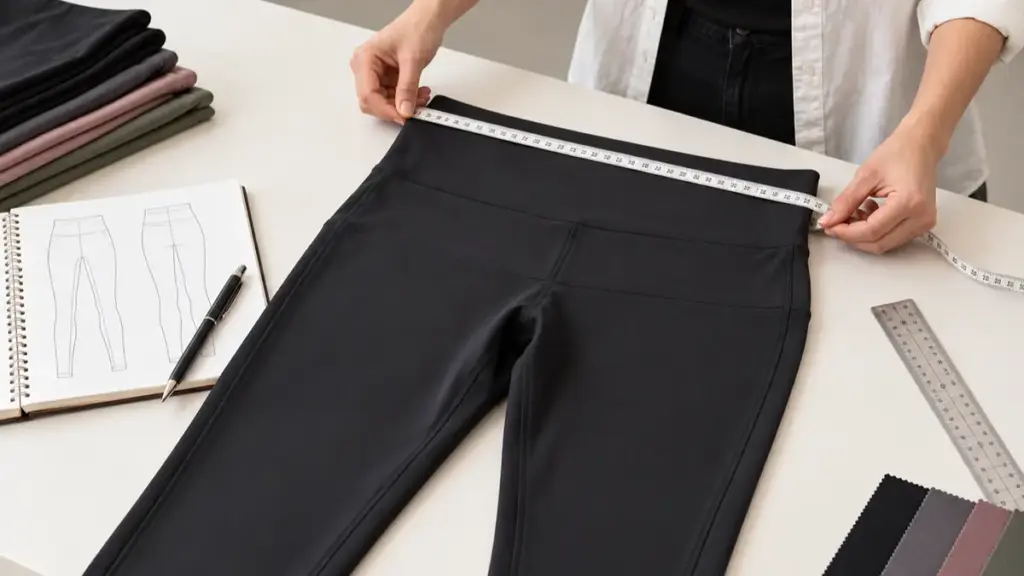
Por ejemplo, a waistband may measure 32 cm when laid flat, representing approximately 64 cm around when relaxed.
This is an illustrative garment measurement, not a universal Size M standard. Fit testing determines whether the dimensions are suitable.
Inseam and Rise Measurements Decoded
The inseam runs from the crotch junction to the leg opening. Rise measurements help determine waistband position and coverage.
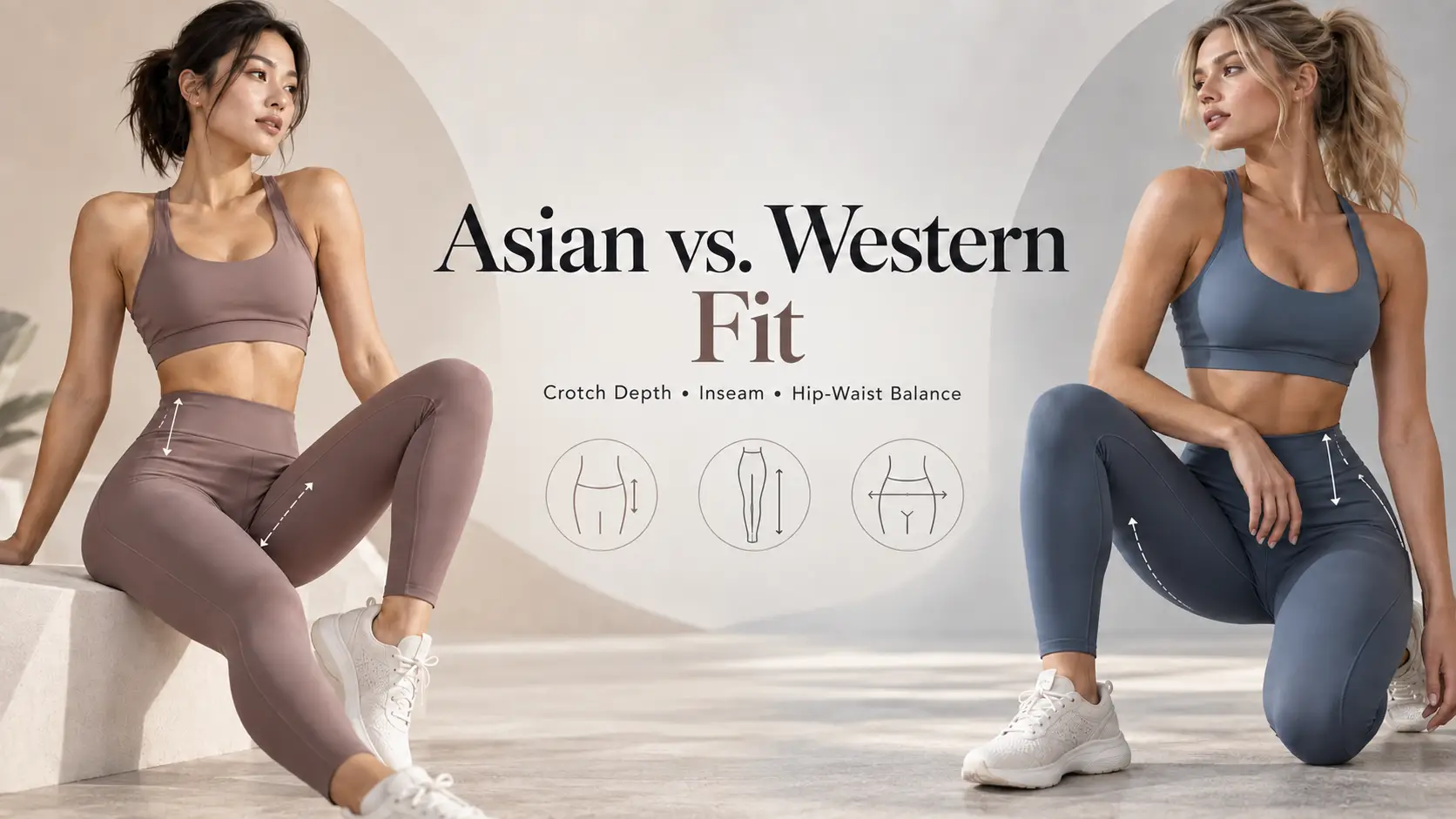
Brands targeting US, Reino Unido, European, or Asian customers should consider their intended customers’ proportions and fit preferences.
Regional size labels alone cannot guarantee accurate fit. Written standards such as ISO 8559, EN 13402, and ASTM D5585 exist, but they are voluntary, so market practices still diverge. Testing representative body measurements remains the more reliable route.
Establishing POM Through Fit Modeling
Fit modeling connects technical measurements with real garment performance.
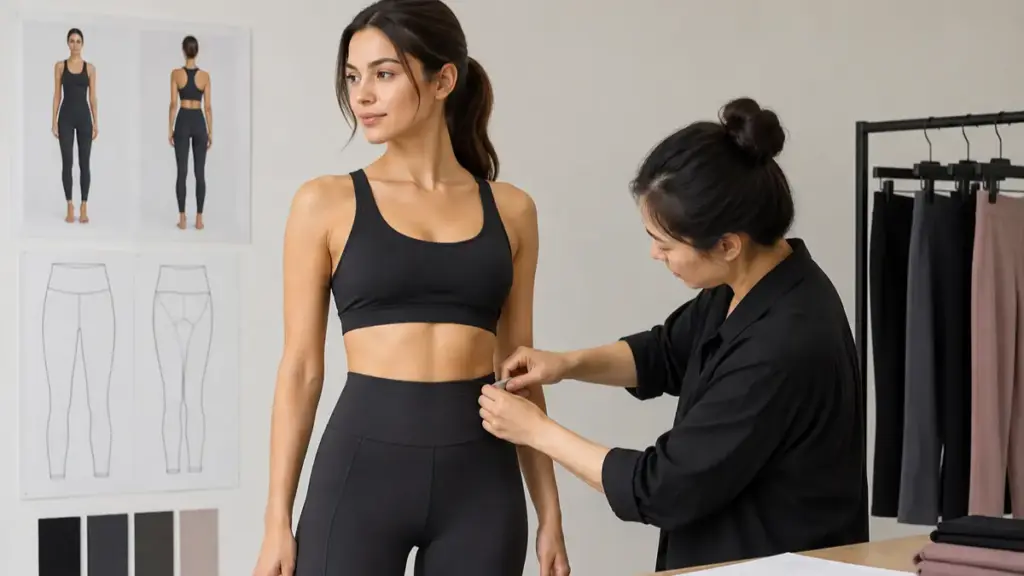
Manufacturers first develop a base-size sample using the approved fabric and pattern. A fit model then tests waistband stability, hip coverage, and movement during squatting, extensión, and walking.
Technicians compare the results with the POM specification and adjust the pattern when necessary.
Practical lesson: Approve both the garment measurements and the fit before proceeding to bulk production.
POM Grading Rules for Size Progression
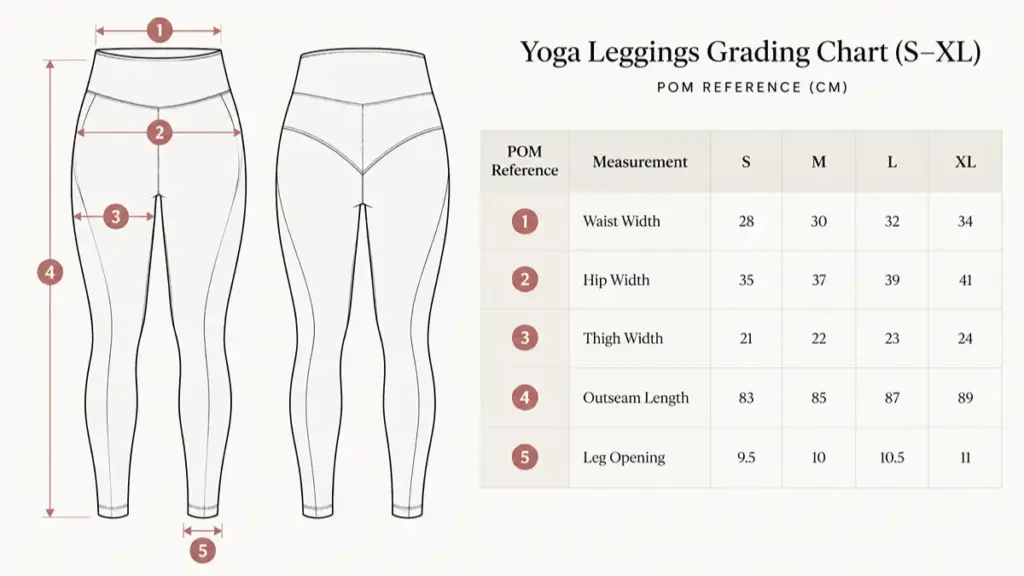
Size grading develops smaller and larger sizes from an approved base pattern.
Waist, cadera, entrepierna, and rise may require different grading increments. Increasing every measurement equally can create fitting problems.
Brands should check multiple sizes before confirming the final grading chart.
Common POM Mistakes Brands Make
Common mistakes include:
• Mixing body and garment measurements.
• Using unclear measuring positions.
• Ignoring fabric stretch and recovery.
• Applying unsuitable grading rules.
• Missing measurement tolerances.
• Approving only one sample size.
Clear tech packs, approved samples, and measurement-based quality checks help reduce these risks—and the returns they cause. Our analysis of how fit problems drive activewear returns quantifies what sizing errors cost.
Preguntas frecuentes
What does POM mean in activewear manufacturing?
POM stands for Points of Measure. It identifies the exact garment measurements used during sampling, calificando, and production.
What is the difference between a POM chart and a size chart?
A POM chart records finished garment dimensions. A customer size chart usually shows recommended body measurements.
Why is negative ease important for yoga leggings?
Negative ease allows stretch fabric to fit closely and provide the intended level of support or compression.
Can one size chart work for every international market?
No siempre. Brands should validate fit using their target customers’ body proportions and preferred sizing conventions.
Final Thoughts on POM Mastery
Accurate Points of Measure help growing activewear brands turn product ideas into consistent, well-fitting garments.
Successful sizing depends on clear measurement specifications, appropriate fabric selection, fit testing, and reliable grading.
As a China-based activewear manufacturer, SANSANSUN supports brands through OEM, ODM, y servicios MDMD, including fabric sourcing, desarrollo de patrones, muestreo, y control de calidad.
Building a reliable POM chart from the beginning helps brands improve product consistency and develop activewear collections with greater confidence.
SANSANSUN maintains size charts for over 3,000 activewear and gymwear styles. If you need an activewear or gymwear size chart, contact us.