You have designed your golf apparel line. The fabrics look great. The samples are ready. Then an EU buyer asks: “Can you send your OEKO-TEX certificate?”
If your manufacturer cannot answer that question, the deal stops there. This is one of the most common pain points for activewear brands entering European markets. EU buyers — especially in Germany, France, the Netherlands, and the Nordic countries — require certification before they place orders. It is not a preference. It is a requirement.
This article explains the four key certifications you need, why each one matters, and what to ask your manufacturer before you start sampling. SANSANSUNSPORS works with brand owners and startups navigating exactly this process, so we have kept this guide practical and straightforward.
Why Certification Is Now a Market Entry Requirement in the EU
European consumers are more informed than ever. They read product labels. They check brand sourcing claims. Because of this, EU retailers and wholesale distributors have updated their supplier requirements. They now expect certification documentation before they approve a new product line.
For brands, this creates a clear pain point: if you source from a manufacturer who is not certified, you cannot enter many EU retail channels — even if your product design and quality are excellent. Certification is not about the product itself. It is about the materials and processes used to make it.
The good news is that if you work with an already-certified manufacturer, you do not need to do anything extra. The certifications transfer through documentation. You simply request the paperwork, and your buyers get what they need.
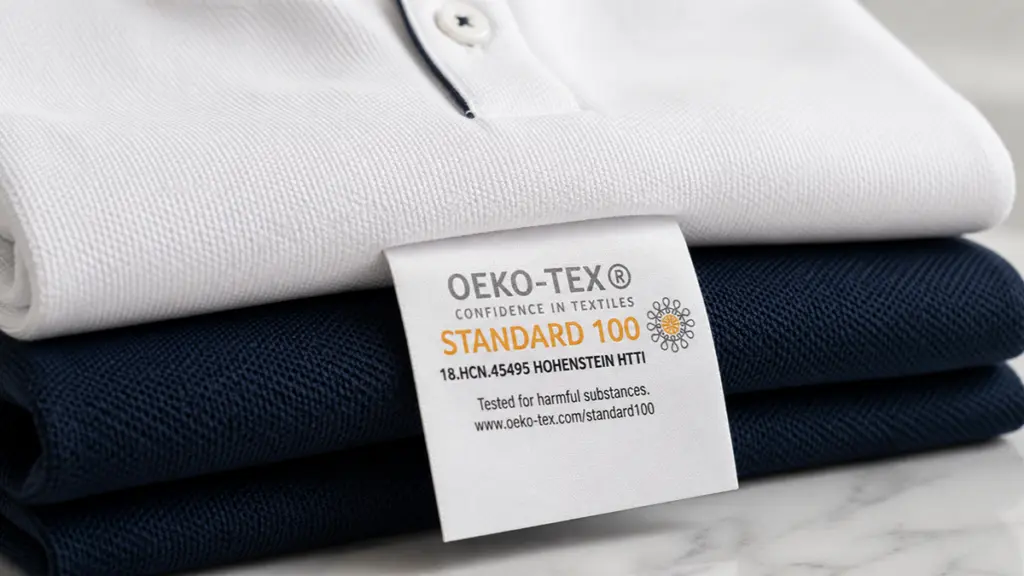
OEKO-TEX Standard 100: What It Is and Why Buyers Require It
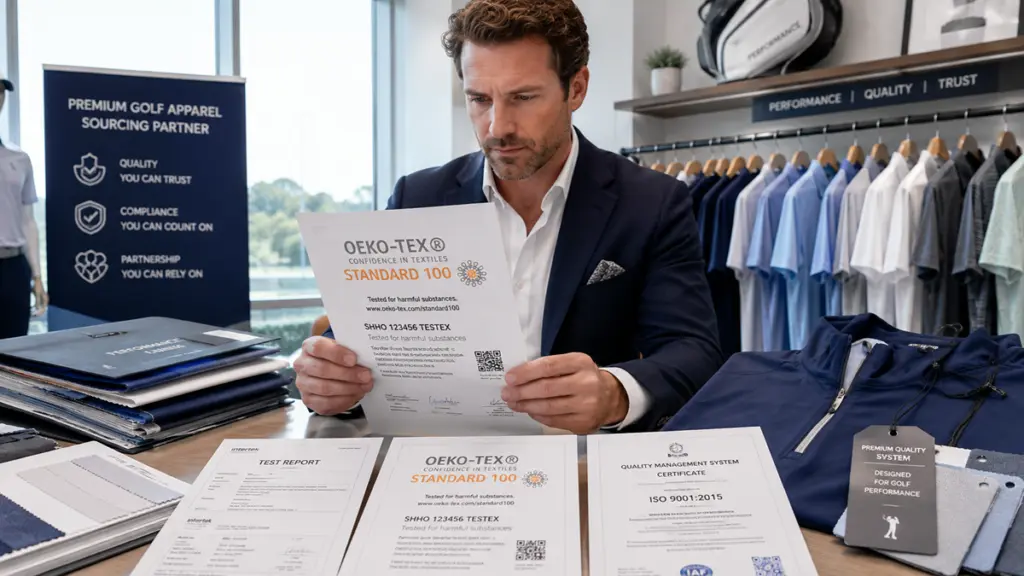
OEKO-TEX Standard 100 tests finished fabrics for over 100 harmful substances. This includes chemical residues, heavy metals, pesticides, and substances that can cause skin irritation. Every part of the garment is tested — fabric, thread, labels, and hardware like zippers and buttons.
Many German and Dutch distributors list OEKO-TEX certification as a non-negotiable sourcing requirement. Without it, your golf apparel simply will not pass their supplier approval process.
For brand owners, the key question to ask is: does your manufacturer source OEKO-TEX certified fabrics as standard? If yes, you get the certificate at no extra cost. It is already embedded in the fabric supply chain. At SANSANSUNSPORTS, OEKO-TEX golf apparel fabrics are part of our standard sourcing — buyers do not need to pay a premium or wait for additional testing.
GRS Certification: The Requirement for Recycled Fabric Claims
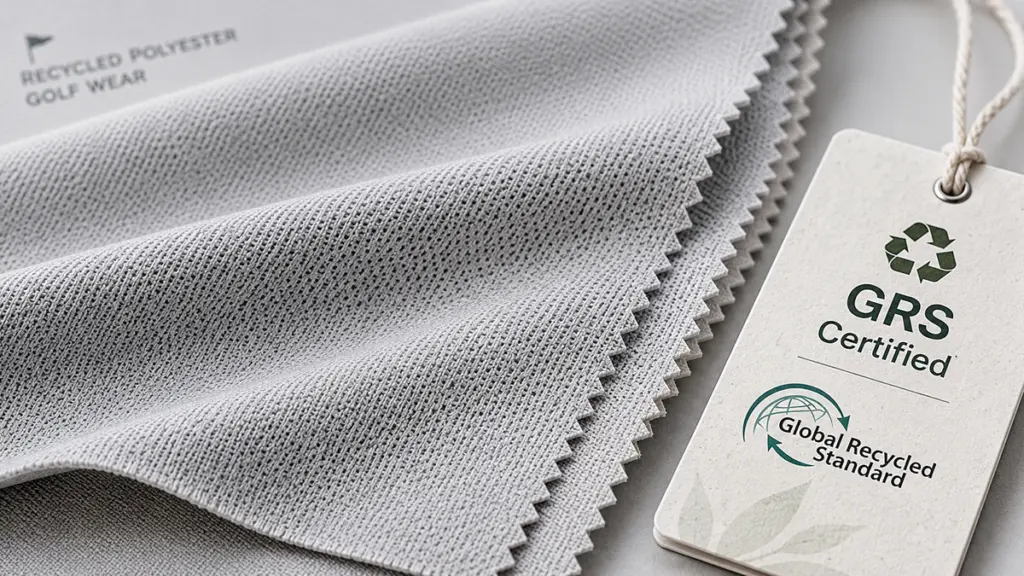
More and more golf apparel brands want to use recycled materials — recycled polyester from plastic bottles, recycled nylon, and blended eco fabrics. This is a strong market trend, especially in the EU where sustainability is a purchasing factor.
However, if you want to make a recycled content claim on your product, you need GRS certification. GRS stands for Global Recycled Standard. It verifies that the recycled content is genuine and that the full supply chain — from raw material to finished garment — meets environmental and social standards.
Without GRS certification, your recycled fabric claim has no credibility with buyers. Some buyers will also reject the product outright if the claim is unverifiable. As a GRS certified activewear manufacturer, SANSANSUNSPORTS supplies certified recycled fabrics across all activewear and golf categories. If sustainability is part of your brand story, this is the certification that backs it up.
You can learn more about Why Golf Apparel Brands Are Switching to Performance Fabric in our dedicated article.
REACH Compliance: The EU Chemical Regulation Every Importer Must Understand
REACH is a European Union regulation. It stands for Registration, Evaluation, Authorisation and Restriction of Chemicals. In simple terms, it controls which chemicals can legally be present in products sold in the EU — including clothing.
For golf apparel brands, REACH compliance means your garments must not contain restricted substances above the allowed legal limits. Non-compliance can result in product recalls, fines, and removal from EU retail channels.
Your manufacturer should provide REACH compliance documentation with every production run. This is typically a test report or a declaration of conformity supported by lab data. As an EU golf clothing supplier partner, SANSANSUNSPORTS includes REACH documentation in our standard export package. You can request it before sampling to confirm compliance before any investment is made.
Country of Origin Documentation: Why It Matters More After Brexit
Post-Brexit trade rules changed how EU and UK buyers calculate import duties. Country of Origin documentation is now increasingly requested by EU customs authorities and buyers who need to verify sourcing to apply the correct tariff rates.
For golf apparel brand importing from Asia into the EU or UK, accurate Country of Origin certificates per production batch are essential. Missing or inaccurate documentation can delay customs clearance and create unexpected costs.
At SANSANSUNSPORTS, Country of Origin certificates are prepared as part of every order’s standard export documentation. This means buyers get what they need at customs, and brands avoid delays that hurt their launch timelines.
Does Certification Add Cost to Your Order?
This is the question most brand owners ask first. The short answer is: not if your manufacturer already holds the certifications.
Certification cost becomes a problem only when a brand sources from an uncertified manufacturer and then tries to certify fabrics or products after the fact. Third-party lab testing, re-sourcing certified materials, and production delays add real cost and time.
When certification is built into the manufacturer’s standard fabric supply chain — as it is at SANSANSUNSPORTS— the cost to the brand is effectively zero. You are not paying for certification. You are paying for the fabric, which already meets certified standards. This is why sustainable golf wear wholesale buyers increasingly prefer factories with pre-existing certification infrastructure rather than trying to build it themselves.
Four Questions to Ask Your Manufacturer Before You Sample
Before you commit to a manufacturer for your EU golf apparel line, ask these four questions directly:
- Do you hold a current OEKO-TEX Standard 100 certificate for the fabrics you plan to use in my product? Ask for the certificate number so you can verify it.
- Can you provide GRS certification if my product uses recycled materials? Confirm this covers the specific fabric blends in your design.
- Can you supply REACH compliance test reports for EU export? Ask whether this is included in your standard export documentation or requires a separate request.
- Can you issue Country of Origin certificates for each production batch? This should be standard for any experienced export manufacturer.
A manufacturer with real EU export experience and a well-established manufacturing process will answer all four clearly and quickly. At SANSANSUNSPORTS, we provide all of these documents as part of our standard process. We recommend requesting certification documentation before you request samples—it saves time and confirms your product is EU-market-ready before production begins.