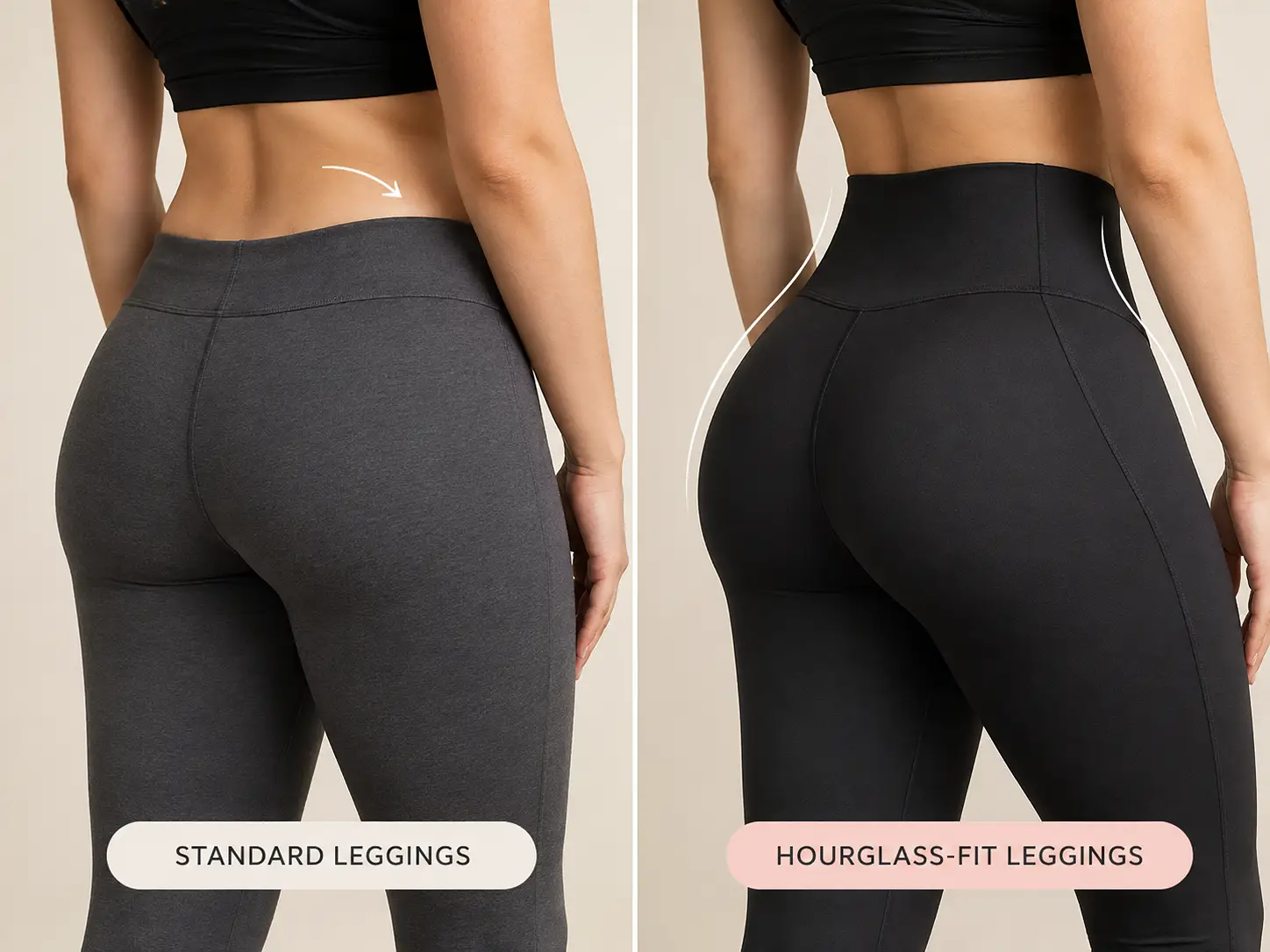
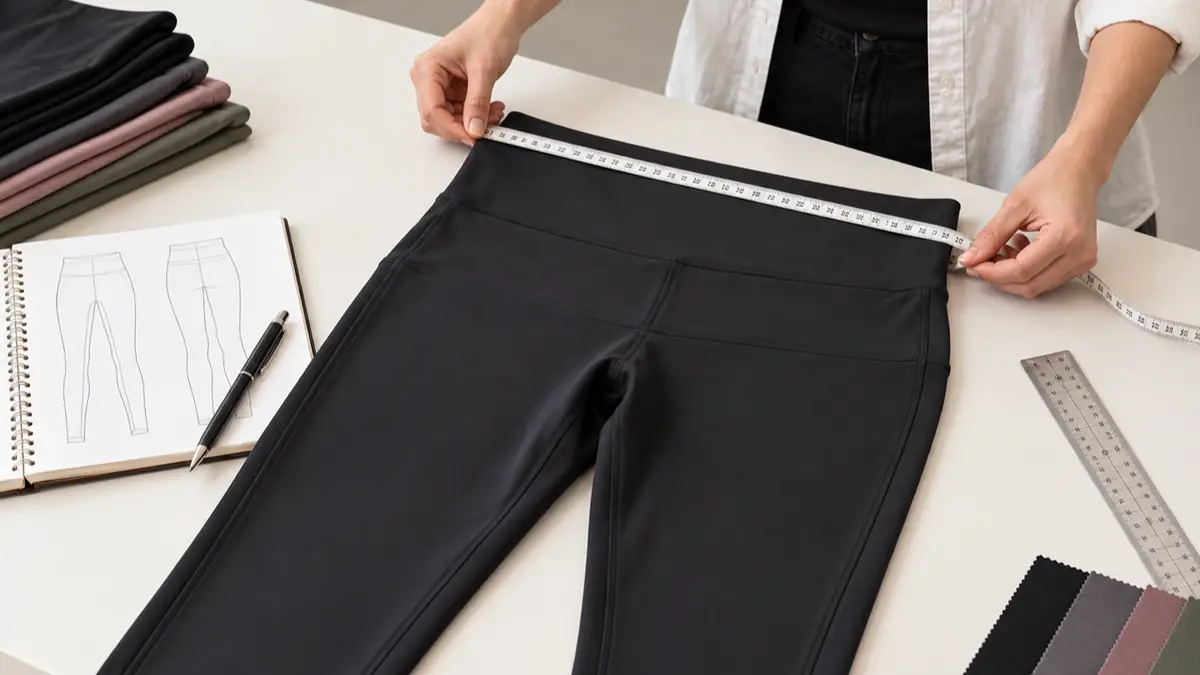
Why do leggings fit comfortably around the hips but leave an uncomfortable gap at the waist?
This is a common activewear fit challenge for women with a large waist-to-hip difference. Standard leggings blocks are drafted around one fixed difference between waist and hip circumference, so a body with a bigger difference gets the room it needs at the hip but keeps excess volume at the waist. The result is a gap – not a lack of support.
For activewear brands targeting the UAE, Arabia Saudita, and other international markets, getting the waist-to-hip difference right is what turns a leggings style that sells through into one that gets returned.
The solution involves precise pattern engineering, strategic fabric selection, and practical fit testing.
Waist-to-Hip Difference: Why the Waistband Gaps
What the pattern needs is the waist-to-hip difference: the measurement gap between the natural waist and the fullest hip. A block drafted around one fixed difference cannot hold a body whose difference is considerably larger.
When that difference is significant, leggings must pass over the hips while still fitting securely around the waist.
Poor pattern balance shows up as a waistband that gaps, slides down, or digs in and leaves pressure lines.
The manufacturing solution: adjust the waist-to-hip difference in the pattern itself, rather than relying on a smaller size or tighter elastic alone.
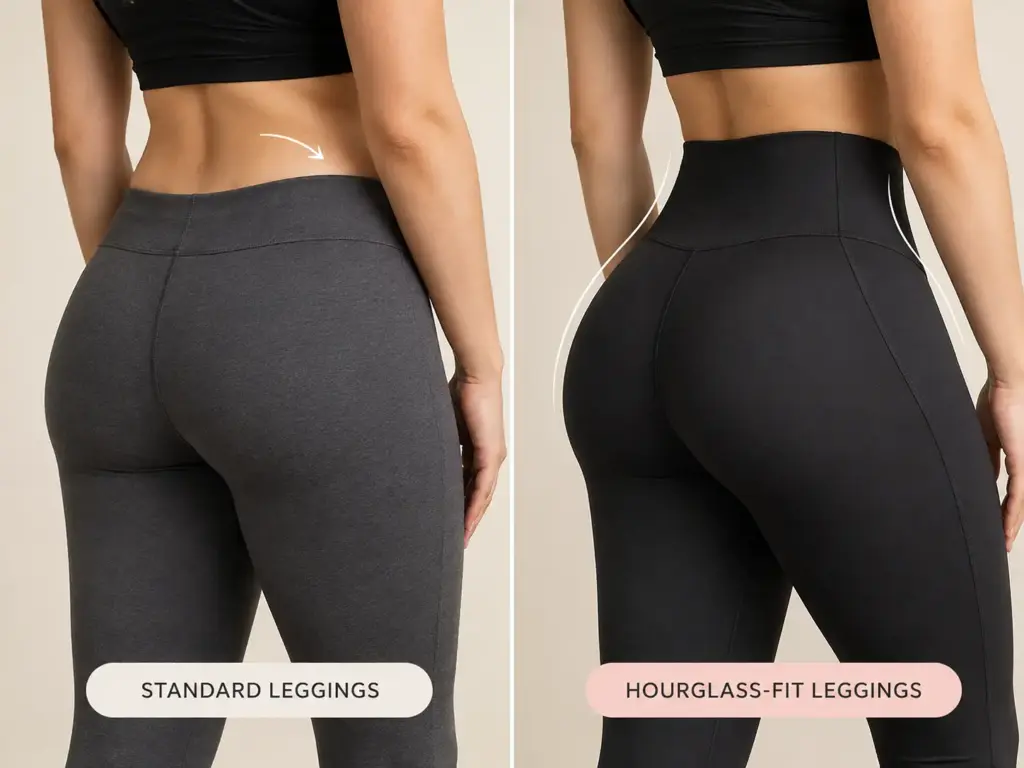
Darts Remove Fabric Volume Strategically
Darts remove excess fabric to create a more fitted three-dimensional shape.
In leggings development, carefully positioned darts can help manage the volume difference between wider hips and a narrower waist – but only in cut & sew construction, where the pattern piece is cut from flat fabric.
Visible darts are not always suitable for a clean-looking activewear aesthetic, and they cannot be added to circular-knit seamless garments, which are knitted to shape. Contoured panels and adjusted pattern curves offer alternatives in both constructions.
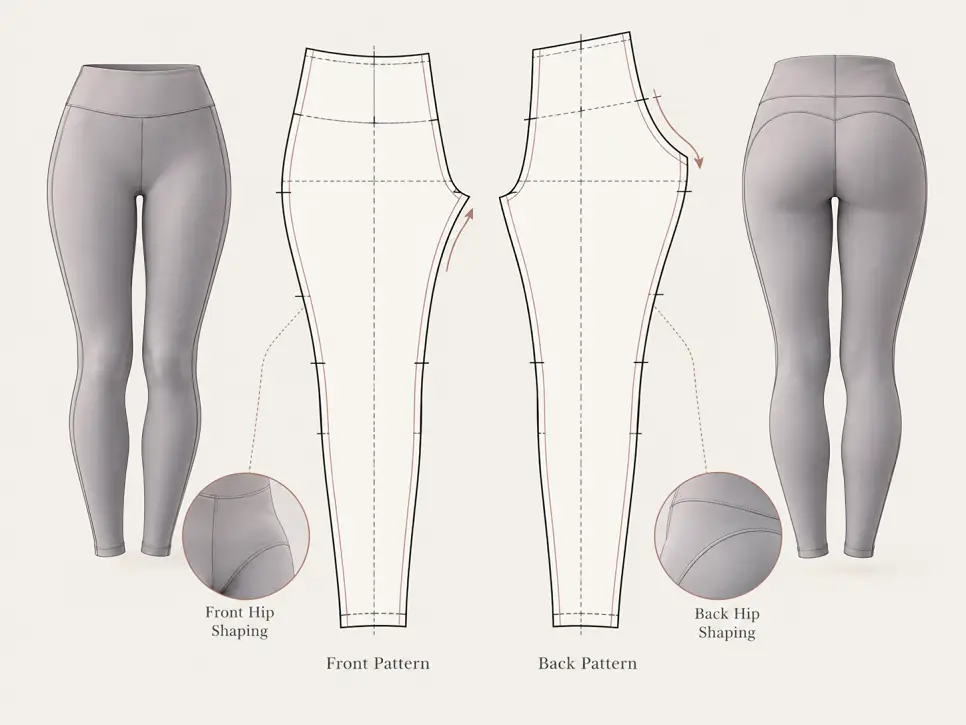
Curved Seams Follow the Body From Waist to Hip
The transition from the waist to the hips is not a straight line.
Curved darts or shaped seams help follow body contours while reducing excess fabric around the waist.
For fitted leggings, these adjustments can create a smoother silhouette and reduce pulling around the hip area.
Pattern makers must evaluate seam placement carefully to maintain both comfort and appearance.
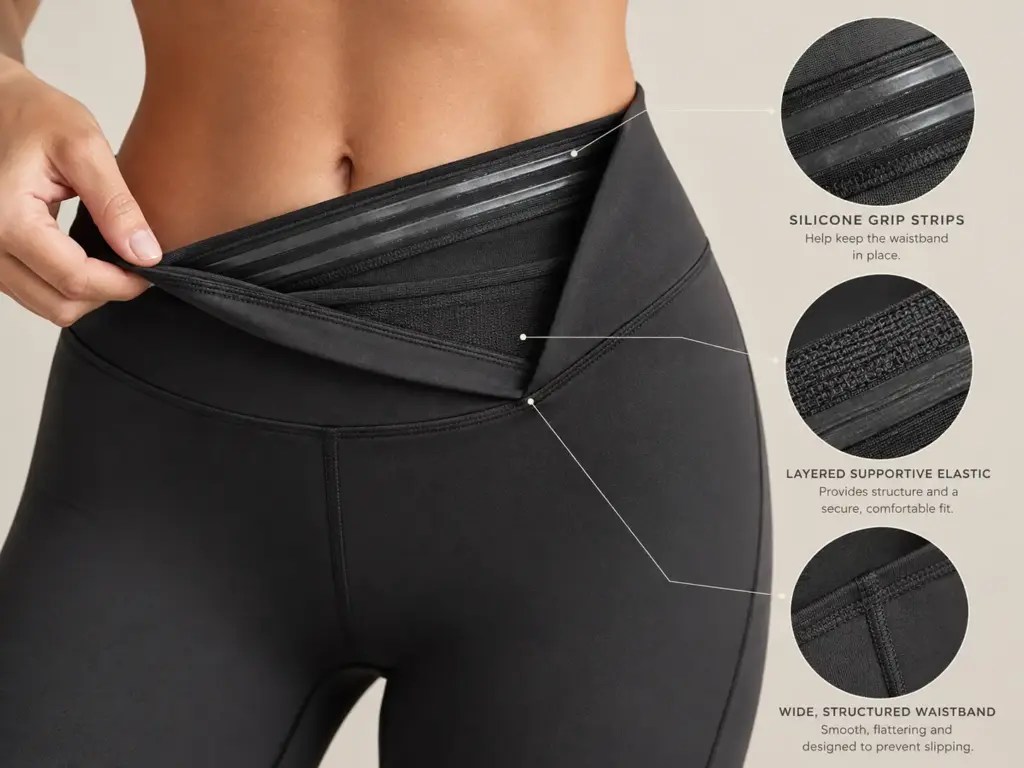
Non-Slip Waistband and Internal Grip Structures
A waistband should remain secure during walking, allungamento, and exercise without digging into the skin.
Silicone tape printed inside the waistband does add grip, but it can crack, buccia, o diventare meno comodi dopo ripetuti lavaggi e usura. Silicone-free alternatives built into the waistband structure – jacquard inner texture, costruzione a doppio strato, and rubber-yarn integration – keep their grip over the life of the garment.
For yoga and everyday athleisure, a wide, contoured waistband with good stretch recovery often provides a smoother solution than any grip treatment.
For elastic types and silicone-free grip structures, see our guide on how to keep leggings waistbands from rolling and slipping.
Stretch Zoning by Panel: Taglio & Sew vs Seamless
A legging does not need the same stretch behaviour in every zone. In cut & sew this is handled by assigning a different fabric – or a different grainline orientation – to each panel; in seamless it is handled by knit zoning, changing needle density and yarn feed panel by panel on the circular machine.
| Garment zone | What to specify | Fitting problem it prevents |
|---|---|---|
| Cintura | Elastic width and construction type; jacquard texture or rubber-yarn grip rather than silicone tape | Back-waist gaping and band sliding down |
| Hips | Multidirectional elongation backed by recovery, not stretch alone | Restriction over the hip and a band that rolls after movement |
| Thighs | Panel stretch aligned with the direction of movement | Pulling and restriction during lunges and squats |
| Seat area | Fabric weight and knit density – in giro 220 gsm for lightweight low-impact styles, closer to 300 gsm where squat-proof opacity is required | Sheerness under bend and coverage loss in squat position |
Drafting the Fit Block for a Large Waist-to-Hip Difference
A fit block is the foundation pattern used to develop and grade garment sizes.
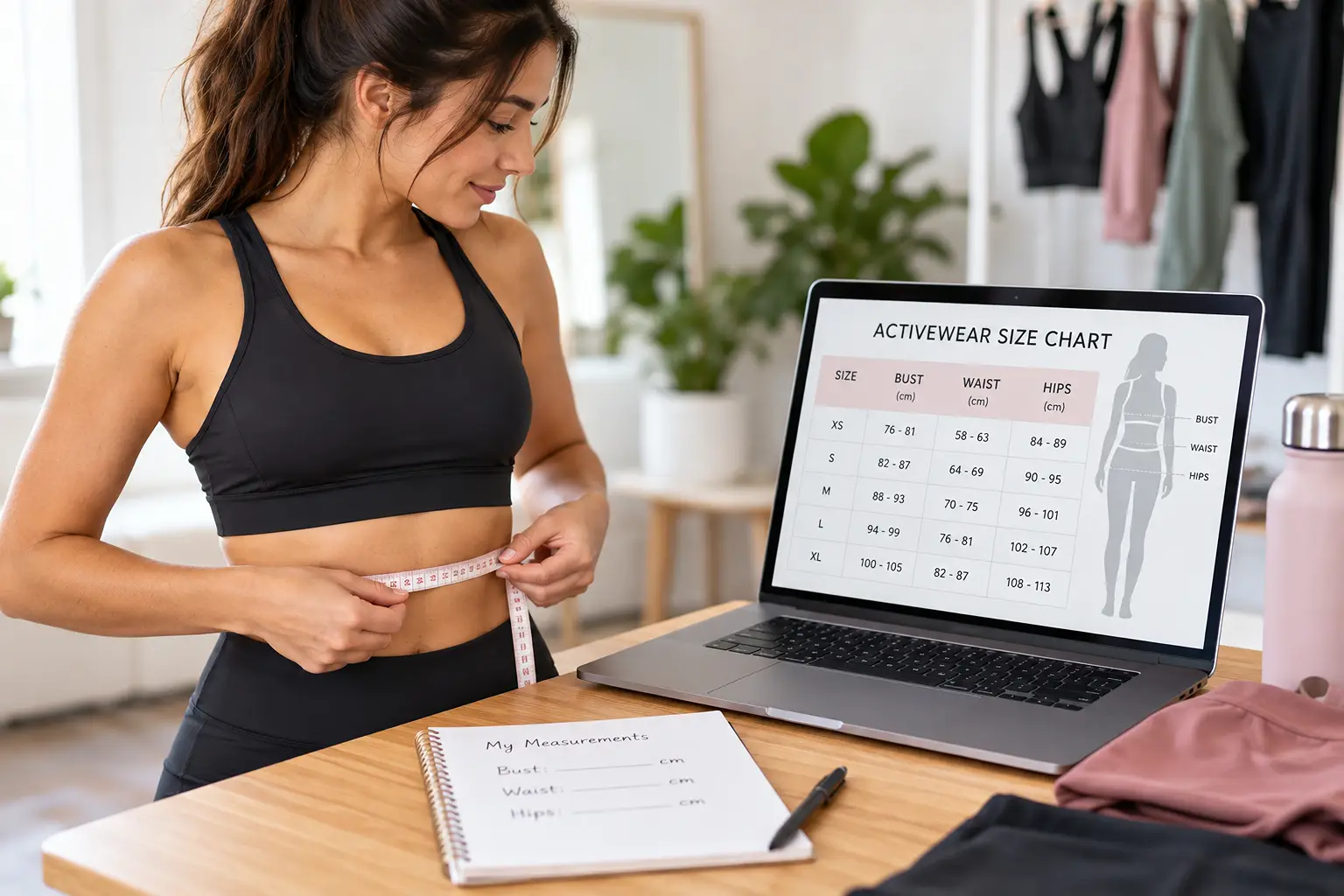
A block drafted for a large waist-to-hip difference is built from waist circumference at the natural waist, hip circumference at the fullest point, front and back rise, and the curve of the side seam between them.
Simply reducing the waist measurement shifts the side seam and shortens the waist-to-hip curve, which creates excessive tension elsewhere in the garment.
Invece, manufacturers should balance the complete pattern and test how the proportions change across the size run, since a fixed difference held through grading reproduces the same gap on a different body.
A block is only useful if it survives grading – how activewear manufacturers keep sizing consistent across a size run covers the measurement points and tolerances behind it.
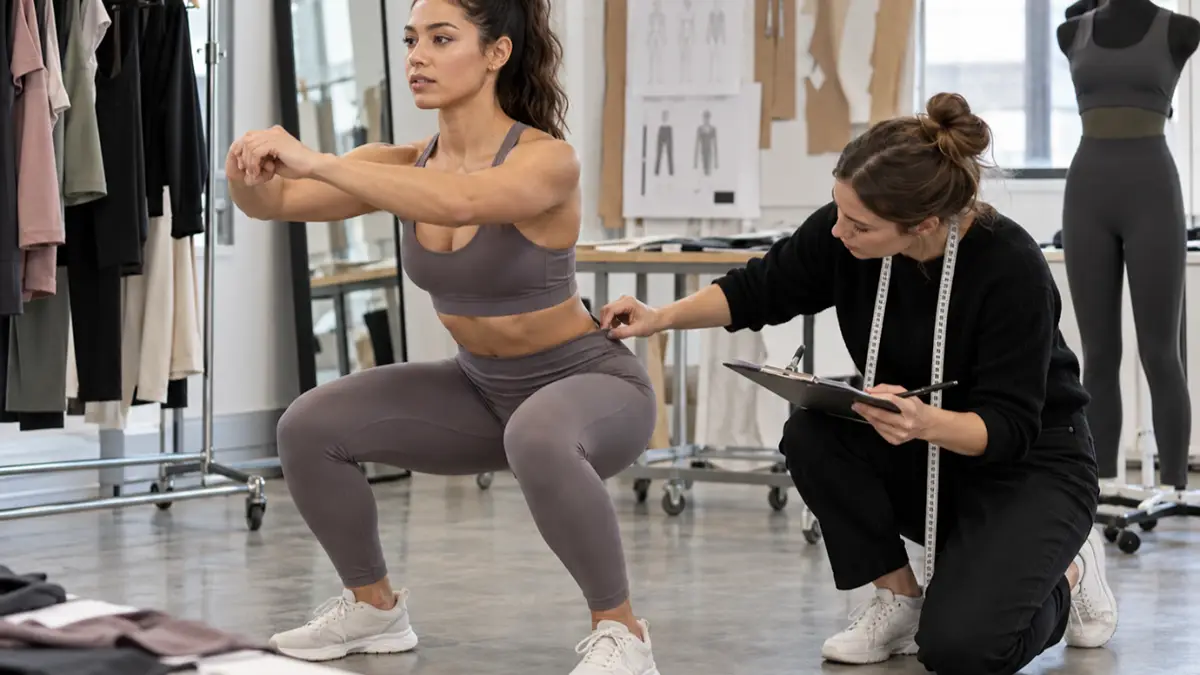
Prototype Fit Testing Before Bulk Production
A perfect standing fit does not guarantee comfort during movement.
Prima della produzione in serie, brands should evaluate prototypes through:
- Squat testing: check waistband stability and fabric opacity.
- Forward bending: identify back-waist gaping.
- Walking and lunges: evaluate slipping and restriction.
- Recovery testing: check whether stretched fabric returns to shape.
Recovery checks should not stop at the approved sample: how factories run the yoga pants stretch test before shipping explains the quality-control side.
For Middle Eastern collections designed for gym training, Pilates, or everyday athleisure, testing should reflect the intended activities and coverage requirements.
Conclusione
Designing leggings for wider hips and narrower waists requires more than stretchy fabric. The right combination of contoured patterns, cinture di supporto, controlled stretch, and prototype testing can help brands achieve a secure, vestibilità comoda. Explore our custom yoga pants and leggings to see how those elements come together in production.
A CAMPI, we support activewear brands through OEM, ODM, e servizi MDMD, compresa la scelta del tessuto, sviluppo del modello, and sampling.
Whether you are developing a premium yoga collection or modest activewear for the UAE, Arabia Saudita, and international markets, contact our team to discuss your custom leggings requirements.