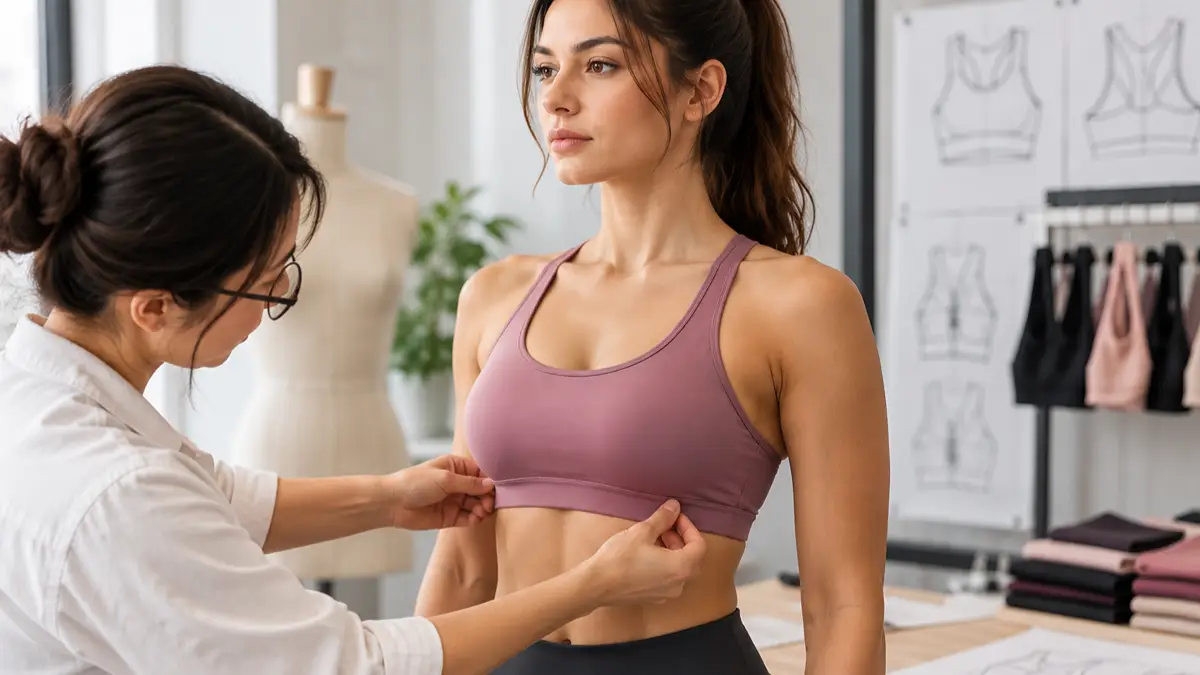
Why do some activewear brands struggle with inconsistent sizing, even after approving their samples?
For growing direct-to-consumer (DTC) activewear brands, sizing problems lead to customer complaints, product returns, and rework or rush-order costs.
The challenge is not simply choosing the correct size chart. It is ensuring that garment measurements, physical fitting, pattern grading, and production tolerances work together.
At SANSANSUN, we help activewear brands review size charts, evaluate sample fit, and verify garment measurements before bulk production.
Why Accurate Size Charts Matter for DTC Brands
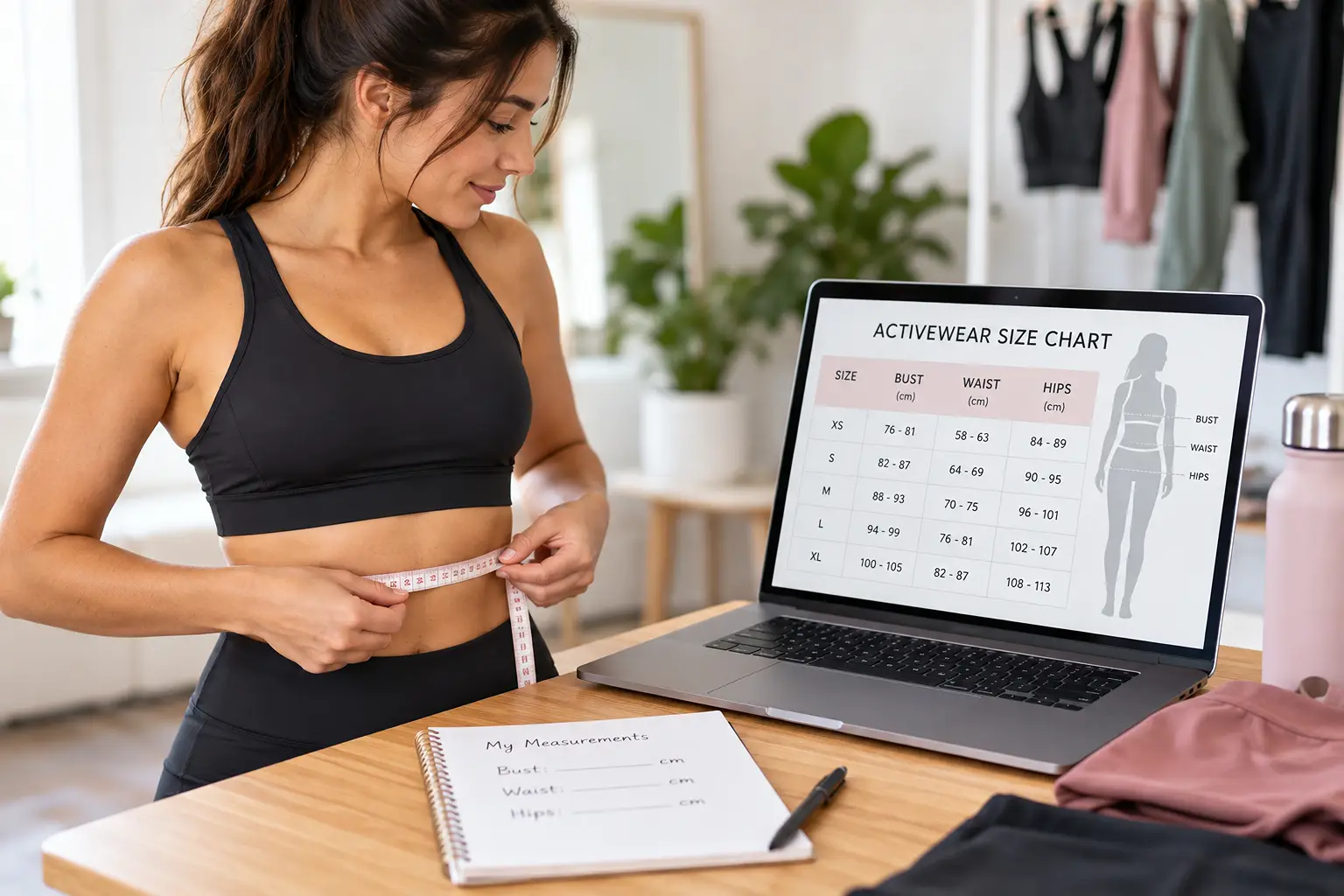
DTC brands sell directly to consumers, who rely on published measurements to choose the correct size.
Tuttavia, a consumer-facing size chart should be built on body measurements, while the finished garment dimensions belong in the tech pack. For stretch knits, the two sets of numbers are deliberately different: a legging made with negative ease measures smaller than the body it is meant to fit.
A usable size chart therefore states which numbers it shows — body or garment, measured flat or stretched — lists both centimetres and inches, and says how the style is intended to feel.
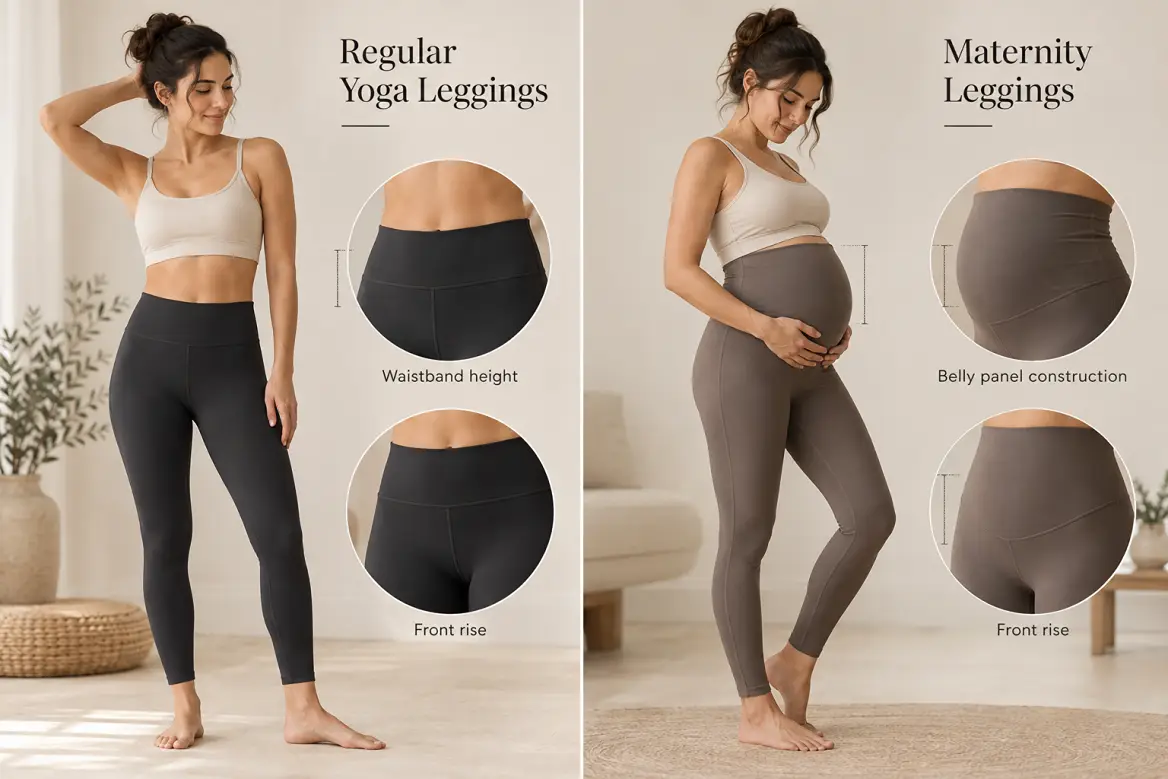
Per esempio, leggings may fit correctly around the hips but feel too tight at the waist. This usually comes from the relationship between three things: the pattern’s waist-to-hip ratio, the waistband’s height and elastic, and how much force the body fabric needs to stretch. A waistband cut for a lower-modulus fabric will dig in on a higher-modulus one even when the flat measurement is identical.
The manufacturing solution: verify garment specifications through measurement checks and physical fitting before production approval.
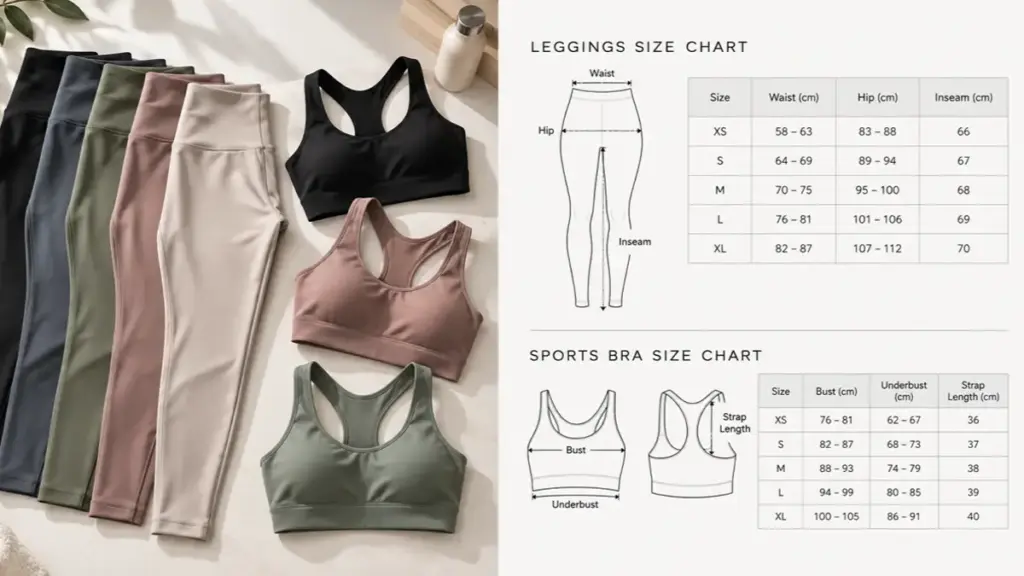
How Activewear Manufacturers Develop and Verify Size Charts
Manufacturers use Points of Measure (POM) to define the garment dimensions that decide fit. Nostro points of measure (POM) guide for activewear explains how each point is recorded, measured, and graded.
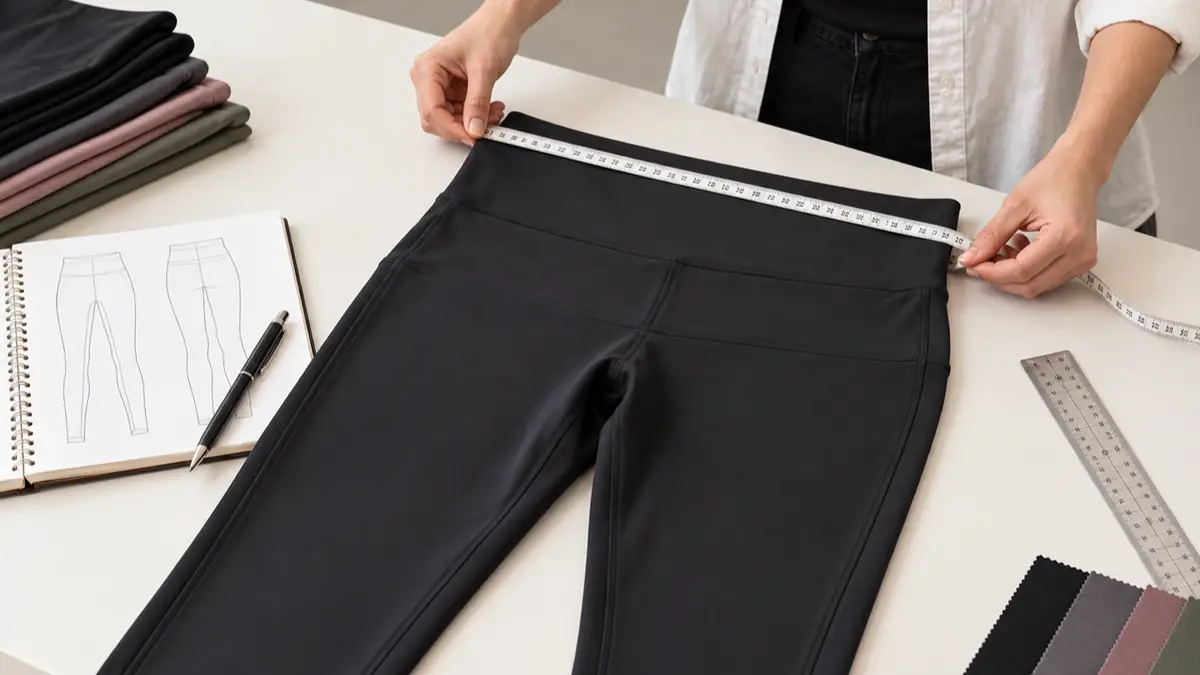
For leggings, these include waist width, hip width, front rise, back rise, thigh circumference, and inseam length. For tops and long-sleeve styles, points of measure add sleeve length, hem width, and front length.
For sports bras, the points that decide fit are the underband — recorded both relaxed and stretched — the chest width at the specified point, and the strap length. Support comes mainly from the band, so the band figure is what a size matrix is built on.
A practical size verification workflow includes:
- Size chart review: check garment specifications against the intended design and the target body measurements.
- Fit sample measurement: measure the first prototype at the defined points of measure.
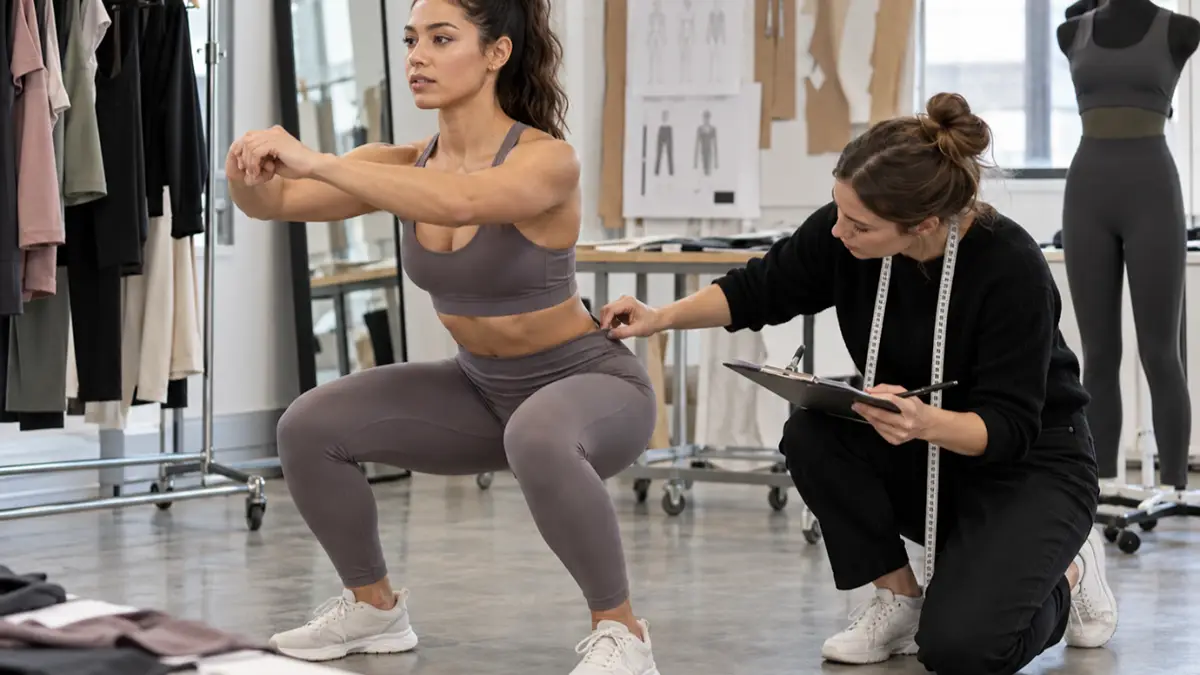
- Physical fitting: evaluate comfort, proportions, and movement on a model of the sample size.
- Pattern correction: adjust the garment pattern where the fit fails.
- Graded size set: re-grade the corrected pattern across the full size run, then fit-check at least the smallest, middle, and largest size. A correction made on one size shifts every other size, so consistency comes from the size set rather than from the single approved sample.
- Final approval: freeze the measurement specifications and the agreed tolerances for each point before production.
This process helps connect technical measurements with actual garment fit, size by size.
Why Physical Fit Testing Is Essential
A garment can meet its measurement specifications and still feel uncomfortable.
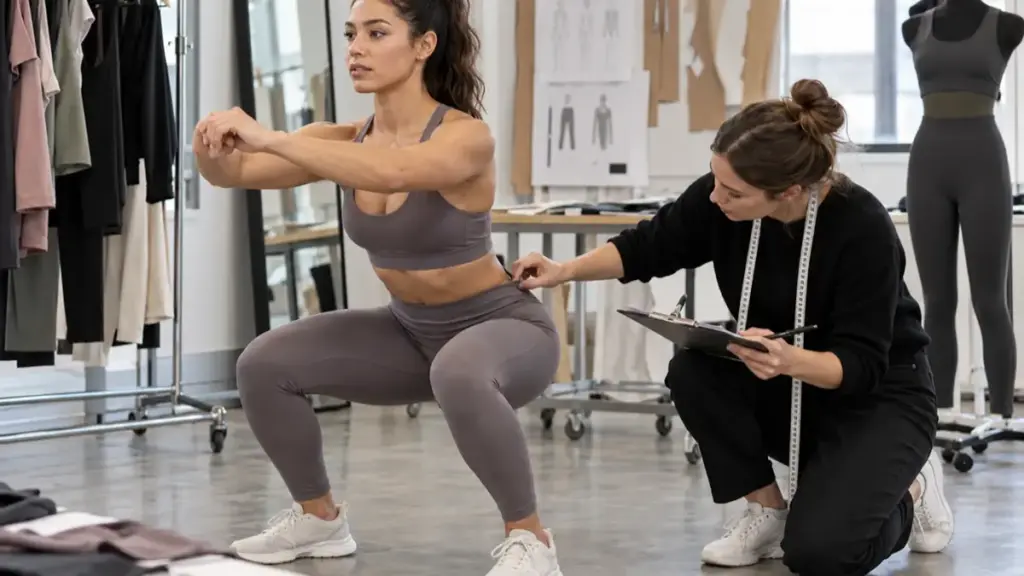
Physical fit testing reveals problems that measurements alone cannot identify. Per esempio, leggings may fit the hips but gap at the back waist.
During fitting, technicians can examine waistband curvature, tensione del tessuto, and front and back rise. After adjusting the pattern, another prototype should be tested to confirm that the correction does not create new problems.
Buyer insight: a successful fit requires both accurate garment dimensions and comfortable movement across the whole size run.
Understanding Measurement Tolerances in Activewear
Measurement tolerance is the acceptable difference between an approved garment specification and an actual production measurement.
At SANSANSUN, the standing requirement is that each measurement point stays within 1 cm of the approved specification, unless that point carries its own documented tolerance. Measurements are taken after the final pressing and finishing process, because a garment measured before pressing will not match the same garment at the customer’s warehouse.
The measuring method is written down as well. Front and back rise start at the crotch cross point, and the spec must state whether the waistband is included, because the same style can differ by the full waistband height. Thigh circumference is taken 3–5 cm below the crotch for women’s styles and 5–7 cm below for men’s.
Different measurement points matter for different reasons:
| Measurement point | Why it matters | Possible fitting problem |
|---|---|---|
| Waist width | Waistband stability | Slipping or excessive pressure |
| Hip width | Comfort and movement | Restrictive fit |
| Chest width | Upper-body comfort | Tightness during stretching |
| Front and back rise | Crotch fit and coverage | Pulling or waistband movement |
| Lunghezza cavallo | Legging proportions | Incorrect garment length |
| Sleeve length | Arm coverage | Sleeves riding upward |
How Fabric Stretch Affects Garment Measurements
Two leggings with identical measurements may feel different because of their fabrics.
Nylon-spandex and polyester-spandex knits can differ in elongation (how far the fabric stretches under a fixed load), recupero dell'allungamento (how completely it returns), and modulus (the force needed to reach that stretch).
Per esempio, a high-modulus compression fabric can feel noticeably tighter than a softer yoga fabric at the identical waist measurement, because it resists stretch more. This is why fabric behaviour is recorded in the tech pack as stretch and recovery figures rather than judged by hand feel.
Manufacturers should therefore evaluate fabric behaviour alongside pattern dimensions and physical fitting. Our article on how elongation, recupero, and negative ease change the way a legging feels covers how the same pattern reads differently on two fabric builds.
From Approved Sample to Bulk Production
Approving a well-fitting sample is only the beginning.
Bulk production must follow the approved specifications to maintain consistent sizing. Manufacturing controls should include checking pre-production samples, recording measurement tolerances, and inspecting finished garments. If you want to see how those checkpoints are usually agreed, read our explanation of how prototype and pre-production samples are approved.
When deviations exceed agreed limits, the cause should be investigated before affected garments are approved. These checks help reduce differences between approved samples and bulk orders.
Size Chart Considerations for Middle Eastern Markets
For brands targeting the UAE and Saudi Arabia, sizing requirements should reflect the intended customer and garment category.
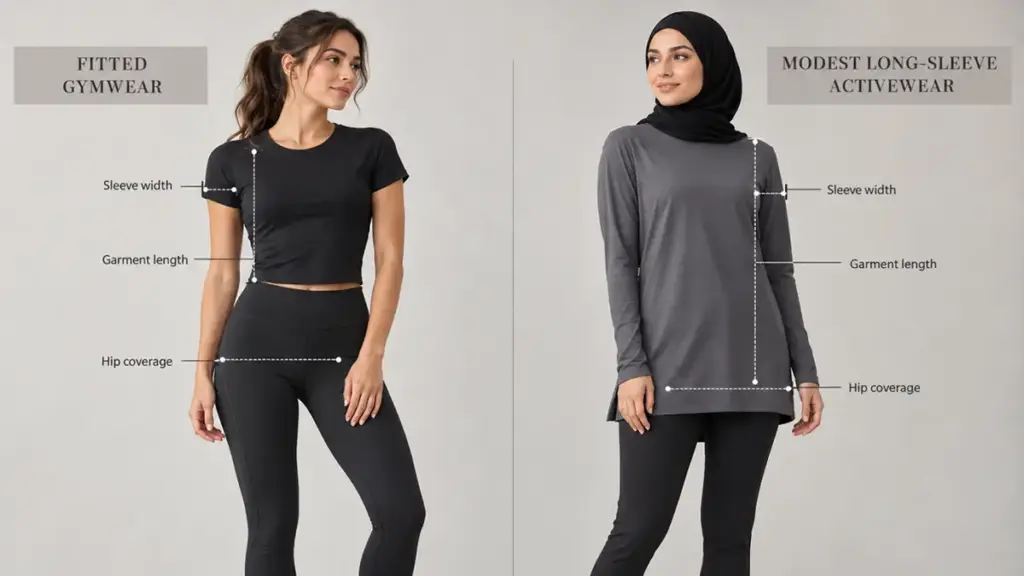
Modest activewear may require additional attention to garment length, sleeve coverage, and relaxed-fit proportions. Important measurements can include:
- Extended top and tunic length.
- Sleeve length and bicep width.
- Hip coverage and garment circumference.
- Training pants rise and leg width.
Physical fitting should also confirm that garments maintain their intended coverage during bending, allungamento, and walking. Brands should base sizing decisions on target-customer measurements rather than assumptions about regional body types. If you are building a line for this market, Nostro custom modest activewear line shows the silhouettes we grade most often for UAE and Saudi buyers.
How SANSANSUN Supports DTC Brands
For DTC activewear brands, developing accurate size charts can be challenging without manufacturing experience.
At SANSANSUN, we support customers with garment size-chart review, physical sample fitting, and measurement verification.
Our team helps check important garment dimensions, including waist, chest, and hip measurements, alongside the agreed tolerances for each relevant measurement point.
When fitting problems appear, pattern adjustments can be evaluated through sample development before bulk production approval.
Through our OEM, ODM, and MDMD (Material to Design to Manufacture to Delivery) services, we connect fabric selection, sviluppo del modello, sample fitting, and manufacturing requirements.
Domande frequenti
How do activewear manufacturers check size charts before production?
Manufacturers compare technical specifications with physical sample measurements, conduct fitting evaluations on a graded size set, and verify agreed measurement tolerances.
What is the difference between body measurements and garment measurements?
Body measurements describe the customer’s dimensions. Garment measurements describe the finished product and include design allowances for fit and movement. A size chart for shoppers should show body measurements, while the finished garment figures stay in the tech pack.
Who approves measurement tolerances in activewear manufacturing?
Buyers and manufacturers should agree on tolerances for relevant measurement points before production. A common starting point is 1 cm per measurement, tightened or released only where a specific point requires it.
Why can two leggings with identical measurements fit differently?
Differences in fabric elongation, recupero dell'allungamento, modulo, waistband construction, and pattern design can affect wearing comfort at the same flat measurement.
How can DTC brands maintain consistent sizing in bulk orders?
Brands should approve technical specifications, verify a graded size set rather than one sample, document fitting corrections, and establish measurement inspection requirements with agreed tolerances.
Conclusione
For DTC activewear brands, reliable sizing begins long before products reach customers.
Accurate size charts, physical fitting, pattern grading, and measurement tolerance checks work together to improve garment consistency and reduce avoidable production problems.
CAMPI is a China-based activewear manufacturer providing OEM, ODM, e servizi MDMD, compresa la scelta del tessuto, sviluppo del modello, campionamento, and fitting support.
Developing custom leggings, reggiseni sportivi, abbigliamento da palestra, or modest activewear for the UAE, Arabia Saudita, or international markets?
Contact SANSANSUN to share your design references, technical specifications, or size chart requirements and discuss how we can support your next activewear collection.