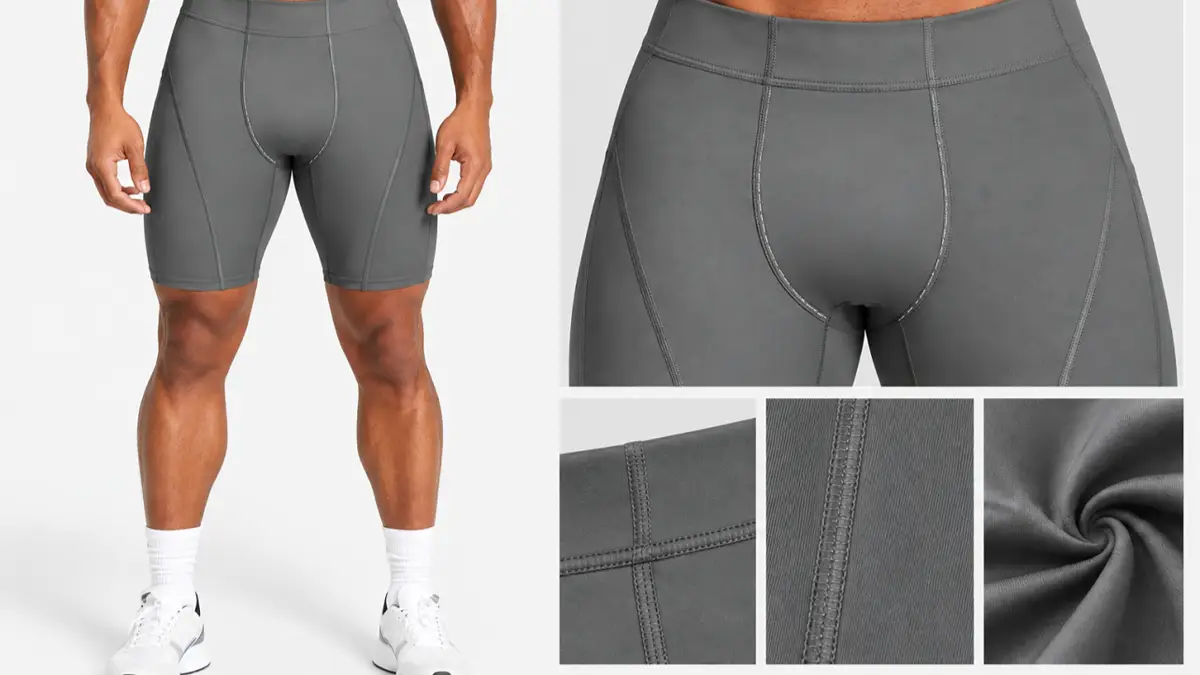
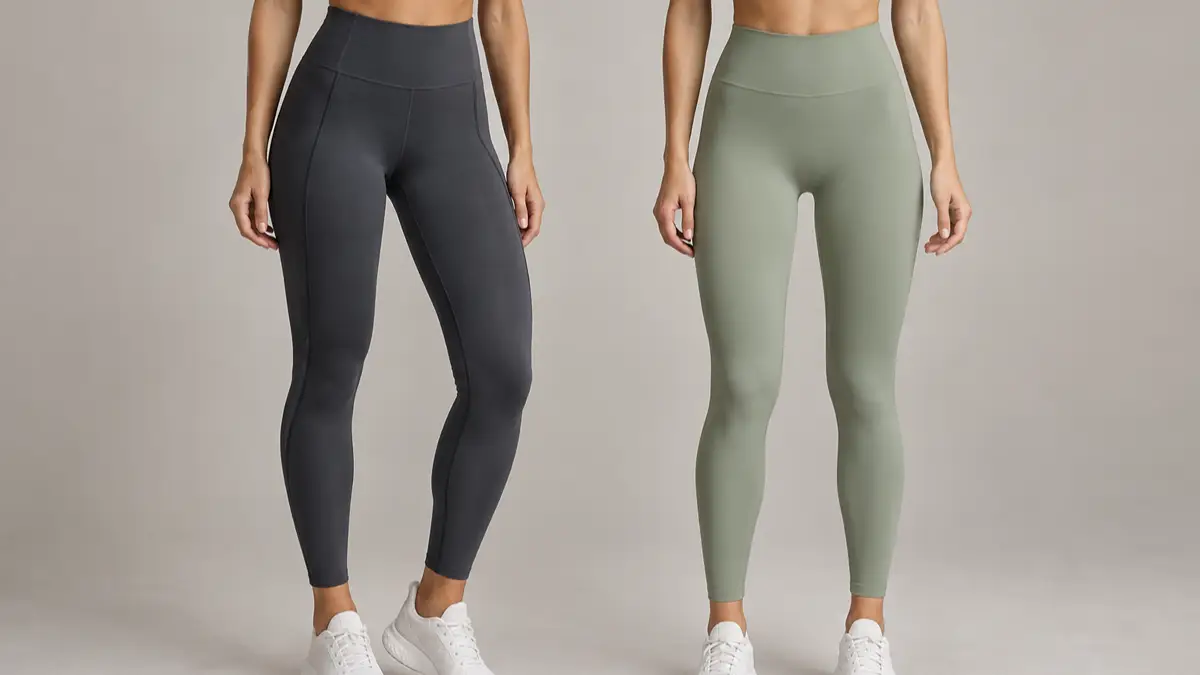
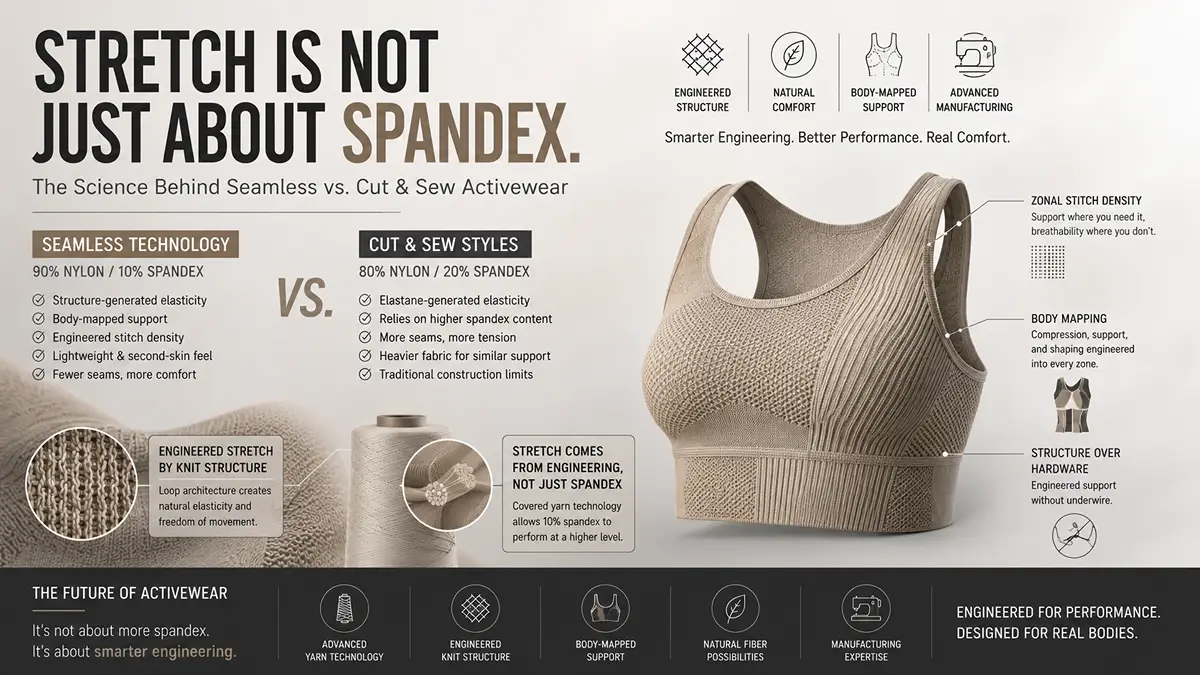
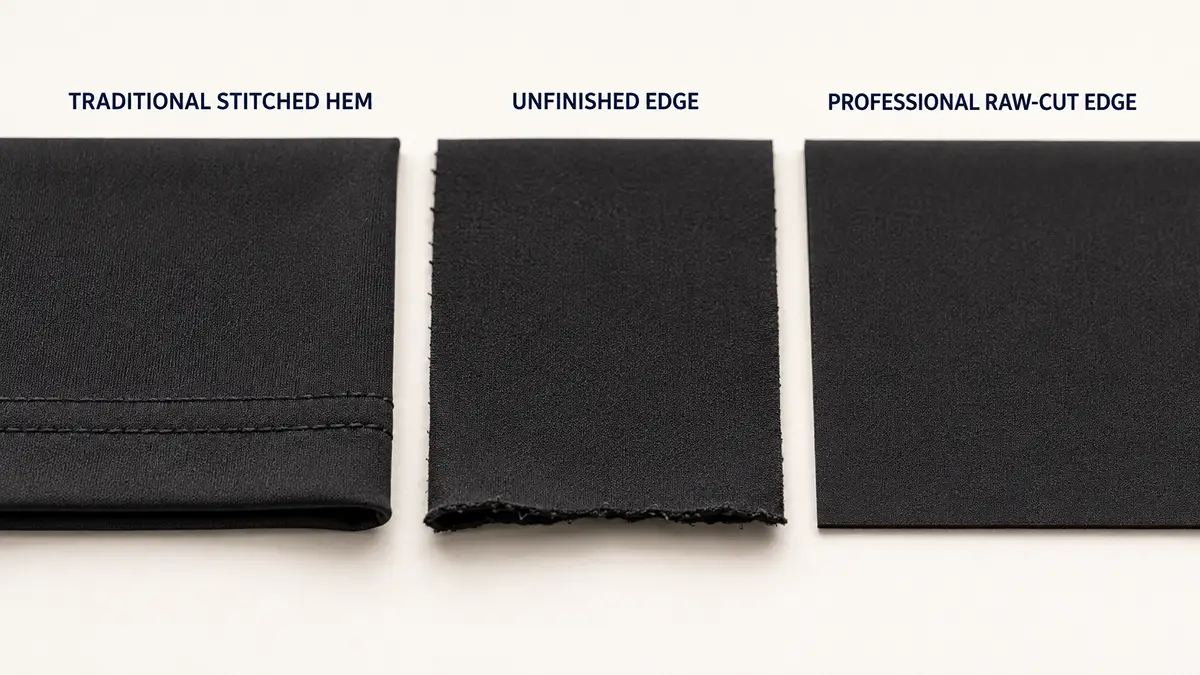
Gli orli tradizionali aggiungono tessuto piegato, filo, e pressione attorno al corpo. L'abbigliamento sportivo a taglio vivo rimuove questi strati extra per creare un look più pulito e una sensazione più leggera. Questa tecnica è popolare nell'abbigliamento yoga, ghette, pantaloncini da ciclismo, reggiseni sportivi, e biancheria intima performante. Tuttavia, tagliare semplicemente l'orlo non è sufficiente. Un abbigliamento a taglio vivo di successo richiede un tessuto stabile, taglio preciso, progettazione attenta, e test ripetuti.
Cos'è una finitura a taglio vivo? Spiegazione dei bordi senza orli
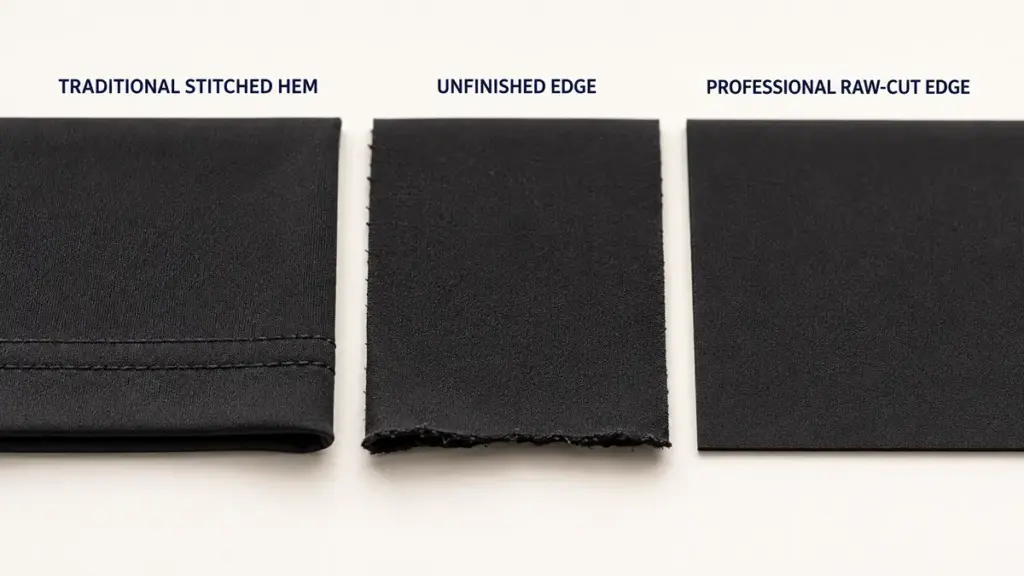
Una finitura a taglio vivo è un bordo di tessuto tagliato con precisione ma non piegato o cucito. Potrebbe sembrare incompiuto, ma in realtà è una tecnica di produzione intenzionale. Il tessuto deve rimanere liscio senza sfilacciarsi, arricciatura, o perdere la sua forma.
Il taglio vivo è diverso da un normale bordo grezzo. Un bordo non rifinito può danneggiarsi rapidamente, mentre attraverso il test del tessuto viene sviluppato un bordo a taglio vivo professionale, regolazione del modello, e taglio accurato.
Perché il taglio vivo sembra più leggero: Rimozione dell'ingombro e del peso del punto
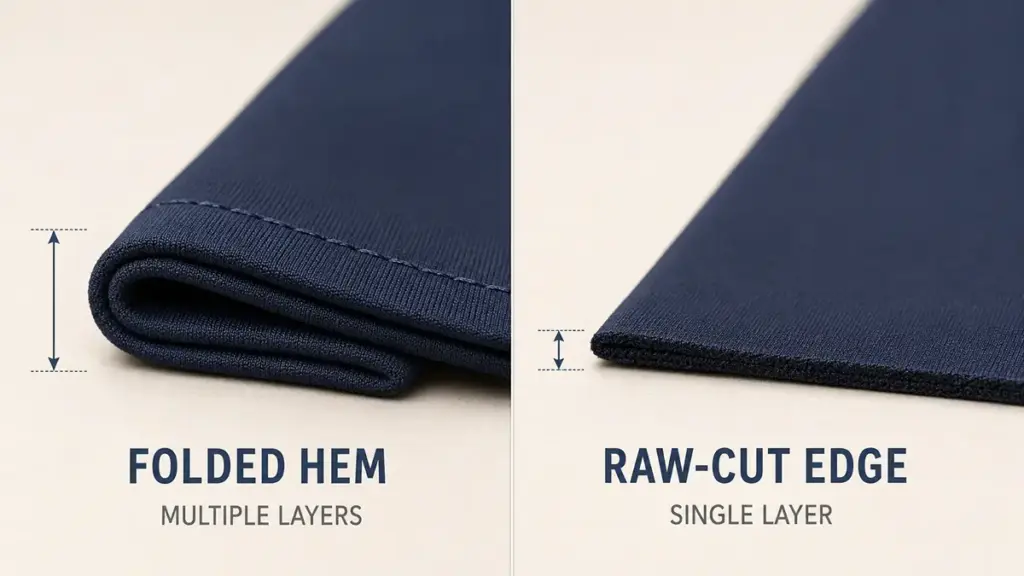
Un orlo tradizionale solitamente contiene due o tre strati di tessuto piegato, più filo e talvolta elastico. Questi strati possono creare spessore attorno alle cosce, braccia, o vita. Possono anche lasciare linee visibili sotto gli indumenti aderenti.
Il taglio grezzo rimuove questo materiale extra. Il bordo è più piatto sulla pelle e si muove in modo più naturale con il corpo. Ciò rende l'indumento più leggero e può ridurre lo sfregamento durante lo yoga, corsa, o movimento quotidiano. Tuttavia, il comfort complessivo dipende ancora dalla morbidezza e dalla vestibilità del tessuto.
Requisiti del tessuto: Maglie ad alto recupero che non si sfilacciano
Non tutti i tessuti elasticizzati sono adatti al taglio grezzo. L'opzione migliore è normalmente un tessuto a maglia densa con forte recupero e bordi stabili. Recupero significa che il materiale può allungarsi e poi ritornare alla sua forma originale senza allentarsi o ondularsi.
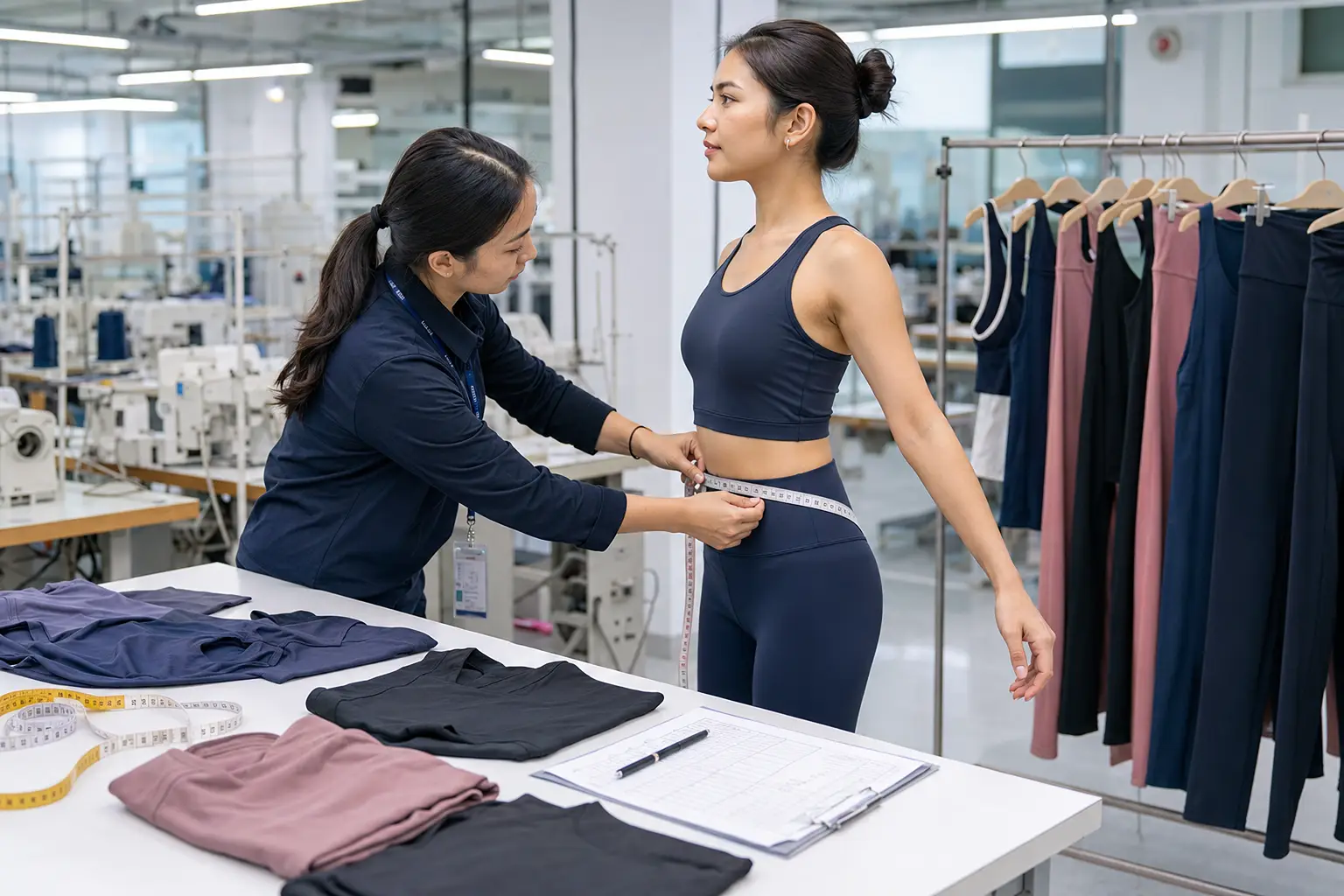
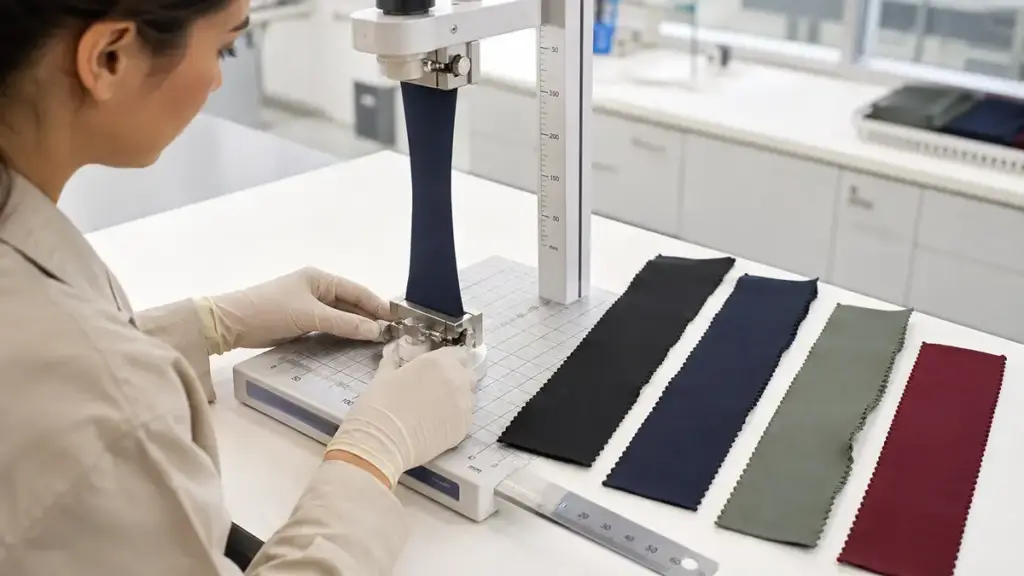
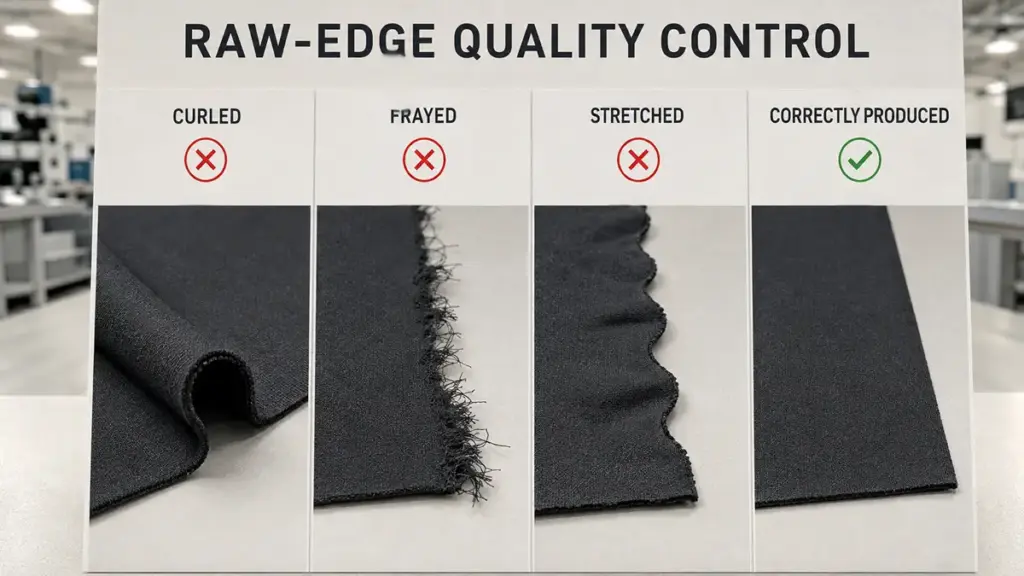
Le miscele di nylon-spandex e poliestere-spandex possono funzionare entrambe, ma le percentuali di fibra da sole non possono confermare l'idoneità. Struttura a maglia, peso del tessuto, qualità dell'elastan, e anche il termofissaggio influiscono sulle prestazioni. SANSANSUNSPORTS mette alla prova lo sfilacciamento, arricciatura, recupero dell'allungamento, lavaggio, e l'aspetto dei bordi prima di consigliare un tessuto per la produzione.
Bordi incollati o grezzi: Quando saltare l'orlo
Sia il taglio grezzo che l'incollaggio creano un aspetto pulito, ma hanno scopi diversi. Un bordo grezzo puro non contiene orli piegati o adesivi, rendendola l'opzione più leggera. Un bordo incollato utilizza una sottile pellicola adesiva per collegare o rinforzare gli strati di tessuto senza normali cuciture.
I bordi grezzi sono adatti per la stalla, aree a basso stress. Il collegamento è più appropriato laddove è necessario un supporto aggiuntivo, come le aperture delle tasche, sezioni della vita, o pannelli uniti. Molti indumenti utilizzano entrambe le tecniche per bilanciare il comfort, forza, e aspetto.
Mantenere la forma: Prevenire l'arricciatura e la deformazione dei bordi
Un bordo grezzo potrebbe arricciarsi quando la struttura del tessuto è instabile o quando il pannello viene tagliato nella direzione sbagliata. Calore eccessivo, scarso rilassamento dei tessuti, attrezzature da taglio smussate, o una tensione errata del disegno possono anche creare bordi ondulati.
Prima del taglio, il tessuto dovrebbe riposare in modo che la tensione derivante dal rotolamento e dal trasporto possa allentarsi. I modelli devono seguire la direzione corretta del tessuto, e la temperatura di taglio deve essere adatta al materiale. SANSANSUNSPORTS controlla i campioni tagliati al vivo dopo lo stiro, raccordo, e lavaggio per confermare che i bordi rimangano piatti.
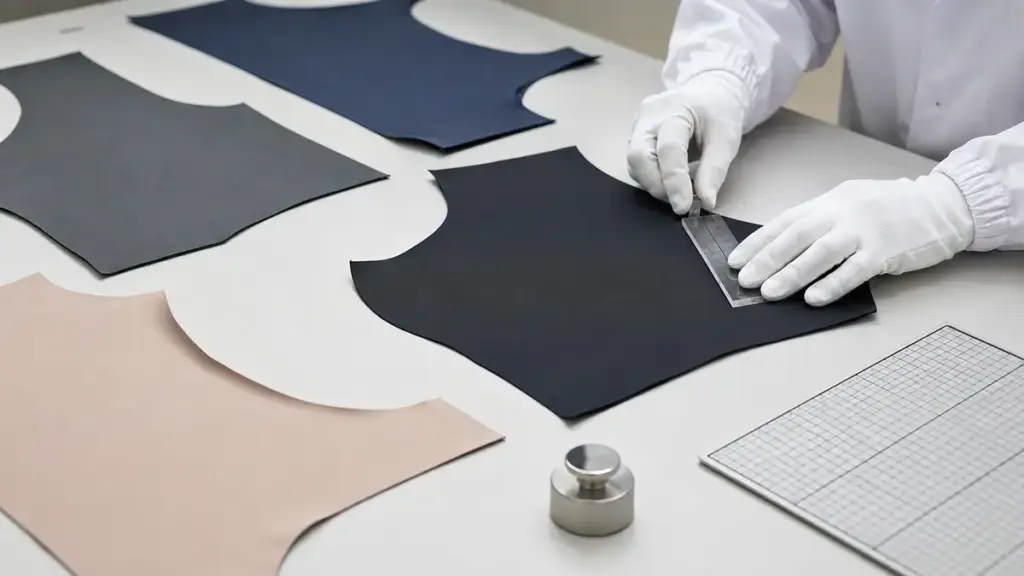
Zone ideali per gli indumenti per il taglio vivo
Il taglio grezzo funziona meglio nelle aree che necessitano di flessibilità ma che non sono sottoposte a forti pressioni. Le applicazioni comuni includono le aperture delle gambe sui pantaloncini, orli su top leggeri, bordi del reggiseno, aperture per cuscinetti rimovibili, e strati lisci in stile intimo.
Le zone ad alto stress necessitano di maggiore supporto. Cuciture sul cavallo, si unisce la spalla, cinture di supporto, e i punti di attacco delle tasche di solito richiedono cuciture, legame, o rinforzo. La scelta delle zone corrette previene i danni mantenendo il capo leggero.
Errori comuni che i marchi commettono con l'esecuzione raw-cut
Un errore comune è scegliere il tessuto solo perché è morbido. Un tessuto può sembrare comodo ma allo stesso tempo arricciarsi, mischia, o perdere il recupero dopo il lavaggio. Un altro errore è applicare il taglio vivo su ogni bordo senza considerare il movimento e la tensione.
I marchi possono anche saltare i test di usura o approvare un campione basato solo sull'aspetto. Al SANSANSUNSPORTS, controlliamo il comportamento del tessuto, vestibilità dell'indumento, allungamenti ripetuti, e prestazioni di lavaggio prima della produzione in serie. Ciò aiuta i marchi startup a correggere i problemi durante il campionamento invece di scoprirli dopo la consegna.
Il futuro del taglio vivo: Integrazione con taglio laser e incollaggio
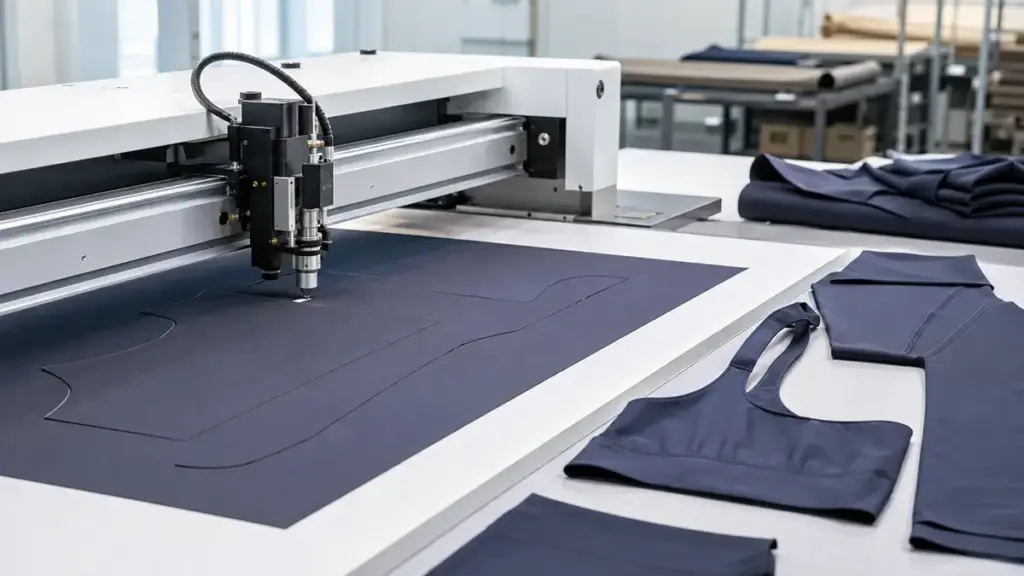
Il taglio laser rende la produzione a taglio vivo più accurata. Può creare curve morbide, forme dettagliate, fori di ventilazione, e pannelli coordinati con minori variazioni manuali. L’incollaggio selettivo può quindi rinforzare solo le aree che necessitano di ulteriore forza.
Questa combinazione supporta l'abbigliamento sportivo moderno e leggero, funzionale, e visivamente pulito. Attraverso il suo servizio OEM e ODM, SANSANSUNSPORTS collega la selezione dei materiali, progettazione del prodotto, produzione, e consegna, aiutare i marchi a trasformare concetti grezzi in capi pronti per la produzione.
Domande frequenti
L'abbigliamento sportivo tagliato a vivo si sfalda?
Un tessuto a maglia fitta adatto non dovrebbe disfarsi facilmente. Tuttavia, il bordo deve ancora superare l'allungamento, recupero, e test di lavaggio.
È possibile utilizzare bordi tagliati al vivo ghette?
SÌ. Sono spesso usati nelle aperture delle gambe, soprattutto nei design leggeri o senza cuciture. Potrebbe essere necessario rinforzare le sezioni ad alta tensione.
Il taglio grezzo è adatto ad ogni tessuto?
NO. Maglie larghe, tessuti instabili, e i materiali con scarso recupero potrebbero arricciarsi, mischia, o deformarsi.
Il taglio vivo è più economico di un orlo tradizionale?
Può ridurre il lavoro di cucito, ma tessuto stabile, taglio di precisione, legame, e test aggiuntivi possono influenzare il costo finale.
Può un marchio startup sviluppare prodotti crudi??
SÌ. L'approccio più sicuro è iniziare con il test del tessuto e un prototipo completo prima di confermare la produzione in serie.
Conclusione
L'abbigliamento sportivo a taglio vivo offre una sensazione di leggerezza, contatto morbido con la pelle, e un aspetto moderno e pulito. Il suo successo dipende da qualcosa di più della semplice rimozione di un orlo cucito. I marchi hanno bisogno del tessuto giusto, modelli accurati, taglio controllato, rinforzo adeguato, e test di usura reali. SANSANSUNSPORT supporta questi passaggi attraverso l'approvvigionamento dei tessuti, campionamento, taglio laser, legame, controllo di qualità, E OEM, ODM, e servizi di produzione a marchio del distributore.