Every returned yoga set tells a story. Para uma marca em crescimento, that story gets bigger with every order. When you sell 200 pieces a month, a few returns are easy to manage. When you sell 5,000 pieces a month, the same fit problem can cost thousands in shipping, lost sales, and unhappy customers.
Growth brings new challenges: more styles, more sizes, larger production runs, and new markets. Fit problems that seemed small at the start can become expensive at scale. As a yoga wear and activewear factory, we review return data with our brand partners every season. This guide explains, in simple terms, what poor fit returns teach us and how growing brands can use those lessons to scale with confidence.
Why Returns Data Reveals True Fit Problems
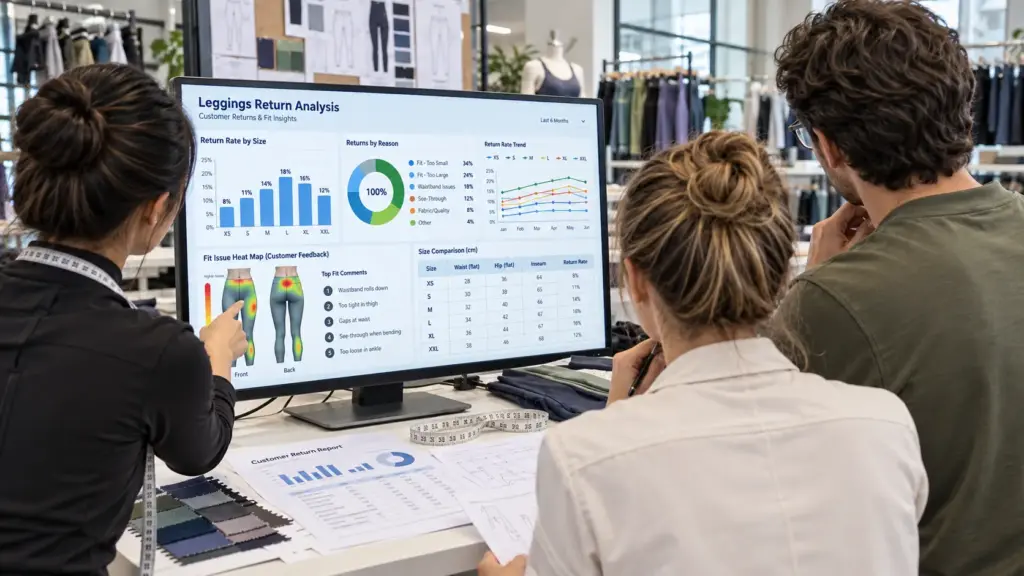
Customer reviews are often vague. A comment like “did not fit well” does not tell you what to fix. Return data is more specific. It shows which size, estilo, cor, and fabric come back most often, and the reason the customer gave.
Here is a simple rule: if one product keeps coming back, the problem is usually in the product, not the customer. The cause may be the pattern, the size chart, or the fabric. If returns are spread across many products, the issue is more likely your general sizing approach.

Top Reasons Customers Cite “Poor Fit” Returns
Most poor fit returns come from a short list of problems:
• The waist is too tight or too loose.
• The leggings are too short or too long.
• The hips or thighs feel tight.
• The leggings slide down during movement.
• The top rides up or feels tight across the chest.
These problems often begin in production, not with the customer. A small error in pattern grading — the process of scaling one base size up or down into a full size run — can make the largest and smallest sizes fit badly. Each market has its own base body measurements and grade rules, so a grade built for US customers may not translate directly to EU or Asian markets without a new fit session. A waistband that is too soft or too narrow can also cause slipping.
Mismatched Expectations vs Actual Measurements
Many “poor fit” returns are not caused by a bad garment. They happen because the customer expected a different size.
UM “médio” from one brand can feel like a “small” in another. Some brands measure the garment flat, and others measure the body. If the website does not explain this, customers guess, and guessing leads to returns.
Growing brands often add new styles quickly, and each style may fit a little differently. If your size names mean different things across products, customers lose trust. A few simple steps help:
• List actual garment measurements, not only size names.
• Show the model’s height, tamanho, and measurements.
• Explain how to measure at home.
• Use the same size logic across all your styles.
These steps take little effort, and they help customers choose correctly the first time.
Fabric Stretch Misunderstandings in Returns
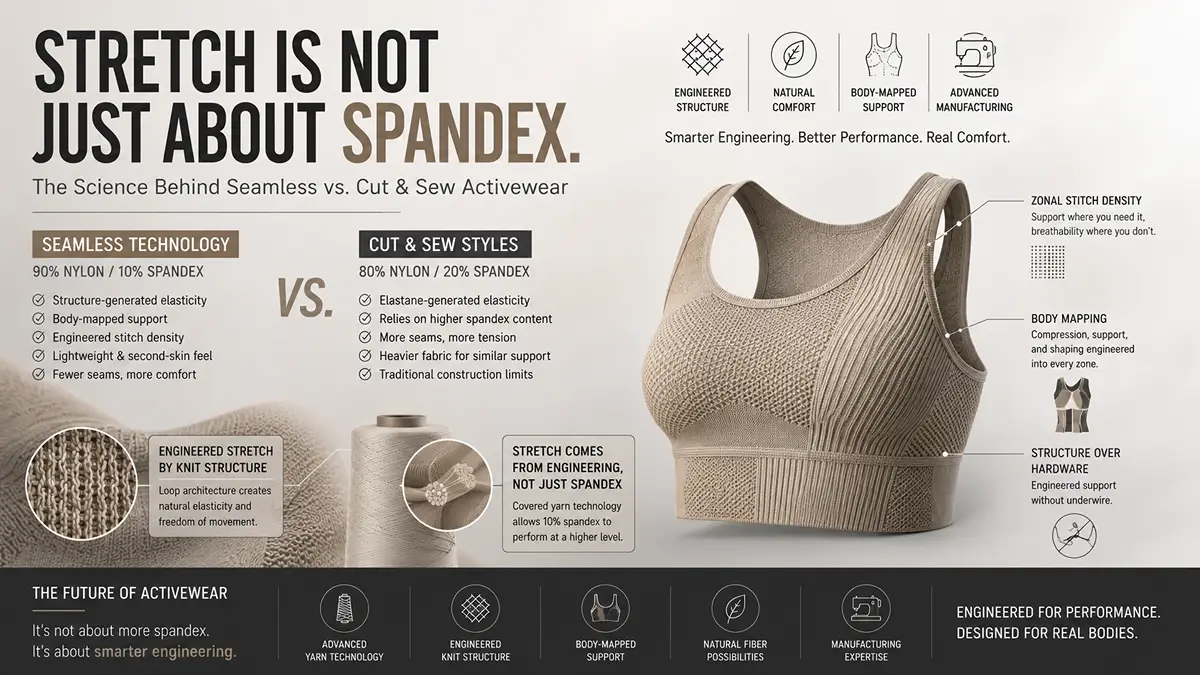
Stretch and fit are not the same thing. A stretchy fabric does not fit everyone. Two fabrics can both stretch, yet feel very different when worn.
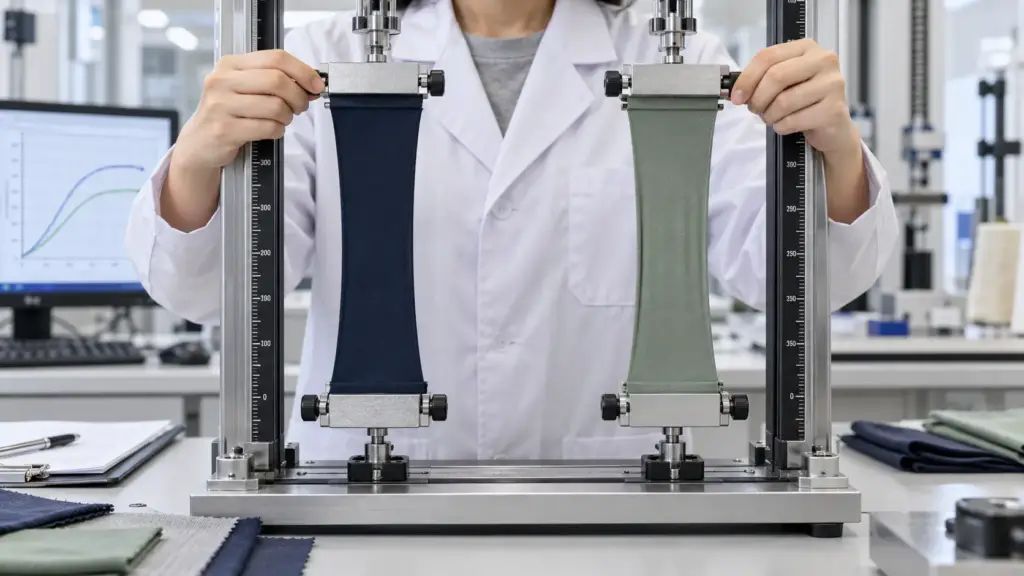
Two terms matter here. Stretch is how far the fabric pulls. Recovery is how well it returns to its original shape. But stretch and recovery alone do not determine fit — the felt fit depends on how these properties interact with garment construction: negative ease (how much smaller the garment is cut than the body), fabric weight in GSM, and knit structure all shape the final feel. Two fabrics can both carry 15% elastano, yet one feels supportive and the other feels loose, because the difference lies in fiber grade, densidade de malha, and how the yarn is wrapped. Fabric with weak recovery may feel fine at first, then bag out at the knees or sag at the waist after a few wears. Customers often describe this as “it got loose,” and many of those cases end up as returns. Understanding how recovery power differs from stretch in spandex is essential for reducing these claims.
Fabric weight matters too. A thin fabric may feel tight and see-through when stretched, while a thicker one gives more support. We test stretch, recuperação, and weight before bulk production so the fabric matches the style and the size range.
Sizing Chart Gaps Exposed by Return Patterns
Return patterns can show gaps in your size chart. If most returns come from one size, the jump between sizes may be too big or too small. Por exemplo, if the waist grows too much from size M to size L, customers between the two sizes will not find a good fit.
Common chart gaps include:
• Missing hip or thigh measurements
• No rise measurement (the distance from crotch to waist)
• Inseam length shown for only one size
• Unclear stretch information
• No extended sizes, such as XS or XXL, even though demand exists
As a brand grows, its customer base becomes more varied. A size chart built for your first 100 customers may not serve your next 10,000. Reviewing the chart each season, with better grading and more complete measurements, is one of the simplest ways to lower fit returns.
Regional Body Type Return Trends Analyzed
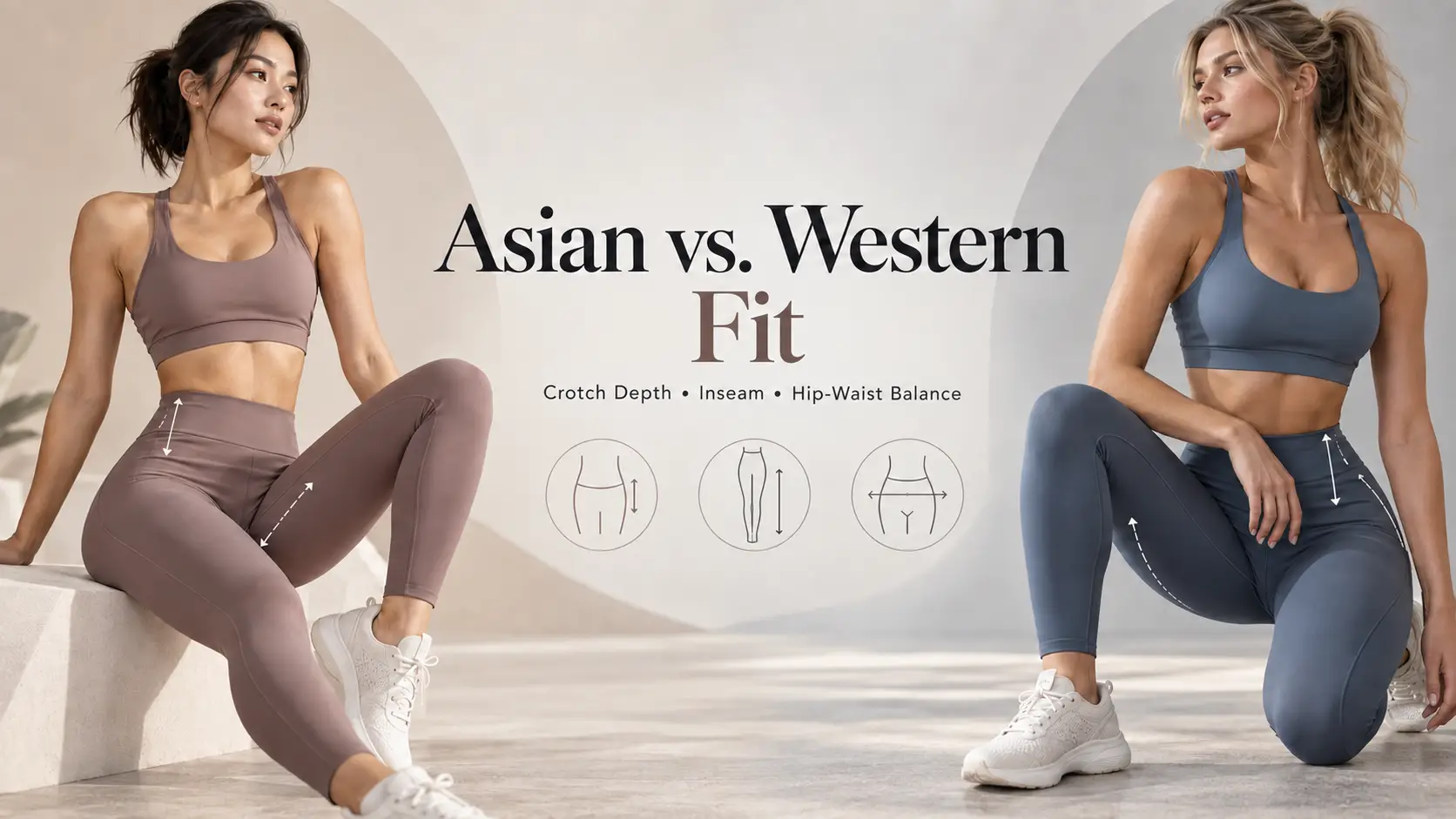
Body shapes and fit preferences differ from market to market. Some regions may prefer longer inseams. Others may need more room in the hips or a different rise. Some customers like a tight compression feel, while others want a softer, relaxed fit. Sizing standards exist for each major market — ASTM D5585 in the US, EM 13402 in the EU, GB/T 1335 in China — but compliance is voluntary, which is why market conventions still vary widely. Sorting your return data by region helps you decide whether to adjust your grade rules or build a market-specific size chart.
Expanding into new countries is a major growth step, and it is where many fit problems appear. A style that works well in one market may see high returns in another — how fit preferences differ across USA, UE, and Middle East markets is a factor many brands discover too late. Sort your return data by region as well as by size. Then you can adjust size ranges, inseam lengths, or fit type for each market instead of using one size chart everywhere.
What Brands Learn from Return Analytics
Return analytics turn complaints into a plan. Here is a simple process for growing brands:
• Track returns by size, estilo, tecido, region, and reason.
• Look for patterns instead of single cases.
• Update size charts and product pages.
• Adjust patterns and fabrics in the next sample.
• Test fit on real bodies before each bulk order.
• Repeat the review every season.
This is where a manufacturing partner helps — from building a successful activewear brand to keeping fit consistent across reorders, the right factory adjusts patterns, tests fabrics, and maintains grading files so your sizing stays reliable. With OEM, ODM, e serviços MDMD, we help brands adjust patterns, source and test fabrics, and build fit samples before the next production run. We can also keep pattern and grading files on record, so your fit stays consistent when you reorder or add new styles. The aim is not perfect fit for everyone, which is rare. The aim is steady, measurable improvement each season.
Perguntas frequentes
What is the main cause of poor fit returns in yoga wear?
The most common causes are unclear size charts, grading errors, and fabric stretch that does not match customer expectations.
How can a startup brand reduce fit returns?
Publish garment measurements, test samples on real bodies, and review return data by size, estilo, and reason every season.
Does fabric choice affect how yoga wear fits?
Sim. Esticar, recuperação, and fabric weight all change how a garment feels and how well it keeps its shape.
What should a good yoga wear sizing chart include?
It should include waist, quadril, costura interna, and rise measurements, plus notes on fabric stretch and model size.
Why do returns differ by region?
Body types and fit preferences vary between markets, so a size range that works in one country may need changes in another.
Can a factory help with fit problems?
Sim. A factory can improve pattern grading, test fabric stretch and recovery, and make fit samples before bulk production.
Conclusão
Returns are feedback. Brands that read them grow with fewer mistakes. SANSANSUN Esportes partners with growing brands through OEM, ODM, e serviços MDMD. We source and test fabrics, build fit samples, and keep pattern files steady across reorders. Entre em contato com a SANSANSUN Sports hoje to build better fit into your next collection.