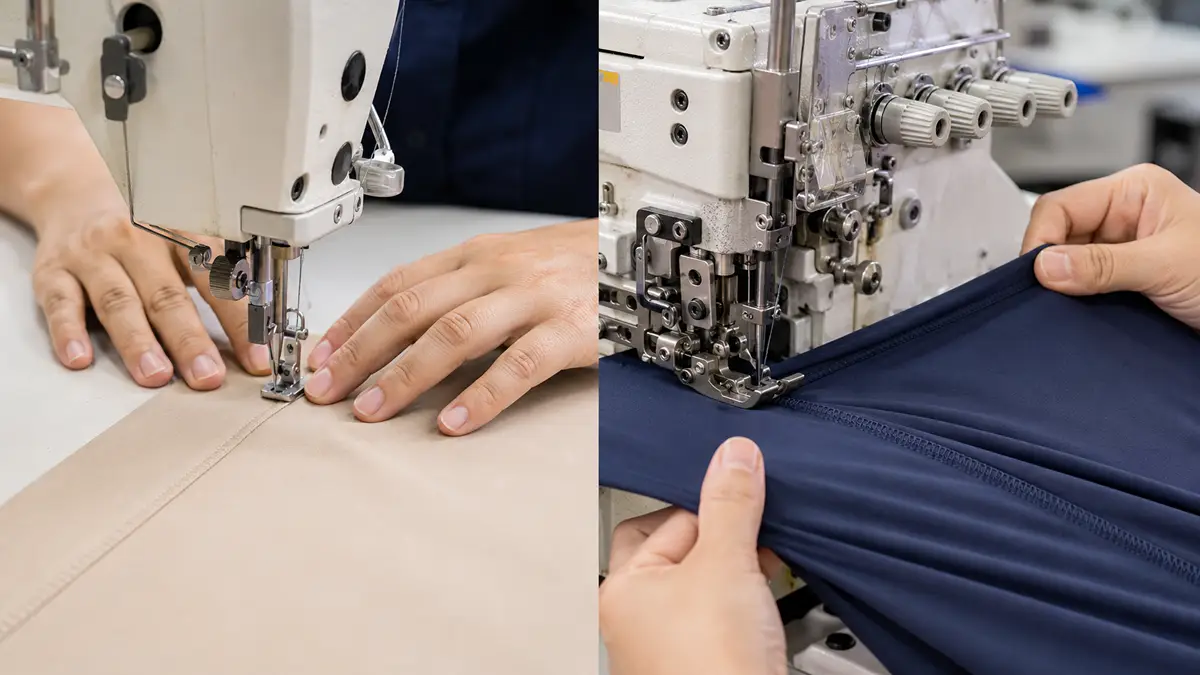
Quando você cria um par de leggings ou um top de ioga, a maior parte da sua atenção provavelmente vai para o tecido. Isso faz sentido. O tecido afeta a aparência da roupa, sentimentos, e executa. Mas há outro material que controla silenciosamente se o seu produto dura ou se desfaz – e esse é o fio condutor.
O tópico é fácil de ignorar. É fino e escondido dentro da costura, mas se a linha errada encontrar um tecido de alta elasticidade, a costura pode falhar, causando reclamações de clientes e problemas de qualidade. Este artigo explica por que tecidos de alta elasticidade devem ser combinados com linhas de alta elasticidade, nylon particularmente lanoso, para melhorar a durabilidade e evitar erros de produção dispendiosos. Encontrar este princípio irá ajudá-lo a tomar melhores decisões e evitar erros de produção dispendiosos.
Por que os tecidos de alta elasticidade precisam de fios de alta elasticidade na fabricação de roupas esportivas
Tecidos de alta elasticidade como roupa de ioga e roupas esportivas geralmente contêm spandex (também chamada de Lycra ou elastano). Esses tecidos podem esticar muito – às vezes 50% para 100% - e depois retornar à sua forma original. É isso que os torna confortáveis e flexíveis para o movimento.
Mas há um detalhe importante: quando o tecido estica, a costura interna também precisa esticar.
Se a linha não puder esticar com o tecido, fica apertado e rígido enquanto o tecido é puxado em diferentes direções. Ao longo do tempo, isso faz com que a costura enfraqueça e eventualmente quebre.
É por isso que fios normais como algodão ou poliéster normal não são adequados. Eles são muito rígidos e não esticam. Eles funcionam bem para tecidos não elásticos, como jeans ou lona., mas não para roupas esportivas.
Em termos simples:
- O tecido elástico se move → a linha também deve se mover
- A linha rígida não pode se mover → costura rompe ou racha
A solução é simples:
Use linha elástica para tecido elástico.
Quando o tecido e a linha esticam juntos, a costura permanece forte, flexível, e duradouro.
Você pode aprender mais sobre Teste de alongamento de calças de ioga: Como as fábricas garantem a qualidade antes do envio em nosso artigo dedicado.
Nylon lanoso 101: Estrutura, Elasticidade, e Suavidade
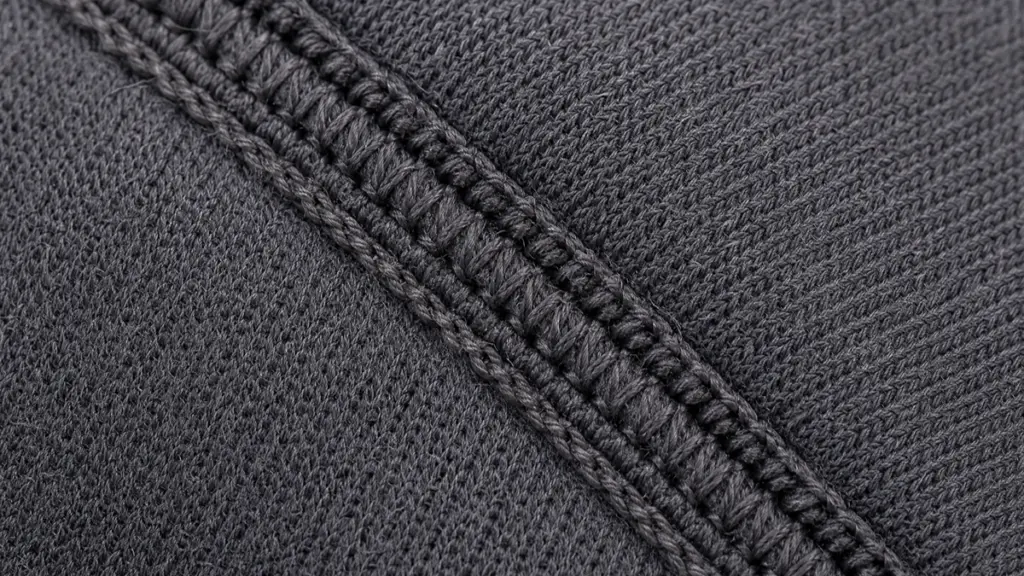
O náilon lanoso é um tipo especial de fio comumente usado em roupas esportivas e de ioga..
É feito de náilon, mas as fibras são texturizadas e ligeiramente enroladas, o que lhe dá uma suavidade, Sensação de “lã” e alta elasticidade.
Quando a linha é puxada, esses pequenos laços se abrem e permitem que ele se estique. Quando a tensão é liberada, ele volta à sua forma original. Isso faz com que funcione perfeitamente com tecidos elásticos como spandex.
Outra vantagem é sua suavidade. Como as costuras em leggings e roupas esportivas costumam tocar a pele, O náilon lanoso ajuda a prevenir irritações e mantém a roupa confortável.
Também é muito forte e durável, para que ele possa lidar com alongamentos repetidos, lavar, e treinos sem quebrar facilmente.
Em termos simples:
Nylon lanoso = macio + extensível + linha forte projetada para costuras de roupas esportivas.
O que acontece quando o fio rígido encontra o tecido elástico
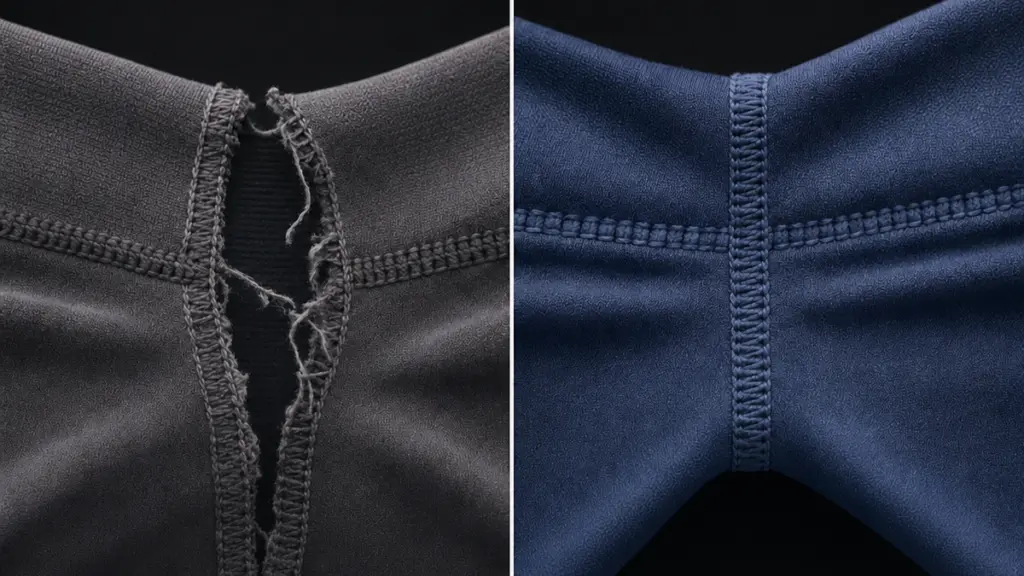
Quando tecidos elásticos como perneiras ou roupas esportivas são costuradas com tecido rígido (não extensível) fio, problemas começam a aparecer durante o movimento.
Por exemplo, quando você dobra os joelhos em leggings, o tecido estica. Mas um fio rígido não pode esticar com ele. Assim, a linha fica esticada e estressada enquanto o tecido é puxado em direções diferentes.
Isso cria dois problemas comuns:
- Pausa repentina: a linha se quebra ao usar a roupa
- Dano lento: o fio não quebra imediatamente, mas enfraquece com o tempo e eventualmente falha após uso e lavagem repetidos
É por isso que muitos defeitos de roupas esportivas aparecem como “costura estourada” ou “costuras divididas”. Muitas vezes parece de má qualidade, mas o verdadeiro problema é usar o tipo errado de linha para tecido elástico.
O dano também pode aumentar lentamente. Cada vez que a roupa estica, o fio rígido está sob pressão, e com o tempo a costura fica mais fraca até finalmente quebrar.
Em termos simples:
Fio rígido + tecido elástico = costuras fracas e eventual falha.
Usar linha elástica evita esse problema e mantém as costuras fortes e duráveis.
Desempenho da costura sob tensão: Esticar, Recuperação, e fadiga
Ao escolher linha para roupas esportivas, há três coisas importantes a serem observadas: esticar, recuperação, e resistência à fadiga.
1. Esticar
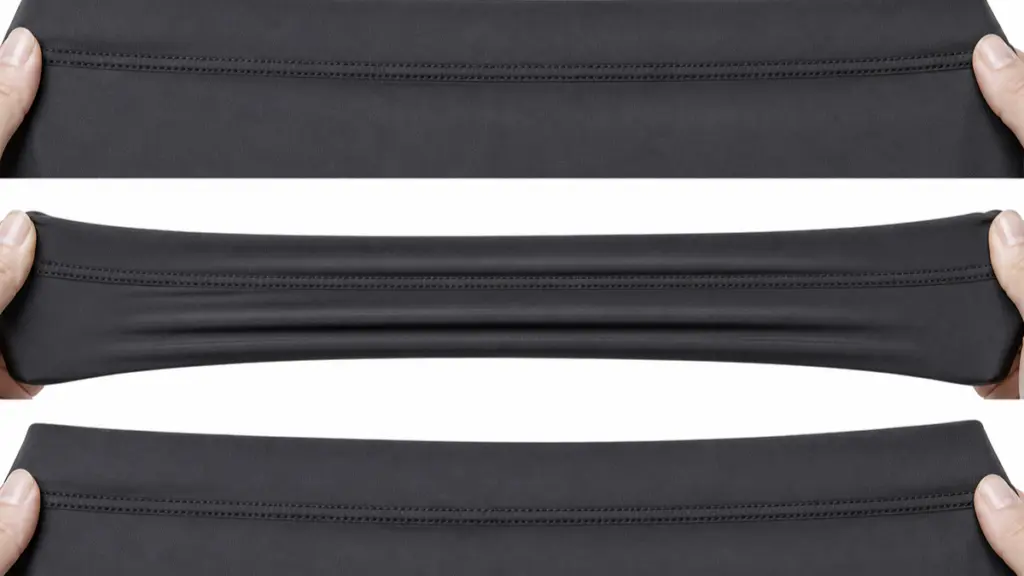
Isso significa o quanto o fio pode esticar sem quebrar. Como os tecidos para ioga e roupas esportivas esticam muito, o fio também deve ser capaz de esticar com eles.
2. Recuperação
Isso significa quão bem o fio volta à sua forma original após o estiramento. Se a recuperação for ruim, a costura fica solta ou ondulada com o tempo e a roupa perde a forma.
3. Resistência à fadiga
Isso significa quão bem o thread lida com o uso repetido. Activewear é esticado, desgastado, e lavei de novo e de novo. Se o fio estiver fraco, ele irá quebrar lentamente após muitos ciclos.
O náilon lanoso tem um bom desempenho em todas as três áreas. Ele se estica facilmente, volta a se moldar bem, e permanece forte após uso repetido.
Em termos simples:
Uma boa linha de roupas esportivas deve esticar, recuperar, e sobreviver ao desgaste repetido.
É por isso que as fábricas testam as costuras sob repetidos alongamentos, porque tecido e linha devem funcionar juntos como um sistema.
Casos de uso ideais para fios de alta elasticidade em roupas esportivas e de ioga
A linha de alta elasticidade não é usada em todas as peças de roupa – ela só é necessária nas áreas que se movem e esticam mais.
Áreas mais importantes:
Essas peças precisam de linha de alta elasticidade porque enfrentam forte movimento e tensão:
- Perna interna (costura interna) e área da virilha das leggings
- Costuras nas axilas de sutiãs e tops esportivos
- Fixação na cintura
- Bainha de shorts e leggings justos
Para roupas de ioga:
Roupas de ioga se estendem em várias direções, então a maioria das costuras principais deve usar linha de alta elasticidade. Se o fio errado for usado, as costuras podem rachar durante movimentos profundos como agachamentos, curvas, ou alongamentos.
Outros usos:
A linha de alta elasticidade também é importante em:
- Trajes de banho
- Shorts de ciclismo
- Desgaste por compressão
- Trajes de dança
Em termos simples:
Use linha de alta elasticidade somente onde o tecido se move muito, especialmente em roupas esportivas de desempenho.
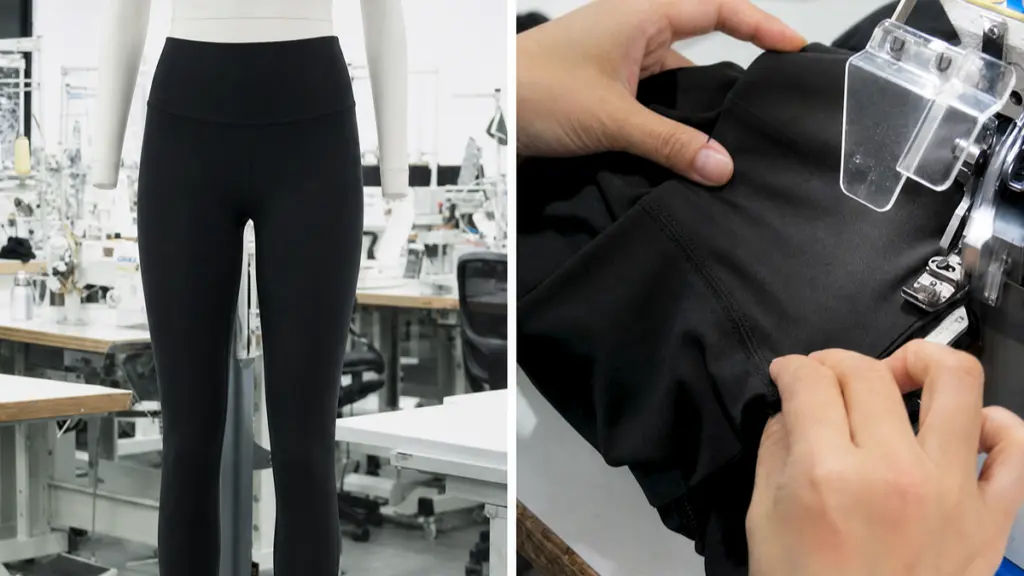
Melhores Práticas: Tipo de ponto de emparelhamento, Tipo de linha, e nível de estiramento do tecido
Para costuras fortes de roupas esportivas, não se trata apenas da linha – tipo de ponto, tipo de thread, e a elasticidade do tecido devem funcionar juntas.
1. Escolha o ponto certo
A maioria das roupas esportivas usa esses pontos:
- Overloque (ponto serger): flexível e forte para a maioria das costuras
- Ponto de cobertura: usado para bainhas e acabamento visível
- Flatlock: muito confortável, fica plano contra a pele
Esses pontos são projetados para se moverem com tecidos elásticos.
2. Use a linha certa no lugar certo
- Nylon lanoso (linha de laçador): usado em máquinas de overloque/ponto de cobertura para maior maciez e alta elasticidade
- Poliéster elástico ou náilon texturizado (linha de agulha): usado para fornecer força enquanto ainda permite movimento
O náilon lanoso lida com a maior parte do alongamento, enquanto a linha da agulha adiciona estrutura.
3. Teste antes da produção em massa
Quando o tecido tem alto spandex (especialmente 20% ou mais), deve ser testado com a combinação de ponto e linha escolhida. Isso garante que a costura não se rompa ou se solte em uso real.
4. Ajuste para tecidos especiais
Tecidos diferentes (como misturas recicladas, tecidos de compressão, ou malhas sem costura) pode precisar de combinações diferentes. Não existe uma configuração única que funcione para tudo.
Em termos simples:
Roupas esportivas fortes vêm da combinação correta de três coisas:
tecido + ponto + linha = desempenho de costura durável
Se uma parte estiver errada, a costura pode falhar mesmo que as outras duas estejam corretas.
Conclusão
A linha pode ser uma pequena parte do vestuário esportivo, mas tem um grande impacto na qualidade. Muitos problemas de costura, como quebra, franzindo, ou afrouxamento acontece porque o tecido e a linha não combinam corretamente - especialmente quando tecido elástico é usado com linha não elástica.
A solução é simples:
Use linha de alta elasticidade (como nylon lanoso) em áreas que se movem muito, e combine-o com o tipo de ponto certo para o tecido. Sempre teste antes da produção em larga escala.
Para novas marcas, isso pode parecer técnico, mas é uma parte padrão da fabricação profissional de roupas. Boas fábricas já entendem e controlam esses detalhes para garantir uma qualidade estável.
Se você estiver desenvolvendo sua própria coleção de roupas esportivas ou de ioga, entre em contato conosco para revisar sua configuração de tecido e linha. Sansansports pode ajudá-lo a escolher o sistema de costura correto antes da produção para que seus produtos fiquem mais fortes, limpador, e mais durável.