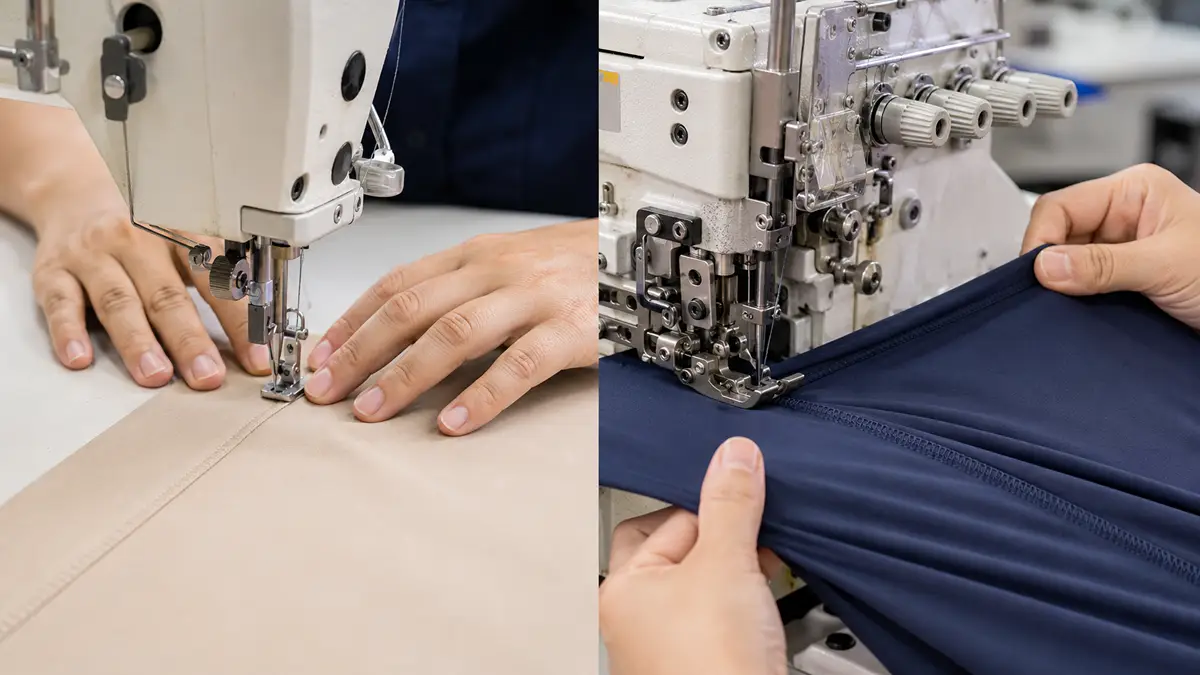
When you design a pair of leggings or a yoga top, most of your attention probably goes to the fabric. That makes sense. Fabric affects how the garment looks, feels, and performs. But there is another material that quietly controls whether your product lasts or falls apart — and that is the thread.
Thread is easy to overlook. It is thin and hidden inside the seam, but if the wrong thread meets a high-stretch fabric, the seam can fail, causing customer complaints and quality issues. This article explains why high-stretch fabrics must be paired with high-stretch threads, particularly wooly nylon, to improve durability and avoid costly production mistakes.nding this principle will help you make better decisions and avoid costly production mistakes.
Why High-Stretch Fabrics Need High-Stretch Threads in Activewear Manufacturing
High-stretch fabrics like yoga wear and activewear usually contain spandex (also called Lycra or elastane). These fabrics can stretch a lot — sometimes 50% to 100% — and then return back to their original shape. That’s what makes them comfortable and flexible for movement.
But there is an important detail: when the fabric stretches, the stitching inside it also needs to stretch.
If the thread cannot stretch with the fabric, it becomes tight and stiff while the fabric is pulling in different directions. Over time, this causes the seam to weaken and eventually break.
This is why normal threads like cotton or regular polyester are not suitable. They are too rigid and do not stretch. They work well for non-stretch fabrics like denim or canvas, but not for activewear.
In simple terms:
- Stretch fabric moves → thread must also move
- Rigid thread cannot move → seam breaks or cracks
The solution is simple:
Use stretchable thread for stretchable fabric.
When both fabric and thread stretch together, the seam stays strong, flexible, and long-lasting.
You can learn more about Yoga Pants Stretch Test: How Factories Ensure Quality Before Shipping in our dedicated article.
Wooly Nylon 101: Structure, Elasticity, and Softness
Wooly nylon is a special type of thread commonly used in activewear and yoga wear.
It is made from nylon, but the fibers are textured and slightly looped, which gives it a soft, “wool-like” feel and high stretchability.
When the thread is pulled, these tiny loops open up and allow it to stretch. When the tension is released, it goes back to its original shape. This makes it work perfectly with stretch fabrics like spandex.
Another advantage is its softness. Since seams in leggings and sportswear often touch the skin, wooly nylon helps prevent irritation and keeps the garment comfortable.
It is also very strong and durable, so it can handle repeated stretching, washing, and workouts without breaking easily.
In simple terms:
Wooly nylon = soft + stretchable + strong thread designed for activewear seams.
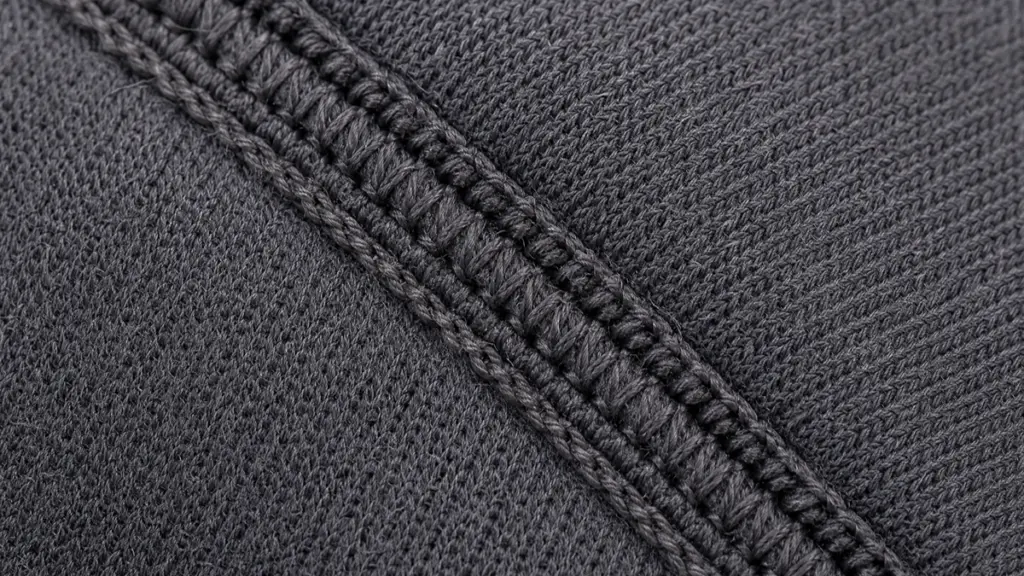
What Happens When Rigid Thread Meets Stretch Fabric
When stretch fabrics like leggings or sportswear are sewn with a rigid (non-stretch) thread, problems start to appear during movement.
For example, when you bend your knees in leggings, the fabric stretches. But a rigid thread cannot stretch with it. So the thread becomes tight and stressed while the fabric is pulling in different directions.
This creates two common problems:
- Sudden break: the thread snaps while wearing the garment
- Slow damage: the thread doesn’t break immediately, but weakens over time and eventually fails after repeated wear and washing
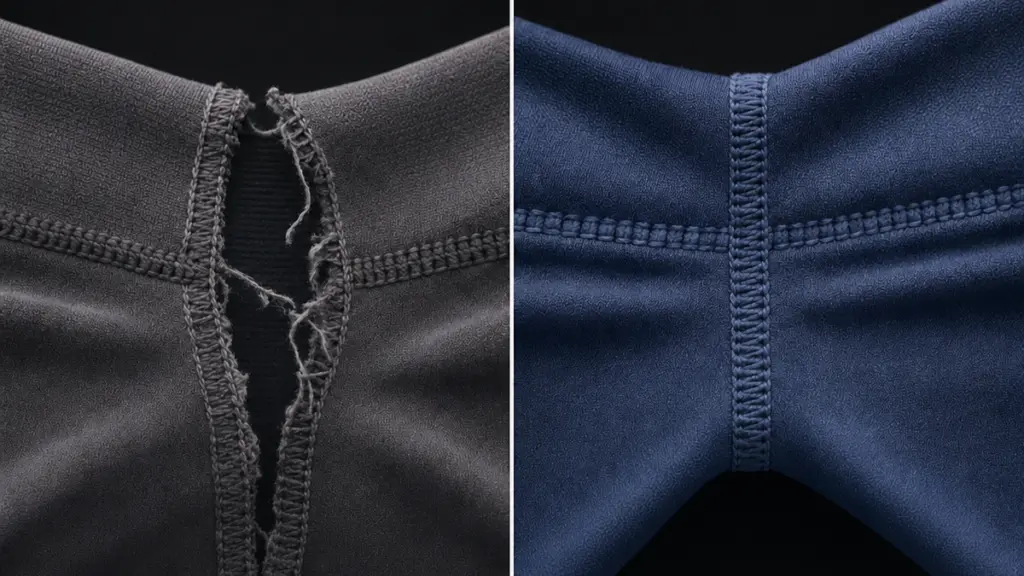
This is why many activewear defects show up as “popped stitching” or “split seams.” It often looks like poor quality, but the real issue is using the wrong type of thread for stretch fabric.
The damage can also build up slowly. Each time the garment stretches, the rigid thread is under pressure, and over time the seam becomes weaker until it finally breaks.
In simple terms:
Rigid thread + stretch fabric = weak seams and eventual failure.
Using stretchable thread prevents this problem and keeps seams strong and durable.
Seam Performance Under Tension: Stretch, Recovery, and Fatigue
When choosing thread for activewear, there are three important things to look at: stretch, recovery, and fatigue resistance.
1. Stretch
This means how much the thread can stretch without breaking. Since yoga and activewear fabrics stretch a lot, the thread must also be able to stretch with them.
2. Recovery
This means how well the thread goes back to its original shape after stretching. If recovery is poor, the seam becomes loose or wavy over time and the garment loses its shape.
3. Fatigue resistance
This means how well the thread handles repeated use. Activewear is stretched, worn, and washed again and again. If the thread is weak, it will slowly break down after many cycles.
Wooly nylon performs well in all three areas .it stretches easily, returns to shape well, and stays strong after repeated use.
In simple terms:
Good activewear thread must stretch, bounce back, and survive repeated wear.
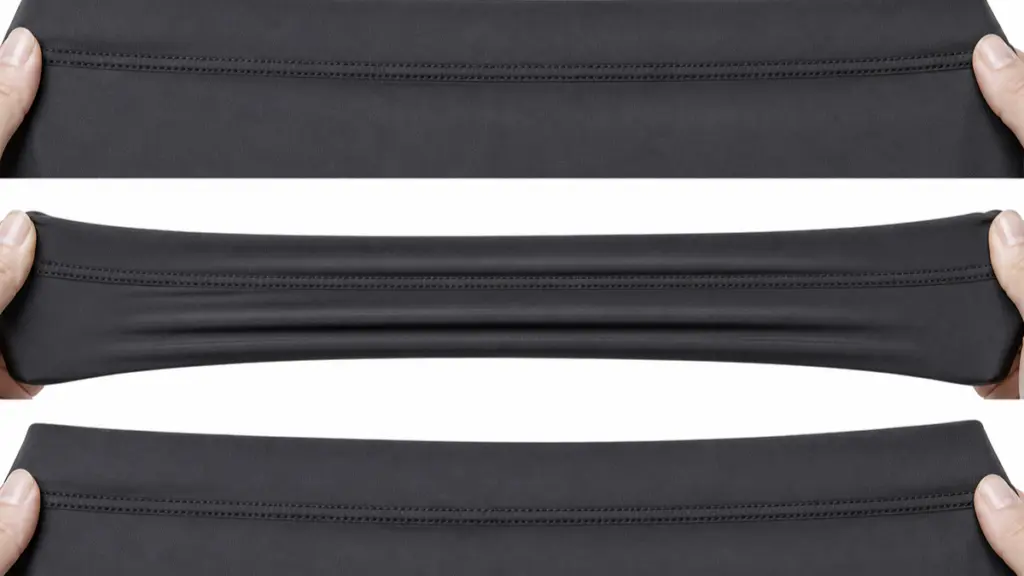
That’s why factories test seams under repeated stretching, because fabric and thread must work together as one system.
Ideal Use Cases for High-Stretch Threads in Activewear and Yoga Wear
High-stretch thread is not used everywhere in a garment — it is only needed in areas that move and stretch the most.
Most important areas:
These parts need high-stretch thread because they face strong movement and tension:
- Inner leg (inseam) and crotch area of leggings
- Underarm seams of sports bras and tops
- Waistband attachment
- Hem of tight shorts and leggings
For yoga wear:
Yoga clothing stretches in many directions, so most main seams should use high-stretch thread. If the wrong thread is used, seams can split during deep movements like squats, bends, or stretches.
Other uses:
High-stretch thread is also important in:
- Swimwear
- Cycling shorts
- Compression wear
- Dance costumes
In simple terms:
Use high-stretch thread only where the fabric moves a lot, especially in performance activewear.
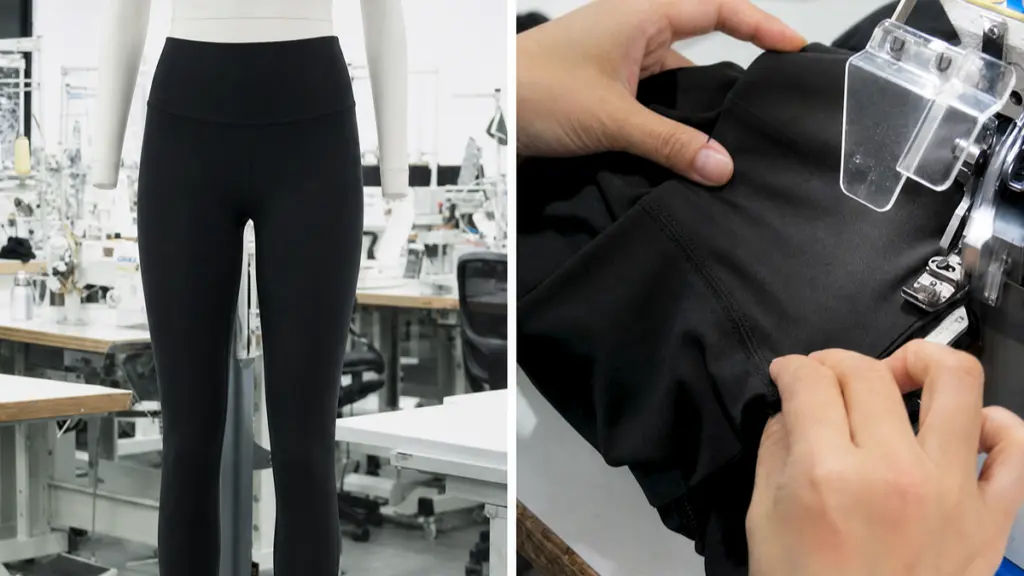
Best Practices: Pairing Stitch Type, Thread Type, and Fabric Stretch Level
For strong activewear seams, it’s not just about the thread — stitch type, thread type, and fabric stretch must all work together.
1. Choose the right stitch
Most activewear uses these stitches:
- Overlock (serger stitch): flexible and strong for most seams
- Coverstitch: used for hems and visible finishing
- Flatlock: very comfortable, sits flat against the skin
These stitches are designed to move with stretch fabrics.
2. Use the right thread in the right place
- Wooly nylon (looper thread): used in overlock/coverstitch machines for softness and high stretch
- Stretch polyester or textured nylon (needle thread): used to provide strength while still allowing movement
Wooly nylon handles most of the stretching, while needle thread adds structure.
3. Test before mass production
When fabric has high spandex (especially 20% or more), it must be tested with the chosen stitch and thread combination. This ensures the seam will not break or become loose in real use.
4. Adjust for special fabrics
Different fabrics (like recycled blends, compression fabrics, or seamless knits) may need different combinations. There is no single setup that works for everything.
In simple terms:
Strong activewear comes from matching three things correctly:
fabric + stitch + thread = durable seam performance
If one part is wrong, the seam can fail even if the other two are correct.
Conclusion
Thread may be a small part of activewear, but it has a big impact on quality. Many seam problems like breaking, puckering, or loosening happen because the fabric and thread are not matched properly — especially when stretch fabric is used with non-stretch thread.
The solution is simple:
Use high-stretch thread (like wooly nylon) in areas that move a lot, and pair it with the right stitch type for the fabric. Always test before large-scale production.
For new brands, this can feel technical, but it is a standard part of professional garment manufacturing. Good factories already understand and control these details to ensure stable quality.
If you are developing your own activewear or yoga wear collection, reach out to us to review your fabric and thread setup. Sansansports can help you choose the right stitching system before production so your products come out stronger, cleaner, and more durable.