Every sports bra buyer wants the same thing: a bra that stays in place, feels comfortable, and gives real support during hard workouts. Yet many bras fail in two common ways. Some flatten the chest into one shape, often called the “uni-boob” look. Others leave empty space in the cups, which causes gaping and movement. Size matching is part of both, but the flattened look is mostly a construction choice, and gaping is usually a shape mismatch between the cup and the body. Для брендов спортивной одежды, solving this early can reduce returns and build customer trust. This guide explains how a band and cup size matrix works, and how factories use it to create high-impact sports bras that fit well.
What Is the Sports Bra Matrix?
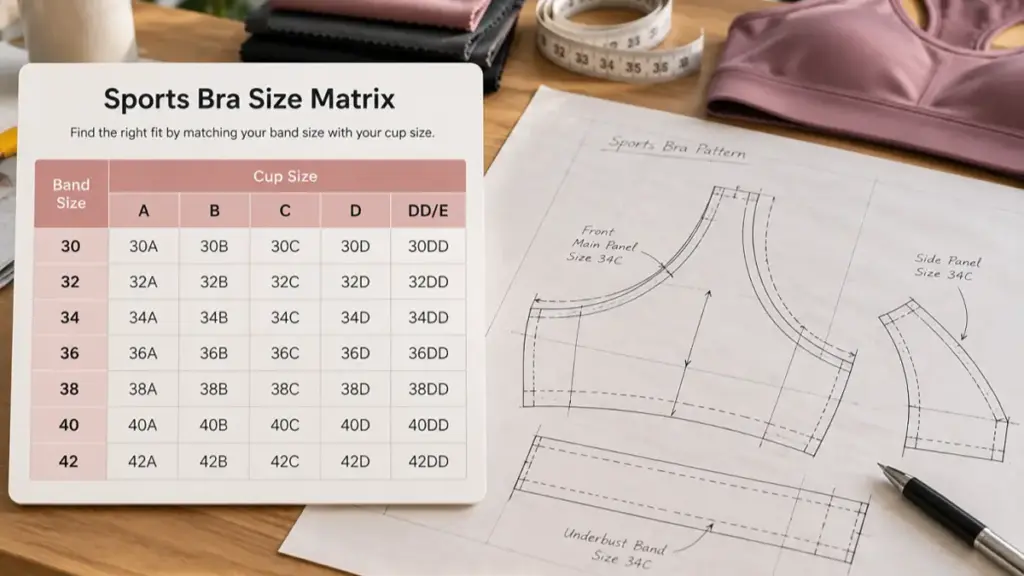
A sports bra matrix is a size chart that connects band size with cup size in a clear grid. Instead of small, середина, and large, the grid uses band and cup codes — 32B, 34С, 36D in US and UK inch sizing, or 70B, 75С, 80D in the EU centimetre system. Same body, different code, so the grid has to be written for the market you sell into. That label question is the one we mapped out for S/M/L versus numeric size codes across markets, only here it runs in two directions at once.
Think of it as a map. The band size is one side of the map, and the cup size is the other. When both are matched correctly, the bra fits the body shape better. На нашем заводе, we build these grids during sample development, so every size has its own pattern, not just a scaled copy.
Most activewear brands do not print band and cup codes on the label. They run XS to XL and map a cup range to each alpha size — S for 32A to 34B, M for 34B to 36C. The grid sits behind that label, in the grading and the fit session. Two things set its width. Первый, расходы: every extra band or cup step is a new pattern block and a new stock unit, so a run wider than eight codes is a costing decision, не подходящее решение. Второй, технология: наш seamless sports bras knit directly to alpha sizes on the Santoni machines, so a wide band-and-cup grid belongs to cut-and-sew styles, not to a seamless line.
Why Band and Cup Matching Matters Most
The band gives most of the support. The cup holds the shape. If the band is too loose, the bra rides up and the cups shift. If the band is too tight, it feels uncomfortable and limits breathing.
Cup volume is not fixed — it moves with the band. A 34C cup holds roughly the same volume as a 32D or a 36B, which is the sister-size rule factories grade by. Too little volume for the body and tissue spills over the cup edge and the underarm line. Too much volume and the cup collapses and gaps. In a well-fitted bra the band carries most of the load — the fitting rule of thumb puts 70% к 80% of support in the band — while the straps only steady it. If a fit sample shows strap marks, check the band before blaming the straps.
Для владельцев брендов, this means one thing: fit is a system. Changing one part affects the others. That is why we test band and cup together during fitting sessions.
Fixing Gaping Cups Through Precision Sizing
Gaping cups are one of the most common complaints in sports bras. They usually appear when the cup depth or width does not match the wearer’s shape. Fabric stretch can also make the problem worse.
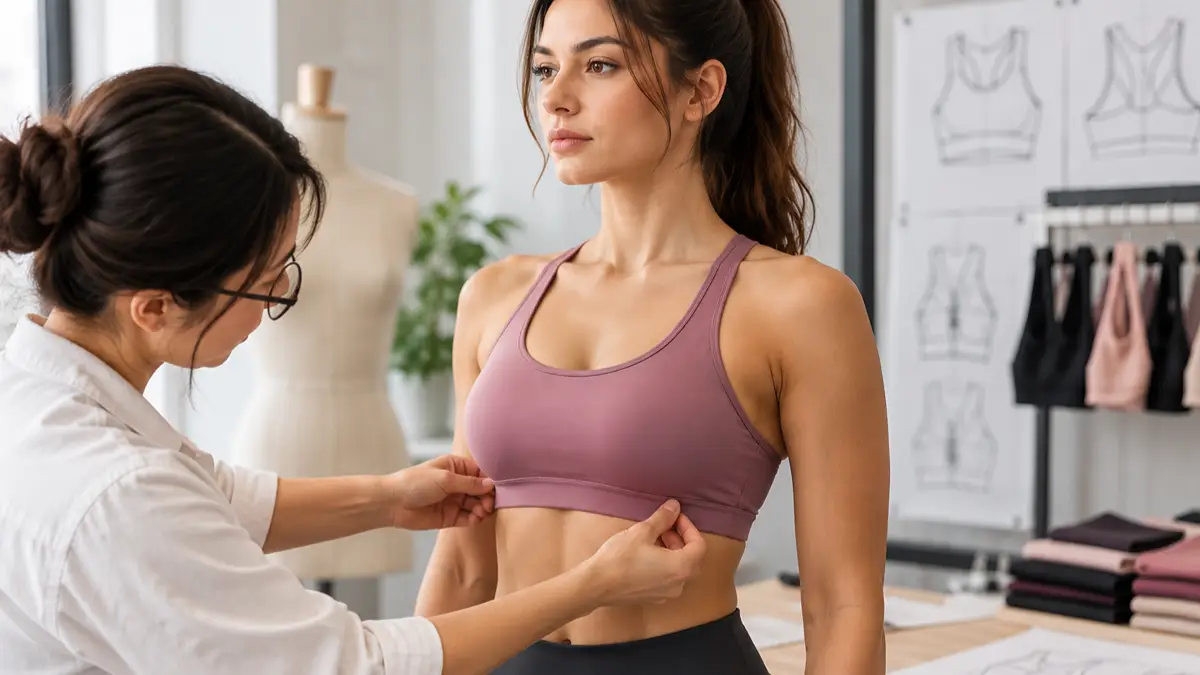
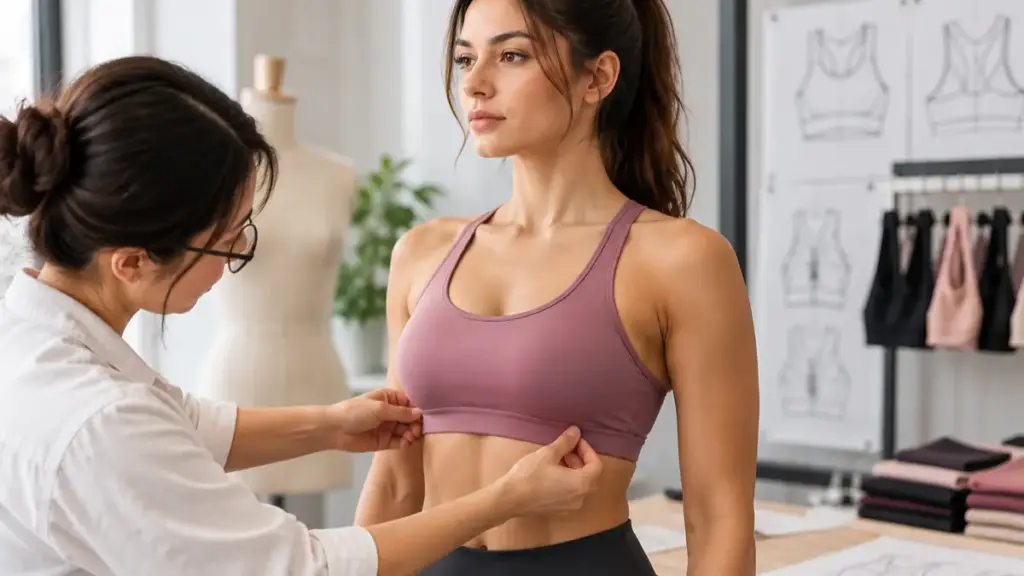
The fix starts with pattern grading. The band steps 2 inches and each cup letter covers about 1 inch of bust difference, so the grid moves in fixed increments. The next cup size is its own block, not the previous one enlarged — we reset cup depth, cup width, and underarm shape on every step, and the frozen size spec carries a tolerance of plus or minus 1 cm on the underband. We then fit at least three graded sizes — first, middle, and last in the run — on models measured to the size spec, rather than one sample on one model. If a gap appears, we change the pattern and test again.
Small changes can make a big difference. Even a few millimeters at the cup edge can improve how the bra sits on the body.
High-Impact Activity Support Levels Explained
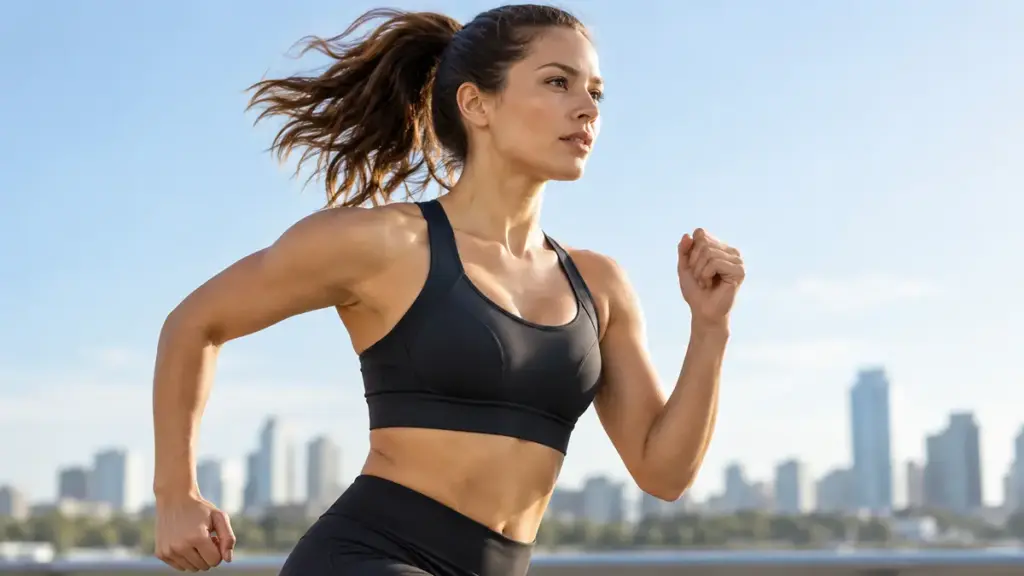
Sports bras are usually grouped by support level: low, середина, and high. High-impact activities include running, ВИИТ, jump training, и полевые виды спорта. These movements create strong bounce, so the bra needs firm control.
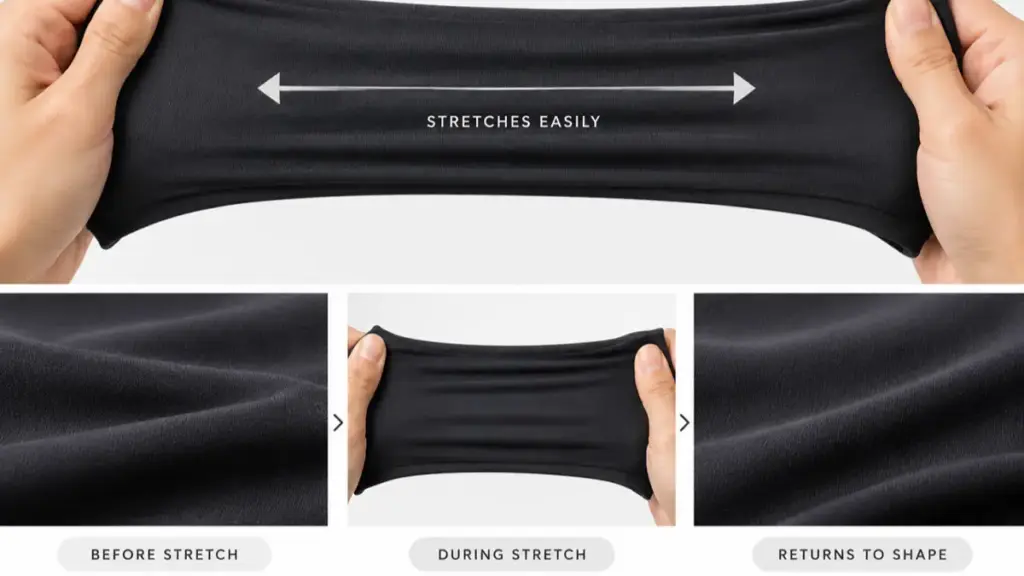
High-impact bras usually have wider bands, stronger straps, and more stable cup structure. Fabric with good recovery is also important, because it returns to shape after stretching.
Support level should guide the sizing matrix. A high-impact bra often needs more size options than a low-impact one, because fit matters more when movement is stronger. We grade this grid per support level rather than per style, which is how our custom high-support sports bras are built for running and HIIT lines.
Encapsulation vs Compression Design Choices
These are two common ways to build support. A compression bra presses the chest against the body to limit motion. An encapsulation bra gives each breast its own cup, so the shape stays more natural.
Compression describes how the bra controls motion, not how much of it. A compression-style bra is still sold at high-impact level for A and B cups, and fails at that same level on a D cup. Encapsulation is often better for larger cup sizes and high-impact use, and it helps avoid the uni-boob look.
Many modern designs combine both. The cups hold the shape, and the fabric provides gentle compression. Under that decision sits the cup insert itself, и molded cups versus removable pads change how that shape survives washing and how the bra packs for retail. We often help activewear brands choose the right approach based on their target customer and price point.
Underwire vs Wireless Matrix Options
Underwire bras use a thin support piece under the cup. It adds lift and shape, which some customers prefer for larger sizes. Wireless bras rely on fabric, seams, and molded cups for support, which makes them lighter and often more comfortable. Underwire adds its own build rules: the wire has to sit on the ribcage under the breast root, not on tissue, and both ends must be locked into a closed channel, because wire migration and poking are among the most common underwire claims in sportswear QC.
Each option needs its own matrix. Wire shape and length change the fit, so sizes cannot be copied from wireless patterns. In wireless styles, seam placement and band strength do more of the work.
Your choice depends on your customers. Many activewear brands offer wireless as the main line and add underwire for a larger size range.
The Role of Fabric Tension in Cup Stability
Fabric tension is the restraining force a fabric gives back at a set stretch point. Factories read it as three separate numbers: удлинение, which is how far it stretches; восстановление, how far it snaps back; and modulus, how hard it pulls in between. It plays a big role in cup stability. A fabric can stretch far and still hold loosely, because high elongation with weak recovery feels supportive on the hand and sloppy on the body. Fabric that is too firm can feel tight and cause pressure marks.
We choose fabrics by testing stretch, восстановление, and thickness, because stretch and recovery are not the same property — the second one decides whether the cup is still holding in month twelve. Nylon and spandex blends are common because they offer stretch and shape retention. Bonded layers or inner cup lining can add extra stability.
Часто задаваемые вопросы
What is a sports bra size matrix?
It is a grid that pairs band sizes with cup sizes, helping brands offer a more accurate fit than basic small, середина, and large sizing.
What causes the uni-boob look in sports bras?
Mostly construction, not size: a compression-only front panel with no cup separation presses both sides together. Undersized cups make it worse, and encapsulation or a combined build reduces it. Better cup sizing and encapsulation can reduce it.
How do I fix gaping cups in a sports bra?
Adjust the cup depth and width in the pattern, check the fabric stretch, and test on real fit models.
Which construction should my brand specify for high-impact styles?
A bra with a firm band, strong straps, stable cups, and fabric with good recovery works best. Encapsulation or combined designs are often preferred.
Should my brand choose underwire or wireless?
Wireless is easier to wear and popular for everyday activewear. Underwire can suit customers who need extra lift. Many brands offer both.
Final Thoughts on Bra Sizing Decisions
A good sports bra is not about one feature. It comes from matching band and cup size, choosing the right support style, and using fabric with the right tension. Когда эти части работают вместе, gaping cups and the flattened uni-boob look become much easier to solve.
Для стартап-брендов, a clear size matrix is a smart foundation. It improves comfort, снижает прибыль, and helps customers trust your product. If you are planning a new sports bra line, working with a factory that understands pattern development, поиск ткани, and fit testing can make the process smoother from the first sample to final production.