Wenn Sie eine Activewear-Marke aufbauen, Sie sind wahrscheinlich schon auf den Begriff PFAS gestoßen. Vielleicht hat es ein Lieferant erwähnt. Vielleicht hat ein Kunde danach gefragt. Oder vielleicht haben Sie online etwas über chemische Beschränkungen in Kleidung gelesen.
Was auch immer Sie hierher geführt hat, Sie sind am richtigen Ort.
PFAS sind eine Gruppe von Chemikalien, die in der Industrie weit verbreitet sind Sportbekleidung und Outdoor-Bekleidung seit Jahrzehnten. Sie tragen dazu bei, dass Stoffe Wasser abweisen, resistent gegen Flecken, und behalten auch bei hartem Training ihre Form. Untersuchungen im Laufe der Jahre haben jedoch gezeigt, dass PFAS schädlich für die menschliche Gesundheit und die Umwelt sein kann.
Für Startup-Marken und neue Käufer, Dieses Thema kann überwältigend sein. Was genau sind PFAS?? Sind sie gerade in deinen Stoffen?? Wie finden Sie sichere Alternativen ohne Leistungseinbußen??
Dieser Artikel beantwortet all diese Fragen. Wir erklären Ihnen, was PFAS sind, warum sie verwendet wurden, und wie man einen sauberen Übergang zu PFAS-freier Sportbekleidung schafft. Wir verraten Ihnen auch, worauf Sie bei der Auswahl eines Fertigungspartners achten sollten, der Sie bei diesem Prozess unterstützen kann.
Was sind PFAS??
PFAS (Pro- und Polyfluoralkylsubstanzen) sind vom Menschen hergestellte Chemikalien, die als „ewige Chemikalien“ bekannt sind, da sie in der Umwelt oder im menschlichen Körper nicht leicht abgebaut werden. Sie sind mit sehr starken Kohlenstoff-Fluor-Bindungen aufgebaut, Dadurch sind sie äußerst langlebig, aber auch langlebig.
Zu den häufigsten Typen gehört PFOA, PFOS, und PTFE, die in vielen Branchen weit verbreitet sind. Jedoch, PFAS werden mit Gesundheitsrisiken wie Schilddrüsenproblemen in Verbindung gebracht, Auswirkungen auf das Immunsystem, und bestimmte Krebsarten.
Da sich die Vorschriften in den Vereinigten Staaten und der Europäischen Union verschärfen, und die Verbraucher machen sich zunehmend Sorgen um die Sicherheit chemischer Stoffe, Immer mehr Marken wechseln aktiv zu PFAS-freien Stoffen.
Warum werden PFAS in Activewear verwendet??
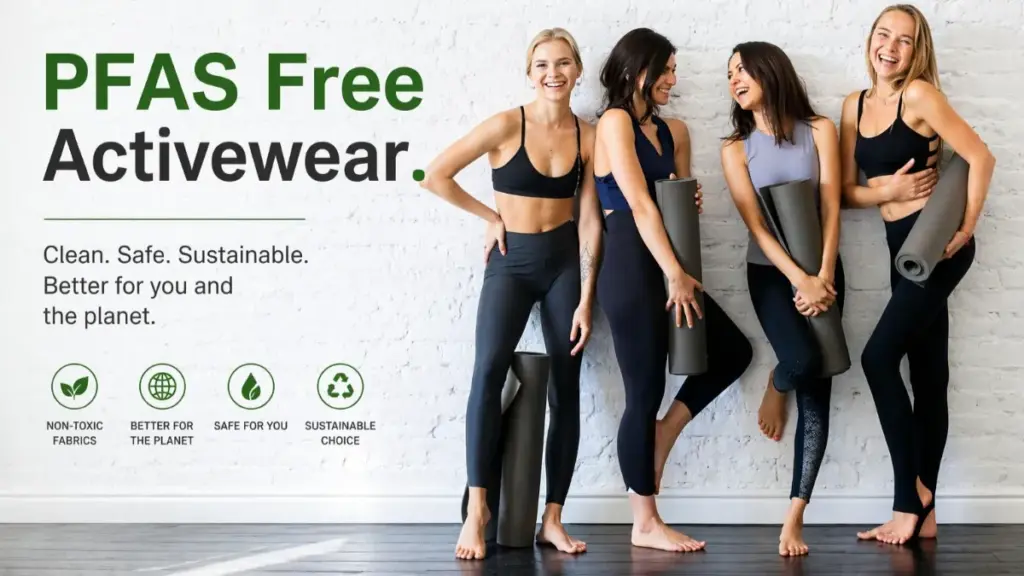
PFAS werden in Sportbekleidung verwendet, weil sie starke Leistungsvorteile bieten. Sie erzeugen eine dauerhafte wasserabweisende Wirkung (DWR) beenden, hilft den Stoffen, Wasser zu widerstehen, schneller trocknen, und bleiben beim Training leicht. Sie erhöhen außerdem die Fleckenbeständigkeit, Verbessern Sie die Glätte des Stoffes, und Reibung reduzieren.
Jedoch, Diese Vorteile sind mit Risiken verbunden. PFAS zersetzen sich nicht so leicht und können beim Waschen auf die Haut übertragen oder ins Wasser gelangen. Aus diesem Grund, Die Branche verlagert sich nun in Richtung Sicherheit, PFAS-freie Alternativen, die dennoch die Leistung beibehalten.
Sind PFAS in Yogabekleidung und Leggings häufig??
In den meisten Standard-Leggings und Yoga-Kleidung, PFAS sind nicht essentiell.
Zu den Produkten, die am wahrscheinlichsten PFAS enthalten, gehören::
- Wasserdichte Jacken
- Wasserabweisende Oberbekleidung
- Laufjacken
- Fleckenabweisende Kleidung
Zu den Produkten, bei denen die Wahrscheinlichkeit geringer ist, dass PFAS erforderlich ist, gehören::
- Yoga-Leggings
- Sport-BHs
- Tanktops
- Kompressionsshorts
Dies bedeutet, dass viele Activewear-Marken mit minimalen Auswirkungen auf die Produktleistung auf eine PFAS-freie Produktion umsteigen können.
So überprüfen Sie die Sicherheit Ihres Stoffes
Vor der Beschaffung von Activewear-Stoffen, Gehen Sie nicht davon aus, dass es sicher ist – überprüfen Sie es. Bitten Sie Lieferanten um Testberichte Dritter von Labors wie SGS, Intertek, oder Bureau Veritas, um auf Schadstoffe zu prüfen.
Suchen Sie nach vertrauenswürdigen Zertifizierungen wie dem OEKO-TEX Standard 100 und Bluesign, die strenge chemische Sicherheitsstandards gewährleisten. Sie können auch Ihre Liste der verbotenen Substanzen teilen (RSL)und bestätigen Sie die Einhaltung mit Ihrem Lieferanten.
Die Zusammenarbeit mit einer Fabrik, die sich mit der Einhaltung chemischer Vorschriften auskennt, erleichtert den Prozess – sodass Sie Sicherheit gewährleisten können, qualitativ hochwertige Produkte, ohne dass tiefgreifendes technisches Fachwissen erforderlich ist.
Wie sich PFAS auf die Leistung und Qualität von Stoffen auswirken
PFAS werden seit langem zur Verbesserung der Stoffleistung eingesetzt – insbesondere zur Wasserabweisung, Fleckenbeständigkeit, und eine glatte Oberfläche. Sie zu entfernen bedeutet keinen Qualitätsverlust, aber es erfordert ein intelligenteres Stoffdesign.
Heutige PFAS-freie Stoffe können durch die Kombination der richtigen Fasern eine ähnliche Leistung erzielen, Konstruktion, und Veredelungstechniken. Viele führende Marken haben bereits umgestellt, ohne dass die Kundenzufriedenheit spürbar zurückging.
Der Hauptunterschied ist die Haltbarkeit: Wasserabweisende Ausrüstungen auf PFAS-Basis halten nach mehrmaligem Waschen tendenziell länger, während PFAS-freie Optionen möglicherweise eine sorgfältigere Pflege oder gelegentliche Nachbehandlung erfordern.
Für Produkte wie Yogabekleidung und Leggings, wo Komfort und Dehnbarkeit wichtiger sind als Wasserbeständigkeit, Der Wechsel zu PFAS-freien Materialien ist in der Regel einfach und beeinträchtigt die Leistung nicht.
PFAS-freie Alternativen, die tatsächlich funktionieren
Mittlerweile gibt es viele PFAS-freie Optionen, die sich gut für Sportbekleidung eignen. Marken auf allen Ebenen nutzen sie bereits erfolgreich.
• Fluorfreie DWR-Beschichtungen: Diese ersetzen herkömmliche wasserabweisende Ausrüstungen durch sicherere Materialien wie Wachs oder Silikon. Sie tragen weiterhin dazu bei, dass Wasser vom Stoff abperlt.
• CO2-WASSER: Ein beliebter PFAS-freier Standard, der für die meisten Sportbekleidung gute Leistung bietet.
• Technisches Polyester & Nylon: Diese Stoffe leiten Schweiß auf natürliche Weise durch ihre Faserstruktur ab, Daher ist keine zusätzliche Beschichtung erforderlich – ideal für Sportbekleidung und Yoga-Kleidung.
• Natürliche Mischungen: Stoffe wie Tencel oder Bio-Baumwolle, gemischt mit Funktionsfasern, fühlen sich weich an, atmungsaktiv, und umweltfreundlich.
Die beste Option hängt von Ihrem Produkt und Ihrem Zielmarkt ab. Das Testen verschiedener Stoffe mit Ihrem Hersteller hilft Ihnen dabei, das richtige Gleichgewicht zwischen Leistung und Sicherheit zu finden.
Worauf Sie bei einem PFAS-konformen Fertigungspartner achten sollten
Die Wahl der richtigen Fabrik ist der Schlüssel zur Sicherheit, konforme Aktivbekleidung. Hier erfahren Sie, was Sie in einfachen Worten überprüfen sollten:
• Seien Sie transparent: In einer guten Fabrik erfahren Sie deutlich, woher die Stoffe kommen, und stellen Sicherheitsdokumente zur Verfügung. Wenn sie Fragen vermeiden, Es ist eine rote Fahne.
• Verwenden Sie zertifizierte Materialien: Suchen Sie nach Fabriken, die mit Standards wie dem OEKO-TEX-Standard arbeiten 100 oder Bluesign. Das bedeutet, dass sie die Sicherheit chemischer Stoffe verstehen.
• Bereitstellung von Testunterstützung: Sie sollten Testberichte anbieten oder mit Laboren wie SGS oder Intertek zusammenarbeiten.
• Befolgen Sie die chemischen Regeln (RSL): Eine zuverlässige Fabrik kann Ihrer Liste verbotener Stoffe folgen oder verfügt bereits über eine solche.
• Kommunizieren Sie klar: Sie sollten den Prozess erläutern und in jeder Phase Dokumente bereitstellen.
Zusamenfassend, Arbeiten Sie mit einer Fabrik, die geöffnet ist, erfahren, und organisiert – das hilft Ihnen, Risiken zu vermeiden und eine vertrauenswürdige Marke aufzubauen.
So stellen Sie Ihre Produktlinie auf PFAS-frei um
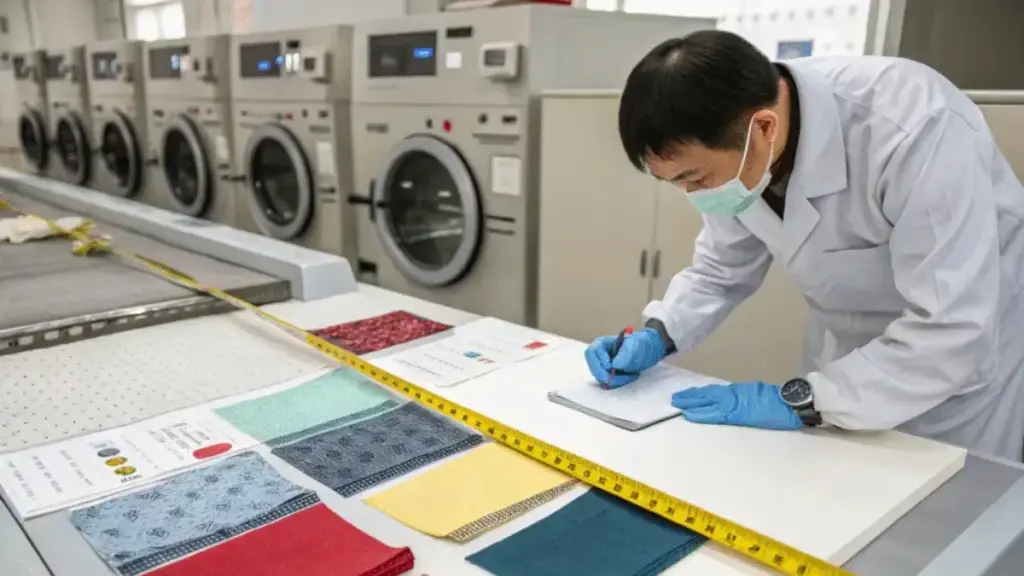
Die Umstellung auf PFAS-frei muss nicht auf einmal erfolgen. Ein einfaches, Ein schrittweiser Ansatz funktioniert am besten:
• Fangen Sie klein an: Beginnen Sie mit 1–2 Ihrer meistverkauften Produkte, um das Risiko zu reduzieren und die Leistung zu testen.
• Testen Sie zuerst die Stoffe: Arbeiten Sie mit Ihrem Werk zusammen, um PFAS-freie Materialien zu testen und vor der Produktion Verschleißtests durchzuführen.
• Pflegehinweise aktualisieren: Einige PFAS-freie Lacke müssen schonender gewaschen werden, Führen Sie Ihre Kunden also klar an.
• Informieren Sie Ihre Kunden: Teilen Sie Ihren Umstieg auf PFAS-frei – viele Käufer legen Wert auf sicherere und nachhaltigere Produkte.
• Planen Sie Ihren Zeitplan: Legen Sie einen klaren Zeitplan fest, um Ihre gesamte Produktlinie schrittweise umzustellen.
In einfachen Worten, prüfen, anpassen, und skalieren Sie Schritt für Schritt – so behalten Sie die Leistung bei und machen Ihre Produkte gleichzeitig sicherer.
Herstellungsherausforderungen bei der Eliminierung von PFAS
Der Umstieg auf PFAS-freie Materialien ist ein guter Schritt, aber es bringt einige Herausforderungen mit sich:
• Die wasserabweisende Wirkung hält möglicherweise nicht so lange an: PFAS-freie Beschichtungen können sich nach vielen Wäschen schneller abnutzen. Dies ist bei Outdoor-Ausrüstung wichtiger, aber weniger für Yoga- oder Sportbekleidung.
• Unterschiedliches Stoffgefühl: PFAS-freie Stoffe können sich weicher oder weniger rutschig anfühlen. Dies kann für den Komfort besser sein, aber man sollte es vorher testen.
• Etwas höhere Kosten: Zertifizierte Stoffe nach OEKO-TEX-Standard 100 oder Bluesign kann etwas mehr kosten, aber sie schützen Ihre Marke.
• Nicht alle Lieferanten sind bereit: Einige Fabriken bieten möglicherweise noch keine PFAS-freien Materialien oder entsprechende Dokumente an.
• Mehr Zeit zum Testen: Die Prüfung von Laborberichten und Zertifizierungen nimmt zusätzliche Zeit in Anspruch, Planen Sie also im Voraus.
In einfachen Worten, Eine PFAS-freie Produktion ist möglich – Sie müssen nur mehr testen, besser planen, und mit den richtigen Partnern zusammenarbeiten.
Wie unsere Fabrik die PFAS-freie Produktion unterstützt
Wir sind eine in China ansässige Fabrik für Aktiv- und Yogabekleidung, die OEM anbietet, ODM, und MDMD-Dienste für Marken aller Größen.
Wir nehmen die PFAS-Konformität ernst:
• Wir verwenden Stoffe, die nach dem OEKO-TEX-Standard zertifiziert sind 100 und Bluesign.
• Wir befolgen eine strenge Liste verbotener Substanzen (RSL) zur Kontrolle von PFAS und anderen Chemikalien.
• Wir stellen Testberichte über vertrauenswürdige Labore wie SGS und Intertek zur Verfügung.
Für neue Marken, Wir begleiten Sie Schritt für Schritt und helfen Ihnen dabei, die richtigen Stoffe auszuwählen und den Prozess zu verstehen.
Für wachsende oder etablierte Marken, Wir können Ihre aktuellen Produkte überprüfen, schlagen PFAS-freie Alternativen vor, und erstellen Sie Muster zum Testen vor der Produktion.
Unser Ziel ist einfach: um Ihnen zu helfen, sicher zu produzieren, Hochwertige Aktivkleidung mit Selbstvertrauen.
Wenn Sie Ihre nächste Kollektion planen, Zögern Sie nicht, uns zu kontaktieren – wir sind hier, um Ihnen zu helfen.
Abschluss
PFAS-freie Sportbekleidung ist nicht länger nur ein Trend – sie wird zum neuen Industriestandard. Da die Vorschriften strenger werden und die Kunden aufmerksamer werden, Marken müssen mehr auf die verwendeten Materialien und die Herstellung ihrer Produkte achten.
Die gute Nachricht ist, dass die Umstellung auf PFAS-frei keine Einbußen bei der Leistung bedeutet. Mit den richtigen Stoffen, Testen, und Fertigungspartner, Sie können hochwertige Aktivkleidung herstellen, die sowohl sicher als auch wettbewerbsfähig ist.
Für wachsende und Startup-Marken, Von Anfang an PFAS-frei zu sein, ist oft der klügste Schritt. Wenn Sie mehr über PFAS-freie Sportbekleidung erfahren oder PFAS-freie Stoffoptionen für Ihre Marke prüfen möchten, Zögern Sie nicht, uns zu kontaktieren – unser Team hilft Ihnen gerne beim Einstieg.
Häufig gestellte Fragen
Q: Enthalten alle Activewear-Stoffe PFAS??
NEIN. PFAS werden hauptsächlich als wasserabweisende Mittel eingesetzt (DWR) Stoffe. Grundstoffe wie Leggings oder Jersey enthalten sie normalerweise nicht. Fordern Sie zur Sicherheit immer einen Testbericht an.
Q: Ist PFAS-frei dasselbe wie umweltfreundlich??
NEIN. PFAS-frei bedeutet nur, dass keine schädlichen PFAS-Chemikalien enthalten sind. Umweltfreundlich umfasst auch Dinge wie recycelte Materialien und ethische Produktion.
Q: Wie überprüfe ich, ob mein Lieferant PFAS-konform ist??
Fragen Sie nach Zertifizierungen wie dem OEKO-TEX Standard 100 oder bluesign und fordern Sie Labortestberichte an.