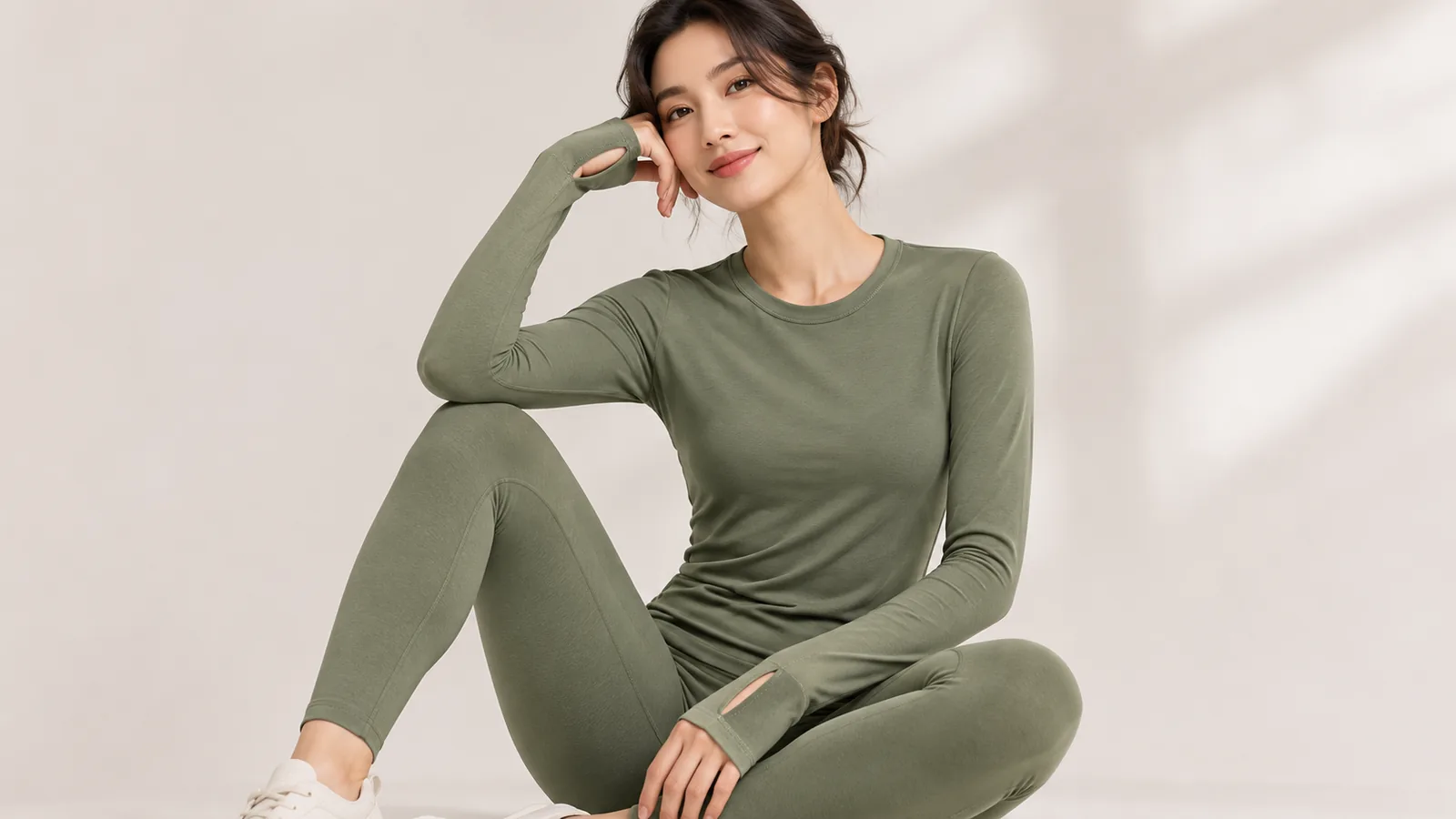
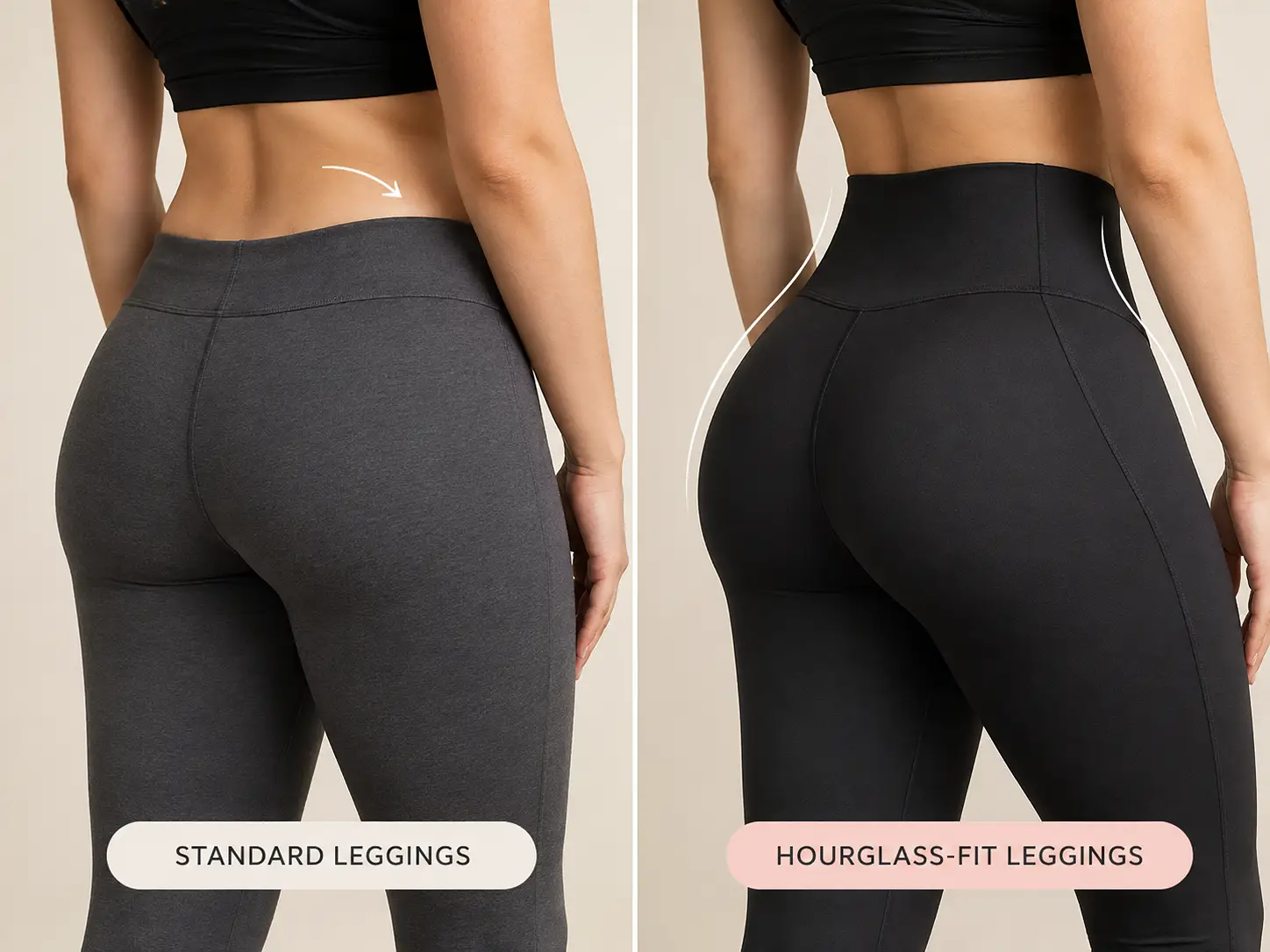
Why do some leggings fit perfectly around the waist and hips but still appear too short or bunch around the ankles?
These fitting issues often relate to inseam length and garment proportions. For growing DTC activewear brands, selecting the right inseam length is an important product-development decision. Different inseam options affect garment proportions, cobertura, movement comfort, and customer satisfaction.
24-inch, 26-inch, and 28-inch inseams are three options brands can evaluate when developing leggings collections. But no single length is suitable for every customer.
For brands targeting the UAE, Arabia Saudita, Europa, and the USA, understanding inseam measurements helps create more accurate size charts and better-fitting activewear.
24″ vs. 26″ vs. 28″ Leggings: Understanding the Differences
The inseam is the length measured from the crotch seam to the bottom of the leg opening.
En ropa deportiva, different inseam lengths create different silhouettes.
| Inseam | Length in cm | Typical design direction |
|---|---|---|
| 24 pulgadas | 60.96 centímetro | 7/8 or cropped styling |
| 26 pulgadas | 66.04 centímetro | Ankle or full-length styling |
| 28 pulgadas | 71.12 centímetro | Full-length coverage |
These categories are not universal. The finished appearance depends on the customer’s leg proportions and the intended garment design.
Established brands such as lululemon offer different inseam lengths across their leggings collections, including 25-inch and 28-inch styles. A 28-inch Align style, Por ejemplo, is described as full length and intended to sit at the ankle.
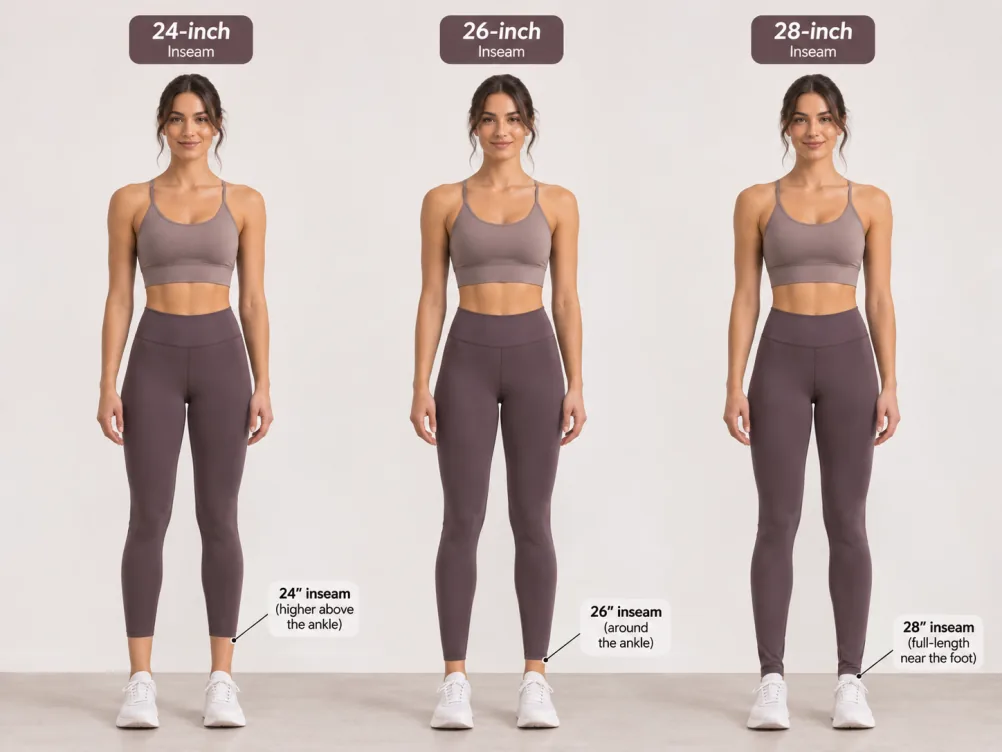
Height-to-Inseam Proportions for Perfect Leg Line
A customer’s height alone cannot determine the ideal leggings inseam. Leg length, torso proportions, and preferred hem position also affect the finished fit.
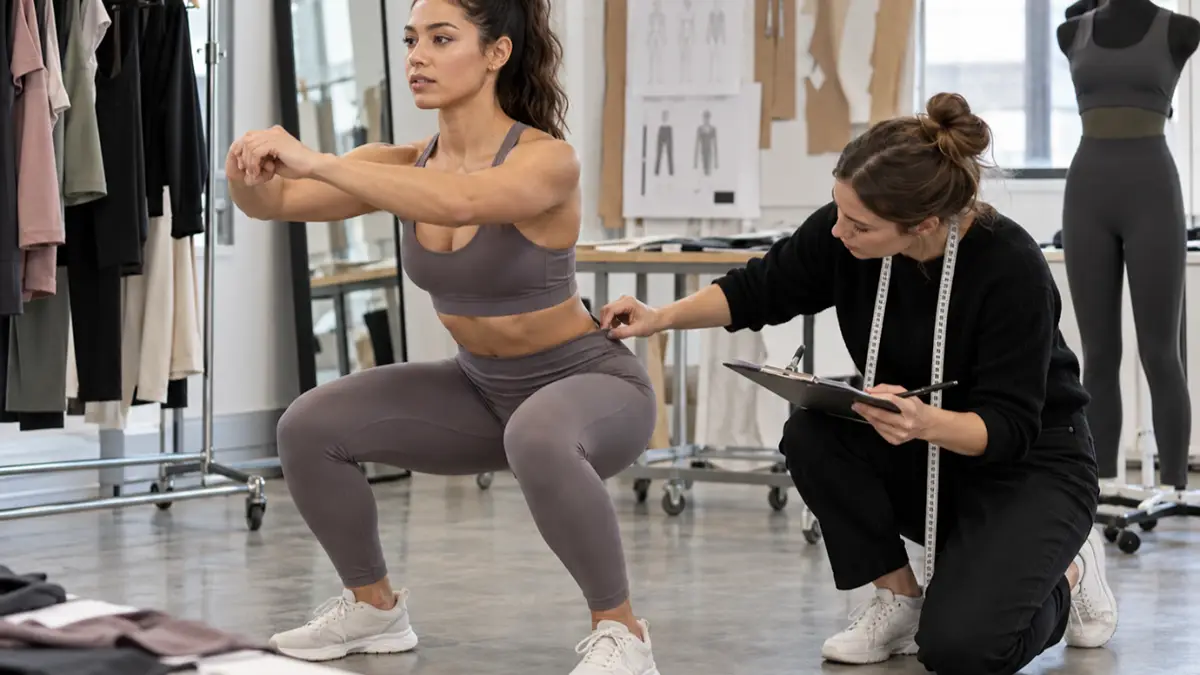
Para marcas de ropa deportiva, target-customer measurements provide a useful starting point for developing inseam specifications. Fit models and physical samples can then help verify the actual hem position before bulk production.
When developing custom leggings, brands should consider:
- Leg length
- Desired hem position
- Fabric stretch
- Garment construction
For UAE and Saudi Arabian collections, inseam selection may also influence styling with longer training tops and modest athleisure layers.
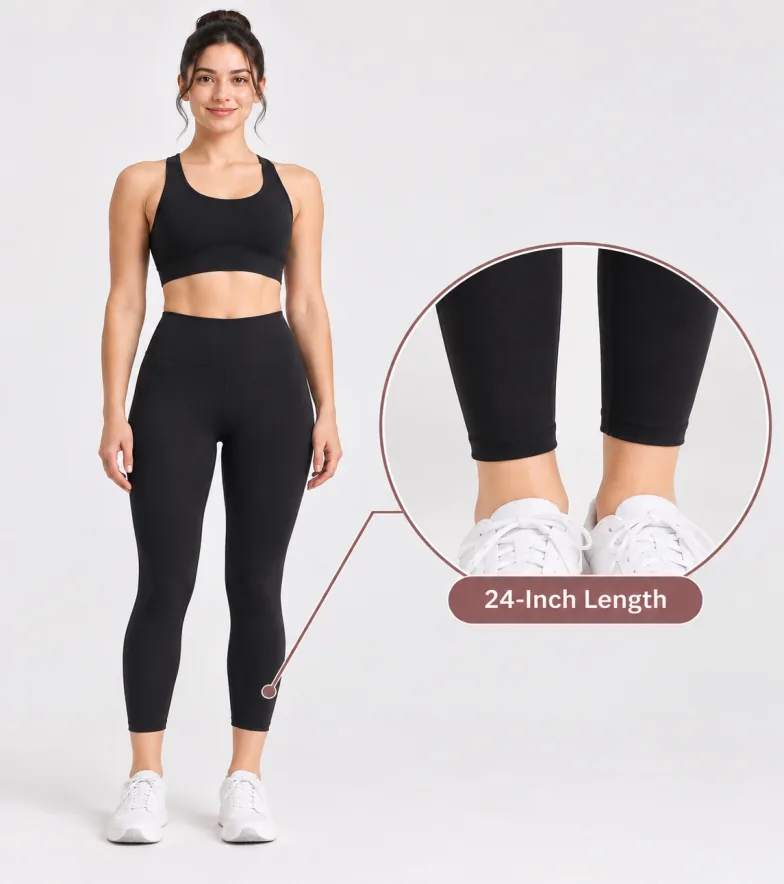
24″ 7/8 Longitud: Ankle Coverage Without Bulk
A 24-inch inseam can create a 7/8-length appearance, depending on the wearer’s leg length.
This shorter design may reduce excess fabric around the ankles and create a streamlined silhouette.
It can be considered for yoga, pilates, entrenamiento de gimnasio, and everyday athleisure.
But on customers with longer legs, the hem may sit higher on the calf.
Buyer consideration: Check leg-opening circumference and hem positioning during physical sample fitting.
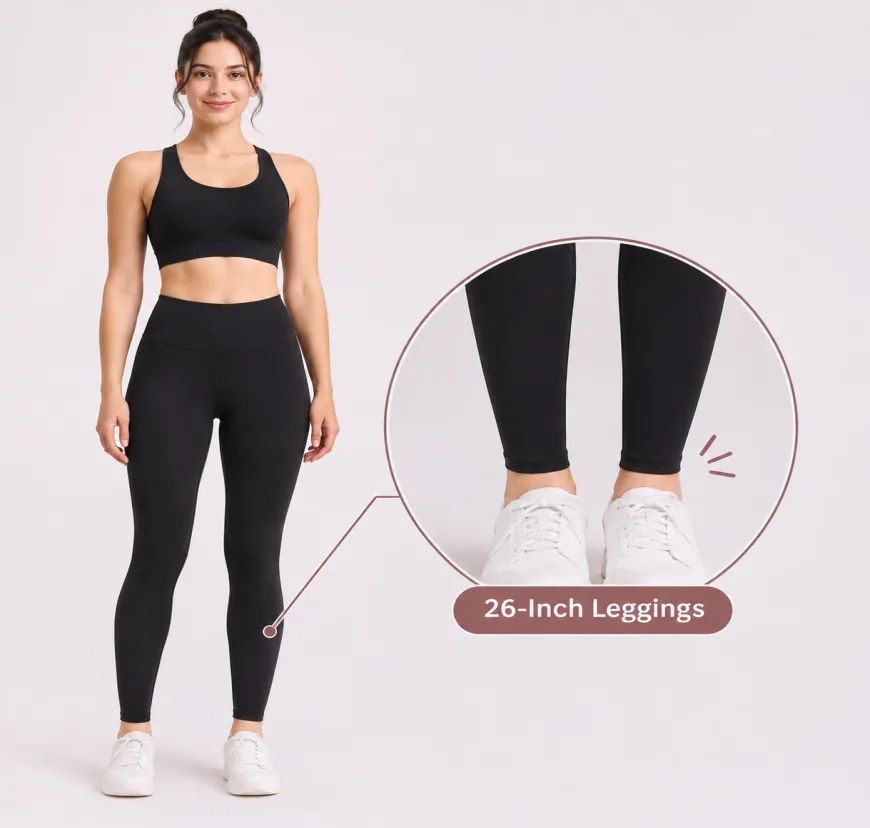
26″ Length: Balancing Coverage and Comfort
A 26-inch inseam provides a middle option between shorter leggings and longer full-length designs.
It is generally suitable for an ankle-length or full-length design direction, depending on body proportions.
Para marcas de ropa deportiva en crecimiento, this length is worth evaluating when customers prefer greater coverage without excessive fabric gathering.
But 26 inches should not automatically be considered the perfect length for every customer.
Manufacturers should verify the inseam and leg-opening measurements on actual samples.
28″ Full Length: Extended Leg Coverage
A 28-inch inseam offers greater leg coverage and is commonly used for full-length leggings.
It may suit customers with longer legs or those who prefer extended coverage for gym training and everyday athleisure.
For modest activewear collections, longer leggings can also complement extended-length tops and layering pieces.
But excess length may create wrinkles around the ankles on shorter customers.
Manufacturing recommendation: Evaluate these together rather than adjusting length alone:
- Largo de entrepierna
- Calf fit
- Leg-opening construction
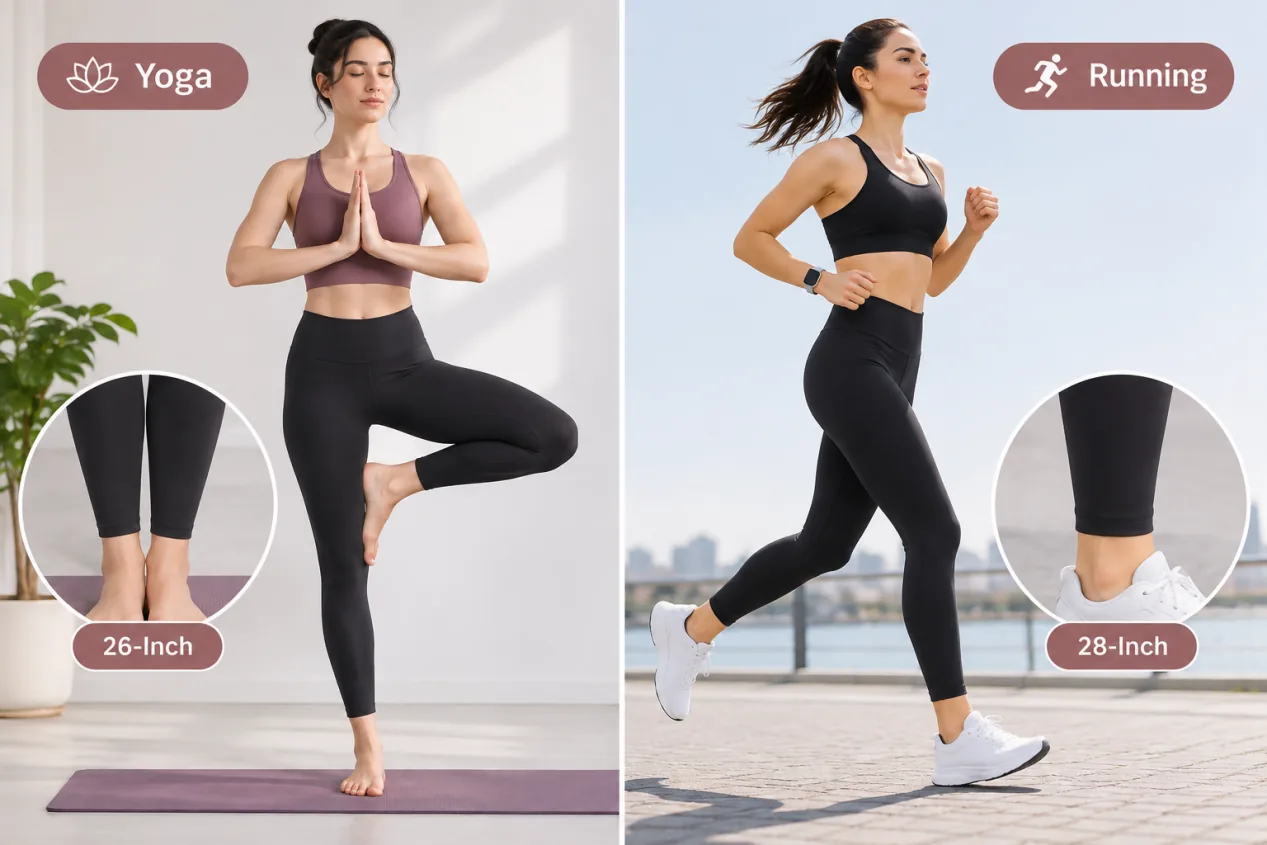
Activity Impact: Yoga Flows vs. Running Strides
Different activities create different demands on leggings.
| Activity | Important fitting consideration |
|---|---|
| Yoga and Pilates | Comfortable stretching and stable hem position |
| Correr | Secure leg openings and minimal fabric movement |
| Gym training | Squat comfort, recuperación de estiramiento, and coverage |
| Everyday athleisure | Desired silhouette and styling versatility |
For running leggings, excess fabric around the ankles may shift during repeated movement.
For yoga and Pilates, hem positioning should remain comfortable during stretching and bending.
The ideal inseam depends on the intended activity, garment construction, and target customer—not simply the length itself.
Body Type Matching: Petite vs. Tall Leg Proportions
Customers with shorter legs may prefer a 24-inch inseam for near-ankle coverage.
Customers with longer legs may find 26-inch or 28-inch options more suitable.
But these are starting points rather than fixed sizing rules.
For growing DTC brands, offering multiple inseam options can serve different customer preferences, but it also increases SKU quantities, inventory requirements, and production complexity.
Buyer recommendation: Evaluate actual customer demand and conduct physical fitting before introducing several inseam variations.
Sizing Chart Reality: True Inseam Measurements
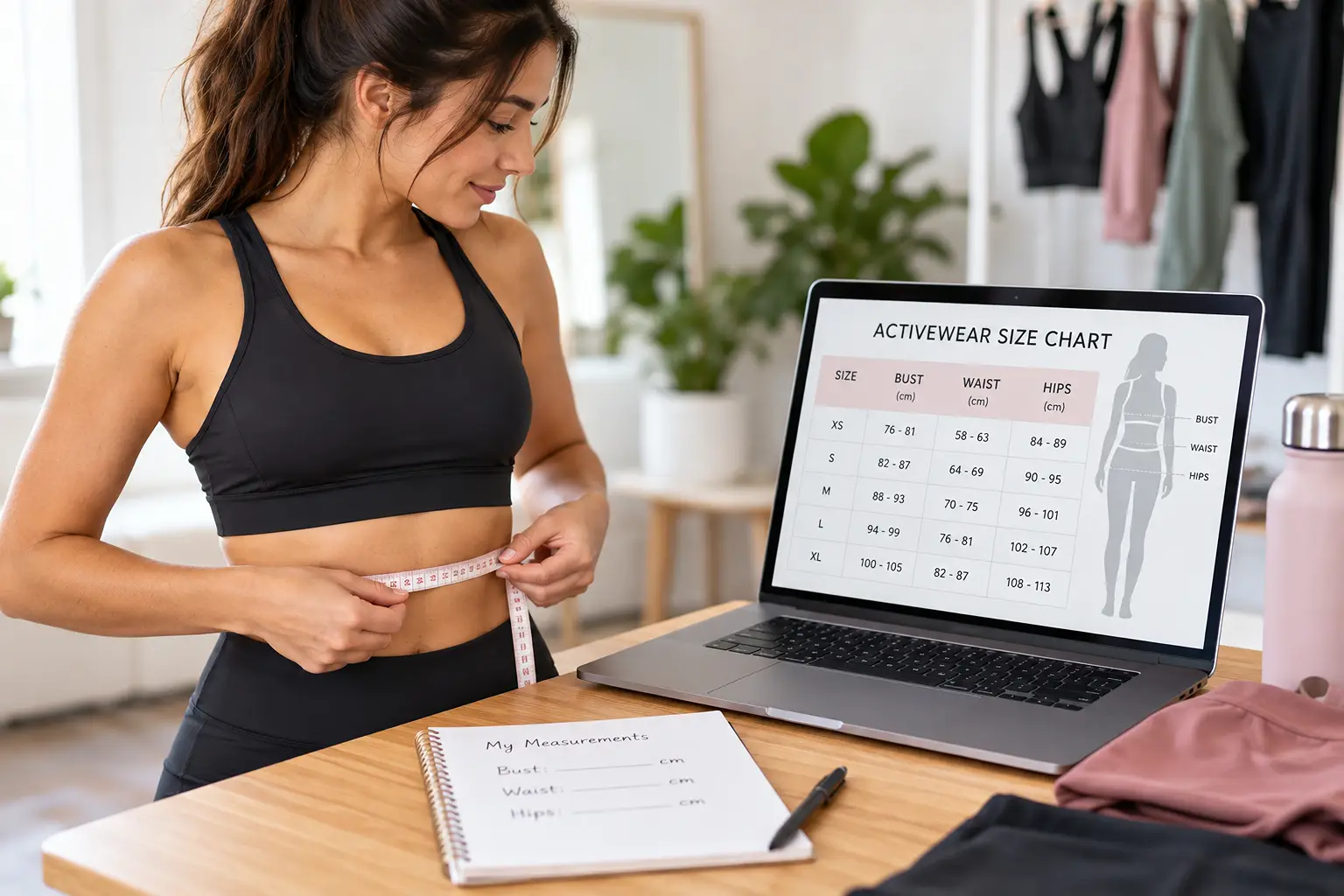
A reliable leggings size chart should clearly communicate actual garment measurements rather than relying only on labels such as cropped, 7/8, or full length.
Manufacturers should measure the finished garment inseam from the crotch seam intersection to the bottom hem using a consistent method.
Antes de la producción a granel, growing activewear brands should verify:
- Approved inseam measurements for each size.
- Consistent measurement methods.
- Agreed garment measurement tolerances.
- Hem position during physical fitting.
- Consistency between approved samples and bulk garments.
Important: Body inseam measurements and finished-garment inseam measurements are not necessarily interchangeable, particularly for fitted stretch leggings.
En DEPORTES SANSANSUN, we support DTC brands with size-chart review, physical sample fitting, desarrollo de patrones, y measurement verification.
Preguntas frecuentes
What is the difference between 24″, 26″, and 28″ leggings?
The primary difference is finished-garment inseam length. Each option creates a different level of leg coverage depending on the wearer’s proportions.
Is a 24-inch inseam always 7/8 longitud?
No. It may appear cropped, 7/8 longitud, or near-ankle depending on the customer’s leg length.
Is a 26-inch inseam considered full length?
It can be. A 26-inch inseam is often suitable for ankle-length or full-length styling, but the final appearance depends on the intended wearer.
Which inseam length is best for petite customers?
A 24-inch inseam may be worth evaluating, but the correct choice depends on leg proportions, preferred coverage, and physical fitting.
Should growing activewear brands offer all three inseam lengths?
No necesariamente. Brands should consider customer demand, planificación de inventario, desarrollo de muestras, and manufacturing requirements before expanding their length options.
How do manufacturers maintain consistent inseam measurements?
Manufacturers use approved patterns, standardized measurement methods, agreed tolerances, and quality inspections to help maintain production consistency.
Conclusión
Choosing between 24-inch, 26-inch, and 28-inch leggings requires more than following popular activewear trends.
For growing DTC brands, the right inseam depends on:
- Target-customer proportions
- Intended activities
- Garment coverage
- Accurate manufacturing specifications
Combining customer research, sample fitting, size-chart verification, and production quality checks helps brands develop leggings that better meet customer expectations.
SANSANSUN SPORTS is a China-based activewear manufacturer providing OEM, ODM, and MDMD (Material–Diseño–Fabricación–Entrega) services, incluyendo selección de telas, desarrollo de patrones, size-chart review, muestreo, and custom garment manufacturing.
Planning a leggings collection for the UAE, Arabia Saudita, Europa, or the USA? Contact SANSANSUN SPORTS to discuss custom inseam options, selección de telas, fitting requirements, and sample development for your next activewear collection.