Today’s activewear buyers expect far more than stylish leggings and trendy colors. They expect confidence, comodidad, and performance in every movement. Whether stretching in a yoga class, running outdoors, or training in the gym, consumers want activewear that remains supportive, respirable, and non-transparent throughout the day.
Como resultado, squat-proof performance is no longer a premium feature. It has become the minimum standard for modern activewear.
For startup brands and growing activewear businesses, selecting the right tela de ropa deportiva is one of the most important decisions in product development. Common issues such as see-through leggings, poor stretch recovery, fabric pilling, and loss of shape after washing can quickly damage customer trust and increase product returns.
En CAMPAMENTOS, we work with activewear brands worldwide to develop high-performance sportswear that balances comfort, durabilidad, y funcionalidad. Today’s consumers are looking for more than attractive designs—they want activewear that performs consistently in real-world use.
Why Squat-Proof Performance Has Become the New Standard in Activewear
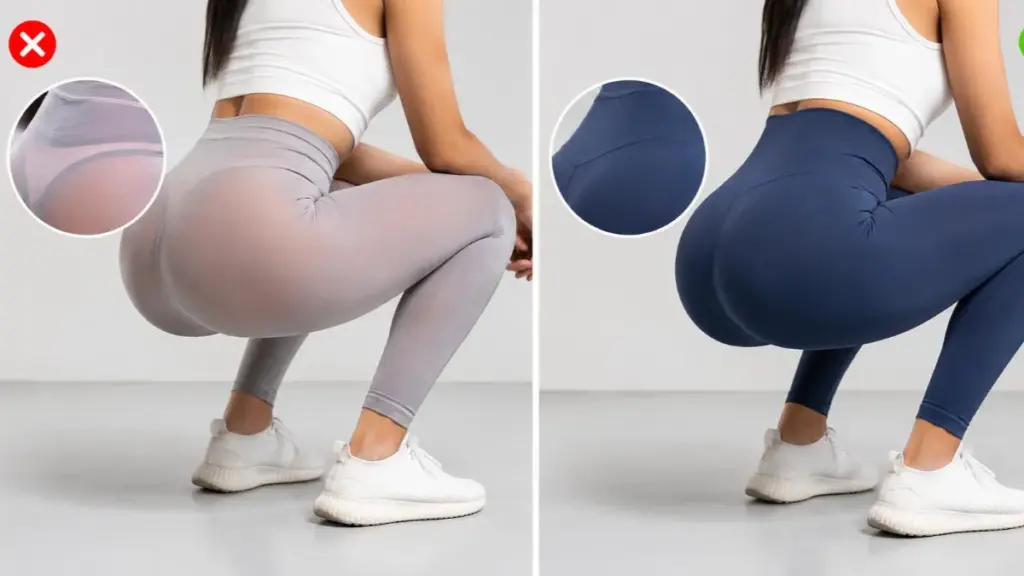
Hace unos años, squat-proof leggings were often marketed as a premium product feature. Hoy, consumers simply expect every pair of leggings, pantalones de yoga, and fitness apparel to provide reliable coverage during movement.
The rise of fitness influencers, workout content, and social media reviews has significantly increased consumer awareness. Customers can quickly identify transparency issues during squats, extensión, or high-mobility exercises, and negative reviews can spread rapidly online.
Para marcas de ropa deportiva, this creates new challenges. Products must deliver not only aesthetic appeal but also reliable performance under real workout conditions. Modern activewear fabrics are expected to combine stretch, opacidad, comodidad, transpirabilidad, and durability simultaneously.
Many brands now request fabric testing before production because preventing quality issues before launch is far more cost-effective than managing customer complaints afterward.
What Makes a High-Performance Activewear Fabric?
High-performance activewear fabrics are engineered to support movement while maintaining comfort and appearance over time. Rather than focusing solely on softness or fabric weight, today’s leading brands evaluate fabrics based on multiple performance indicators.
These include:
- Opacity during stretching and movement
- Four-way stretch capability
- Stretch recovery and shape retention
- Moisture-wicking performance
- Breathability and comfort
- Resistance to pilling and abrasion
- Long-term durability after repeated washing
This is particularly important because activewear is no longer used exclusively for exercise. Consumers increasingly wear yoga wear, polainas, and athleisure apparel throughout the day, requiring fabrics that perform equally well during workouts and daily activities.
One of the most common sourcing mistakes is selecting fabrics based only on appearance or hand feel. A fabric that feels soft in a showroom may perform poorly during actual use. Performance-focused fabric evaluation helps brands reduce return rates, improve customer satisfaction, and build stronger product reputations.
How Modern Activewear Fabrics Deliver Stretch, Cobertura, and Durability
El performance of activewear fabrics depends on both fiber composition and fabric construction.
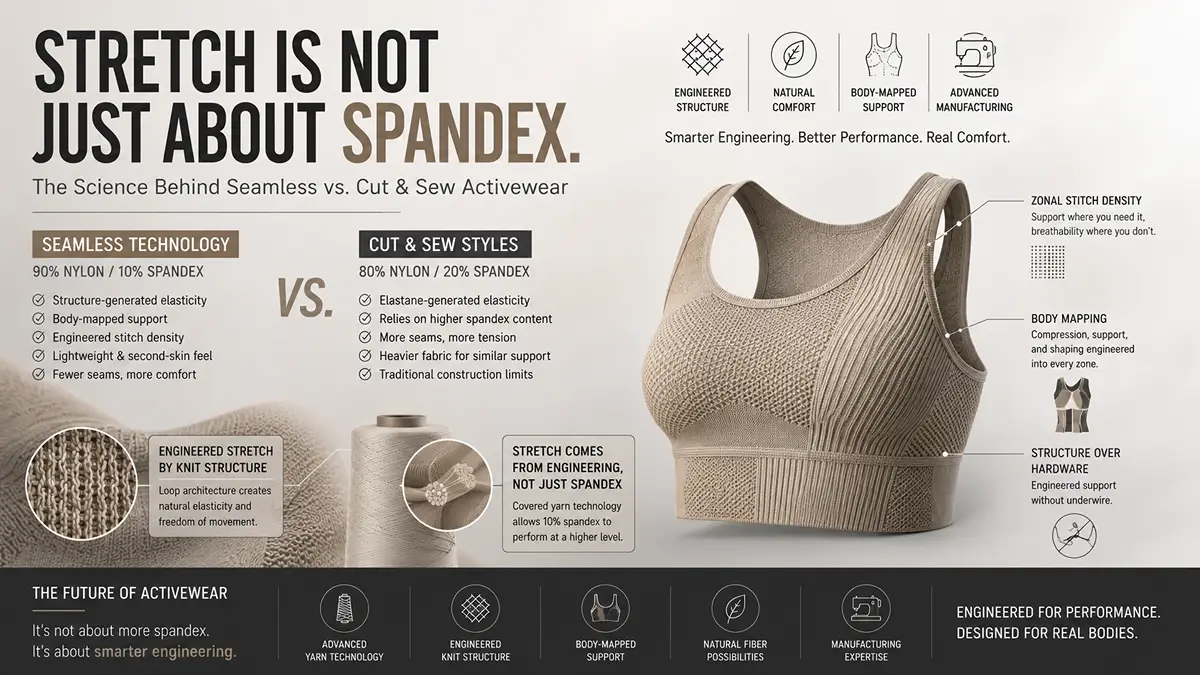
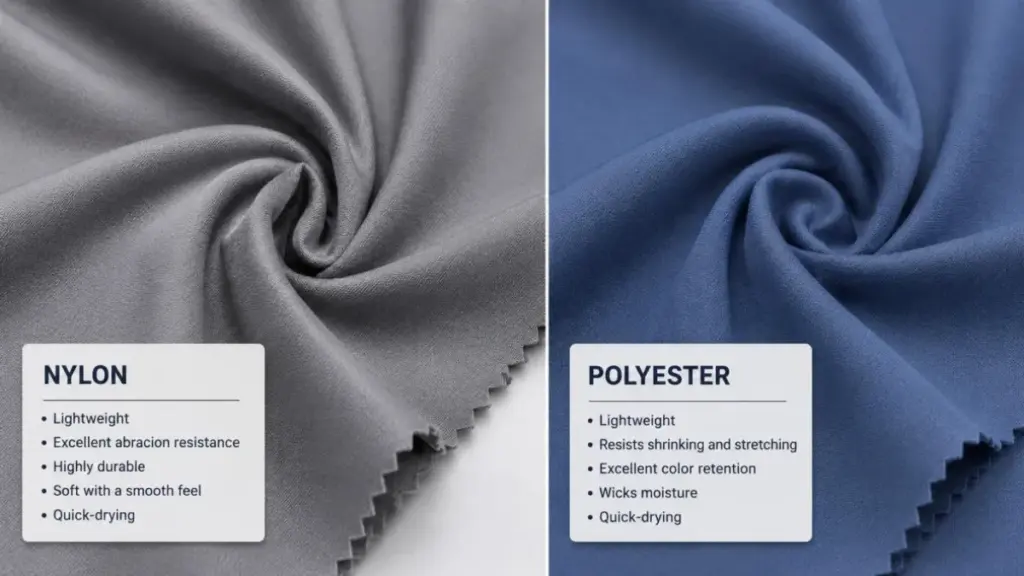
Most modern activewear products are made from blends of nylon, poliéster, and elastane (spandex), with each fiber contributing unique benefits.
elastano provides flexibility and four-way stretch, allowing garments to move comfortably with the body. Nylon offers a smooth, premium feel and excellent stretch recovery, while polyester contributes durability, color retention, and moisture management.
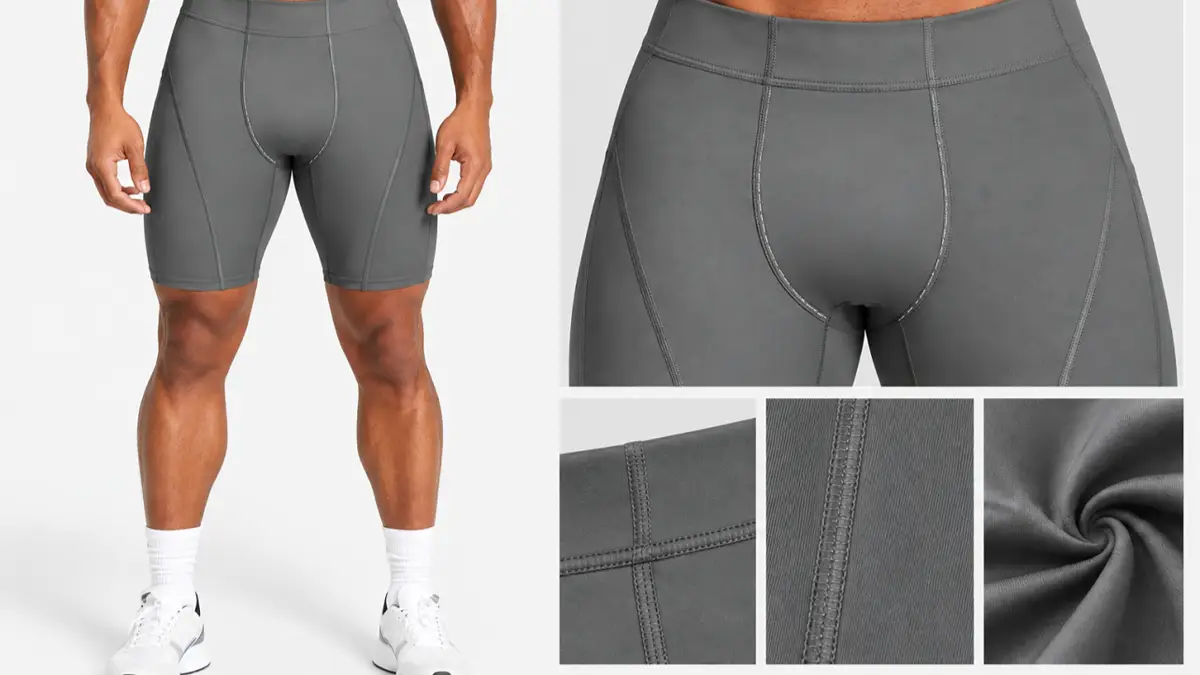
Beyond fiber content, fabric construction plays a critical role in squat-proof performance. Dense knitting structures help improve coverage and reduce transparency during movement. Advanced knitting techniques also support better shape retention and long-term durability.
Many startup brands focus heavily on GSM when evaluating fabrics. While fabric weight can influence coverage and compression, it should not be considered the only indicator of quality. The combination of fiber composition, estructura de tejido, and finishing treatments ultimately determines overall performance.
Nylon vs Polyester Activewear Fabrics: Which Is Better for Your Brand?
| Criterios | Nylon-Spandex Blend | Polyester-Spandex Blend |
|---|---|---|
| Customer Perceived Quality | De primera calidad, suave, luxury hand feel | Performance-focused, functional feel |
| Comodidad & Blandura | Excellent | Very Good |
| Rendimiento que absorbe la humedad | Very Good | Excellent |
| Durabilidad | Good | Excellent |
| Retención de forma | Excellent | Very Good |
| Solidez del color | Very Good | Excellent |
| Costo de producción | Más alto | More Cost-Effective |
| Mejor para | Ropa de yoga de primera calidad, polainas, athleisure brands | Ropa de deporte, ropa de entrenamiento, high-volume collections |
One of the most common questions in activewear product development is whether nailon o poliéster is the better fabric choice.
Nylon fabrics are widely used in premium ropa de yoga collections because of their exceptionally soft hand feel, smooth surface, and luxurious appearance. They often provide superior comfort and are highly favored in high-end activewear markets.
Polyester fabrics are typically selected for their durability, cost efficiency, and strong moisture-management capabilities. They are commonly used in sportswear collections that require excellent performance at a competitive price point.
Hoy, many successful activewear brands choose blended fabrics that combine the advantages of both materials. Nylon-spandex blends are often preferred for yoga wear and athleisure collections, while polyester-spandex blends are popular in performance sportswear.
The right choice depends on your brand positioning, cliente objetivo, budget, and product objectives. Selecting the wrong fabric can increase production costs while negatively affecting customer satisfaction and product performance.
Why Leading Activewear Brands Are Investing in Performance-First Fabric Development
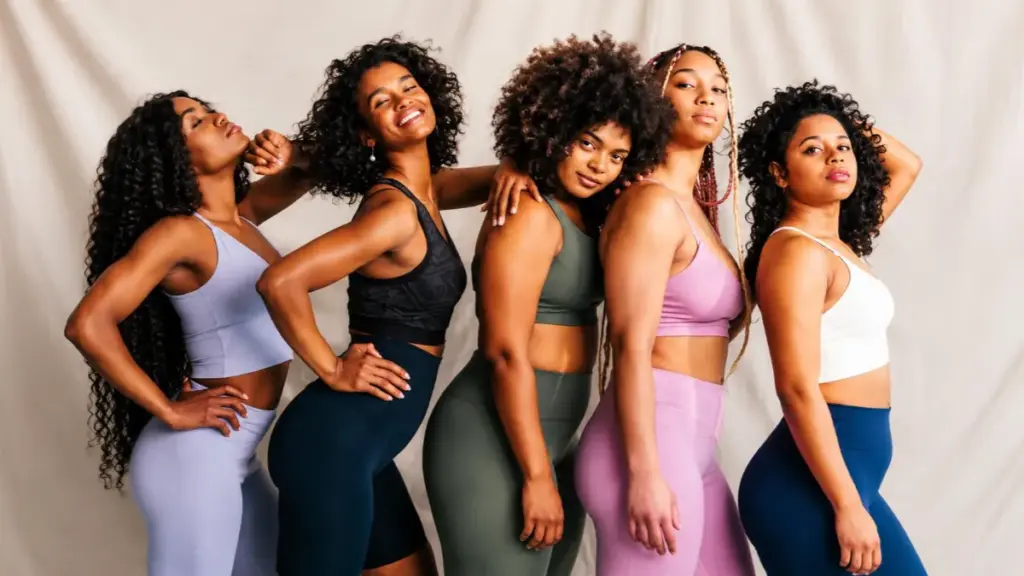
As the activewear market becomes increasingly competitive, consumers are paying closer attention to product quality and long-term value.
Customers compare products, read reviews, and expect their leggings and sportswear to maintain performance after repeated use. They notice whether fabrics remain supportive, respirable, and comfortable after dozens of workouts and washing cycles.
Por esta razón, many successful activewear brands now prioritize fabric performance before design trends. Performance-first product development helps reduce return rates, increase customer loyalty, and strengthen brand reputation over time.
Investing in better activewear fabrics is no longer simply a product decision—it is a long-term brand strategy.
What Brands Should Ask an Activewear Manufacturer Before Production
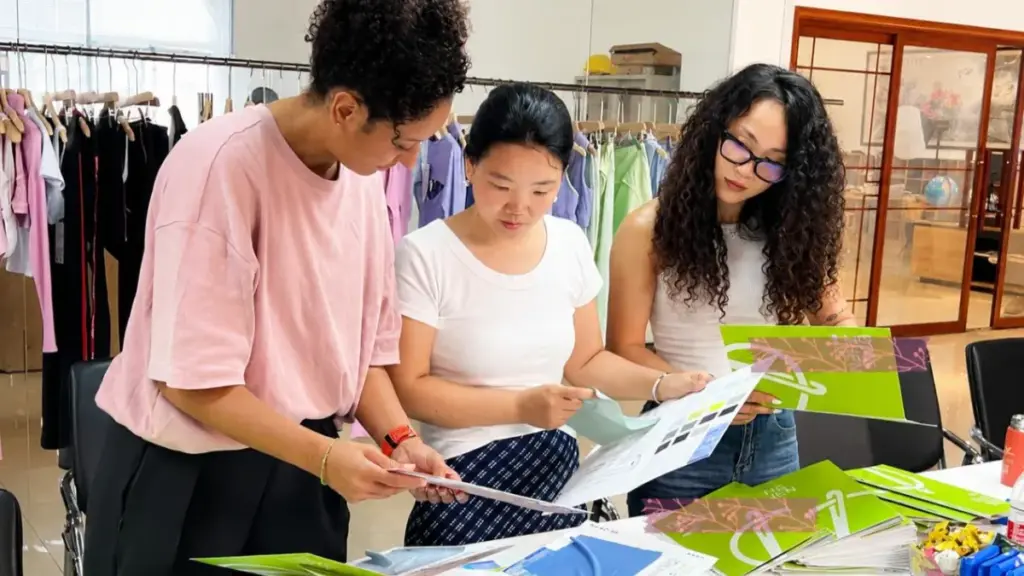
Choosing the right fabricante de ropa deportiva is just as important as selecting the right fabric.
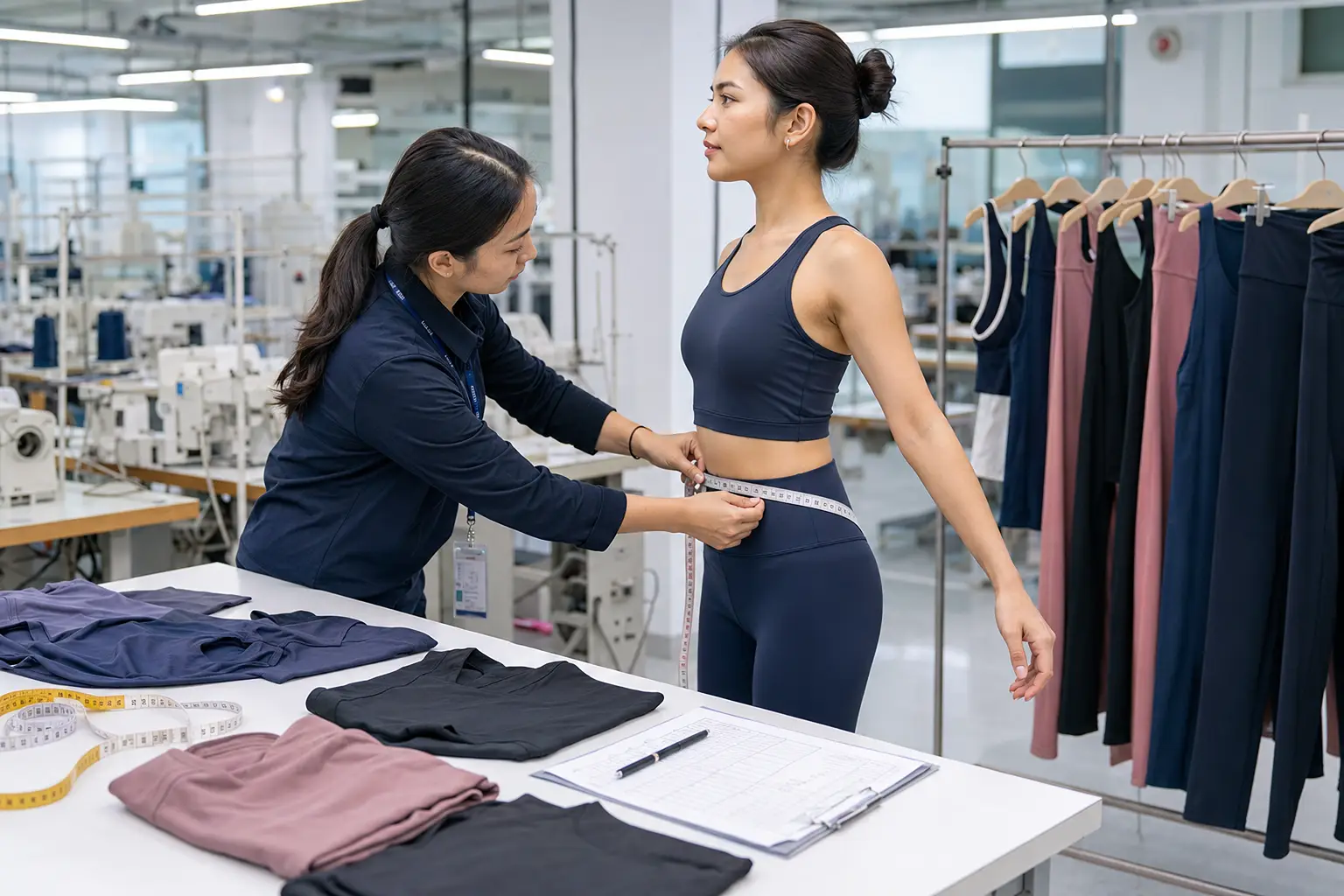
Before launching a new activewear collection, brands should ask key questions regarding fabric quality, product development capabilities, and quality control systems.
Important questions include:
- Is the fabric tested for squat-proof opacity during stretching?
- How does the fabric perform after repeated washing?
- Which fabric blends are recommended for my target market?
- Can custom activewear fabrics be developed?
- What quality control procedures are implemented during production?
- Can you support OEM and private label activewear projects?
- What sampling and development support is available before bulk production?
While low pricing may seem attractive, manufacturing decisions based solely on cost often lead to quality issues, customer complaints, and higher long-term expenses.
A reliable activewear manufacturer should help brands identify potential problems before production begins, reducing sourcing risks and improving product consistency.
Conclusión
En el mercado de ropa deportiva actual, squat-proof performance is only the starting point. Consumers now expect complete confidence from their clothing, including comfort, cobertura, durabilidad, manejo de la humedad, and long-lasting performance in real-world movement.
Para marcas de ropa deportiva, fabric selection directly influences customer satisfaction, reseñas de productos, repeat purchases, and long-term brand growth. Investing in the right activewear fabric and manufacturing partner can help prevent common product issues while creating stronger competitive advantages.
En SANSANSUN, we help startup brands, private label activewear companies, and established sportswear businesses develop high-performance activewear through fabric sourcing, custom product development, and reliable OEM/ODM manufacturing support.
If you’re planning your next activewear collection and need guidance on fabric selection, desarrollo de muestras, or production solutions, our team is ready to help you build products that customers can trust and wear with confidence.
Preguntas frecuentes
What does squat-proof mean in activewear?
Squat-proof means a fabric remains fully opaque and non-transparent during stretching, doblando, allanamiento, and other movement-intensive activities.
What is the best fabric for squat-proof leggings?
Most premium squat-proof leggings use nylon-spandex or polyester-spandex blends combined with high-density knitting structures to provide coverage and flexibility.
Is nylon better than polyester for activewear?
Nylon generally offers greater softness and a more premium feel, while polyester provides excellent durability and cost efficiency. The best choice depends on your product positioning and target market.
What is four-way stretch fabric?
Four-way stretch fabric can stretch both horizontally and vertically, providing greater comfort, movilidad, and recovery during exercise.
How can brands evaluate activewear fabric quality?
Brands should evaluate opacity, recuperación de estiramiento, manejo de la humedad, pilling resistance, durabilidad, and washing performance before moving into bulk production.