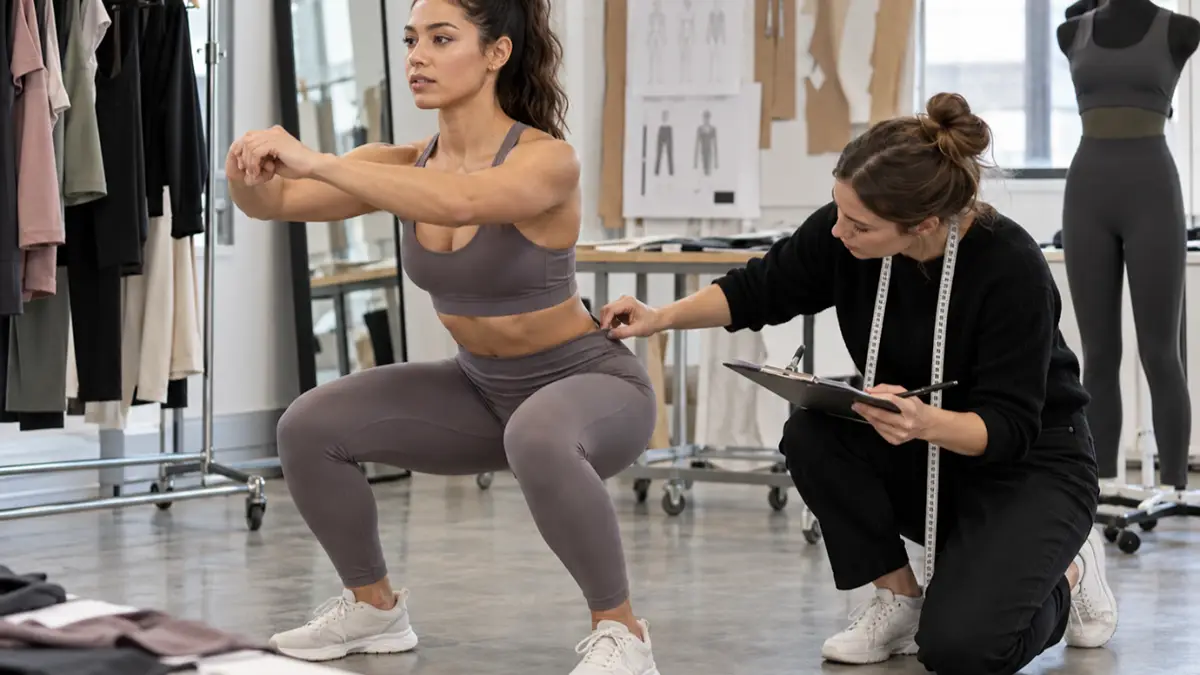
Why does a size M fit perfectly in one activewear brand but feel like a size L in another?
For growing DTC activewear brands, inconsistent sizing can confuse customers, aumentar fit-related returns, and weaken brand trust.
Activewear size consistency depends on accurate garment measurements, estiramiento de la tela, desarrollo de patrones, and clear tablas de tallas. Understanding why sizes differ helps brands develop products that customers can choose with greater confidence.
What Is Vanity Sizing in Activewear?
Vanity sizing occurs when a brand assigns a smaller size label to a garment than customers might expect from another sizing system.
But not every difference between size charts is vanity sizing. Brands may use different body measurement ranges, fit preferences, or garment specifications.
Para marcas de ropa deportiva en crecimiento, the priority should be creating a clear and consistent sizing system rather than competing over smaller size labels.
Why the Same Activewear Size Fits Differently Across Brands
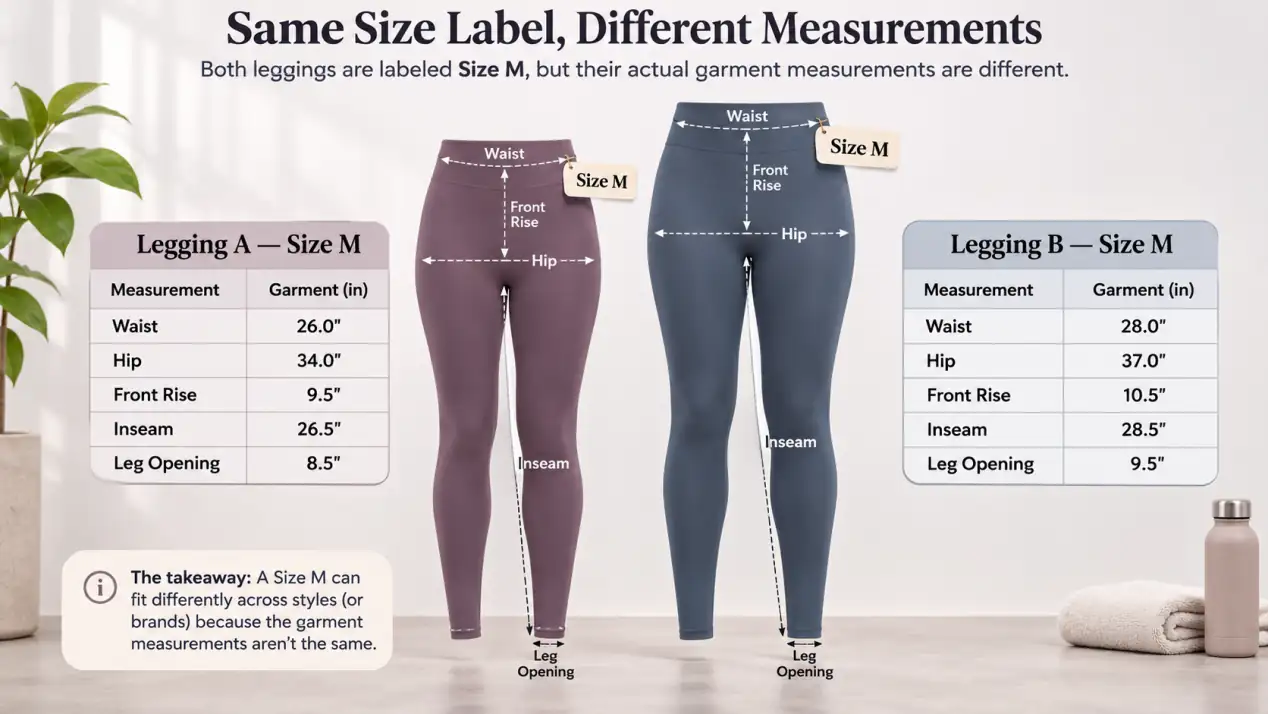
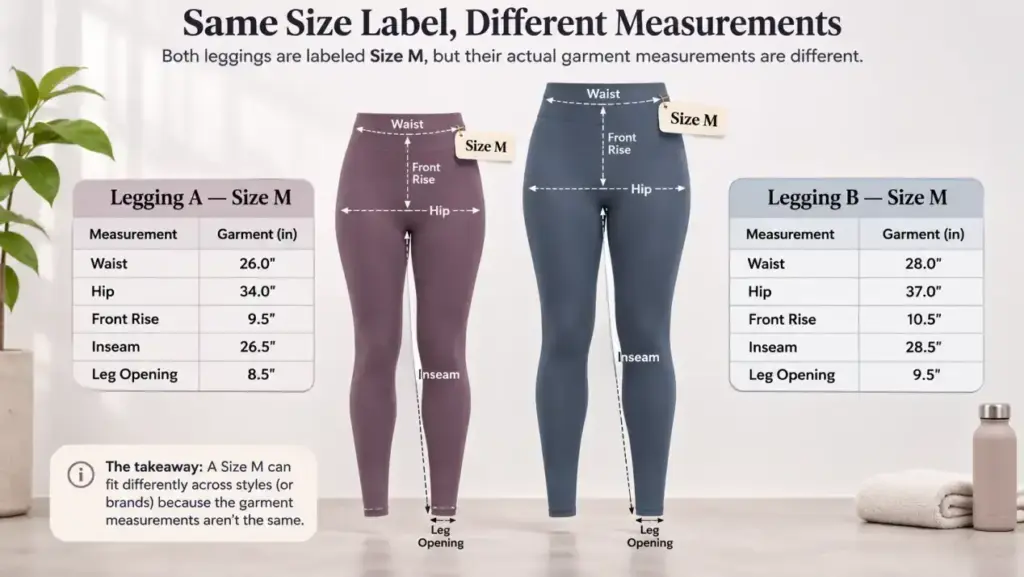
The same size label does not guarantee identical garment dimensions.
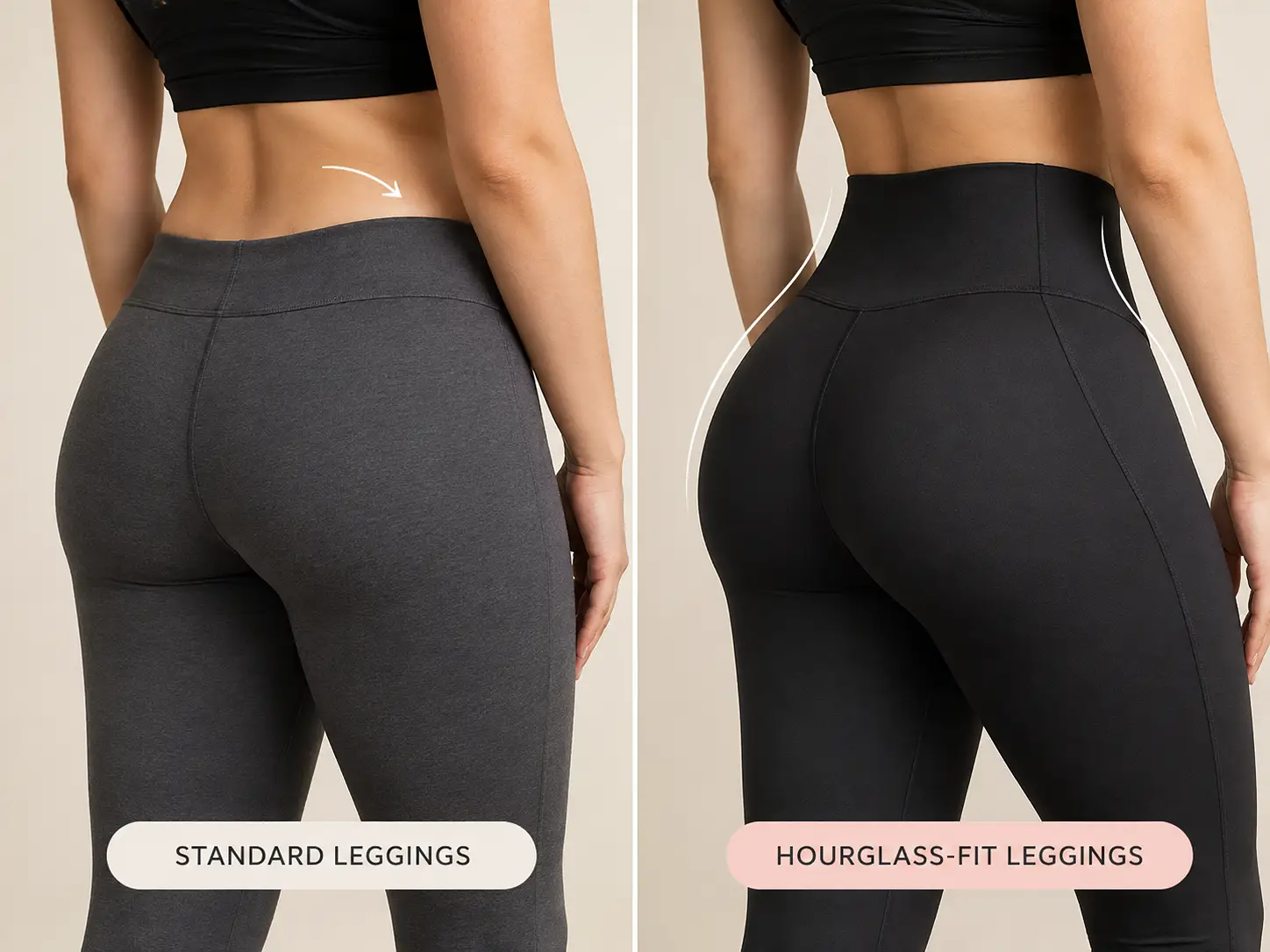
Por ejemplo, two size M leggings may differ in waistband width, hip measurements, y fabric compression.
A high-compression fabric can feel tighter than a softer yoga fabric, even when both garments have similar measurements.
| Factor | Effect on fit |
|---|---|
| Size chart | Defines the intended body measurements |
| Pattern design | Controls garment proportions |
| Fabric stretch | Affects tightness and comfort |
| Fit preference | Determines relaxed or compressive styling |
Buyer insight: Growing brands should establish their own sizing specifications and verify them through physical fitting.
Why Activewear Brands Use Different Sizing Standards
Activewear brands do not always follow the same sizing standards. Their size charts may reflect different target-customer measurements, design preferences, and product positioning.
Some brands may adopt vanity sizing as a marketing strategy by assigning smaller labels to garments with comparable body measurements.
Sin embargo, smaller size labels do not necessarily indicate a better fit or higher garment quality.
For DTC brands, sizing standards should be based on:
- Target-customer body measurements.
- Intended garment fit, such as compression or relaxed fit.
- Pattern specifications and grading increments.
- Physical fitting results and approved samples.
This approach creates a more consistent reference for customers across different styles and collections.
How Inconsistent Sizing Affects Customers and Brands
Inconsistent sizing can affect both customer experience and brand performance, particularly for online activewear retailers.
Common consequences include:
- Sizing confusion: Customers may struggle to select the right size when product measurements differ across styles.
- Fit-related returns: Poor fit can lead to exchanges or returns, increasing order-handling and logistics costs.
- Reduced repeat purchases: Customers who experience inconsistent fits may hesitate to order from the same brand again.
- Lower brand confidence: Unclear sizing information can make customers less confident when purchasing new collections.
For growing DTC brands, consistent sizing across product categories helps create more predictable fit expectations and supports customer retention.

Why Numeric Sizing Does Not Guarantee Consistent Fit
Would replacing S, METRO, and L with numeric sizes solve inconsistent sizing?
No necesariamente. Numeric labels such as 4, 6, y 8 can also differ between brands.
The more reliable solution is a measurement-based sizing system supported by physical fitting.
Brands should clearly distinguish between customer body measurements and finished-garment measurements.
For leggings, important specifications include:
- Waist width
- Hip width
- Front and back rise
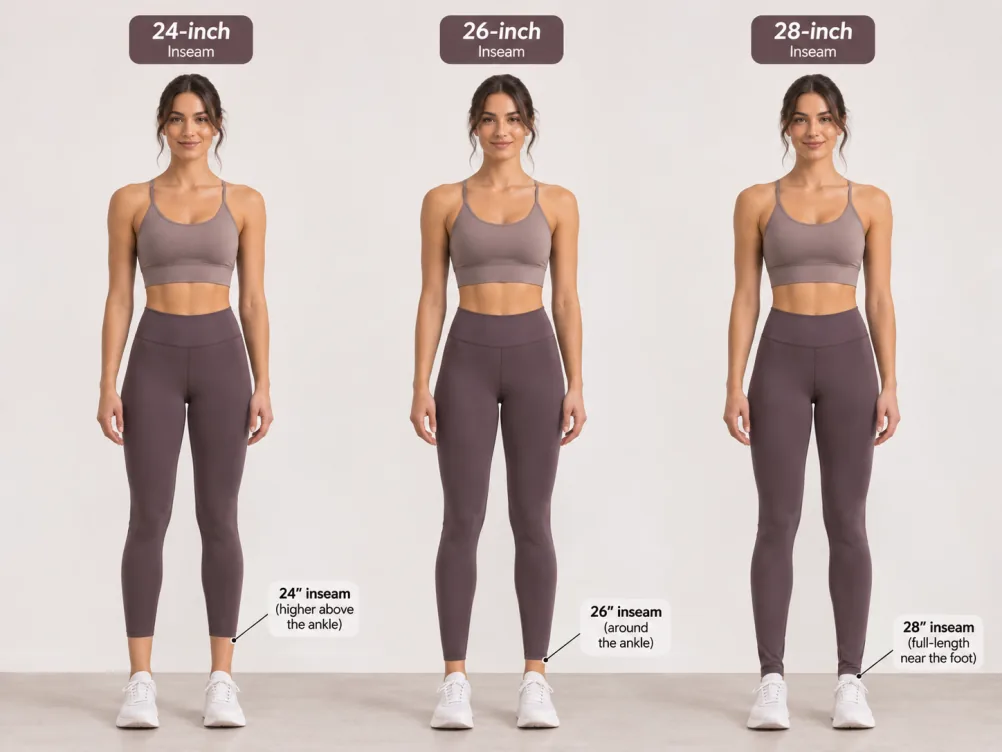
- Largo de entrepierna
How Brands Can Improve Activewear Size Consistency
Para marcas de ropa deportiva en crecimiento, identifying sizing problems should happen during product development rather than after customer complaints.
Before approving a collection, brands should:
- Compare size charts across styles.
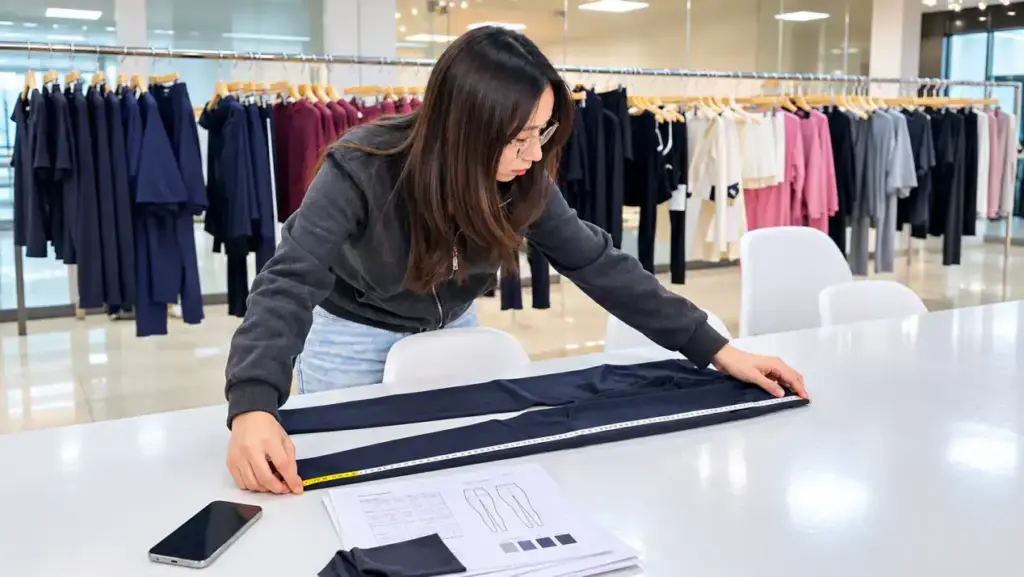
- Check finished-garment measurements.
- Evaluate fabric stretch and compression.
- Conduct physical sample fitting.
- Confirm measurement tolerances before bulk production.
These checks help identify inconsistent specifications, although measurement differences alone do not prove deliberate vanity sizing.
Activewear Size Development and Quality Control at SANSANSUN SPORTS
En DEPORTES SANSANSUN, we support growing DTC activewear brands through size-chart review, physical sample fitting, desarrollo de patrones, and measurement verification.
Our team helps check important garment dimensions, including waist, chest, and hip measurements, against agreed specifications and tolerances.
When fitting problems are identified, pattern adjustments can be evaluated during sampling before bulk production.
For brands targeting the UAE and Saudi Arabia, sizing development may also consider modest activewear requirements such as garment length, sleeve coverage, and relaxed-fit proportions.
A través de OEM, ODM, and MDMD (Material–Diseño–Fabricación–Entrega) services, we help connect sizing requirements with garment development and manufacturing.
Preguntas frecuentes
Why does size M fit differently between activewear brands?
Brands may use different size charts, patrones, fabric constructions, and compression levels. Letter sizes are not universally standardized.
Is vanity sizing the same as inconsistent sizing?
No. Vanity sizing involves deliberately assigning smaller labels. Inconsistent sizing can also result from different design specifications or production variations.
Can numeric sizing prevent vanity sizing?
Not automatically. Numeric sizes also require clear body measurements and consistent garment specifications.
How can DTC activewear brands maintain consistent sizing?
Brands should verify size charts, test physical samples, document pattern corrections, and establish measurement tolerances before bulk production.
Conclusión
Vanity sizing highlights a larger challenge in the activewear industry: a size label alone cannot guarantee a predictable fit.
For growing DTC brands, reliable sizing begins with:
- Accurate measurements
- Evaluación de telas
- Physical fitting
- Consistent manufacturing specifications
SANSANSUN SPORTS is a China-based activewear manufacturer offering OEM, ODM, y servicios MDMD, incluyendo selección de telas, desarrollo de patrones, size-chart verification, muestreo, and custom production.
Developing ropa de yoga, polainas, sujetadores deportivos, or modest activewear for the UAE, Arabia Saudita, or international markets? Contact SANSANSUN SPORTS to discuss your sizing requirements and develop a collection with more consistent fit.