Você provavelmente já passou por isso - seu telefone escorrega, salta, ou sai lentamente do seu bolso no meio da corrida. Isso quebra seu foco. Isso te atrasa. Para marcas de roupas esportivas, este pequeno problema é uma grande oportunidade.
O design do bolso é um dos recursos mais solicitados e reclamados em roupas de corrida e ioga. Fazer certo exige mais do que apenas costurar uma bolsa na costura lateral. É necessário um planejamento cuidadoso em torno do posicionamento, profundidade, tensão do tecido, e ângulo de entrada.
Este artigo detalha todo o processo de engenharia por trás de um bolso lateral verdadeiramente funcional – o tipo que mantém seu telefone confortavelmente contra sua coxa, permanece em silêncio durante os sprints, e abre facilmente quando você precisa. Esteja você construindo sua primeira linha de roupas esportivas ou melhorando um design existente, este guia fornece o conhecimento para tomar decisões mais inteligentes.
A mecânica do design de bolso: Armazenamento pronto para uso para o seu telefone
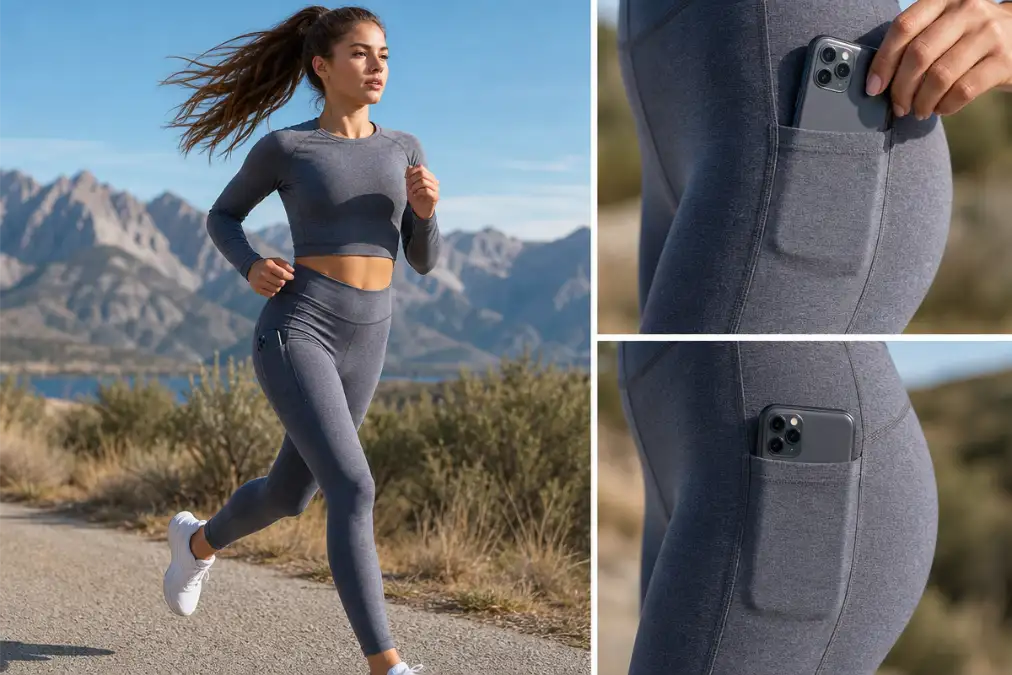
Um bolso que funciona para ioga não funciona automaticamente para corrida. Estes são dois padrões de movimento muito diferentes. Yoga envolve lento, alongamentos profundos e sustentações. Correr envolve impacto repetitivo, quicar, e mudanças de velocidade.
Quando seu telefone fica dentro de um bolso lateral durante uma corrida, ele experimenta uma força constante para cima e para baixo a cada passada. Se o bolso estiver muito solto, o telefone salta. Se estiver muito apertado, é difícil acessar. Se o ângulo de abertura estiver errado, o telefone desliza lateralmente em uma colina.
Um bom design de bolso resolve todos esses problemas juntos. É um equilíbrio entre aderência, ajustar, acesso, e estrutura. Cada decisão de design afeta as outras. É por isso que fábricas com real experiência em roupas esportivas abordar a engenharia de bolso como um sistema completo - não apenas um único painel.
Colocação de bolso: Zona ideal da coxa para estabilidade
O local onde o bolso fica na perna é mais importante do que a maioria dos proprietários de marcas espera. Coloque muito alto, perto do quadril, e o telefone balança para fora conforme o quadril gira. Coloque muito baixo, perto do joelho, e puxa o tecido para baixo e fica pesado.
O posicionamento ideal é na parte externa da coxa, aproximadamente entre o meio do quadril e o meio da coxa. Esta zona se move com a perna como uma unidade. A coxa não gira como o quadril. Ele empurra para frente e para trás em linha reta durante a corrida. Um telefone nesta zona permanece mais estável porque se move em uma direção em vez de duas.
A colocação também depende do ajuste da legging. Um ajuste de compressão mais apertado mantém o bolso mais próximo do corpo. Um ajuste relaxado permite mais movimento. Para estilos específicos de corrida, ajuste de compressão combinado com o posicionamento da zona da coxa proporciona os melhores resultados.
No nível da fábrica, a colocação é testada em diferentes medidas corporais antes que uma posição final seja confirmada. O que funciona em um padrão de tamanho pequeno pode precisar de ajuste em um tamanho grande para manter o mesmo alinhamento da zona da coxa.
Profundidade e ângulo: Evitando saltos e pop-outs do telefone
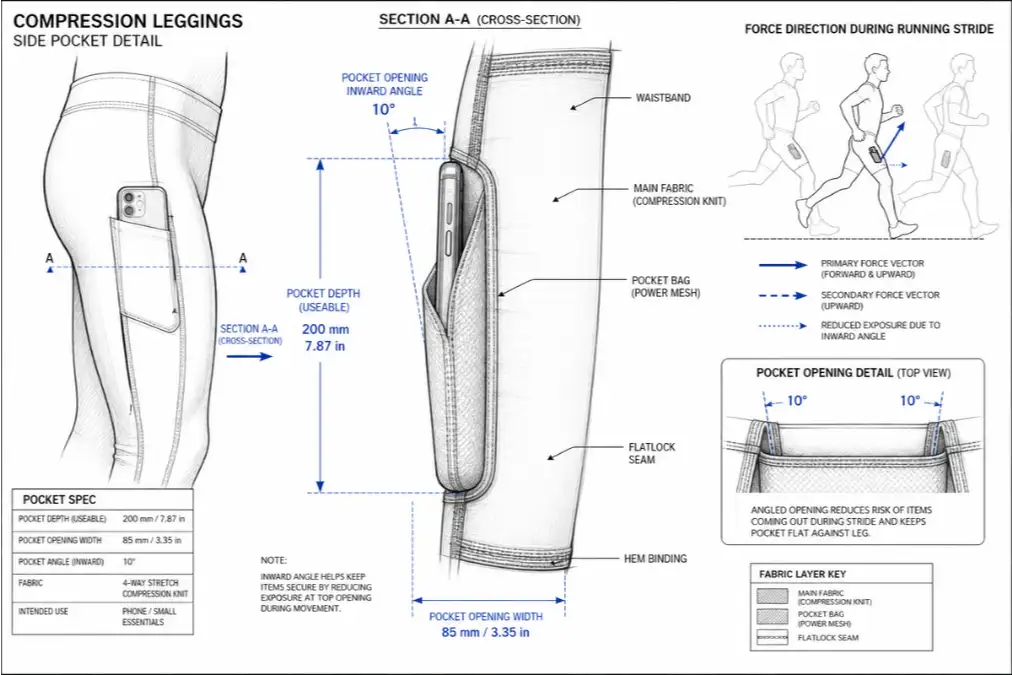
Profundidade é a distância da abertura do bolso até o fundo do bolso. A maioria dos bolsos para telefone são projetados para os smartphones maiores de hoje – normalmente 16 para 18 centímetros de profundidade. Mas a profundidade por si só não impede o salto.
O ângulo desempenha um papel igualmente importante. Uma abertura de bolso vertical permite que o telefone deslize para cima quando você corre – porque cada passada empurra a força para cima através da perna. Um bolso inclinado ligeiramente para dentro, em direção à frente da coxa, redireciona essa força ascendente para a parede do bolso. O telefone empurra o tecido em vez de empurrar em direção à abertura.
Um ligeiro ângulo interno de cinco a dez graus é suficiente para fazer uma diferença notável. Combinado com profundidade adequada, o telefone não tem para onde viajar. Fica baixo, pressiona para dentro, e fica parado.
Este ângulo também torna o bolso mais confortável. O telefone fica apoiado na coxa, em vez de ficar na lateral. Os corredores costumam dizer que esquecem que o telefone está lá – que é exatamente o objetivo.
Integração de compressão: Usando tensão de tecido para travar dispositivos
Tensão do tecido é uma das ferramentas mais poderosas na engenharia de bolso. Quando o painel do bolso é cortado de um tecido com compressão controlada, naturalmente pressiona para dentro contra a coxa e contra tudo o que está dentro do bolso. Esta pressão constante ajuda a reduzir o movimento do dispositivo durante a execução, treinamento, e outras atividades de alto impacto.
Vários fatores relacionados ao tecido influenciam a eficácia com que a compressão protege um telefone dentro do bolso:
- Peso do tecido: Um tecido de bolso ligeiramente mais pesado ou mais denso adiciona estrutura e melhora a retenção do dispositivo sem restringir o movimento natural das pernas.
- Alongamento em quatro direções: O bolso deve expandir-se facilmente quando um telefone é inserido, mantendo o conforto e a mobilidade irrestrita durante o exercício.
- Recuperação Elástica: Tecidos que retornam rapidamente à sua forma original após o alongamento proporcionam uma compressão mais consistente durante o treino.
- Construção de camada dupla: Uma camada externa correspondente combinada com uma camada de compressão interna mais apertada pode aumentar a aderência ao dispositivo, mantendo uma aparência perfeita.
Esta combinação de compressão, desempenho de alongamento, e propriedades de recuperação ajudam a criar bolsas que permanecem seguras durante atividades físicas exigentes.
Formato de abertura de bolso: Facilidade de entrada versus compensação de segurança
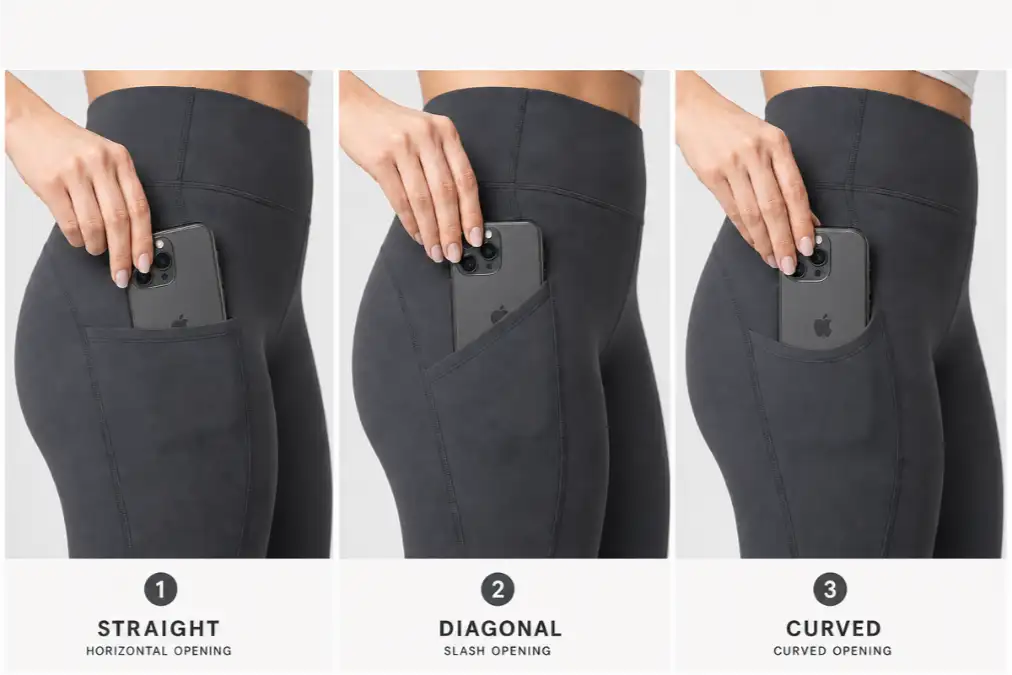
O formato da abertura do bolso determina o quão fácil é colocar o telefone – e a probabilidade de ele cair. Esses dois objetivos competem naturalmente entre si. Uma ampla, bolso fácil de abrir é menos seguro. Um bolso muito seguro é mais difícil de usar rapidamente.
As formas de abertura mais comuns são:
- Reto horizontal: fácil de ver e usar, mas oferece fechamento menos natural
- Barra diagonal: ângulos com o movimento da mão, parece intuitivo, bom meio termo
- Curvo ou crescente: senta-se naturalmente contra a curva do quadril, reduz a abertura no topo
Para executar aplicativos, uma abertura diagonal é geralmente a melhor escolha. Permite acesso rápido com uma mão. Também fecha naturalmente sob tensão do tecido quando sua mão não está dentro dele, porque o ângulo funciona contra a direção de abertura.
A largura da abertura também é importante. Um telefone deve deslizar com uma mão, mas não cair sozinho. A recomendação padrão é fazer a abertura sobre 80 porcentagem da largura do telefone. Isso cria resistência suficiente para segurar o telefone sem dificultar o acesso.
Forro e aderência: Usando malha elástica e detalhes antiderrapantes
Mesmo um bem colocado, bolso bem dimensionado pode falhar se a superfície interna for muito lisa. Um telefone dentro de um bolso de náilon liso ainda pode se mover e saltar porque não há nada para mantê-lo no lugar.
Malha elástica o forro adiciona respirabilidade e uma textura leve que agarra o telefone naturalmente. A malha tem uma superfície ligeiramente áspera que cria fricção sem adicionar volume. Também permite o fluxo de ar, que evita que o bolso retenha calor contra a coxa durante corridas longas.
Algumas fábricas adicionam uma tira fina de silicone ou impressão antiderrapante na parte inferior ou nas laterais do interior do bolso. Esta é a mesma tecnologia usada nos cós para evitar que as leggings deslizem para baixo. Aplicado dentro do bolso, cria um ponto de aderência suave que evita que o telefone vibre para cima.
Esses detalhes são pequenos em custo, mas significativos em desempenho. Para proprietários de marcas que desenvolvem coleções de corrida premium, o forro antiderrapante é um dos recursos mais apreciados pelos clientes finais — e um dos sinais mais claros de desenvolvimento criterioso de produtos.
Teste de rejeição: Corrida, Pular, e validação de lance de escadas
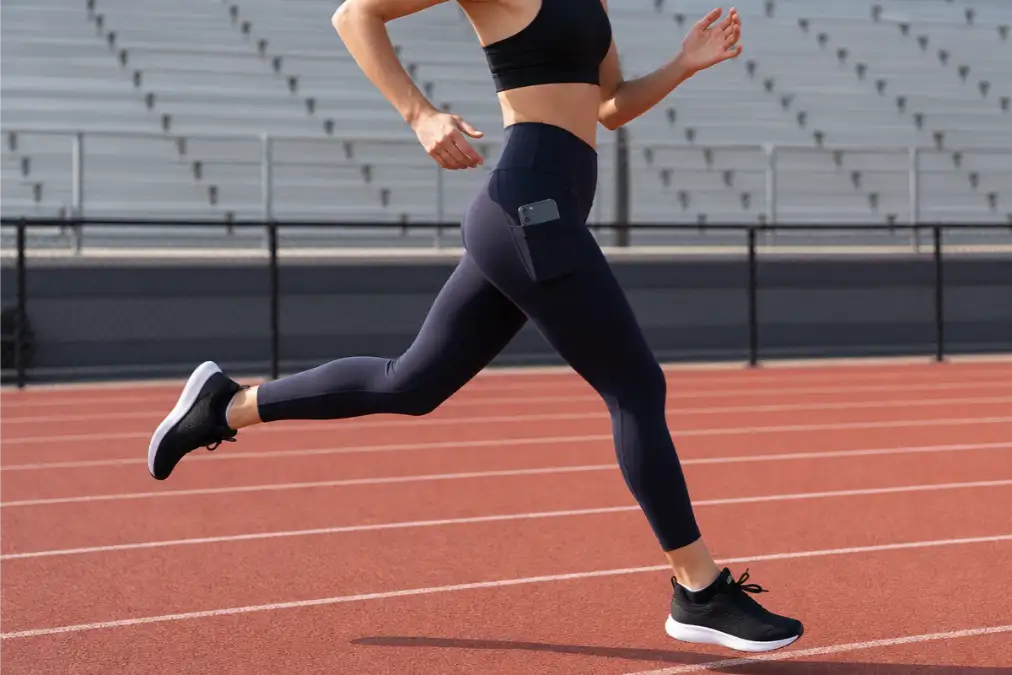
Um design de bolso não está concluído até que passe no teste de movimento. Isso significa colocar um telefone real dentro e funcionar – não andar, não correr devagar, mas correndo a toda velocidade, pulando, e subir escadas.
Esses três movimentos estressam o bolso de maneiras diferentes. Sprinting cria impacto vertical rápido. O salto cria uma única grande força vertical seguida pelo impacto da aterrissagem. Subir escadas combina mudanças de ângulo com variação de passada. Um bolso que passa por todos os três é genuinamente livre de saltos.
Em um ambiente de fábrica profissional, modelos ajustados usam as amostras de teste durante cada tipo de movimento. Engenheiros observam movimento do telefone, ouça o barulho dentro do bolso, e verifique se o telefone muda de posição após cada teste. Se o telefone mudar, mesmo que ligeiramente, durante uma aterrissagem com salto, o design volta para ajuste.
Os proprietários de marcas que desenvolvem novos estilos devem sempre solicitar uma amostra física e testá-la antes de aprovar a produção.. Nenhum desenho técnico substitui totalmente a experiência real de correr com o celular no bolso.
Conclusão
Um bolso para celular que realmente funciona durante a corrida não é um acidente. É o resultado de decisões intencionais tomadas em todas as fases – colocação, profundidade, ângulo, tensão do tecido, opening shape, resina, and real-world testing. Cada elemento suporta os outros.
Para startups e proprietários de marcas que estão entrando no espaço de roupas esportivas, pocket design é um dos melhores lugares para investir atenção desde o início. É um recurso que seus clientes usarão todos os dias. When it works perfectly, eles se lembram da sua marca. Quando falha, eles trocam.
Se você está desenvolvendo uma legging de corrida ou qualquer estilo de roupa esportiva com bolsos laterais, estamos prontos para ajudá-lo a projetar da maneira certa. Nossa equipe trabalha em todo o processo de desenvolvimento - desde a seleção de padrões e tecidos até testes de protótipos e produção em massa. Reach out to discuss your project, e vamos construir algo que realmente funcione.
Perguntas frequentes
1º trimestre: Para qual tamanho de telefone devo projetar o bolso?
A maioria das marcas projeta smartphones entre 15 e 16.5 centimeters in height, que cobre a maioria dos modelos atuais, incluindo smartphones maiores. Se o seu cliente-alvo usa um modelo de telefone específico, você pode solicitar uma profundidade de bolso personalizada.
2º trimestre: Qual tecido funciona melhor para o painel do bolso?
Um náilon ou poliéster elástico em quatro direções com densidade um pouco maior que o tecido do corpo funciona bem. Fabrics with 80 taxa de recuperação elástica percentual ou superior mantém sua forma e adere melhor ao longo do tempo.
3º trimestre: Como evito que o bolso fique aberto quando vazio?
Um ângulo de abertura diagonal combinado com uma bainha ligeiramente elástica na borda da abertura ajuda o bolso a fechar naturalmente sob tensão do tecido. Alguns designs também usam um laço elástico interno oculto para manter o bolso fechado quando vazio.
4º trimestre: Você pode produzir designs de bolso personalizados com forro antiderrapante e painéis de camada dupla?
Sim. Nossa fábrica oferece completo OEM, ODM, e serviços MDMD. Isso inclui posicionamento personalizado do bolso, construção de painel de camada dupla, forro de malha elástica, e detalhes de aderência em silicone. Trabalhamos com proprietários de marcas desde o esboço inicial até a produção final em massa.