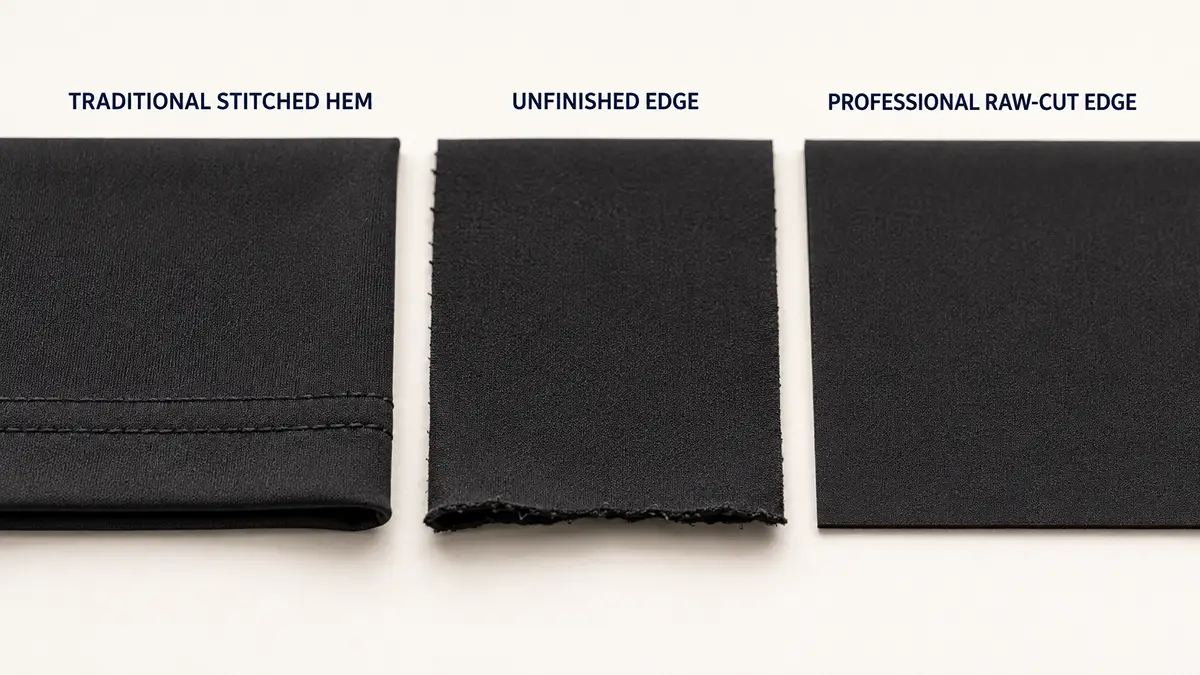
الشركة المصنعة للملابس الرياضية · Dual Sourcing Strategy · Cost Optimization · OEM Sportswear Production · USA + Asia Supply Chain
لقطة النمو
نقطة البداية
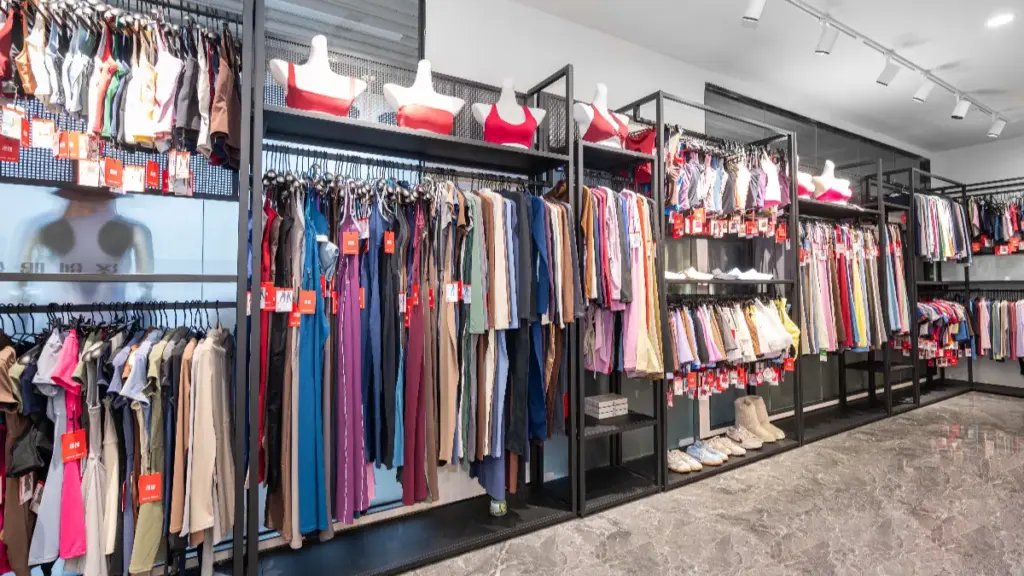
This brand had spent years building its positioning around a domestic manufacturing model in Los Angeles.
“Made in USA” was not a marketing angle — it was part of the brand identity and pricing structure.
لكن, over time, the cost structure created pressure:
- Domestic production costs were significantly higher than overseas alternatives
- New competitors entered the market with visually similar products at much lower retail prices
- Revenue began to decline as price-sensitive customers shifted away
The challenge was no longer product quality. It was structural margin competitiveness.
Manufacturing Challenges
1. Margin pressure without damaging brand equity
Any shift in production geography risked being perceived as a downgrade.
For a premium activewear brand, even perception changes can affect customer retention and resale behavior.
The transition needed to preserve:
- Product quality consistency
- Customer trust in core SKUs
- Brand positioning in premium segment
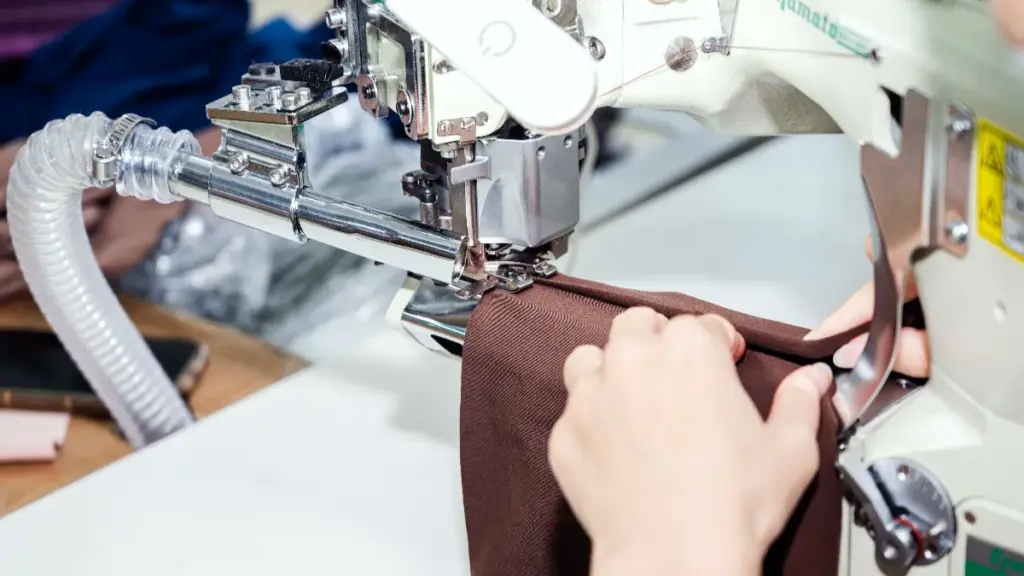
2. Replicating a proprietary fabric system
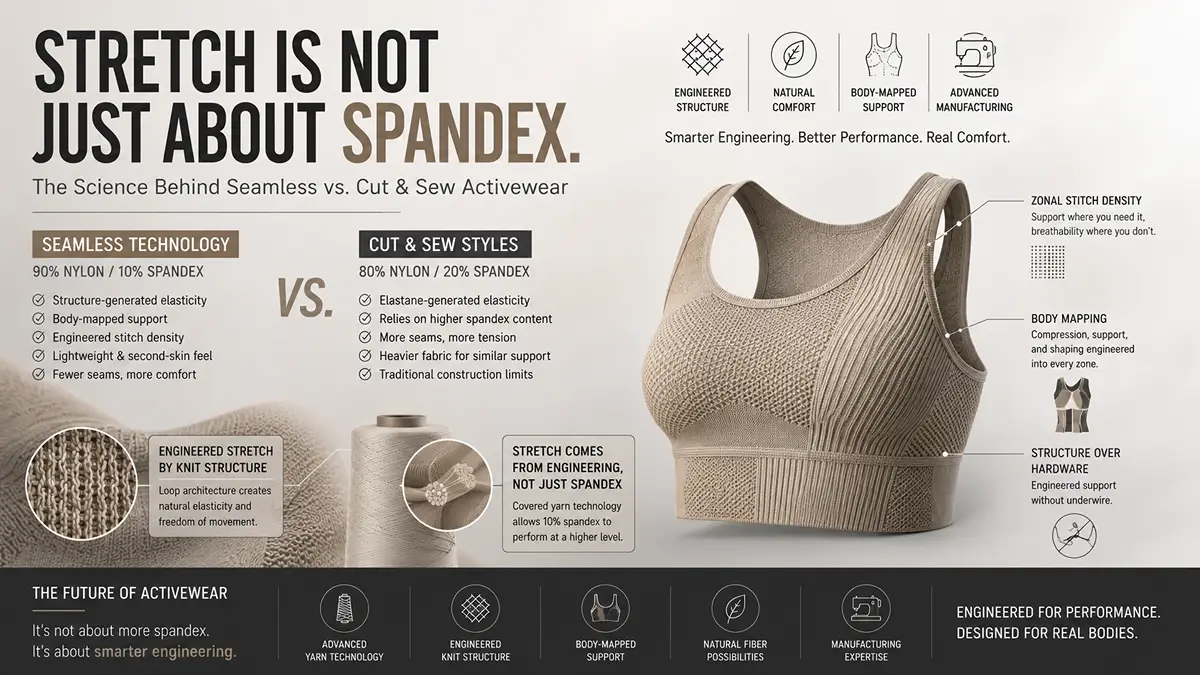
The brand’s signature fabric blend (نايلون / polypro / spandex combination) was central to its performance identity.
Reproducing this outside the original domestic supply base required:
- Multiple fabric development iterations
- Testing for compression, moisture behavior, وتمتد الانتعاش
- Validation against existing product benchmarks
This was not a sourcing task — it was a fabric engineering exercise.
3. SKU prioritization under limited transition capacity
Not all product lines could be transitioned at once.
We had to prioritize:
- High-volume SKUs driving revenue pressure
- Low-risk categories for early migration
- Products with minimal design sensitivity from customers
This ensured margin recovery started early while protecting core brand perception.
ما بنيناه معًا
1. Dual supply chain structure
We implemented a two-tier production model:
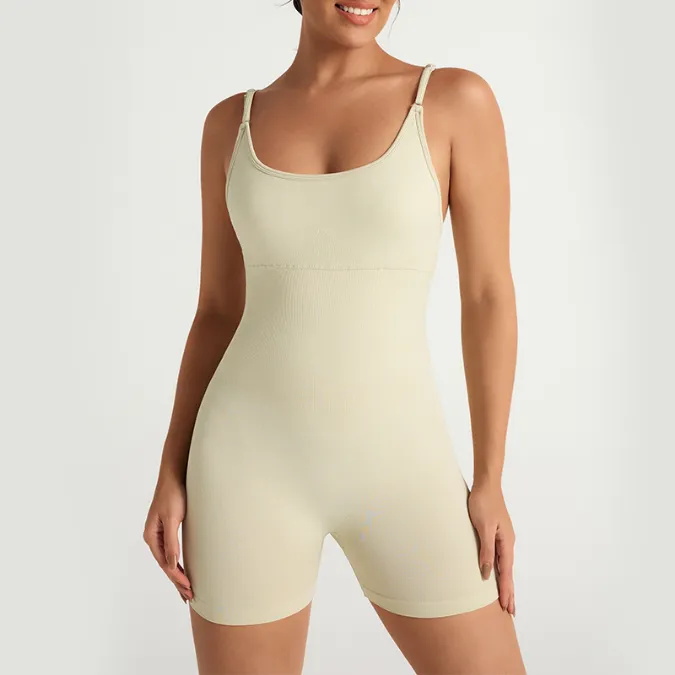
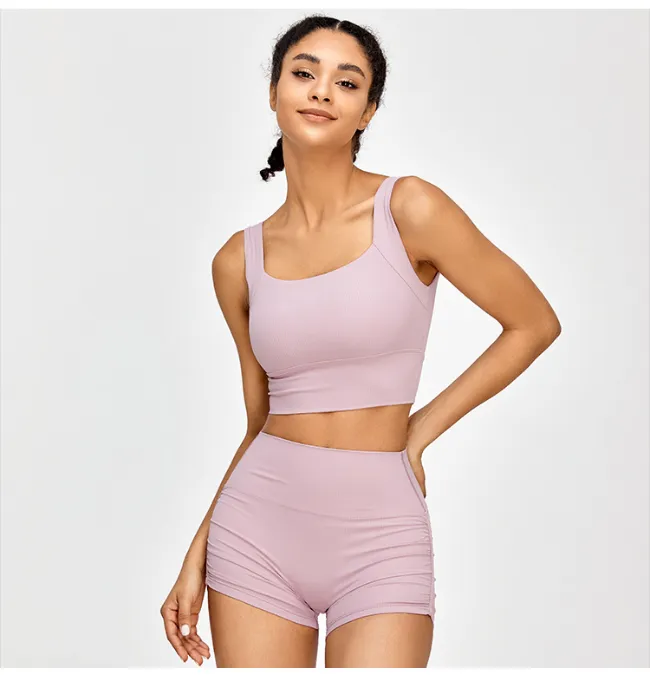
- Domestic production (الولايات المتحدة الأمريكية): core signature leggings requiring specific technical positioning
- Asia-based OEM production: new categories including rest-day wear, swim, والاكسسوارات
This allowed the brand to maintain its identity while improving cost structure.
2. Product repositioning without brand dilution
To avoid conflict with “Made in USA” positioning, we adjusted labeling strategy:
- Shifted from origin-based messaging
- To product-based value messaging (تصميم + performance focus)
This reduced customer friction while maintaining transparency.
3. Phased SKU migration strategy
We introduced production changes in controlled phases:
- Phase 1: non-core SKUs moved first
- Phase 2: high-volume repeat products optimized for cost efficiency
- Phase 3: evaluation of remaining domestic-only items
This minimized disruption while maximizing early margin recovery.
نتائج
- +18 percentage points gross margin improvement on transitioned SKUs
- No quality complaints reported post-transition
- Improved cash flow enabled expansion into app + wholesale channels
Key Takeaway
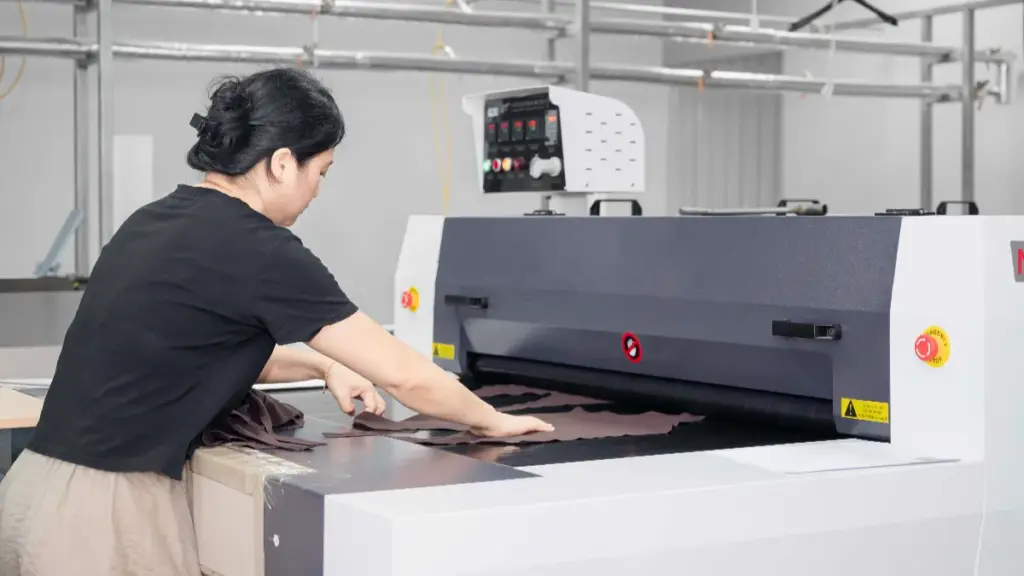
Supply chain structure is not just an operational decision — it directly defines brand scalability.
The most successful brands are not the ones that keep a single manufacturing philosophy at all costs, but those that understand:
- what must remain fixed to protect brand equity
- what can be optimized to improve competitiveness
A manufacturing partner’s role is to help define that boundary clearly and execute it without compromising product integrity.
Why Brands Work with سانسان سبورتس
Sansan Sports supports apparel brands with:
- Dual sourcing supply chain strategies (الولايات المتحدة الأمريكية / Asia hybrid models)
- OEM activewear production optimization
- Fabric replication and development for existing brands
- Cost structure optimization without brand repositioning loss
- Scalable manufacturing for premium DTC brands