アクティブウェア開発において最も誤解されている概念の 1 つはこれです。:
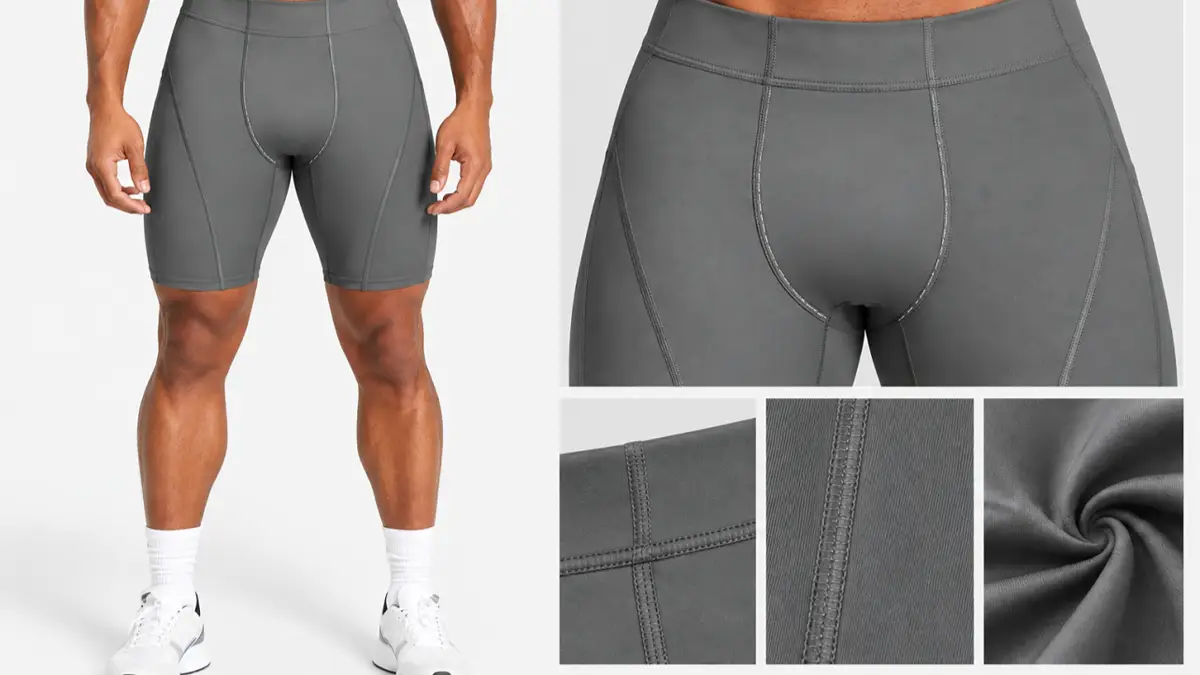
なぜシームレスな衣服を作ることができるのか:
90% ナイロン / 10% スパンデックス
まだ非常に伸縮性を感じます, 協力的な, そして体の輪郭を整える…
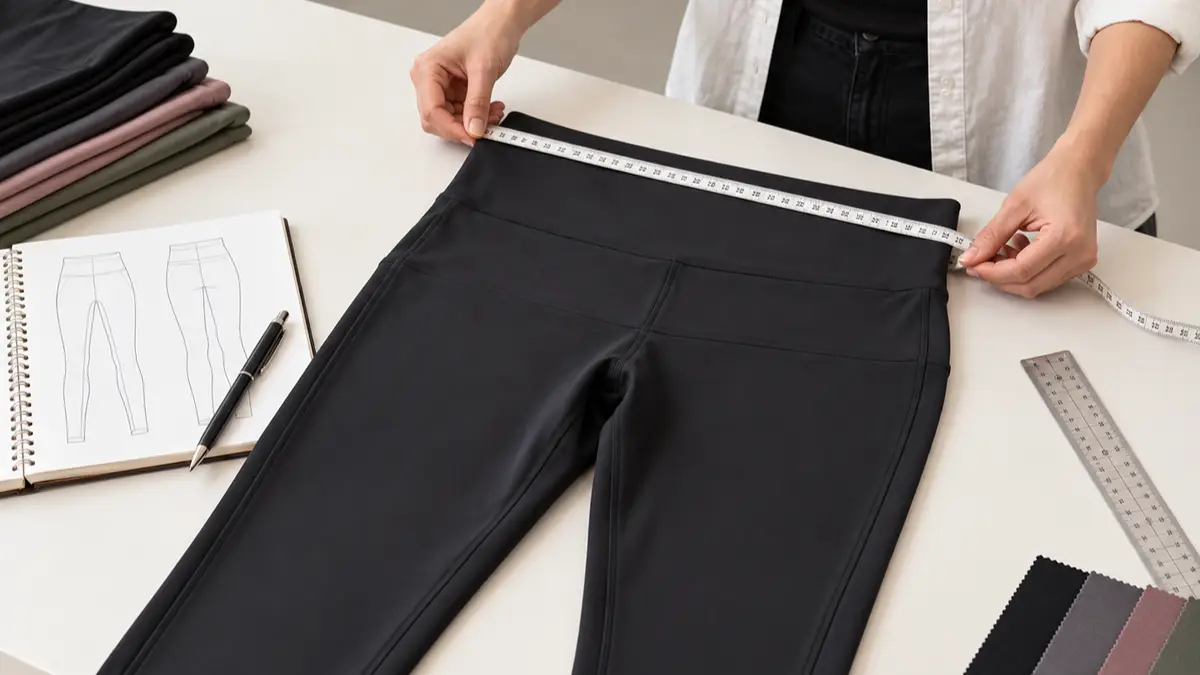
伝統的なカットでありながら & 布地を縫うのが頻繁に必要になる:
80% ナイロン / 20% スパンデックス
同等の 4 方向のストレッチと回復を実現します。?
一見して, これは矛盾しているように思えます.
ほとんどの人が想定しているのは: スパンデックスが多い = 伸縮性が高い.
しかし実際には, 高性能アクティブウェアは生地の構成だけに依存するわけではありません.
最後のストレッチ, サポート, 衣服の回収と回収は、実際にははるかに大きなシステムによって決定されます。:
• ニット構造 • 糸構造 • ステッチ密度 • 圧縮マッピング • 回復挙動 • 衣類エンジニアリング • エラスタンが生地構造内でどのように関与するか
シームレステクノロジーがすべてを変える場所です.
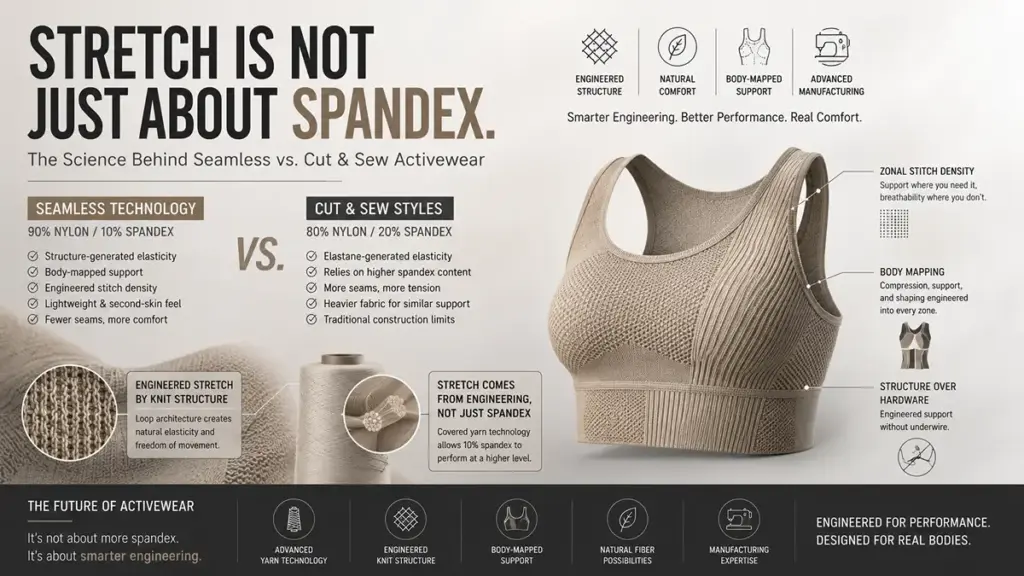
シームレスはスパンデックスだけでは伸びない
従来のアクティブウェア生地とシームレスな衣類は、まったく異なる動作をします。.
最もカットされた & 生地を縫うのに頼る:
「エラスタンが生み出す弾力性」。
しかし、シームレスな衣服はさらに多くの要素に依存します。:
「構造が生み出す弾力性」。
その区別は重要です.
シームレス丸編みで, 伸縮性はエラスタンの割合だけによるものではありません.
それはエンジニアリングされたニット構造そのものから生まれます.
ループ構造の秘められた力
シームレスな衣類は、サントーニ システムなどの丸編み機でループごとに作られます。.
それぞれの編みループが自然に拡張スペースを生み出します - まるでバネシステムのようです.
これは、衣服が構造を通じて機械的に伸びる可能性があることを意味します, 高いエラスタンの割合が関与する前であっても.
だからこそ、 10% スパンデックスは依然として柔軟性が高く、体にぴったりとフィットします。.
構造自体が仕事の一部を行っている.
ハイゲージ編みで機械的弾力性を実現
シームレス機械は幅広いゲージ範囲にわたって構築されています
• 14G ~ 22G は着圧重視のレギンスとスポーツブラ用 • 28G ~ 40G は軽量 T シャツとセカンドスキンレイヤー用
ゲージが高いほど作成されます:
• より細かいループ • より緊密な構造 • よりスムーズな圧縮移行 • より制御された回復
これにより、多くの開発者が呼ぶものが生成されます。:
「機械的弾性」。
言い換えると: 伸縮性のある衣服は、エラスタンの含有量だけではなく、設計された編み動作によって伸縮します。.
カバードヤーンがすべてを変える理由
もう一つの大きな要因は糸の構造です.
ほとんどのシームレスな衣類には、:
• シングルカバーヤーン • またはダブルカバーヤーン
これは、エラスタンがナイロン糸システムの内側に直接包まれていることを意味します。.
したがって、たとえ衣服の組成が次のように書かれていたとしても、
90% ナイロン / 10% スパンデックス
— カバーヤーンレベルでカウント, エラスタンコア自体は通常、より低い位置にあります。
エラスタンは依然として衣服内のあらゆる糸経路に積極的に関与しています。.
これにより、従来のカットと比較して非常に異なる張力分布が作成されます。 & 生地を縫う.
完成した衣類のこの伸縮性と回復性のバランスを工場がどのように検証するかについては、 ヨガパンツストレッチテストガイド.
なぜカットするのか & よく必要なものを縫う 20% スパンデックス
トラディショナルカット & アクティブウェアの生地を縫うのは通常、:
• インターロックニット • ダブルニット構造 • 起毛生地 • 縦編み構造
これらの生地には、シームレス衣類と同じように設計されたループ拡張システムがありません。.
したがって、ニットアーキテクチャに依存するのではなく、, 伸縮性はエラスタン自体に直接依存しています。.
だからこそハイコンプレッションカット & 頻繁に必要となる生地を縫う
15-20% スパンデックス
達成する
• 強力な 4 方向ストレッチ • 体へのフィット • コンプレッション • 素早い回復
エラスタンが足りない, これらの生地は感じることができます:
• 硬い • 重い • 制限的である • または回復が遅い
シームレステクノロジーの真の意味はボディマッピングです
ここでシームレスな開発が真に強力になります.
最新のシームレスなシステムにより、エンジニアは制御を可能にします:
• コンプレッションゾーン • 通気性のあるメッシュエリア • サポート構造 • 輪郭形成 • 発汗ゾーン • 回復張力
すべてを一枚の衣服の中に.
例えば:
• サポートのためのバスト周りの高密度ニット • ウエスト周りのコンプレッションマッピング • 臀筋周りのリフト構造 • 背中のオープンメッシュベンチレーション
これはと呼ばれます:
「可変ゾーンステッチ密度」
このサポートは、生地の重量やエラスタンの量を増やすことではなく、設計された構造によって実現されます。.
多くのプレミアムブランドがシームレスを好む理由
シームレス技術にはいくつかの利点があります:
1. 軽量化
エラスタンの割合を低くして強力な伸縮性を実現.
2. 第二の皮膚のような感触
縫い目が少なくなり、身体との接触がスムーズになります。.
3. 体の輪郭を改善する
サポートはニット構造に直接プログラム可能.
4. 摩擦の軽減
縫い目が少ないので刺激が少ない.
5. より高い技術的障壁
高度なシームレス開発には縫製能力だけではなく、エンジニアリングに関する深い知識が必要です.
しかしシームレスにも限界がある
その利点にもかかわらず, シームレスが常に完璧なソリューションであるとは限りません.
いくつかの課題には次のようなものがあります。:
• 生地の柔軟性が限られている • 染色後の色の変化がより敏感である • より豊かなバストサイジングのための開発の複雑さが高い • 機械のセットアップコストが高い • そして天然繊維を使用する場合の大きな課題
この最後の点は特に重要です.
綿などの天然繊維は合成高機能糸に比べて回復力が弱い.
それで建物を建てる: ワイヤレスサポート + 自然な快適さ + シームレスな回復
これは今日の現代のアパレル工学における最も困難な課題の 1 つです.
アクティブウェアの未来は「生地のストレッチ」から「構造エンジニアリング」へ移行する可能性がある
何年もの間, アクティブウェア業界は以下に重点を置いています:
• より高いスパンデックス含有量 • より強力な圧縮 • 合成高機能生地
しかし、次世代のアパレル開発はまったく異なるものになる可能性があります.
未来はそれを中心に築かれるかもしれない:
• 設計されたニット構造 • ボディマップされたサポートシステム • 天然繊維の快適さ • 回復を重視した糸構造 • インテリジェントな圧縮マッピング
単に「スパンデックスを増やす」だけではありません。
だからこそ、シームレステクノロジーは基本的なヨガセットやジムウェアをはるかに超えて進化し続けています。.
パフォーマンスアパレルの未来は縫製できないかもしれない.
構造自体に直接組み込まれる可能性があります.
—
で サンサンサンスポーツ, 私たちは材料システムの研究にかなりの時間を費やしてきました, ステッチ密度エンジニアリング, シームレスなボディマッピング, 快適さとのバランス, サポート, そして、ブランドがそのリサーチを製品化可能なスタイルに変えるのを支援します。 シームレスなODM & OEMサービス.
なぜなら結局のところ, 最高の製品は生地だけでは決して生まれません.
それらは以下の統合によって作成されます。: 材料 + 構造 + 工事 + フィット + エンジニアリング.