Have you ever been asked, “Should we use S/M/L/XL or numbers like 4/6/8/10?” This is one of the most common questions activewear brands face.
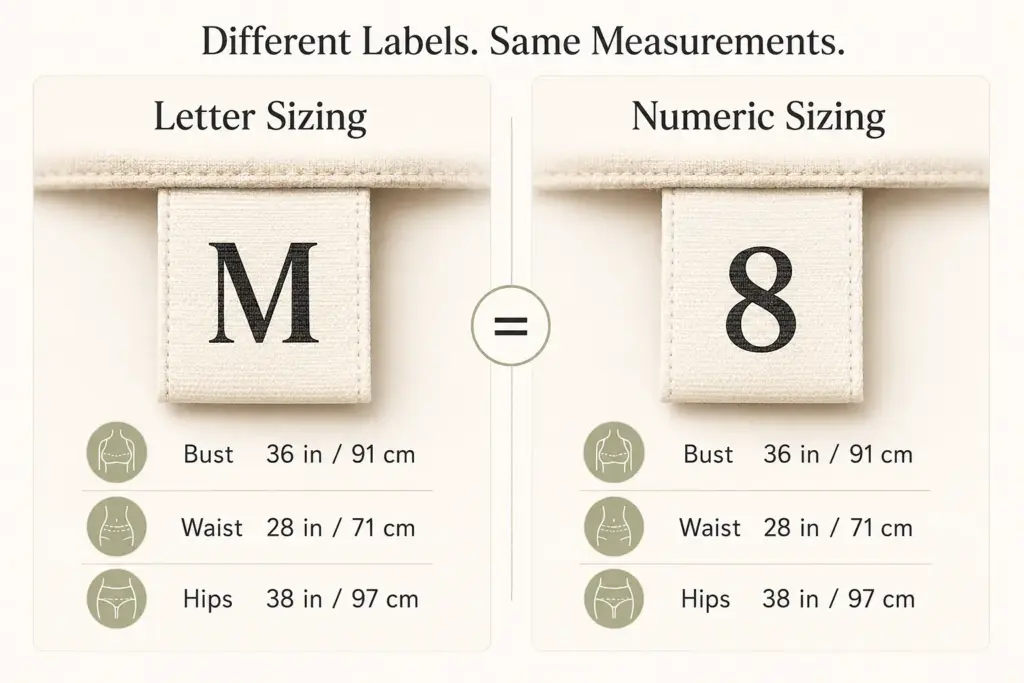
Here’s the simple answer: neither system is better than the other. A size Medium and a size 8 can stand for the exact same body measurements. The real difference isn’t accuracy. It comes down to region, brand style, and what customers are used to seeing.
This guide explains how letter and numeric sizing work, why markets and audience groups differ, and how to pick (or convert between) the right system for your customers.
What Is the Difference Between Letter and Numeric Sizing?
Letter sizing uses XS, S, M, L and XL. Numeric sizing uses numbers such as 4, 6, 8 and 10.
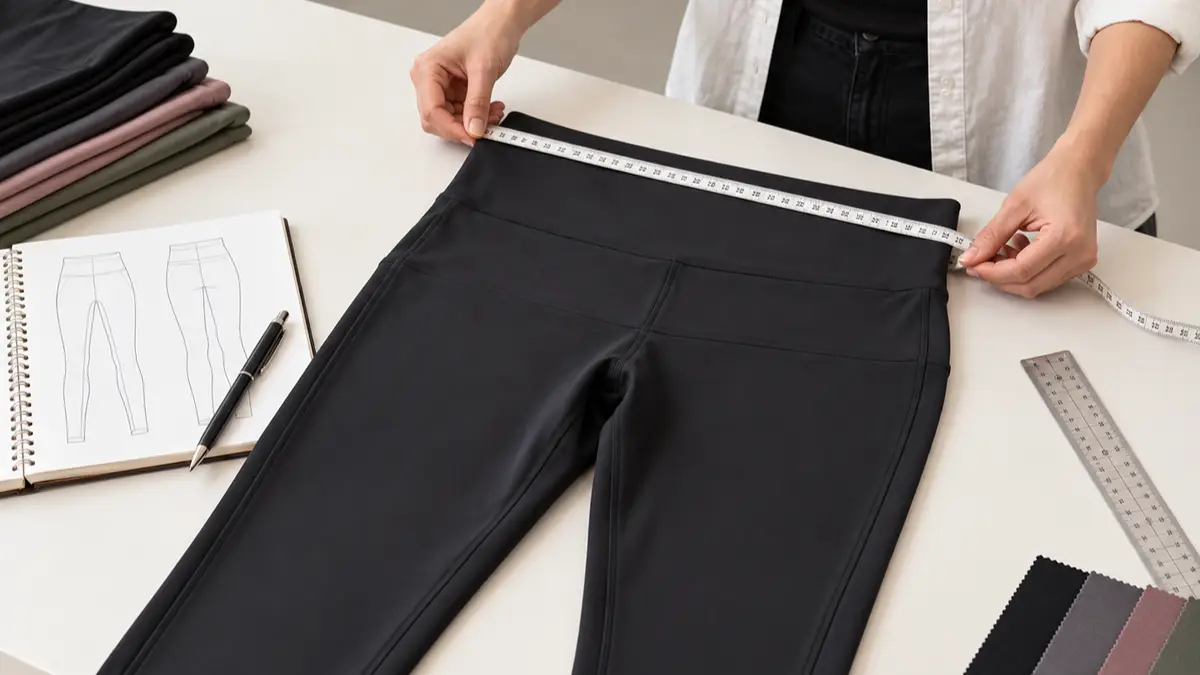
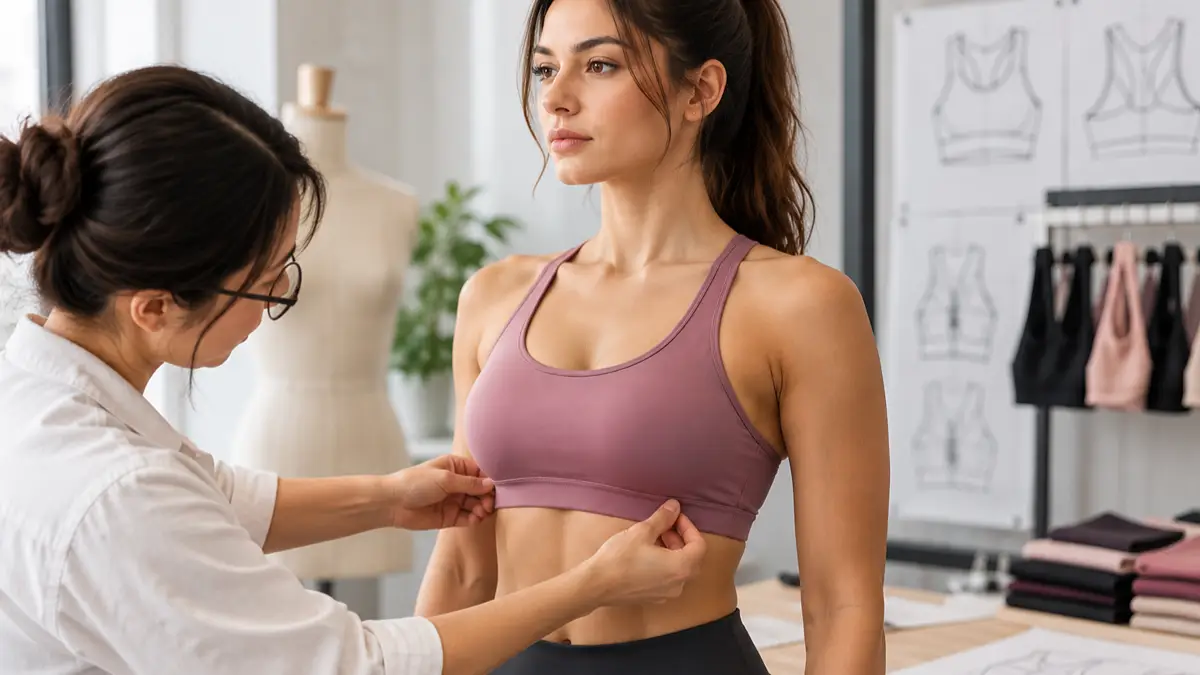
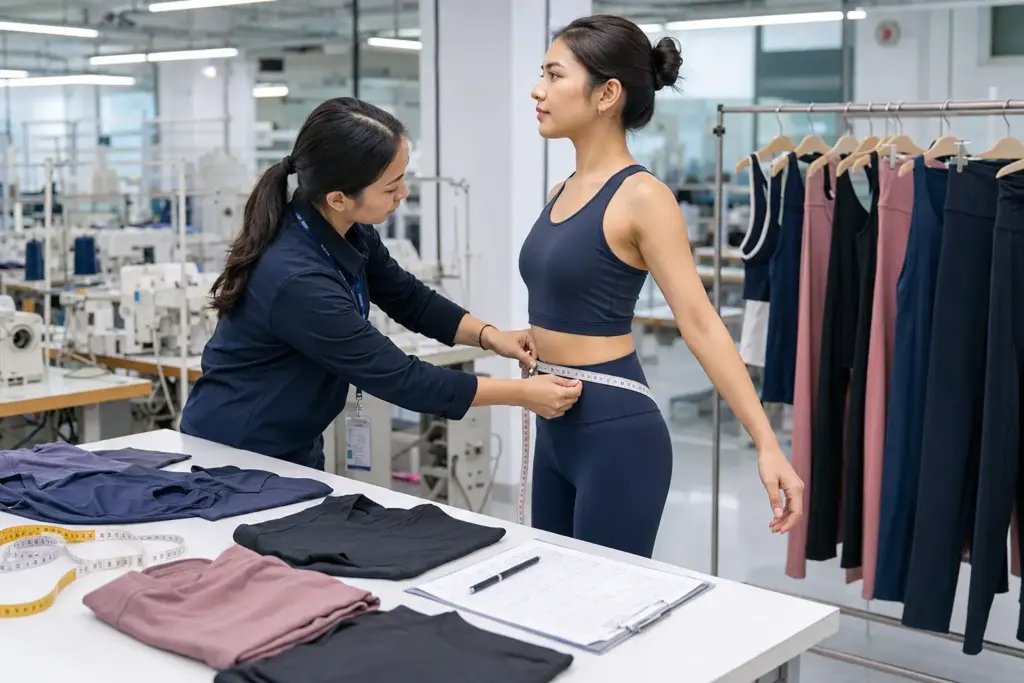
Both systems are built on body measurements — bust, waist and hips for women’s styles, chest and waist for men’s, height for kids’. A letter-size chart can be just as accurate as a numeric chart. The labels are different, but the measurements may be the same.
Some brands use both systems together, such as “M (US 8–10),” to help more customers understand their sizing. Never print a bare number — always add the country in front of it.
Why Do Activewear Markets Use Different Size Labels?
Written standards do exist — ISO 8559, EN 13402 in Europe, ASTM D5585 in the US, GB/T 1335 in China — but all are voluntary, so market habits still rule. Each place developed its own habit over many years, based on shopping history and what people got used to.
In some countries, big stores used numbers for a long time, so numbers became normal. In other countries, letters felt easier and less personal, especially for tight-fitting clothes like leggings or sports bras.
Brand positioning matters too. Sportswear and athleisure hangtags are dominated by letters. Fashion-led activewear lines still print numbers. Neither one fits better. It’s what your shopper is trained to read.
Sizing Habits in the UK, EU, USA, and Other Markets
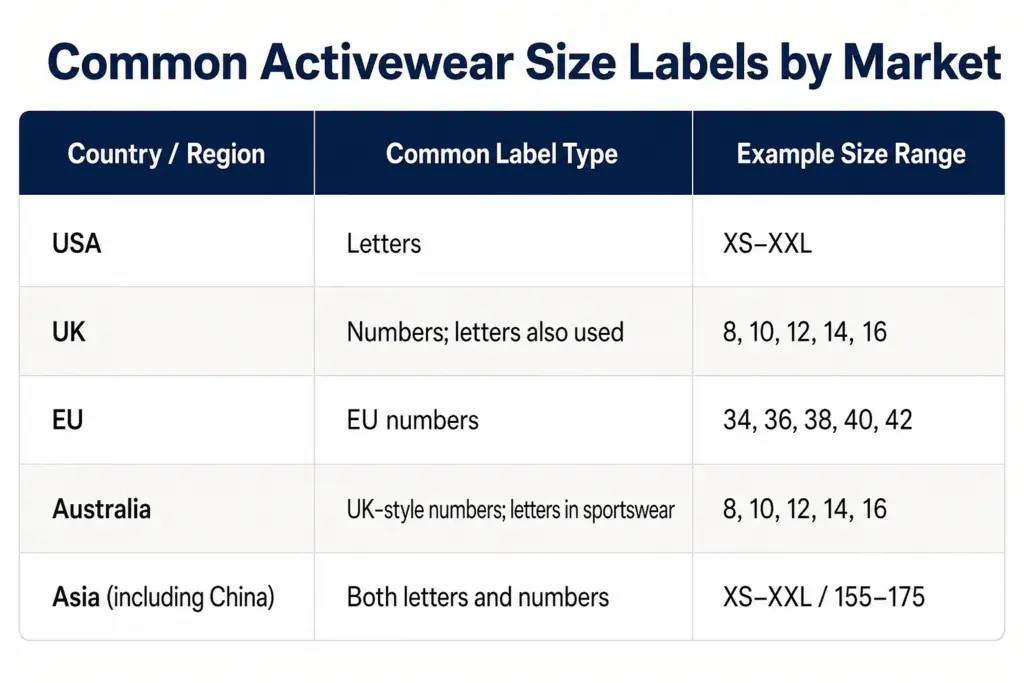
USA: Letters (XS–XXL) are common for leggings, sports bras, and yoga wear. Numbers show up more in fashion-style activewear.
• UK: Numbers (8, 10, 12…) are still common in regular clothing. But more UK activewear brands are now switching to letters.
• EU: EU numbers (34, 36, 38…) differ from UK or US numbers, and Italy prints its own scale — an Italian 40 sits close to an EU 34. This confuses buyers selling in more than one country.
• Australia: Usually follows UK-style numbers for regular clothes. Sportswear brands often use letters instead.
• China: Local retail uses a height-and-chest code such as 165/88A (national standard GB/T 1335), not a number. Export orders use XS–XXL, but graded on Chinese body data — re-fit the sample, don’t just convert the label.
• Japan and Korea: Japan runs S–XL, then LL, 3L and 4L instead of XXL. Korea prints chest centimeters (90, 95, 100), which shoppers shorten to 66, 77 and 88.
Because these systems differ everywhere — and Asia often prints raw measurements instead of a label at all — brands selling in more than one country need a clear size chart. Never guess that “Medium” or “size 8” means the same thing in every country.
Do Men’s and Kids’ Activewear Use the Same Size Labels?
No. The numeric 4/6/8/10 scale is a women’s convention. Applying it to other groups is where most size charts break.
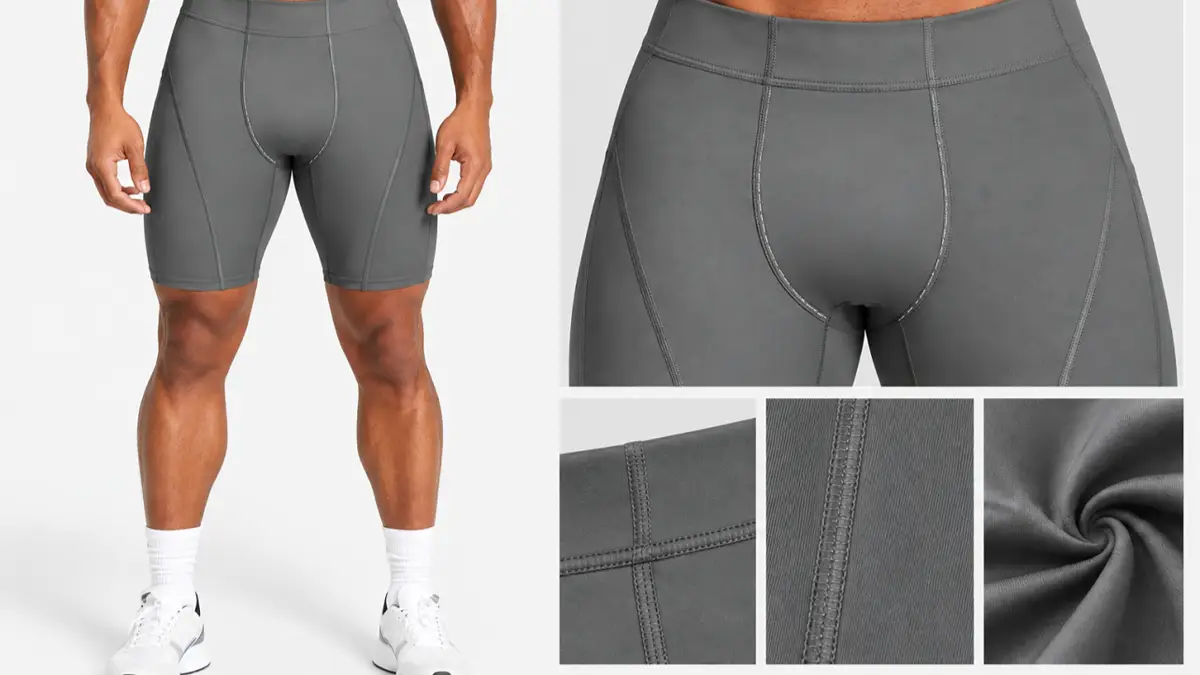
Men’s activewear uses letters almost everywhere. S–XXL is the default in the US, UK, EU and Australia, with XS and 3XL added for extended runs. Numbers do appear for men, but they measure the waist in inches (28, 30, 32, 34) and sit on shorts and woven pants, not on tights or training tops. In parts of continental Europe you will also see chest-based numbers such as 46, 48 and 50.
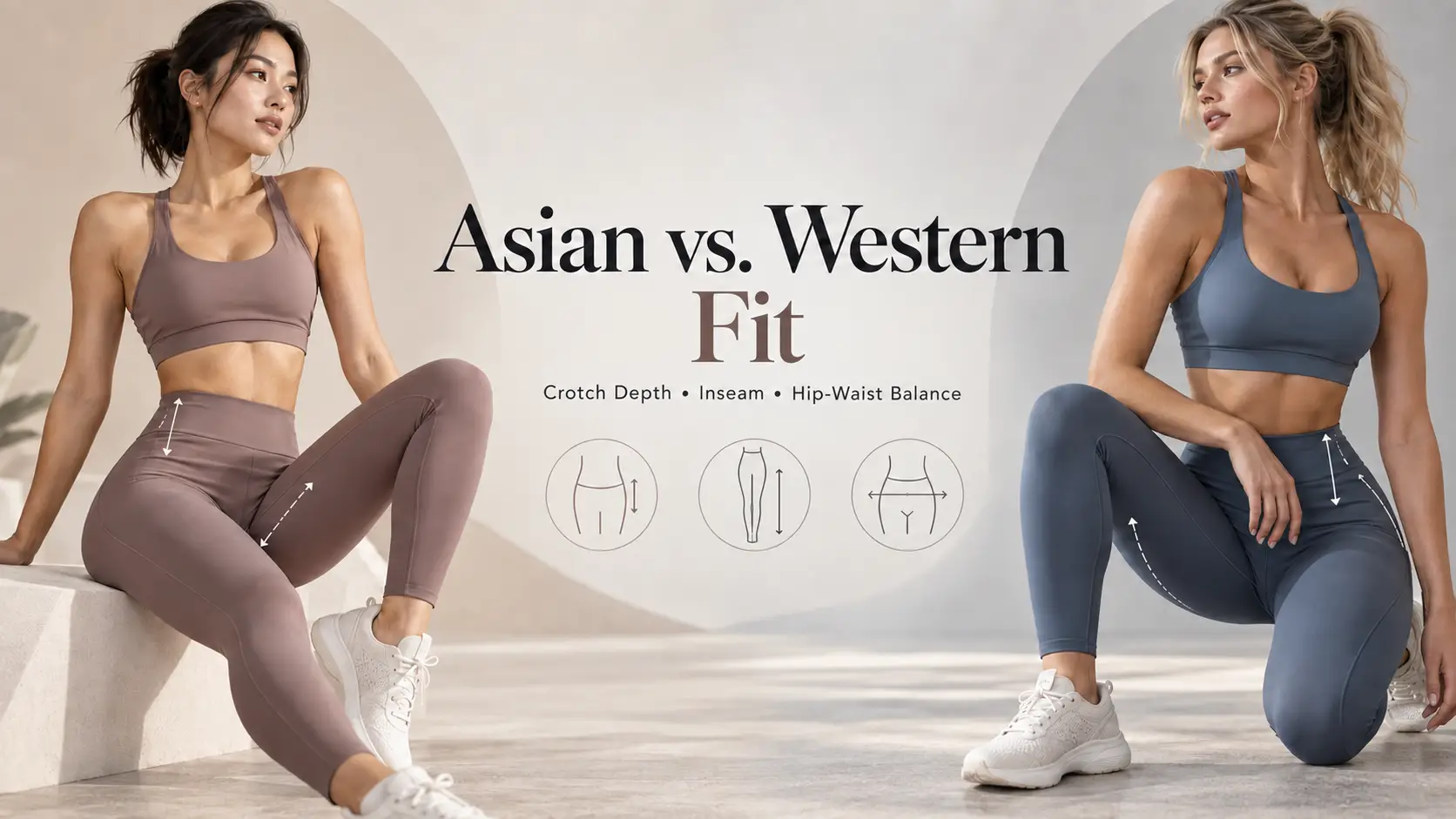
The trap is not the label. It is whose body the label was built on. A letter size cut to a US body block is not the same garment as a letter size cut to an Asian block — the same “M” can sit one to two sizes smaller off the body. Brands sourcing from Chinese factories usually re-letter the chart for their own market instead of copying it across.
Kids’ sizes are age, not a progression. “Size 8” for a child means eight years old and has nothing to do with a women’s 8. US and UK brands label kids’ ranges by age bands (4Y, 5–6Y, 7–8Y); most EU brands label by height in centimeters (98, 104, 110, 116, 122). Any kids’ chart needs a height column, because children do not grow in proportion — a tall child can have a small waist. This is the problem we untangled in a case study on kids’ sizing for a loungewear line.
If you sell women’s, men’s and kids’, run three separate charts. Do not shrink a women’s chart down to create a kids’ range.
How Letter and Numeric Labels Map onto One Size Chart
Letter and numeric labels are not two systems to convert between. They are two label columns on one chart. That chart gets built in this order:
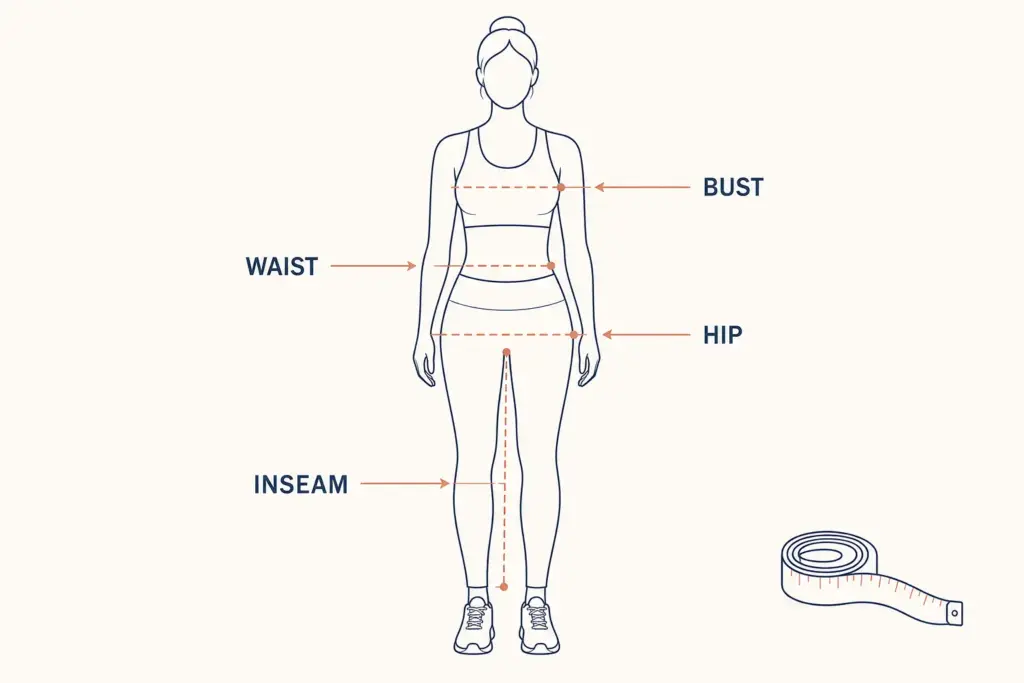
- Write the body measurements for your target market — bust, waist, hip, inseam — before any label exists.
- Grade the chart. Each size steps by a fixed increment, usually about 4 cm (1.5 in) at the bust and 3–4 cm at the waist and hip.
- Convert body specs into garment specs, allowing for negative ease: activewear is cut under the body measurement on purpose.
- Set a tolerance, typically ±1 cm per measurement, so QC can pass or fail a size without arguing about it.
- Attach letters and numbers as two columns, then freeze the sheet into a professional tech pack the factory works from.
Stretch changes the chart itself. Two fabric numbers decide the fit: elongation (how far it pulls) and recovery (how far it springs back). Weak recovery fits perfectly at the fitting and bags out by the third wear — which is why factories stretch-test the graded set, not one lucky size.
Why Body Measurements Matter More Than Size Labels
A size label is just a name. What matters is the measurement behind it — bust, waist, hip, inseam — plus how much negative ease the fabric can carry without losing its shape.
Two brands can both use “size M,” but the clothes can fit very differently. Why? Because their measurement charts are not the same, and their fabrics are not the same.
This is why many buyers receive samples that don’t fit as expected. If you are buying activewear, always ask for the full measurement chart. Don’t rely on the size label alone.
How to Create the Right Size Chart for Your Target Market
Ask yourself these easy questions before making a size chart:
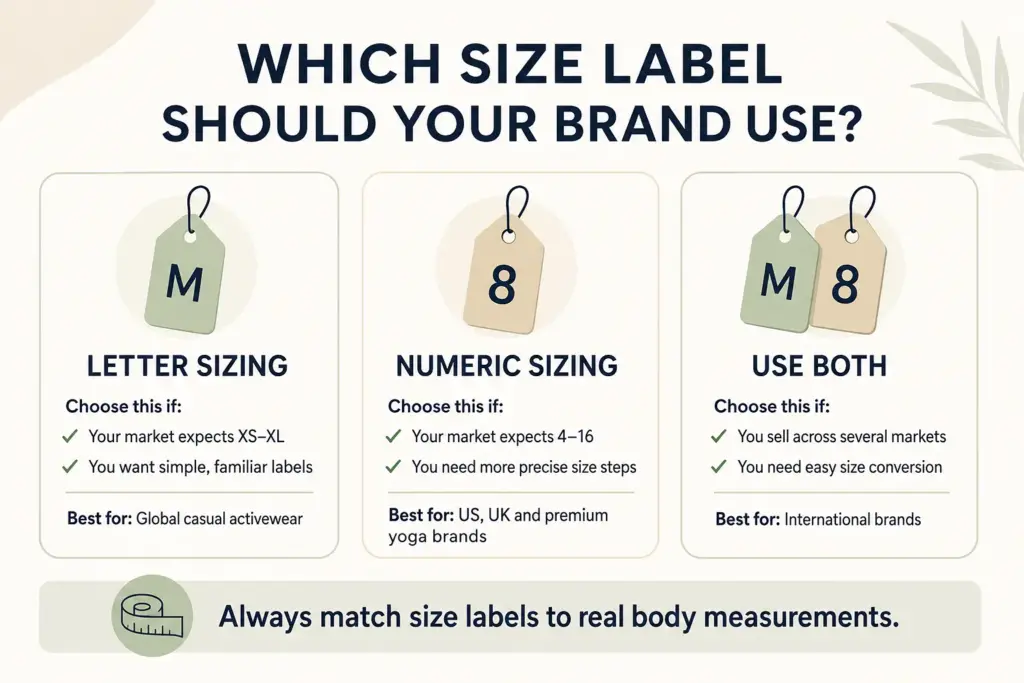
• Who buys your clothes? Sporty shoppers often expect letters. Fashion shoppers may expect numbers.
• Where do you sell? If using numbers, make sure they match the right country’s scale (US, UK, EU, or AU).
• How far will you extend the range? Numeric charts already carry a plus segment shoppers read as 14–24; letter charts extend upward as plus-size activewear runs instead.
• Do you sell in more than one country? If yes, use both letters and numbers together. This avoids confusion and fewer returns.
• Does your fabric stretch a lot? Stretchy fabric may need small size changes, no matter which labels you use.
There is no single “correct” system. The goal is picking what your customers already trust, based on real measurements. Separately, decide your size run — how many units per size, such as a 1:4:6:4:1 curve across XS–XL. The curve is a buying decision, not a fit decision, and it shifts market by market.
How SANSANSUN Supports Custom Activewear Sizing
At SANSANSUN, we help brand owners and startups make this exact decision, especially when they plan to sell in more than one country. As an activewear manufacturer, we offer OEM and ODM services. We build size charts using real measurement data, whether that means letters, numbers, or both.
We give you detailed measurement charts, fit samples, and sizing advice for different markets. This helps your product fit right the first time. Fewer mistakes means reduces returns and less wasted money. Whether you’re launching your first yoga wear line or growing into a new country, SANSANSUN supports accurate sizing from your first sample to full production.
Frequently Asked Questions
Is numeric sizing more accurate than letter sizing?
No. Both can be just as accurate. What matters is the measurement data, not the label.
Why don’t my US and UK sizes match for the same item?
Different countries use different measurement rules. A US size 8 is not the same as a UK size 8, even though the number looks the same.
Should my brand use letters, numbers, or both?
It depends on your market and your brand style. Many brands that sell in many countries use both together.
How can I make sure my activewear fits right in different countries?
Ask your manufacturer for their full body measurement chart, not just a list of size labels. Test the fit on real people before ordering in bulk.
Can I use one size label system for men’s and women’s activewear?
Not for the same chart. Numeric 4/6/8/10 reads as womenswear in most markets; men expect letters or waist inches. Kids expect an age band or a height in centimeters. Keeping the three separate also keeps your grading, sampling and returns data readable.
Conclusion
At the end of the day, S/M/L and 4/6/8/10 are just two different ways of saying the same thing. Neither one is smarter, better, or more accurate. What really matters is the real body measurements behind the label, and whether that label matches what your customers expect to see. If you’re building or expanding an activewear brand, don’t leave sizing to guesswork. A clear, well-tested size chart, built for your target market, is what keeps customers happy and returns low. Ready to build a size chart that fits your market perfectly? Contact SANSANSUN today to get expert sizing support and start your custom activewear project with confidence.